





In an era where industrial operations are becoming increasingly complex, the risk of fire remains a persistent and potentially catastrophic threat to workforce safety. Recognizing the urgent need for proactive prevention, the National Institute for Occupational Safety and Health (NIOSH) has released a new, specialized "toolbox talk" document designed to bridge the gap between regulatory requirements and daily worksite safety practices. This initiative aims to empower both employers and employees to cultivate a culture of fire awareness, hazard identification, and rapid response.
Main Facts: The NIOSH Initiative
The newly released two-page resource from NIOSH serves as a concise yet critical manual for worksite safety managers. At its core, the document emphasizes that fire prevention is not merely a compliance checkbox but a foundational element of occupational health.
NIOSH highlights that workers who are actively engaged in identifying potential ignition sources are significantly better equipped to protect themselves and their colleagues. The toolbox talk is structured to be used during short, pre-shift meetings, providing a platform for managers to facilitate an essential dialogue with their teams. The central challenge posed by the document is a simple but profound question: "What will we do at the worksite to prevent fires?" By forcing teams to confront this question daily, NIOSH aims to transition safety from a theoretical concept to an actionable, ingrained habit.
Chronology of Fire Risk Management
The evolution of workplace fire safety has shifted significantly over the last several decades. Historically, fire prevention was reactive, often dictated by insurance requirements or post-incident investigations. However, the current regulatory landscape, underscored by this new NIOSH guidance, represents a proactive shift in the industry.
- Pre-2000s: Fire safety was largely focused on structural compliance—installing sprinklers and exit signage.
- 2010-2020: The focus expanded toward Fire Prevention Plans (FPPs), requiring employers to conduct formal risk assessments.
- 2026 and Beyond: The current period marks a move toward "behavior-based safety," where the emphasis is placed on the individual worker’s situational awareness. This latest NIOSH tool represents the apex of this trend, bringing high-level safety engineering concepts down to the shop floor.
Supporting Data: Why Specialized Knowledge Matters
Fire hazards are not monolithic. Depending on the environment—whether it be a chemical processing plant, a construction site, or a high-tech manufacturing facility—the "fuel" for a potential fire varies, as does the method for extinguishing it.
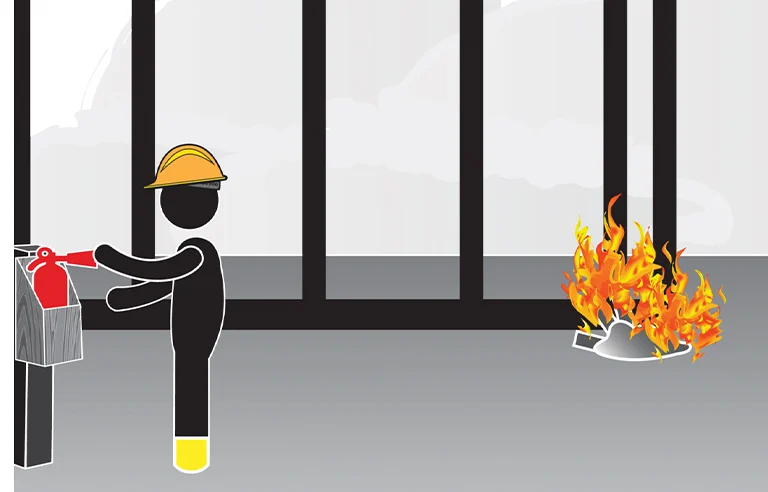
NIOSH places significant emphasis on the correct classification of fire extinguishers. A common failure point in industrial fire management is the assumption that a general-purpose extinguisher is a "one-size-fits-all" solution. The agency stresses that for every specific hazard on-site, a corresponding extinguisher must be readily available and correctly labeled.
Furthermore, the document addresses specialized scenarios, such as combustible metal fires. In these instances, traditional water-based suppression systems can be disastrous. NIOSH explicitly warns: "Never put water on a combustible metal fire." Instead, they advocate for the use of dry sand or specialized Class D extinguishing agents. This specific, granular advice highlights the danger of relying on general knowledge; without specific training, a well-intentioned worker could accidentally exacerbate a fire, turning a contained incident into a facility-wide catastrophe.

Official Responses and Regulatory Implications
The regulatory requirement for a fire protection program is not optional. According to NIOSH and broader OSHA standards, employers are legally mandated to develop a comprehensive fire protection program and, crucially, to explain it in detail to their workers.
This "explanation" phase is where many safety programs fail. It is not enough to have a binder on a shelf; the program must include active, ongoing training that helps workers identify and correct fire hazards before they manifest as emergencies. This shift places a heavy burden of responsibility on management. By releasing this toolbox talk, NIOSH is effectively providing the "curriculum" for this required communication, ensuring that even smaller organizations without dedicated safety departments can meet federal standards.
The Human Element: Implications for Safety Culture
While technology and equipment are vital, the human element remains the most significant variable in fire safety. The implications of this NIOSH release extend beyond the immediate prevention of flames; it touches on the psychological aspects of safety management.
1. Moving Beyond Compliance to Commitment
A workplace that treats safety as a compliance hurdle often experiences "check-the-box" syndrome, where workers go through the motions without internalizing the risks. The NIOSH toolbox talk encourages a shift toward commitment, where the worker is viewed as a primary sensor for hazards. When workers feel empowered to speak up about frayed wiring, blocked exits, or improper chemical storage, the entire safety ecosystem strengthens.
2. The Role of the Toolbox Talk
Toolbox talks are effective because they are brief, frequent, and context-specific. By providing a structured guide, NIOSH is helping to eliminate the "what should we talk about today?" hesitation that often plagues supervisors. This consistency is the secret to building a robust safety culture. When fire prevention is discussed at the start of every week, it moves from the periphery to the center of the worker’s focus.
3. Training as an Investment
Employers often view safety training as an operational cost. However, the data supports the view that it is an investment. The cost of a fire—ranging from equipment damage and lost productivity to legal liability and, in the worst cases, loss of life—far outweighs the cost of regular training sessions and proper safety equipment. By following the NIOSH guidelines, organizations are effectively insuring themselves against the volatility of the workplace environment.
Practical Steps for Implementation
To maximize the impact of the new NIOSH guidance, safety officers and site managers should follow a systematic implementation plan:

- Assessment: Conduct a walkthrough of the facility specifically to identify the types of potential fires. Are there flammable liquids? Electrical hazards? Combustible dust?
- Procurement: Audit the current inventory of fire extinguishers against the identified risks. Ensure that the "right" extinguisher is within reach of the specific hazard.
- Integration: Incorporate the NIOSH toolbox talk into the weekly safety rotation. Use the provided narrative to spark discussion, allowing workers to share their own observations of potential hazards.
- Documentation: Maintain records of these discussions. Not only is this a regulatory requirement, but it also creates a track record of due diligence that is invaluable in the event of an audit or incident.
Bridging the Gap: The Path Forward
The release of this document by NIOSH serves as a reminder that safety is an evolving discipline. As new materials, chemicals, and technologies are introduced into the workplace, the risks change. Consequently, the tools we use to mitigate those risks must also evolve.
The agency’s insistence on a comprehensive fire protection program is a clear directive to management. It is a signal that the era of passive safety management is over. Today’s high-stakes industrial environments require active, ongoing, and, most importantly, collaborative safety strategies.
By fostering an environment where workers feel confident in their ability to identify and respond to fire hazards, organizations do more than just meet federal requirements; they create a resilient workforce that is prepared for the unexpected. As we look toward the future of industrial safety, resources like the NIOSH toolbox talk will remain the backbone of a secure and productive worksite.
Ultimately, the goal is to ensure that every worker returns home safely at the end of the day. Through the consistent application of these fire safety protocols, that goal becomes not just a hope, but a realistic and achievable standard. The integration of this guidance into daily operations is the first step toward a safer, more vigilant, and better-protected industrial landscape.
For those looking to deepen their expertise, organizations such as the Board of Certified Safety Professionals (BCSP) offer pathways for continued professional development, allowing safety leaders to earn recertification points by engaging with these critical updates and demonstrating a commitment to the highest standards of occupational safety. Whether you are a frontline worker or a site manager, the message from NIOSH is clear: fire safety is everyone’s business, and it starts with the conversation you have today.