





By Robert Muggah and Ilona Szabó de Carvalho
October 27, 2026
Main Facts
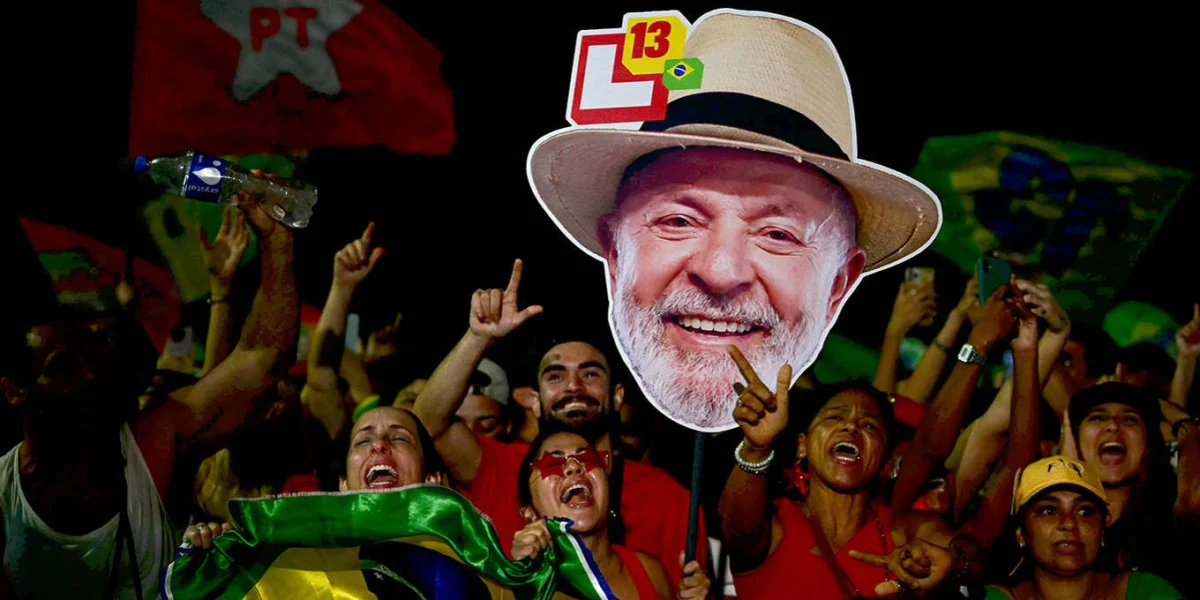
In a watershed moment for Latin America’s largest democracy, President Luiz Inácio Lula da Silva secured a historic re-election victory in October 2026, defying historical precedent and fierce opposition. Lula captured nearly 52% of the vote in a high-stakes presidential runoff against Flávio Bolsonaro, who finished closely behind with 48%.
The election marked a turning point in Brazilian political history: until this cycle, no presidential candidate in a runoff had ever successfully overturned a first-round deficit to win the presidency. The race galvanized the electorate, drawing over 128 million voters to the polls—an increase of nearly three million participants compared to the first round.
While the victory cements a renewed sense of democratic confidence across the nation, political analysts and civil society leaders emphasize that winning the election is only the first step. To secure long-term stability, Brazil’s leadership must match this democratic resilience with deep institutional and structural reforms, alongside a strategic willingness to build governing coalitions that stretch far beyond traditional leftist alliances. Drawing parallels from recent democratic resilience in countries like Hungary and Serbia, experts argue that Brazil’s path forward requires broad-based political consensus to safeguard democratic norms against ongoing populist polarization.
Chronology of the 2026 Electoral Cycle
The path to the October 2026 runoff was characterized by intense political maneuvering, shifting voter sentiment, and a polarized national dialogue that played out over several distinct phases:
- Early 2026: As the electoral calendar commenced, Brazil was already deeply divided. The political landscape was dominated by debates over economic recovery, inflation, environmental policy, and the ongoing legacy of the Bolsonaro administration. President Lula announced his bid for re-election, emphasizing social welfare, national unity, and the protection of democratic institutions.
- Mid-2026 (The Campaign Trail Intensifies): Flávio Bolsonaro emerged as the primary standard-bearer for the conservative and right-wing opposition, galvanizing a loyal base centered on fiscal conservatism, traditional values, and security concerns. Campaign rallies drew massive crowds across the country’s southeastern and southern strongholds, while Lula focused heavily on working-class neighborhoods and the populous Northeast.
- October 2026 (First Round): The initial round of voting laid bare the deep fractures within the Brazilian electorate. While Lula performed strongly, the first-round tally placed Flávio Bolsonaro in a surprisingly competitive position, setting the stage for an unprecedented runoff. Political pundits widely predicted an uphill battle for the incumbent, noting that historical trends heavily favored front-runners who maintained momentum from the first round.
- The Inter-Round Sprint (Mid-October 2026): Recognizing the existential stakes of the runoff, both campaigns engaged in a frantic consolidation of alliances. Lula’s camp pivoted toward moderate centrists, technocrats, and regional leaders who had previously remained non-committal. The strategy aimed to reframe the election not merely as a contest between left and right, but as a referendum on democratic governance, institutional stability, and international standing.
- October 27, 2026 (Runoff and Results): Voting centers across Brazil reported exceptionally high turnout. By late evening, the Superior Electoral Court (TSE) announced the official results: Lula had achieved an unprecedented comeback, securing roughly 52% of the valid votes to defeat Bolsonaro and claim a historic new mandate.
Supporting Data and Voter Turnout Metrics
The 2026 general election will be studied by political scientists for decades, largely due to the sheer scale of civic participation and the dynamics of the runoff shift.
- Total Electorate Participation: More than 128 million citizens cast their ballots in the decisive second round. This represented an increase of nearly three million voters compared to the first round, underscoring the high stakes perceived by the public.
- Vote Share Breakdown: President Lula secured approximately 52% of the total valid vote, translating to tens of millions of ballots. Flávio Bolsonaro captured a formidable 48%, reflecting a deeply polarized nation split almost evenly down ideological lines.
- The Comeback Metric: Historical data from Brazil’s return to democracy in the 1980s shows that no candidate trailing in the first round had ever won a presidential runoff. Lula’s reversal of this trend highlights a late-campaign surge driven by strategic coalition-building and effective mobilization in key swing regions.
- Comparative International Context: Observers pointing to global democratic erosion have noted that Brazil’s high voter turnout contrasts sharply with voter apathy observed in other major democracies. However, the close 52-48 margin mirrors the hyper-polarized political environments seen in Central and Eastern Europe, such as recent electoral contests in Hungary and Serbia, where opposition forces have had to navigate captured state media and entrenched populist machines.
Official Responses and International Reactions
The certification of the election results by Brazil’s Superior Electoral Court (TSE) drew immediate reactions from domestic stakeholders and the international community.
Domestic Leadership
President Lula addressed the nation from São Paulo shortly after the TSE confirmed his victory. In a speech emphasizing reconciliation, Lula stated that his administration would govern for all Brazilians, regardless of how they voted. He stressed that the victory belonged to democracy itself, calling for an end to toxic political polarization that threatens civic institutions.
Flávio Bolsonaro, speaking to supporters following the announcement of the final tally, acknowledged the closeness of the race while signaling that the conservative movement would maintain a rigorous, vigilant opposition in the National Congress. Bolsonaro emphasized that the nearly 48% vote share demonstrates a powerful mandate for conservative economic policies and traditional values, promising to hold the executive branch accountable.
International Community
World leaders were quick to dispatch congratulatory messages, emphasizing Brazil’s crucial role in global geopolitics, climate action, and regional stability.
- From the Americas and Europe: Leaders from major Western democracies praised the resilience of Brazil’s electoral systems, noting that the peaceful transfer of power and the smooth execution of the runoff reaffirm the strength of the nation’s democratic framework.
- Multilateral Bodies: Representatives from organizations monitoring the election commended the transparency and efficiency of the TSE, highlighting the security measures implemented to ensure a fair and verifiable vote count.
Implications for Brazil’s Future
While Lula’s victory is a monumental triumph for the incumbent and his supporters, the road ahead is fraught with complex governance challenges. The 52-48 split in the runoff serves as a stark reminder that Brazil remains a deeply divided nation. To translate this democratic win into enduring progress, several critical pathways must be navigated.
1. Institutional and Structural Reforms
Winning the presidency is insufficient to guarantee stability. Brazil’s political system is notoriously fragmented, requiring the executive branch to negotiate constantly with a diverse and often fractious National Congress. To enact meaningful change—ranging from tax reform and fiscal responsibility measures to environmental protection in the Amazon and anti-corruption frameworks—the government must pursue deep structural reforms that strengthen public administration and restore faith in state institutions.
2. Moving Beyond Left-Right Tribalism
The narrow margin of victory underscores that a purely partisan agenda will inevitably face paralyzing gridlock. Robert Muggah and Ilona Szabó de Carvalho argue that Lula and his allies must demonstrate a genuine willingness to build broad, cross-ideological coalitions. By incorporating moderate centrists, business leaders, and pragmatic regional politicians into the governing architecture, the administration can dilute the influence of extremist factions on both sides of the political spectrum.
3. Lessons from International Democratic Resilience
Looking abroad provides valuable context for Brazil’s current juncture. Recent political developments in countries like Hungary and Serbia illustrate the fragility of democratic norms when polarization hardens into systemic division. In those nations, democratic pushback succeeded only when disparate opposition groups managed to transcend ideological purity tests in favor of a united front centered on democratic fundamentals. Brazil has the opportunity to model a more resilient pluralism, provided its political leaders prioritize institutional integrity over short-term partisan gains.
4. Economic and Social Horizons
Ultimately, the longevity of Brazil’s renewed democratic confidence will depend on tangible material outcomes for its citizens. Addressing persistent wealth inequality, curbing inflation, ensuring public safety, and positioning Brazil as a reliable leader in the global green transition are paramount. If the administration can deliver sustainable economic growth alongside social equity, it may succeed in bridging the deep divides laid bare in the October 2026 election, securing a prosperous and stable future for the world’s fourth-largest democracy.