




CAMBRIDGE, Mass. / HAMPTON, N.H. — In a strategic move signaling a major evolution in how regional utilities prepare for climate change, artificial intelligence-powered grid planning platform Rhizome has entered into a three-year partnership with public utility service provider Unitil Corporation. Announced in late October, the collaboration will deploy advanced climate simulation and machine learning tools across Unitil’s electrical service territories in New Hampshire and Massachusetts.
The agreement brings together cutting-edge predictive software and a vital regional utility serving more than 215,000 customers across Maine, Massachusetts, and New Hampshire. By integrating Rhizome’s proprietary gridADAPT and gridFIRM platforms into a single software instance, Unitil aims to radically transform its capital allocation strategy, ensuring that infrastructure investments maximize grid resilience, protect vulnerable assets, and responsibly manage ratepayer funds amid mounting environmental pressures.
Main Facts: The Intersection of AI and Grid Modernization
The core of the partnership centers on the deployment of Rhizome’s machine-learning-driven modeling software to address multi-hazard, climate-driven risks. As New England weather patterns grow increasingly volatile—characterized by severe winter storms, coastal vulnerabilities, and a surprising rise in localized wildfire activity—traditional, historical-average planning models are proving insufficient.
- The Technology: Unitil will utilize Rhizome’s gridADAPT tool, which merges forward-looking climate hazard projections with granular operational performance data, alongside gridFIRM, which specifically targets long-term wildfire risk assessment.
- The Scope: The three-year implementation covers Unitil’s electrical service footprints across New Hampshire and Massachusetts, providing feeder-level resilience metrics.
- The Goal: To replace legacy planning frameworks with uniform, data-driven risk quantification. This enables Unitil to execute rigorous cost-benefit analyses, ensuring that every dollar spent on infrastructure upgrades delivers the maximum possible risk reduction per dollar invested.
- The Stakeholders: Rhizome, a fast-growing climate tech firm founded in 2023, supplies solutions to major energy operators globally, including National Grid, Avangrid, Fortis, Horizon Energy, and the Vermont Electric Cooperative. Unitil delivers electricity and natural gas to over a quarter-million residential and commercial customers throughout northern New England.
Chronology of an Emerging Partnership and Regional Threat
The convergence of AI technology and utility planning did not happen overnight; it is the culmination of years of escalating climate events across the Northeastern United States and the concurrent tightening of regulatory standards for capital expenditure (capex) approvals.
2021–2025: The Shift in New England’s Risk Profile
Historically, New England utilities focused their hazard mitigation primarily on heavy snowstorms, nor’easters, and coastal storm surges. However, the last half-decade has redefined regional weather risks:
- The New Hampshire Wildfire Threat: Although New England is rarely associated with wildfire seasons of Western proportions, New Hampshire recorded more than 504 wildfires between 2021 and late 2026. This trend was severely exacerbated when the state experienced its driest summer on record in 2025, creating unprecedented brush and forest fire hazards near electrical corridors.
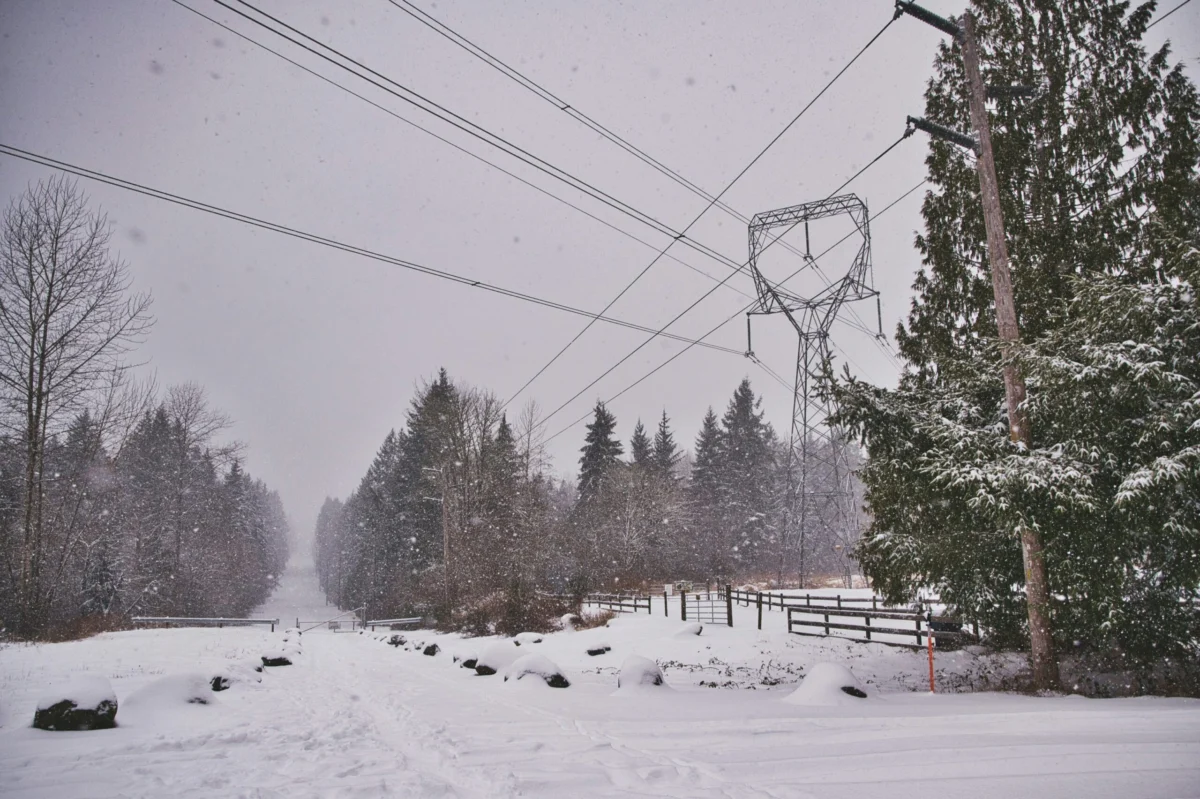
- Compound Disasters: Simultaneously, winters continue to deliver heavy, wet snow and ice loads that snap aging wooden utility poles and drop limbs across distribution lines, compounding stress on the grid.
2023: The Birth of Rhizome
Recognizing that climate change was outstripping the predictive capabilities of standard utility asset management tools, Mishal Thadani and co-founders launched Rhizome in 2023. The platform was designed to bridge the gap between complex climate science and practical utility engineering by synthesizing historical asset data with predictive AI modeling.

October 2026: The Strategic Agreement
Formalized as a three-year contract, the Unitil-Rhizome partnership represents a formal transition from reactive storm response to proactive, predictive grid hardening. Under the agreement, Unitil’s engineering, sustainability, and regulatory compliance teams gain unified access to advanced simulation dashboards capable of modeling complex scenarios down to the individual feeder level.
Supporting Data: The Economics and Realities of Modern Grid Investments
To understand the necessity of Rhizome’s platform, one must examine the severe financial and operational pressures facing modern utilities. Energy providers are caught in a complex trilemma: aging infrastructure, surging electricity demand (load growth) driven by electrification and data centers, and supply chain constraints that inflate the cost of replacement parts.
[Climate Hazards: Wildfires, Ice, Storms] + [Aging Infrastructure]
       │
       ▼
[Escalating Ratepayer Pressures & Strict Regulatory Scrutiny]
       │
       ▼
[Rhizome AI Platform: gridADAPT & gridFIRM]
       │
       ▼
[Defensible, High-ROI Capital Allocation & Feeder-Level Resilience]
Regulatory Scrutiny and Ratepayer Affordability
State public utility commissions (PUCs) are increasingly rigorous when reviewing utility rate cases and capital expenditure plans. Utilities can no longer simply propose broad hardening programs without granular, empirical justification. Because resilience investments are ultimately recovered from ratepayers through monthly utility bills, regulators demand rigorous cost-benefit analyses to prove that capital expenditures are both necessary and optimized.
Rhizome’s platform directly addresses this regulatory bottleneck by generating audit-ready documentation and evidence-backed metrics. By running thousands of climate simulations, the software calculates which specific grid segments—such as specific distribution lines in dry New Hampshire forests or coastal circuits in Maine and Massachusetts—pose the highest probability of catastrophic failure relative to the cost of hardening them.
Quantitative Risk Modeling
Using machine learning, the software evaluates metrics including:
- Asset Vulnerability: The age, material, and structural integrity of poles, transformers, and substations.
- Environmental Stressors: Wind speeds, soil moisture levels, historical freeze-thaw cycles, and localized drought indexes.
- Consequence of Failure: The number of customers downstream, critical infrastructure dependencies (such as hospitals and water treatment plants), and potential public safety hazards (such as wildfire ignition risks).
Official Responses and Executive Perspectives
Leadership from both companies have emphasized that the collaboration is not merely an IT upgrade, but a fundamental shift in corporate philosophy regarding risk management and sustainability reporting.

Mishal Thadani, Co-Founder and CEO of Rhizome
Highlighting the changing mindset of New England utilities, Mr. Thadani noted the broader regional transformation toward holistic risk assessment:
"New England has become a region where utilities are thinking holistically about the system risks they face today and tomorrow," Thadani assessed. "This partnership is the first step in taking a uniform approach to risk quantification across all hazards, then improving resilience and investment planning to keep their customers’ lights on and bills low."
Sara Sankowich, VP of Shared Services and Sustainability at Unitil
Speaking on behalf of the utility provider, Sara Sankowich underscored how the platform directly supports Unitil’s dual mandate of operational reliability and corporate accountability:
"We are excited to partner with Rhizome to better understand the climate risks facing our systems and prioritize investments that strengthen resilience," Sankowich stated. "This work will help us make informed, cost-effective decisions that benefit our customers for years to come."
By integrating these simulation tools, Unitil’s corporate and sustainability teams gain a singular, reliable source of truth for environmental, social, and governance (ESG) disclosures, as well as mandatory compliance reporting required by state and federal energy regulators.
Implications: The Future of Utility Planning Across North America
The three-year pact between Unitil and Rhizome carries significant implications for the wider energy sector, pointing toward several structural changes in how power grids will be designed and defended over the coming decades.

1. The Normalization of AI in Regulated Utilities
Traditionally, the utility sector has been conservative in adopting emerging software technologies due to strict reliability requirements and long asset lifecycles. However, the acceleration of climate change has forced an industry-wide pivot. The successful deployment of platforms like Rhizome by regional operators like Unitil normalizes AI as an indispensable engineering tool, paving the way for wider adoption across smaller and mid-sized municipal and investor-owned utilities.
2. Shifting from "Hardening Everything" to "Targeting Risk"
In the past, utilities often relied on blanket replacement cycles or reactive repairs following major weather events. AI-powered simulation shifts the paradigm to precision hardening. By identifying precise vulnerabilities down to the feeder level, utilities can deploy targeted solutions—such as undergrounding specific lines, installing covered conductors, or clearing high-risk vegetation—where they yield the highest safety dividend. This precision is vital for keeping electric bills manageable for consumers facing broad inflationary pressures.
3. Strengthening Regulatory and Public Trust
As the frequency of billion-dollar weather disasters rises, public trust in utility infrastructure is constantly tested. When power outages occur, regulators and consumers demand accountability. By utilizing transparent, machine-learning-verified risk models, utilities like Unitil can present clear, defensible justifications for their capital spending plans to state regulators, consumer advocates, and the public.
Conclusion
As climate volatility continues to challenge legacy energy infrastructure, partnerships like the one between Unitil and Rhizome offer a roadmap for the future. By merging advanced AI simulation with rigorous financial and operational analysis, regional utilities can build a more resilient, defensible, and cost-effective power grid capable of weathering the uncertainties of the 21st century.