Main Facts: Understanding the Critical Nature of Climate Control Failures
For homeowners, few things match the sinking feeling of walking into a freezing home in the dead of January or stepping into a sweltering, humid house in July, only to find the HVAC system completely dead. While routine maintenance can prevent the vast majority of mechanical failures, system components can and do fail without warning. When they do, the situation can rapidly escalate from an inconvenience to a genuine crisis.
An emergency HVAC service situation occurs when a heating or cooling system fails in a manner that directly threatens the safety, health, or property of the household. These crises rarely happen during convenient Monday-to-Friday business hours. Instead, they notoriously strike during extreme weather events—when heating and cooling equipment is pushed to its absolute limits.
For residents in North Ridgeville, OH, where weather patterns swing from freezing, sub-zero winter nights to suffocating, humid summer heatwaves, understanding the boundary between a routine malfunction and an emergency is vital. A system failure in this region isn’t just uncomfortable; under specific environmental conditions, it can become hazardous.
Chronology of an HVAC Failure: How a Small Issue Escalates into an Emergency
To better understand why prompt action is essential, it helps to examine the typical lifecycle of an unaddressed HVAC failure. Recognizing these stages can help homeowners intervene before a minor glitch cascades into a total system shutdown.
Stage 1: The Incipient Problem (Invisibility)
At the outset, a part begins to wear down—perhaps a blower motor capacitor is slowly degrading, or a microscopic refrigerant leak is developing. There are usually no outward symptoms, or the signs are so subtle (a slight drop in efficiency or a minor spike in the monthly utility bill) that they go unnoticed.
Stage 2: The Warning Signs (The Prompt for Action)
As wear and tear continues, the system begins to exhibit distinct symptoms. Homeowners might notice unusual noises—such as a faint clicking, a low hum, or a minor rattle. Airflow may become uneven between rooms. In winter, the furnace might take slightly longer to reach the thermostat setting; in summer, the AC might run continuous cycles without thoroughly cooling the home. This is the urgent, non-emergency repair window. Addressing the issue here minimizes repair costs and prevents after-hours service fees.
Stage 3: The Critical Threshold (The Emergency Trigger)
If ignored, stressed components fail completely. The degrading capacitor burns out entirely, a heat exchanger cracks under thermal stress, or frozen coils lock up the compressor. The system shuts down entirely or begins exhibiting dangerous symptoms (such as electrical burning smells or gas odors). Because this failure often coincides with peak weather extremes—when the equipment is working hardest—indoor temperatures plummet or skyrocket within hours.
Stage 4: The Crisis and Resolution
At this stage, health and property are at risk, necessitating immediate emergency intervention. Professional technicians arrive, diagnose the acute failure, secure the property, and perform emergency repairs or replacements to restore safe operating parameters.
Supporting Data: The Local Climate Challenge in North Ridgeville, OH
Geography and climate dictate the severity of HVAC failures. North Ridgeville experiences a humid continental climate, characterized by distinct and often severe seasonal extremes.
- Winter Realities: Average winter lows regularly drop well below freezing, with overnight temperatures frequently plunging into the teens or single digits. During polar vortex events, temperatures can drop below zero. In these conditions, a residential heating failure causes indoor temperatures to drop rapidly—often matching outdoor ambient temperatures within 12 to 24 hours. This creates a severe risk of frozen and burst water pipes, which can cause catastrophic structural and water damage to a home.
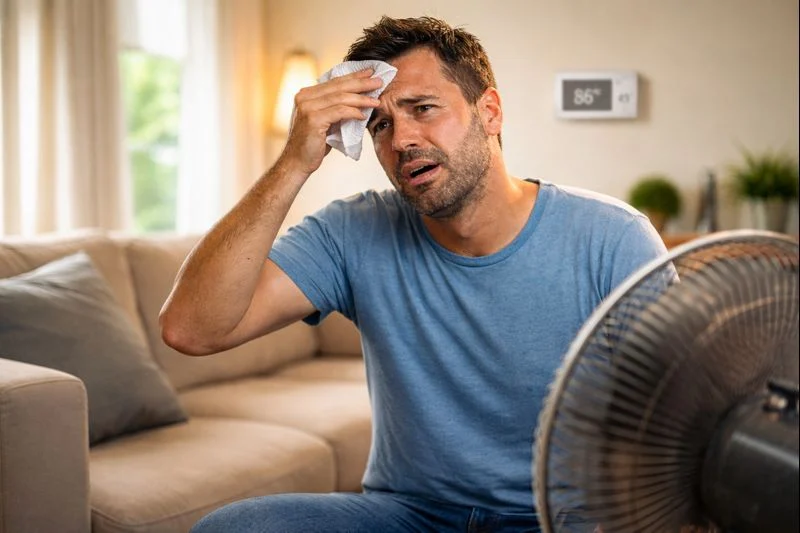
- Summer Realities: Summers in northern Ohio are marked by high temperatures paired with dense humidity. Heat index values can climb past 90°F to 100°F. When an air conditioner fails under these conditions, indoor heat indexes rise even faster due to trapped humidity. This creates dangerous living conditions, particularly for vulnerable populations such as infants, the elderly, and individuals with chronic respiratory or cardiovascular conditions.
According to public health and safety data, prolonged exposure to extreme indoor heat or cold is a leading cause of weather-related illness and hospitalizations, proving that functional HVAC systems are not merely luxury items, but essential home safety infrastructure.
Official Guidelines and Safety Standards: What Qualifies as an Emergency?
Industry standards and safety organizations categorize HVAC issues based on the immediate risk they pose to human life, health, and structural integrity. Homeowners must be able to differentiate between true emergencies and issues that can wait until standard business hours.
1. Absolute Emergencies (Immediate Action Required)
- Total Heating Loss in Freezing Weather: If your furnace stops functioning while outdoor temperatures are below freezing, it is an immediate emergency. Beyond comfort, the risk of frozen plumbing is high. Furthermore, vulnerable household members can suffer from hypothermia if indoor temperatures drop too low.
- Gas Smells or Carbon Monoxide Alarms: Any smell of natural gas (resembling rotten eggs) or the triggering of a carbon monoxide (CO) detector requires immediate action. Carbon monoxide is a colorless, odorless, and tasteless gas produced by incomplete combustion in faulty heating equipment. Exposure can lead to unconsciousness and death.
- Electrical Burning Smells or Smoke: If your furnace or air conditioner emits a sharp burning odor, visible smoke, or sparks, turn off the system at the breaker panel immediately. These signs point to electrical shorts, failing wiring, or overheating motors that can easily spark a devastating house fire.
- Total AC Failure During Extreme Heatwaves: When ambient outdoor temperatures and humidity reach dangerous heights, a broken air conditioner is a health hazard. For households with elderly residents, infants, or medically vulnerable individuals, a failure of climate control can quickly lead to heat exhaustion or heatstroke.
2. Urgent, But Non-Emergency Issues (Can Usually Wait for Normal Hours)
- Uneven Cooling or Heating: If certain rooms are slightly warmer or cooler than others, but the system is still functional, it is an urgent repair, not an emergency.
- Minor Water Leaks: A slow drip from the condensate pan is problematic and requires attention to prevent mold growth, but if it is contained and not threatening electrical components, it can typically wait until regular operating hours.
- Strange Noises Without System Failure: Rattling or humming noises should be inspected soon, but if the system is still heating or cooling effectively, it generally does not warrant emergency after-hours dispatch fees.
Implications of Neglect: Why DIY Fixes and Delayed Responses Fail
When an HVAC system breaks down during a crisis, panic often sets in. Unfortunately, homeowners under stress frequently turn to DIY remedies that can exacerbate the problem, void warranties, or create severe safety hazards.
The Dangers of DIY Interventions
- Electrical Tampering: Attempting to bypass control boards, hard-wire contactors, or mess with internal wiring without professional training risks severe electrocution or permanent damage to expensive system components.
- Improper Refrigerant Handling: Trying to recharge an air conditioner with DIY refrigerant kits without diagnosing the root leak violates environmental laws (EPA regulations) and can easily ruin the compressor through over-pressurization.
- Furnace Cover Removal: Attempting to manually light a modern electronic ignition furnace or tamper with gas valves creates an explosion and fire hazard.
The Financial and Structural Costs of Waiting
Delaying professional service—whether out of hope that the system will "fix itself" or dread of repair bills—invariably costs more in the long run. A minor refrigerant leak left unaddressed forces the compressor to work twice as hard, leading to a complete compressor burnout. A small cracked heat exchanger left unmonitored leaks deadly carbon monoxide into the living space. Prompt professional intervention is always the most economical and safest path forward.
Professional Response: How Emergency HVAC Services Operate
When a North Ridgeville homeowner contacts a licensed provider like Climate-Tech for 24/7 emergency HVAC service, a standardized, safety-first protocol is deployed to resolve the crisis quickly and efficiently:
- Immediate Triage Over the Phone: Dispatchers gather critical details about the nature of the failure—asking about strange odors, noises, total system shutdowns, or safety alerts (like CO alarms)—to determine the urgency level and brief the technician.
- Rapid Dispatch: Mobile service units equipped with common diagnostic tools and replacement parts are routed to the property. Priority is often given to vulnerable households and maintenance plan members.
- Comprehensive Safety and Diagnostic Sweep: Upon arrival, technicians immediately check for gas leaks, electrical hazards, and carbon monoxide levels before diagnosing the root mechanical failure.
- Transparent Repair or Mitigation: The technician presents clear, upfront options for repairing the immediate issue, stabilizing the environment, or—in cases of catastrophic failure—discussing replacement options.
- System Restoration and Testing: Once repairs are completed, the system undergoes rigorous testing to ensure safe, efficient operation before the technician leaves the premises.
Prevention: The Ultimate Shield Against HVAC Emergencies
While knowing how to handle an emergency is essential, the best strategy is stopping emergencies before they occur. Routine preventative maintenance remains the single most effective tool for homeowners.
Regular tune-ups—typically performed bi-annually (furnace check in the fall, AC check in the spring)—allow technicians to catch worn parts, clean dirty coils, check electrical connections, and test safety switches before extreme weather hits. Homeowners enrolled in structured maintenance plans experience significantly fewer breakdowns, enjoy extended equipment lifespans, and receive priority dispatch when unexpected crises do occur.
Conclusion: Prioritize Safety and Comfort
HVAC emergencies are stressful, disruptive, and potentially dangerous. Whether facing a freezing winter night or a scorching summer afternoon in North Ridgeville, OH, recognizing the difference between a minor glitch and a true emergency protects your property, your budget, and most importantly, the health and safety of your family.
When your system fails and safety is on the line, do not wait. Climate-Tech offers reliable, 24/7 emergency HVAC service in North Ridgeville, OH, standing ready to restore your home environment at any hour of the day or night.
Your Comfort. Our Commitment.