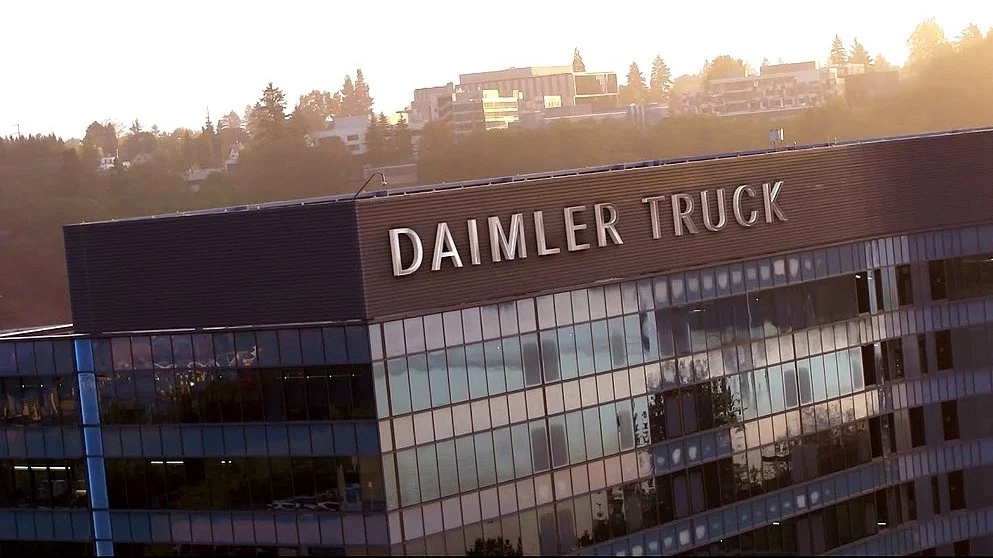
PORTLAND, Ore. — Daimler Truck North America (DTNA), one of the most prominent and influential commercial vehicle manufacturers in the world, has found itself at the center of an extraordinary internal fraud scandal. The company has filed a civil lawsuit in Oregon against a former employee and his wife, alleging that the couple siphoned nearly $3.8 million in corporate funds over a five-year period to finance a lavish lifestyle complete with European vacations, luxury home upgrades, and everyday personal expenses.
The lawsuit, which was officially filed on October 12 in the Washington County Circuit Court in Oregon (Case No. 26CV57242), names Terry S. Watson—a former worker in Daimler’s test fleet operations—and his wife, Krystal Watson, as defendants. While DTNA claims the direct embezzlement totaled roughly $3.8 million, the commercial vehicle manufacturing giant is pursuing approximately $6.6 million in total damages, factoring in penalties, legal fees, and the broader financial fallout of the alleged scheme.
The unfolding legal battle has sent shockwaves through the Pacific Northwest corporate community and raised critical questions regarding the internal financial controls and expense-reporting oversight mechanisms utilized by major industrial heavyweights.
Main Facts of the Case
According to court filings and reports from regional media outlets including The Oregonian/OregonLive and KOIN, the alleged financial misconduct went undetected for half a decade. Terry Watson was employed within Daimler’s test fleet operations division in Portland, Oregon, beginning in 2016. His tenure abruptly ended in November 2025 when internal monitors flagged suspicious financial activities tied to his corporate accounts.
The core of the lawsuit centers on a sophisticated misuse of corporate credit cards, company fuel cards, and falsified expense reports. DTNA alleges that Terry Watson systematically bypassed internal spending thresholds and approval processes by coding personal expenditures as legitimate business expenses related to test fleet operations.
Rather than funding vehicle testing, component research, or logistical evaluations, the corporate funds were allegedly diverted toward:
- Exotic and Family Vacations: Extensive travel, including trips to Europe, Las Vegas, and family excursions to Legoland.
- Home Improvements: Substantial residential construction, landscaping, and household maintenance services performed at the couple’s property in Hillsboro, Oregon.
- Daily Luxuries: Child care services, restaurant deliveries via platforms like Uber Eats, and everyday retail purchases.
- Fuel Misuse: Unauthorized personal use of company-issued fuel cards over multiple years.
Krystal Watson is named as a co-defendant for her alleged active participation in the scheme. Investigators claim she routinely utilized corporate credit cards for unauthorized personal shopping and supplied receipts directly to her husband, who then incorporated them into fraudulent expense reports submitted to Daimler’s accounting department.
Chronology of Events
To understand how an alleged multi-million-dollar fraud could persist for five years within a multi-national corporation, legal experts and industry observers have looked closely at the timeline of Terry Watson’s employment and the eventual unraveling of the operation.
- 2016: Terry S. Watson is hired by Daimler Truck North America, eventually securing a position within the company’s test fleet operations based out of Portland, Oregon.
- 2016 – 2025 (The Embezzlement Window): Over the course of nearly a decade—specifically concentrated into a five-year window of peak activity according to the lawsuit—the Watsons allegedly establish a routine of charging personal travel, home renovations, and daily lifestyle costs to corporate accounts. Contractors are allegedly directed to bill Daimler directly for construction and landscaping projects executed at the couple’s Hillsboro residence.
- November 2025: Internal financial audits and oversight mechanisms at DTNA flag anomalies and suspicious transaction histories linked to Watson’s accounts. Following a swift internal review, Watson is terminated from his position in test fleet operations.
- October 12, 2026: Following a thorough forensic accounting investigation, DTNA officially files a civil lawsuit in the Washington County Circuit Court in Oregon, seeking $6.6 million in total damages from Terry and Krystal Watson.
- Late 2026: As the case moves through the Oregon court system, legal teams analyze the breadth of the financial records, and industry watchers begin dissecting the broader corporate governance implications.
Supporting Data and Corporate Context
Daimler Truck North America is an industrial titan. Headquartered in Portland, Oregon, DTNA is a market leader in the commercial vehicle space, responsible for manufacturing heavy-duty and medium-duty trucks, commercial vehicles, and school buses under globally recognized legacy brands such as Freightliner, Western Star, and Thomas Built Buses.
Because of its scale, DTNA manages massive operational budgets, extensive research and development facilities, and large-scale test fleets that put millions of miles on prototype vehicles annually. Test fleet operations inherently require fluid purchasing power—ranging from field fuel purchases and immediate maintenance to travel expenses for engineers monitoring vehicles on endurance runs.
It was precisely this operational necessity—the requirement for test fleet personnel to possess corporate purchasing flexibility—that Terry Watson allegedly exploited. By blending personal expenses into the vast operational expenditures of a busy test fleet unit, the fraudulent transactions allegedly managed to evade surface-level scrutiny until forensic reviews exposed the pattern.
The $3.8 million direct loss, coupled with the $6.6 million in total damages sought by Daimler, represents a significant sum, even for a corporation of DTNA’s magnitude. It underscores the reality that corporate fraud often bypasses traditional checks not through sheer sophistication, but by mimicking the complex, high-volume transactions typical of large industrial supply chains and R&D departments.
Official Responses and Legal Status
As of press time, the civil case remains actively open in the Washington County Circuit Court. Legal representatives for Daimler Truck North America have maintained a strict posture, utilizing the court system to recover the lost funds and hold the former employees accountable.
Independent news organizations, including FreightWaves, have formally requested copies of the original complaint and supporting exhibits from the Washington County court clerk to verify the exact mechanics of the fraud outlined in the civil filings. While published reports from regional investigative journalists provide detailed accounts of the allegations regarding European trips, contractor invoices routed to the Hillsboro home, and falsified receipts, the formal legal defenses of Terry and Krystal Watson are expected to unfold as the litigation proceeds.
Because this is currently a civil proceeding rather than a federal criminal indictment, formal criminal charges by state or federal prosecutors have not been publicly announced, though civil fraud cases of this magnitude frequently attract the attention of regulatory and law enforcement bodies.
Broader Industry Implications
Beyond the courtroom drama in Oregon, the Daimler embezzlement case carries profound ripple effects for the commercial trucking and manufacturing sectors.
1. Re-Evaluating Internal Financial Controls
For logistics, manufacturing, and transport firms, the headline serves as a stark reminder of the vulnerabilities inherent in corporate expense management. Companies managing sprawling test fleets, distributed field offices, and remote operations must frequently balance operational agility against financial oversight. When employees are trusted with corporate credit cards and fuel cards to facilitate fast-paced field research, the window for abuse widens if approval hierarchies lack multi-layered verification.
2. The Cost of Oversight Failures
While $3.8 million (or the broader $6.6 million in damages sought) is a fraction of Daimler’s bottom line, the reputational and administrative costs are tangible. Incidents like these force executive boards and chief financial officers across the freight technology and manufacturing landscape to mandate tighter audits, restrict discretionary corporate card limits, and implement automated AI-driven anomaly detection software to catch irregular spending within months rather than years.
3. Trust in R&D and Test Fleet Environments
Test fleet operations are the crucible where the future of commercial trucking—including electric trucks, autonomous vehicle integrations, and advanced diesel platforms—is tested. When internal corruption compromises an R&D support division, it strains departmental morale and redirects executive attention away from innovation and toward damage control.
As the legal proceedings in Washington County continue to develop, Daimler Truck North America’s pursuit of the Watsons will remain a closely watched bellwether for corporate accountability, internal security, and the relentless enforcement of financial integrity within the heavy-duty manufacturing sector.