By Tech-Clarity Analyst Review
1. Main Facts: The Autonomous Horizon
The supply chain technology landscape is undergoing a structural transformation, shifting away from rigid, legacy planning systems toward continuous, context-aware decision engines. This paradigm was on full display at the o9 Solutions aim10x 2026 conference in Chicago. Drawing over 500 global customers, implementation partners, and market analysts, the landmark event underscored o9’s rapid expansion over the past decade since the 2014 launch of its flagship Digital Brain Platform.
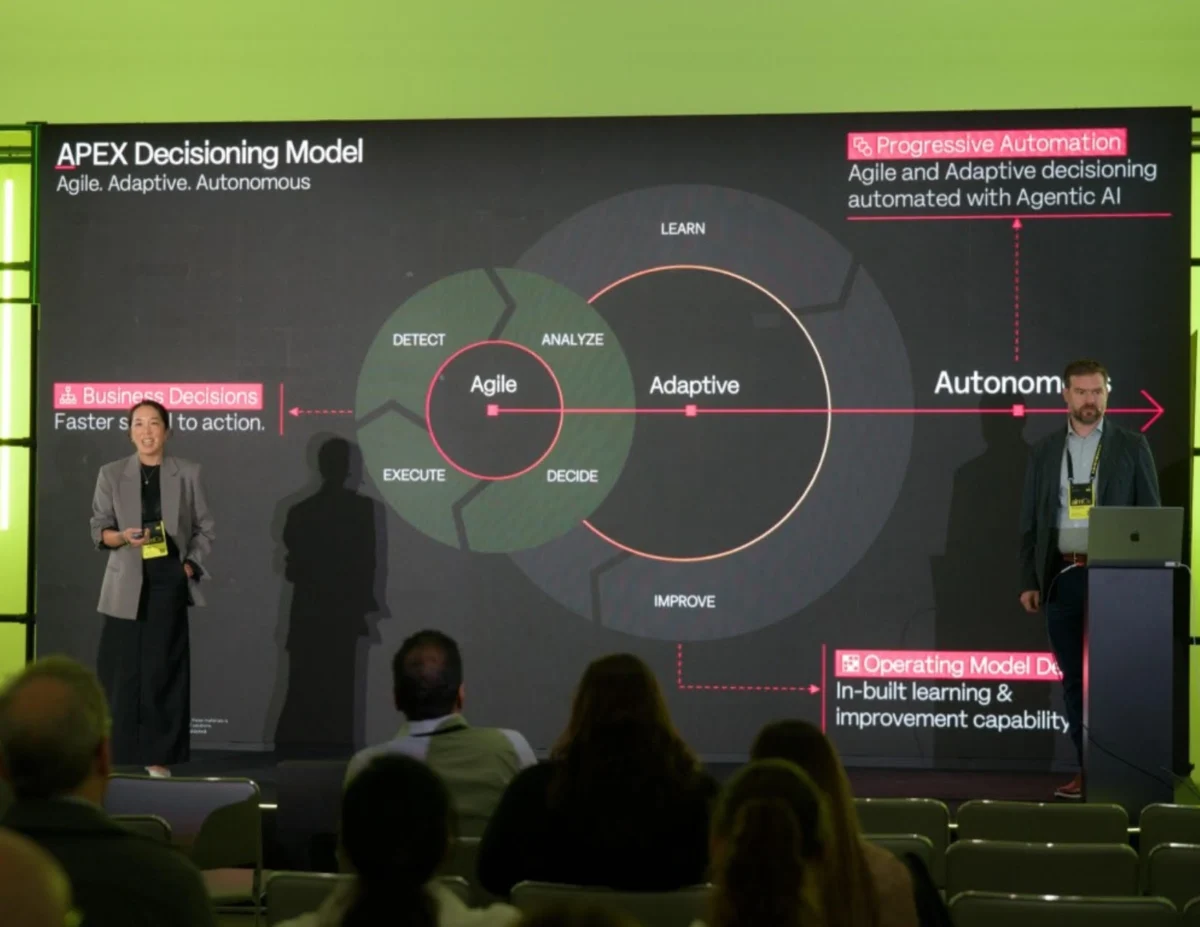
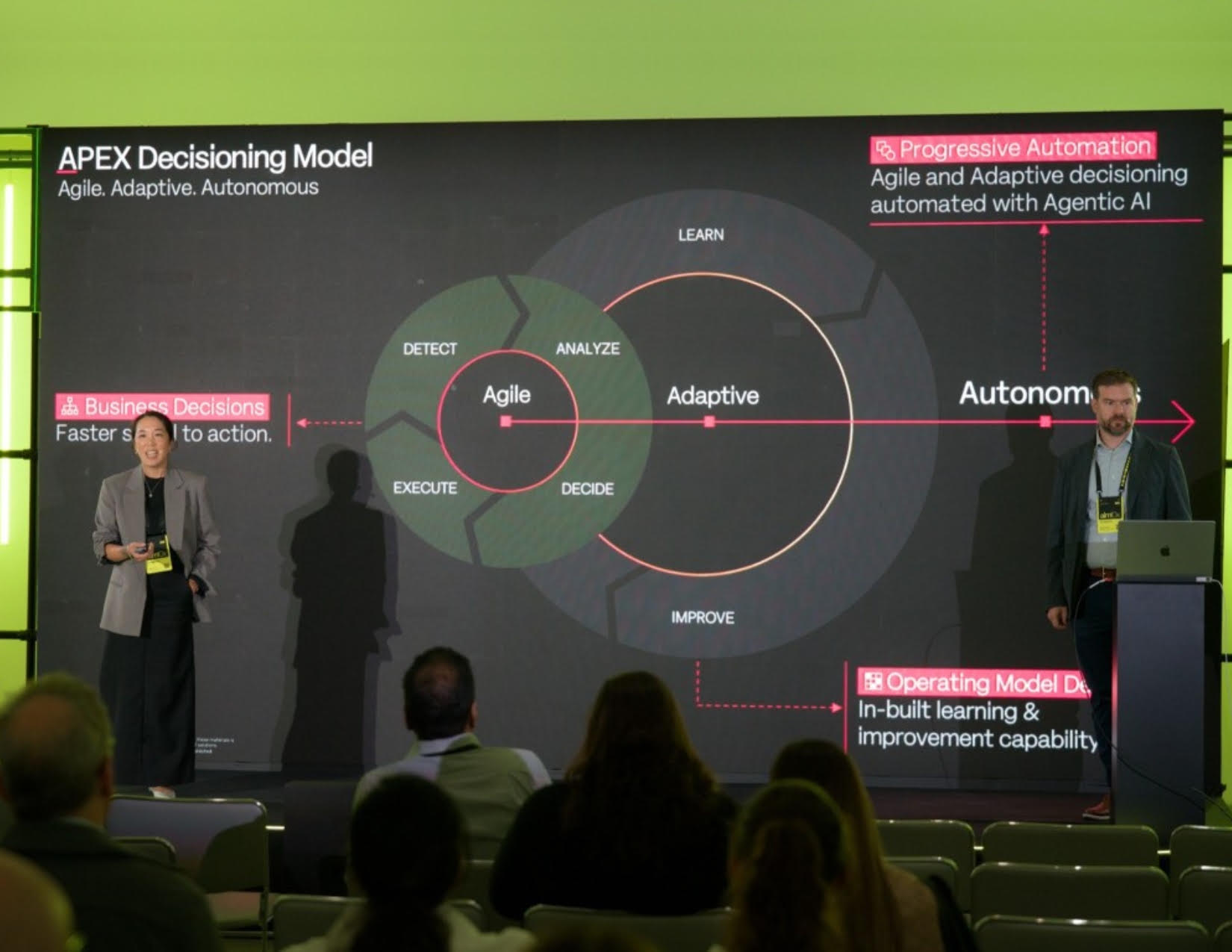
At the core of this year’s conference was the unveiling of o9’s APEX Decisioning Model—an enterprise framework engineered around three pillars: Agile, Adaptive, and Autonomous decision-making. Bolstered by newly appointed Chief Technology Officer Dr. Ashwin Rao’s Neuro-symbolic AI architecture, o9 aims to bridge the gap between broad language model intelligence and deterministic enterprise constraints.
By marrying its foundational Enterprise Knowledge Graph (EKG) with neural-symbolic reasoning and agentic AI capabilities like the Post Game Analyzer (PGA), o9 is redefining what it means to run an autonomous supply chain. Yet, as industry observers note, while the vision is technologically groundbreaking, realizing fully autonomous enterprise decision-making will require organizations to surmount deeply entrenched hurdles in data governance, cultural readiness, and cross-functional visibility.
2. Chronology: The Evolution of o9’s Digital Brain
To understand the weight of the announcements at aim10x 2026, it is necessary to trace o9 Solutions’ trajectory over the last decade:
- 2014: o9 Solutions officially launches the Digital Brain Platform, introducing an integrated, data-driven approach to planning that challenges traditional, siloed supply chain software.
- 2014–2025: Over an 11-year growth period, o9 scales its customer base dramatically, forging deep alliances with global system integrators (SIs) and expanding its functional scope from basic demand forecasting to end-to-end Integrated Business Planning (IBP) and Manufacturing Resource Planning (MRP).
- Late 2025 / Early 2026: o9 promotes Dr. Ashwin Rao to Chief Technology Officer, signaling an increased strategic emphasis on applied AI, mathematical modeling, and decision-making under uncertainty. Concurrently, early adopters like Hormel Foods and wearable tech pioneer WHOOP successfully deploy expansive capabilities on the Digital Brain Platform.
- October 2026 (aim10x Chicago): o9 hosts its flagship analyst and customer conference. Leadership introduces the APEX Decisioning Model, the Neuro-symbolic AI architecture, the Post Game Analyzer (PGA) tool, and the revamped Partner Pulse implementation ecosystem.
3. Supporting Data & Technical Architecture
The technological breakthroughs driving o9’s 2026 roadmap are rooted in a sophisticated convergence of data science, semantic modeling, and machine learning.
The APEX Decisioning Model
The framework introduced by CEO and co-founder Chakri Gottemukkala relies on three distinct operational gears:
- Agile: The established capability within the Digital Brain Platform that detects deviations or disruptions from plan, analyzes downstream impacts, formulates optimal responses, and executes operational decisions.
- Adaptive: A learn-and-improve feedback loop. Using advanced AI techniques, the system evaluates past outcomes to dynamically refine corporate policies, operational guardrails, and planning logic over time.
- Autonomous: The ultimate frontier. Designed to manage tens of thousands of routine and complex supply chain decisions daily, the autonomous tier leverages agent-assisted planning to model scenarios, weigh alternatives, and execute decisions without human friction.
Neuro-symbolic AI and the Enterprise Knowledge Graph (EKG)
Addressing the market’s hunger for semantic enterprise foundations, CTO Dr. Ashwin Rao detailed how o9 combines neural networks with symbolic logic.
- Neural AI: Provides pattern recognition, natural language processing, and broad predictive intelligence.
- Symbolic Logic: Enforces strict enterprise rules, operational constraints, business policies, and mathematical boundaries.
- The EKG Layer: Serving as the bedrock of this architecture, o9’s Enterprise Knowledge Graph captures business, operating, and decision models.
According to o9 leadership, the long-term vision involves constructing a comprehensive library of semantic industry templates. Organizations across retail, CPG, high-tech, and manufacturing will be able to plug pre-built, reusable governance frameworks and decision models directly into their tech stacks, drastically accelerating deployment times.
4. Official Responses & Industry Perspectives
Leadership Insights
During one-on-one dialogues at aim10x, CEO Chakri Gottemukkala emphasized that o9’s architecture was intentionally designed to extend far beyond the supply chain into broader enterprise domains. By establishing a universal semantic layer via the EKG, o9 is positioning itself as an enterprise-wide decision platform.

The promotion of Dr. Ashwin Rao to CTO was universally praised by analysts as a masterstroke. Grounded in applied mathematics and AI, Rao’s leadership ensures that o9’s product roadmap will remain tightly tethered to rigorous analytical problem-solving rather than fleeting technology trends.
Customer Validation: Hormel and WHOOP
Enterprise adoption stories provided real-world validation for o9’s theoretical frameworks:
- Hormel Foods: Having deployed core capabilities on the Digital Brain Platform, Hormel stressed that digital transformation hinges on the presence of "functional champions"—influential leaders embedded within the business who possess both end-user trust and executive clout to mitigate friction and secure broad adoption.
- WHOOP: The wearable tech innovator expanded rapidly into an end-to-end, decision-focused domain spanning IBP to MRP. WHOOP’s core philosophy reinforced the notion that software is merely a supporting instrument designed to extract maximum value from underlying human and process transformations, rather than a magic bullet in isolation.
The Analyst Assessment of Post Game Analyzer (PGA)
A primary talking point at the conference was the Post Game Analyzer (PGA), marketed as an agentic AI tool to evaluate divergence between plans and real-world execution, uncover value leakage, and prioritize change initiatives.
Analyst reviews frame PGA as a powerful, bounded-domain tool—specifically, an AI-assisted root-cause analysis engine endowed with agentic characteristics. While it excels at investigating and explaining anomalies, it operates safely within guardrails rather than executing rogue actions across disparate enterprise systems. Prospective buyers are encouraged to evaluate which external data pipelines PGA can ingest and whether its outputs remain advisory or direct-actionable.
5. Strategic Implications for the Supply Chain Market
The announcements made at aim10x 2026 carry sweeping implications for software buyers, implementation partners, and the broader enterprise technology consulting ecosystem.

Rapid Mobilization and Time to Value
Historically, supply chain planning implementations have been plagued by protracted blueprinting phases, extensive custom builds, and creeping project scopes. o9 has actively confronted this friction by streamlining critical-path activities and deploying internal AI agents to handle raw data ingestion and quality analysis. By compressing deployment timelines, o9 is directly addressing buyer demands for faster time to value.
Transforming the SI Ecosystem: Partner Pulse
To scale deployments without sacrificing quality, o9 unveiled its updated Partner Pulse partner ecosystem strategy. Working extensively with global system integrators (SIs) like IBM and EFESO, o9 is tying program benefits and tier progression directly to compliance and successful customer outcomes.
This model serves as a vital market forcing function. As software automation and AI reduce the necessity for massive armies of implementation consultants, o9’s approach pushes traditional SIs to fundamentally re-engineer their operating models. Consultancies can no longer rely on billable hours spent wrestling with legacy blueprints; instead, they must add strategic value by orchestrating o9’s pre-built semantic models to drive measurable business outcomes.
The Road Ahead
The o9 aim10x 2026 conference demonstrated that the company has successfully transitioned from an ambitious disruptor to an entrenched enterprise software powerhouse. For supply chain leaders, the journey toward fully autonomous decision-making remains a steep mountain to climb—demanding rigorous data governance, cultural change management, and organizational alignment. However, with a robust neuro-symbolic technical foundation, accelerated implementation pathways, and a maturing partner ecosystem, o9 Solutions has established a clear blueprint for the future of autonomous enterprise planning.