





October 26, 2026
By Mary Bailey
Main Facts
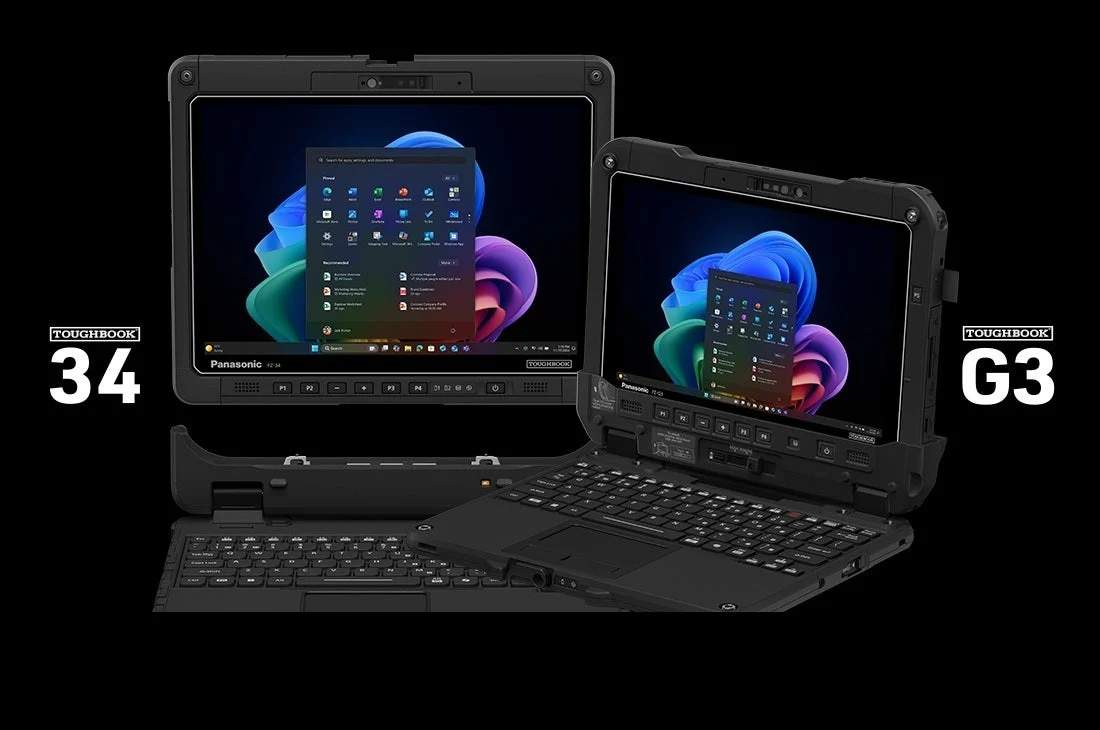
Panasonic Connect North America has officially announced the launch of its next-generation mobile computing solutions: the TOUGHBOOK 34 and the TOUGHBOOK G3 2-in-1 mobile devices. Engineered specifically for mission-critical workers operating in demanding sectors—such as utilities, chemical processing plants, field services, public safety, and warehouse distribution—these new ruggedized terminals are designed to bridge the gap between heavy-duty physical endurance and advanced digital capability.
Both devices are powered by high-performance Intel Core Ultra processors, delivering built-in, AI-ready performance and edge computing capabilities without adding undue complexity to corporate IT infrastructure. A standout feature of this release is Panasonic Connect’s industry-leading software integration: the TOUGHBOOK 34 is certified to run Red Hat Device Edge (RHEL), building upon Panasonic’s status as the first rugged device manufacturer to achieve this certification, while the TOUGHBOOK G3 is actively undergoing the same rigorous certification process.
Available with comprehensive security and deployment suites—including the proprietary TOUGHBOOK Total Defense package—the TOUGHBOOK 34 and G3 share core technological capabilities across two distinct physical form factors. This design strategy allows enterprise and industrial organizations to deploy uniform processing power tailored to diverse operational roles, environmental constraints, and workflow requirements.
Chronology
The introduction of the TOUGHBOOK 34 and G3 is the culmination of years of targeted evolution in rugged mobile computing, reflecting how industrial digital transformation has shifted over time:
- The Foundation of Rugged Computing: For decades, rugged laptops and tablets were evaluated almost exclusively on their physical durability—their ability to withstand drops, extreme temperatures, moisture, and dust. Processing power and software flexibility were frequently compromised to ensure physical survival in the field.
- The Edge-Computing Shift: As industrial Internet of Things (IoT) sensors, predictive maintenance algorithms, and automated asset tracking saturated industries like utilities and chemical manufacturing, field workers required more than just durable hardware; they needed true computing nodes at the edge.
- The Red Hat Milestone: Panasonic Connect achieved a breakthrough by becoming the first rugged device manufacturer to secure Red Hat Device Edge certification, establishing a secure, scalable, and enterprise-standard operating system foundation for field-deployed hardware.
- October 26, 2026 – Global Launch: Panasonic Connect formally unveils the TOUGHBOOK 34 (featuring an expanded 12.4-inch display and modular xPAK options) and the TOUGHBOOK G3 (featuring a streamlined, lightweight 10.1-inch form factor). By standardizing on Intel Core Ultra processors and offering shared internal capabilities across both designs, Panasonic provides IT departments with a unified ecosystem for mission-critical field deployment.
Supporting Data & Technical Specifications
To understand the true utility of the TOUGHBOOK 34 and TOUGHBOOK G3 in high-stakes environments like chemical engineering facilities and electrical grids, a granular look at their technical specifications is required:
TOUGHBOOK 34: Expanded Workspace and Modular Versatility
- Display: Expanded 12.4-inch display, offering maximized screen real estate for data-dense workflows, schematics, and complex information dashboards while maintaining exceptional field portability.
- Deployment Versatility: Engineered to transition seamlessly between inside-vehicle docks, permanent command centers, and open-air industrial sites.
- Modular Expansion: Includes four distinct modular expansion areas, featuring two user-replaceable xPAK areas to adapt inputs, outputs, and hardware capabilities dynamically.
- Power Management: Offers an optional dual hot-swappable battery configuration, allowing field crews to swap power sources on the fly without shutting down the system or losing critical operational data.
- Interface & Usability: Features an advanced auto-detect touchscreen that automatically differentiates between bare fingers, heavy-duty work gloves, and active digitizer pens.
TOUGHBOOK G3: Compact Portability for Space-Constrained Roles
- Form Factor: Compact 10.1-inch 2-in-1 layout built into a noticeably lighter and thinner chassis than previous generations, drastically reducing fatigue for highly mobile workers.
- Target Environments: Ideal for space-constrained workspaces, such as cramped public safety vehicles, field biologists carrying equipment over long distances, and warehouse logisticians managing rapid inventory scans.
- Customization: Equipped with two expansion areas featuring configurable I/O options.
- Battery Options: Offers three distinct battery capacity choices, enabling organizations to balance device weight against runtime requirements based on specific shift lengths.
Shared Rugged & Connectivity Performance
- Processor Architecture: Intel Core Ultra processors providing dedicated neural processing unit (NPU) capabilities for local AI inference and advanced diagnostics.
- Connectivity: Robust support for next-generation communication protocols, including 5G, CBRS (Citizens Broadband Radio Service), and B106 private cellular networks, ensuring uninterrupted communication during emergency outages or in remote industrial plants.
- Environmental Resilience: Standard IP65-rated ingress protection against dust and water jets, high-nit, sunlight-readable displays for clear viewing under direct outdoor glare, and digitizer pen support across both units.
- Operating System & Security: Native compatibility with Red Hat Device Edge (RHEL) for the TOUGHBOOK 34 (and pending for the TOUGHBOOK G3), complemented by TOUGHBOOK Total Defense for out-of-the-box compliance and data protection.
Official Responses and Industry Context
Industry analysts and leadership at Panasonic Connect emphasize that these devices arrive at a critical inflection point for digital transformation in essential industries. As infrastructure ages and technical labor shortages place a premium on workforce efficiency, mobile technology must actively reduce cognitive and operational friction.
"As digital transformation reshapes essential industries, intelligent and reliable mobile technology is no longer a luxury; it is the backbone of operational continuity," notes product development leadership at Panasonic Connect North America, headquartered in Newark, N.J. "Field technicians, utility operators, and public safety personnel cannot afford equipment that fails under stress or requires complicated IT interventions in the middle of an emergency response."

By integrating Intel’s Core Ultra processors and achieving Red Hat Device Edge certification, Panasonic is addressing a long-standing pain point for enterprise IT departments: the friction between deploying specialized rugged hardware and maintaining a standardized, secure enterprise software pipeline.
"Our goal with the TOUGHBOOK 34 and G3 was to eliminate compromise," company representatives explained during the launch rollout. "Organizations no longer have to choose between a large screen and a portable chassis, or between enterprise-grade Linux/AI capabilities and physical ruggedness. By building these two distinct form factors on a shared technological core, we give IT teams the flexibility to equip every worker—from the plant floor technician to the remote substation inspector—with the exact tool they need, backed by a unified management and security framework."
Implications for Utilities, Field Services, and Chemical Engineering
The introduction of the TOUGHBOOK 34 and TOUGHBOOK G3 carries significant operational and financial implications across several high-consequence sectors:
1. Streamlining Utilities and Field Services
In the utilities and energy sectors, managing complex asset networks requires rapid data collection and accurate work order execution. The new TOUGHBOOK devices transform how technicians handle routine and emergency tasks:
- Work Order Management & Inspections: Field crews can access live piping diagrams, electrical schematics, and historical maintenance logs directly on the shop floor or atop a remote utility pole, utilizing sunlight-readable screens and glove-friendly touch controls.
- Asset Tracking and Troubleshooting: Utilizing high-speed 5G and private cellular networks (CBRS/B106), technicians can instantly upload inspection telemetry, query enterprise resource planning (ERP) databases, and verify replacement parts without returning to a central office.
- Predictive Maintenance and Edge AI: Powered by Intel Core Ultra processors, local AI models can run diagnostic software directly on the device. Instead of simply recording sensor data to be reviewed later, the device can flag anomalies in real time during a routine plant walkthrough.
2. Enhancing Chemical Engineering and Industrial Plant Operations
In chemical processing plants and refineries—environments characterized by corrosive atmospheres, stringent safety regulations, and complex piping systems—equipment reliability is paramount:
- Remote Repairs and Reduced Repeat Visits: With advanced edge computing capabilities and high-bandwidth private networks, junior technicians on the plant floor can stream high-definition diagnostic video or run local troubleshooting routines, consulting remotely with senior chemical engineers. This dramatically increases "first-time fix" rates and minimizes costly plant downtime.
- Durability in Harsh Environments: The IP65-rated construction protects sensitive internal components from chemical vapors, dust, moisture, and accidental drops, ensuring regulatory compliance and uninterrupted plant safety oversight.
3. Easing the Burden on IT Departments
A major hidden cost of deploying specialized hardware is the overhead required for IT support, security patching, and device provisioning.
- Day-One Compliance: Through TOUGHBOOK Total Defense and pre-configured deployment options, devices are secure and compliant from the moment they are unboxed.
- Red Hat Device Edge Integration: For organizations utilizing enterprise Linux environments, the official certification of the TOUGHBOOK 34 to run RHEL means that edge applications deployed in data centers can be seamlessly extended to mobile field units without containerization issues or custom driver development.
- Reduced Complexity: Because the TOUGHBOOK 34 and G3 share core internal architecture despite their differing physical sizes (12.4 inches vs. 10.1 inches), IT administrators can manage drivers, updates, and software images across a unified platform, drastically lowering total cost of ownership (TCO).
Conclusion
Panasonic Connect’s launch of the TOUGHBOOK 34 and TOUGHBOOK G3 marks a mature evolution in rugged mobile computing. By fusing enterprise-grade AI readiness, Red Hat Device Edge certification, modular xPAK flexibility, and uncompromising physical durability, these devices are uniquely positioned to empower mission-critical workers—ensuring that industries ranging from chemical engineering to municipal utilities can operate safely, intelligently, and efficiently in an increasingly connected world.
For further technical specifications, documentation, and sales inquiries, visit connect.na.panasonic.com.