The landscape of oncological surgery is undergoing a profound transformation, moving away from generalized anatomical approaches toward highly personalized, data-driven interventions. Avenda Health, a California-based innovator in medical technology, has taken a significant leap forward in this evolution. The company recently announced the launch of "Surgery Mode," a robust suite of intraoperative features integrated into its flagship Unfold AI platform. By extending the capabilities of artificial intelligence from the consultation room into the heart of the operating theater, Avenda Health aims to redefine the standard of care for prostate cancer patients.
Main Facts: Bringing AI to the Surgical Console
Avenda Health’s Unfold AI platform has long been recognized for its ability to map prostate cancer in three dimensions using multimodal data. The new "Surgery Mode" represents a strategic expansion of this technology, specifically designed to assist surgeons during both robotic and traditional non-robotic prostatectomies.
The core value proposition of Surgery Mode lies in its ability to provide real-time, actionable insights during complex procedures. The platform synthesizes a patient’s specific MRI, biopsy, pathology reports, and PSA (prostate-specific antigen) levels to create a high-fidelity 3D map of the tumor’s location and extent.
In the operating room, surgeons utilizing Surgery Mode can now access:
- Enlarged 3D Visualizations: Enhanced, interactive maps that provide a clearer view of tumor boundaries.
- Perspective Alignment: The ability to adjust the cancer estimation map to match the exact camera angle of the surgical console, ensuring a seamless interface between the digital map and the live surgical feed.
- Contextual MRI Integration: The capacity to review underlying MRI slices simultaneously with the AI map, offering surgeons the ability to correlate digital insights with raw diagnostic imaging.
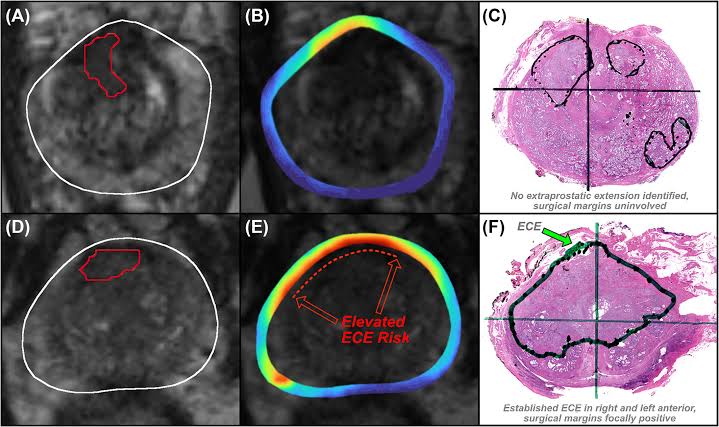
- Risk Score Analytics: Real-time access to "capsule risk scores," which assist surgeons in evaluating the likelihood of extracapsular extension (cancer spreading beyond the prostate).
By integrating these features, Avenda Health is not merely providing a diagnostic tool; it is providing a navigation system for the surgeon, potentially reducing the margin of error in procedures that demand millimetric precision.
Chronology: A Trajectory of Innovation
The emergence of Surgery Mode is the culmination of years of targeted research and software development by Avenda Health, which was founded in 2017 with the express mission of personalizing prostate cancer care.
- 2017 – Founding & Vision: Avenda Health was established in Culver City, California, with the goal of moving beyond the "one-size-fits-all" approach to prostate cancer treatment. The founding team focused on utilizing deep learning to translate complex diagnostic data into intuitive, 3D anatomical models.
- Preoperative Foundation: For the first several years of its operation, Unfold AI was utilized primarily as a decision-support tool. It assisted physicians in preoperative consultations, helping them determine the best course of action—whether that be active surveillance, focal therapy, or surgery—by visualizing the disease’s extent.
- The Research Validation Phase: Between 2022 and 2025, the company engaged in rigorous peer-reviewed clinical studies. These studies were instrumental in establishing the platform’s credibility, proving that Unfold AI could significantly outperform standard-of-care practices, such as relying on MRI alone for tumor staging.
- 2026 – The Intraoperative Breakthrough: Following the validation of its predictive accuracy, Avenda Health officially launched "Surgery Mode" in late 2026. This move signaled a major pivot, shifting the company’s influence from the clinic to the operating suite, and effectively closing the gap between diagnostic planning and surgical execution.
Supporting Data: The Case for Clinical Precision
The implementation of AI in surgery is often met with healthy skepticism regarding accuracy and reliability. However, Avenda Health has anchored its rollout of Surgery Mode in compelling clinical evidence.
A pivotal peer-reviewed study, published in BJU International (BJUI), highlights the dramatic impact of Unfold AI on surgical outcomes. The data suggests that the use of this technology could potentially cut positive surgical margins—a major indicator of cancer recurrence—by half.
The performance gap between traditional methods and AI-assisted mapping is striking:
- Predictive Accuracy: According to the research, Unfold AI predicts the spread of cancer into nearby anatomy with 92% accuracy, a significant improvement over the 52% accuracy observed when surgeons rely solely on standard MRI imaging.
- Tumor Identification Sensitivity: In separate assessments, the integration of Unfold AI increased the sensitivity of tumor extent identification from 37% to 97%.
These figures are not just statistical anomalies; they have direct implications for surgical strategy. In prostate cancer, the decision to perform a "nerve-sparing" surgery—which preserves erectile function and urinary control—versus a non-nerve-sparing approach often hinges on the surgeon’s ability to see exactly where the tumor ends and healthy tissue begins. By increasing the visual confidence of the surgeon, Avenda Health is providing the data necessary to make these life-altering choices with greater certainty.
Official Responses: The Human Element of AI
Dr. Shyam Natarajan, co-founder and CEO of Avenda Health, has framed the launch of Surgery Mode as a moral and clinical imperative. In his official statement, Dr. Natarajan emphasized that the goal is not to replace the physician, but to enhance the "visual confidence" of the surgical team.
"Our goal with Unfold AI has always been to provide more clinical clarity throughout every stage of a patient’s cancer journey," Dr. Natarajan stated. "Whether a physician is counseling a newly diagnosed patient, planning a targeted radiation oncology treatment, or performing a complex radical prostatectomy, having an accurate 3D map of the disease is transformative."
Dr. Natarajan’s sentiment reflects a broader industry shift toward "Augmented Intelligence." The company’s leadership maintains that by removing the ambiguity from the surgical field, they are empowering surgeons to achieve two competing goals simultaneously: optimal cancer control (the removal of all malignant tissue) and the preservation of patient quality of life. The ability to spare healthy nerves while surgically excising a tumor is the "holy grail" of prostate oncology, and Avenda Health believes its software provides the roadmap to achieve it consistently.
Implications: The Future of Surgical Oncology
The integration of Surgery Mode into the operating room has far-reaching implications for the medical community and the future of healthcare technology.
1. Standardization of Care
Prostate cancer surgery is notoriously variable; outcomes can differ wildly depending on the experience and intuition of the individual surgeon. By introducing a consistent, AI-driven map, Avenda Health is effectively standardizing the quality of surgical planning. This could bridge the gap between high-volume academic centers and smaller community hospitals, ensuring that patients receive a similar level of high-quality surgical mapping regardless of where they are treated.
2. Efficiency and Workflow
Beyond the clinical outcomes, the platform addresses the logistical burdens of modern surgery. The new workflow tools included in the update allow medical staff to manage cases more efficiently. By centralizing pathology, PSA, and imaging data into a single, accessible interface, the platform reduces the "administrative drag" that often slows down surgical teams.
3. A Model for Other Cancers
While Avenda Health is currently focused on the prostate, the successful application of this multimodal, 3D-mapping AI serves as a blueprint for other surgical disciplines. As the company continues to refine its algorithms, the potential to adapt this technology for other solid-tumor cancers—such as kidney, breast, or lung cancers—becomes an obvious, albeit ambitious, trajectory.
4. The Patient Perspective
For patients, the implications are perhaps the most profound. A diagnosis of prostate cancer is often accompanied by significant anxiety regarding the side effects of treatment, specifically incontinence and impotence. Technologies that promise to increase the precision of cancer excision offer a tangible beacon of hope for better postoperative recovery.
Conclusion: A New Era of Surgical Navigation
The expansion of Unfold AI into the operating room marks a turning point in the adoption of artificial intelligence in medicine. It demonstrates a move from passive diagnostic support to active, real-time surgical guidance.
As Avenda Health moves forward, the success of Surgery Mode will be measured by the continued reduction of surgical margins and the improvement of patient-reported outcomes. By turning static imaging into a dynamic, 3D surgical guide, the company is not only helping surgeons see the cancer more clearly—it is helping them see a future where prostate cancer treatment is safer, more effective, and more personalized than ever before. With 20 years of progress in surgical robotics already behind us, tools like Unfold AI represent the next frontier: the era of the "intelligent" operation.