




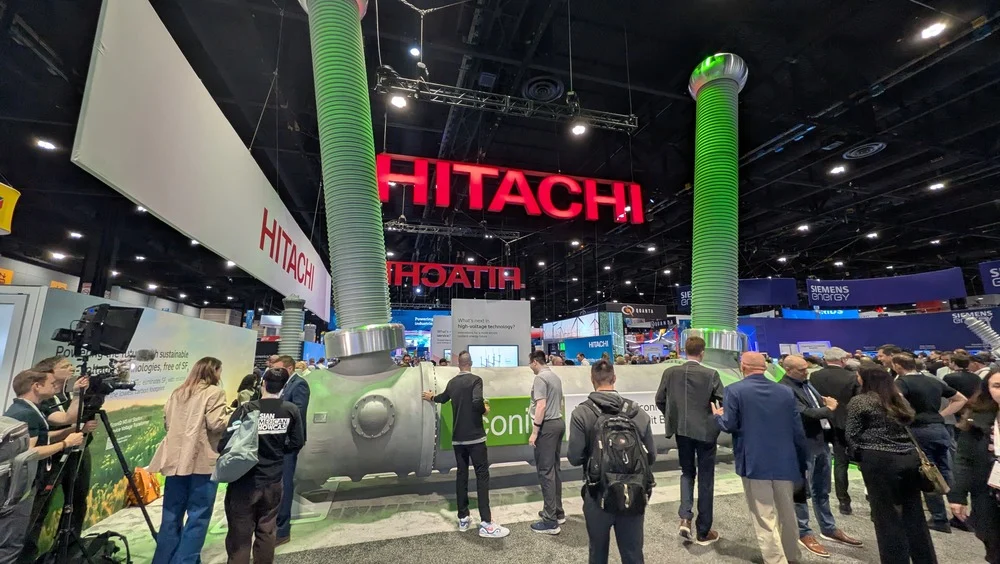
From May 4–7, 2026, the global energy sector converged on Chicago, Illinois, for the biennial IEEE PES T&D Conference & Exposition. Amidst the backdrop of the city’s iconic architecture—and the inevitable side conversations about deep-dish pizza and baseball—the industry gathered to confront a series of existential and operational shifts. While the event showcased the latest in grid modernization hardware, the true narrative of the 2026 gathering was the fundamental realignment of utility priorities.
As the industry faces the dual pressures of unprecedented load growth from data centers and the urgent requirement for decarbonization, the conference served as a crucible for new ideas. The central takeaway? The era of "business as usual" for electric utilities has officially ended.
A Strategic Inflection Point: The Opening Narrative
David Perez, Executive Vice President and Chief Operating Officer at ComEd, set the tone for the four-day event during the opening plenary. He argued that the industry has reached a decisive "inflection point." According to Perez, the investment strategies deployed by utilities today are no longer merely internal operational decisions; they are the primary architects of future economic stability, community resilience, and the global response to climate change.
This high-level framing served as the anchor for the entire conference. While previous years’ summits were often dominated by the promise of emerging software or the "shiny object" of artificial intelligence, the 2026 landscape felt more grounded in practical, long-term sustainability. The discourse shifted away from the novelty of technology toward the necessity of institutional evolution.
Affordability: The New Regulatory and Political Mandate
If one theme permeated every session—from the technical floor to the executive boardrooms—it was affordability. For decades, the "Utility Trilemma"—balancing safety, reliability, and affordability—has served as the industry’s North Star. However, in 2026, the weighting of these pillars has undergone a tectonic shift.
"The landscape around affordability has totally changed," noted Kevin Geraghty, Chief Operating Officer and Chief Safety Officer at San Diego Gas & Electric. "It used to be that decarbonization or grid hardening drove our primary decision-making. Now, we are in a reality where the bills simply cannot go up any further. We’re seeing state governors weighing in on rate cases directly. It’s seeping into the political and social psyche."
The Collective Responsibility of Ratepayer Impact
The industry is beginning to recognize that affordability is not just a financial metric; it is a communication challenge. Because no utility infrastructure project exists in a vacuum, utilities that fail to articulate the long-term value of their investments to the public face a "lose-lose" scenario. If the public only sees the price tag, support for necessary modernization crumbles.

Research presented at the conference underscored this. Industry leaders acknowledged that while they have become adept at engineering solutions, they have lagged in communicating why those solutions are worth the cost. The consensus among speakers was that utilities must move toward a model of transparent, proactive engagement to maintain their "social license to operate."
The Communication Imperative: Bridging the Knowledge Gap
The disconnect between technical utility planning and public perception was brought into sharp focus by Chris Kofinis, CEO of Park Street Strategies. Presenting findings from the "PES 2050" research project, Kofinis unveiled data that should serve as a wake-up call for the entire sector.
According to his research, 75% of consumers express strong confidence in the ability of engineers to solve the world’s most complex energy challenges. However, the most startling statistic was that nearly 100% of respondents agreed that it is the professional responsibility of engineers to educate the public on these issues.
"I’ve been doing public opinion research for a long time, and we never see numbers like 100%," Kofinis remarked. "We know the energy industry has a massive opportunity to serve growing demand, but that number tells you exactly how the public wants to be treated: they want to be informed partners."
This mandate is particularly critical as utilities grapple with "data center backlash." As massive AI-driven data centers demand unprecedented amounts of power, utilities must prove that these projects are not just taking from the grid, but contributing to its modernization.
Redefining Resiliency in Layers
While affordability dominated the public-facing conversations, the technical track of the conference was obsessed with the operational definition of "resiliency." In an era of increasing climate volatility, static defenses are no longer sufficient.
Mark Baranek, Senior Vice President of Technical Services at ComEd, offered a nuanced take on the subject. "Resilience isn’t just one thing," Baranek explained. "It’s about building in layers. It’s more about how you approach systemic flood mitigation or wildfire hardening than it is about any single piece of equipment. Resiliency in multiple layers is the only way it works at scale."

This shift toward "layered resiliency" suggests a move away from monolithic, centralized solutions. Instead, utilities are exploring decentralized strategies, including microgrids, hardened distribution networks, and sophisticated automated switching that can isolate outages before they cascade.
The Workforce Crisis: Investing in Human Capital
As the industry undergoes a digital and green transformation, it faces a mounting human capital crisis. With a massive wave of retirements looming and a desperate need for specialized skills—ranging from AI-data analysis to high-voltage engineering—the "workforce as critical infrastructure" was a major talking point.
Jason Hawkins, Director of Electric Transmission Engineering at Dominion Energy, highlighted the importance of intergenerational knowledge transfer. "Getting a newer employee to work directly under someone nearing retirement ensures those institutional insights don’t just walk out the door," Hawkins noted. "This creates a clear career trajectory for younger engineers, which is the only way to ensure long-term retention in a competitive labor market."
Strategic Implications: The Emergence of New Grid Assets
The conference also provided a platform for rethinking what constitutes a "grid asset." A prime example is the shift in how the industry views Virtual Power Plants (VPPs) and data centers.
Jeff Bladen, Head of Energy at Verrus, argued that the industry must stop viewing data centers as mere consumers of energy. "We need to see the emergence of data centers as a new class of grid assets," Bladen said. "They can’t just exist to serve their own load. If we get the policy and the frameworks right, these large, flexible loads can be part of the solution that keeps energy affordable for everyone."
Key Takeaways for the Future
- Affordability is the Primary Constraint: Utilities can no longer prioritize decarbonization or reliability at the expense of ratepayer affordability without facing severe political and regulatory blowback.
- Public Trust is an Engineering Task: Engineers must shift from being strictly "back-office" technical experts to becoming public-facing advocates who can explain the value of grid investment.
- Resiliency is Multidimensional: A successful grid of the future will not be one that is "unbreakable," but one that is built in layers, capable of absorbing shocks and recovering quickly.
- Workforce Development is Urgent: The industry must move beyond traditional recruiting to create aggressive, structured mentorship programs that retain talent in an era of rapid technological change.
- Re-imagining Load: The transition from "demand-side management" to "demand-side participation" is underway, with data centers and VPPs acting as potential stabilizers for the grid rather than just stressors.
Conclusion: A New Era of Utility Thinking
The 2026 IEEE PES T&D Conference was a testament to the fact that the energy transition is not merely a technical challenge, but a socio-economic one. The shift in utility thinking—from purely operational efficiency to a broader focus on community communication, workforce retention, and multi-layered resilience—is the defining trend of the decade.
As the industry moves forward, the gap between the vision presented in Chicago and its realization on the ground remains a significant hurdle. However, the alignment of the sector’s leaders around these core principles suggests that the industry is finally ready to move past the incrementalism of the past and embrace the systemic changes required to power the world of tomorrow.