




WASHINGTON, D.C. — In a sweeping policy shift that has sent shockwaves through the renewable energy sector, the Trump administration has ordered an immediate “pause” on all large-scale offshore wind projects currently under construction along the United States coastline. The directive, issued by the Department of the Interior (DOI), halts progress on multiple multi-billion-dollar infrastructure sites, citing classified intelligence reports that suggest these massive turbines pose significant, unmitigated national security risks.
The move marks a dramatic escalation in the federal government’s scrutiny of clean energy infrastructure, placing the urgent push for decarbonization in direct conflict with traditional defense and intelligence priorities.
The Core Mandate: Interior Cites “Radar Clutter” and Adversary Technology
The decision to suspend the leases rests on findings provided by the Department of Defense (DoD). According to officials, the primary concern centers on the physical characteristics of the wind turbines—specifically, the massive, rotating blades and the highly reflective steel towers.
Secretary of the Interior Doug Burgum, in a formal statement announcing the pause, emphasized that the administration’s primary obligation is the protection of the American public. “Today’s action addresses emerging national security risks, including the rapid evolution of the relevant adversary technologies, and the vulnerabilities created by large-scale offshore wind projects with proximity near our East Coast population centers,” Burgum stated.
The technical justification provided by the DOI hinges on the phenomenon known as “radar clutter.” The agency contends that the motion of the turbine blades and the radar cross-section of the towers create interference that can obscure the detection of low-flying aircraft or maritime threats. As adversary nations continue to develop advanced stealth and cruise missile technologies, the federal government argues that the proliferation of these “clutter” zones in strategic coastal waters creates a blind spot that the U.S. military can no longer ignore.
Chronology: A Decade of Planning Meets a Sudden Stop
To understand the gravity of the administration’s decision, one must look at the decade-long trajectory of these projects.
- 2014–2018: Early permitting and pilot phases begin for several major projects, including Dominion Energy’s Coastal Virginia Offshore Wind (CVOW). Initial environmental and military impact studies are conducted, with developers claiming coordination with the Department of Defense.
- 2019–2022: A wave of state-level regulatory approvals sweeps across the Atlantic coast. In Virginia, state regulators conduct rigorous cost-benefit analyses, clearing the way for full-scale construction.
- 2023: Projects move into the high-capital-expenditure phase, with thousands of workers mobilized and specialized vessels commissioned to install foundations in the Atlantic.
- Early 2024: The U.S. Department of Defense initiates a classified review of critical infrastructure in the wake of updated intelligence regarding foreign surveillance capabilities.
- The Current Moment: The Department of the Interior issues an immediate stop-work order, effectively freezing all capital deployment and construction activities for active leaseholders, citing the newly finalized classified reports.
The Dominion Energy Response: A Strategic Conflict
The reaction from industry leaders has been one of profound pushback. Dominion Energy, the developer behind the Coastal Virginia Offshore Wind (CVOW) project, issued a blistering rebuttal to the DOI’s claims. The company argues that the project is not a security liability, but a security asset.
"The Coastal Virginia Offshore Wind Project is essential for American national security and meeting Virginia’s dramatically growing energy needs," the company stated. Dominion highlights that Virginia is currently experiencing the fastest energy demand growth in the country, driven by a trifecta of national strategic imperatives: the support of key war-fighting installations, the production of nuclear-powered warships, and the massive energy requirements of the global AI data center hub.
Dominion’s argument rests on three pillars:
- Grid Reliability for Defense: The company asserts that the power generated by CVOW is necessary to ensure the grid stability of some of the nation’s most sensitive military assets. Without this influx of power, Dominion argues, the reliability of war-fighting and intelligence-gathering capabilities in the region will be compromised.
- Technological Provenance: Dominion points out that the project has been under development for over a decade with constant military oversight. Furthermore, they note that the project’s two pilot turbines have operated for five years without a single reported impact on national security radar systems.
- Economic and Strategic Necessity: The company warns that the suspension will lead to “energy inflation” and the loss of thousands of high-skilled jobs, while simultaneously threatening the energy supply needed for the “AI revolution” and maritime supremacy efforts.
Technical and Strategic Implications
The conflict highlights a fundamental tension between the "All-Of-The-Above" energy strategy and the shifting landscape of modern warfare.
The Radar Interference Dilemma
Radar interference from wind farms is not a new concept, but the scale of current projects has changed the risk calculus. Modern offshore turbines reach heights exceeding 800 feet. When hundreds of these structures are grouped in a “wind farm,” they form a massive artificial obstruction to radio frequency (RF) signals. While mitigation technologies—such as specialized radar software—exist, the DoD’s new classified reports suggest that these solutions are insufficient against the latest generation of foreign intelligence-gathering and strike platforms.
The AI and Data Center Nexus
Northern Virginia is home to the largest concentration of data centers on the planet. These facilities are the backbone of the U.S. AI industry, a sector the administration has identified as a primary theater of competition with China. The energy density required for these data centers is immense. By pausing the wind projects, the administration is inadvertently forcing these companies to rely on traditional, more carbon-intensive, or constrained energy sources, potentially slowing the development of domestic AI capabilities.
Economic and Environmental Fallout
The economic implications of the pause are massive. Billions of dollars in private capital are currently locked into the seabed. Supply chains, which have been painstakingly built over the last five years, are now facing the threat of collapse. Investors are likely to view the U.S. regulatory environment as increasingly unstable, which could lead to a spike in the cost of capital for future green infrastructure projects.
Future Outlook: A Path Forward?
As the situation unfolds, the industry is looking for a path toward reconciliation. Dominion Energy and other stakeholders have expressed a willingness to engage in further technical reviews to resolve the radar clutter issues.
"We stand ready to do what is necessary to get these vital electrons flowing as quickly as possible," Dominion stated. This implies that the industry may be willing to invest in advanced radar mitigation hardware or reconfigure turbine layouts if the government provides clear, actionable requirements.
However, the administration’s reliance on "classified reports" creates a significant hurdle. If the specific nature of the threats remains hidden from the public and the developers, it is difficult to design engineering solutions that satisfy the military’s concerns.
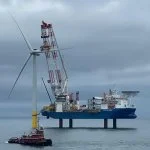
For now, the cranes in the Atlantic remain static. The project managers, engineers, and thousands of union workers who were expecting to bring these projects online in the coming months are left in limbo. The decision marks a significant milestone in the Trump administration’s tenure, signaling a pivot where national defense takes precedence over the rapid scaling of renewable energy, regardless of the economic or environmental costs.
As Washington debates the future of the American grid, the offshore wind industry waits to see whether this pause is a permanent termination of the sector or a temporary hardening of national security standards. In the meantime, the race for power in the Atlantic has come to a screeching, silent halt.