





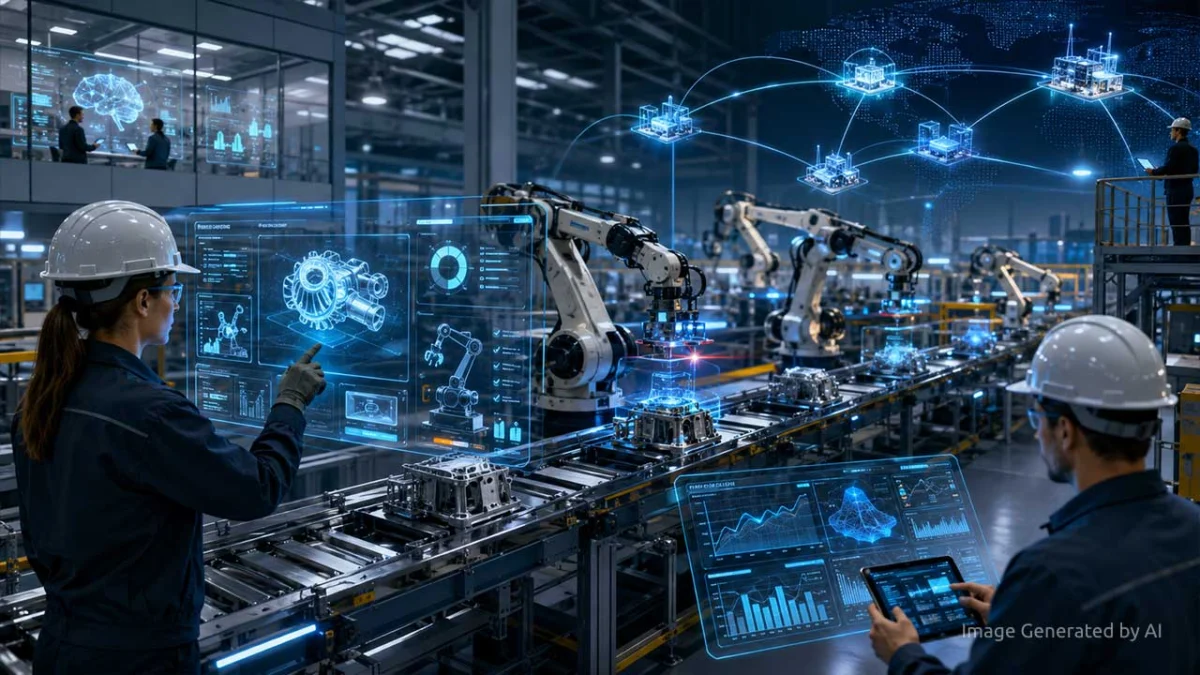
The landscape of global manufacturing is undergoing a seismic shift, moving away from legacy systems toward a future defined by intelligent, autonomous collaboration. At Hannover Messe 2026, industry leaders and technology visionaries gathered to witness a new frontier: the deployment of AI agents that do more than just process data—they actively participate in the industrial value chain.
Avanade, a joint venture between Microsoft and Accenture, took center stage to demonstrate how these AI-driven agents are transitioning from conceptual prototypes to tangible, high-impact assets. By embedding intelligence directly into the workflows of the production line and the boardroom, organizations are not only solving long-standing operational inefficiencies but are also fundamentally altering the economics of manufacturing.
Main Facts: The New Industrial Intelligence
The core proposition presented by Avanade is that artificial intelligence, when implemented correctly, serves as an extension of the human workforce rather than a replacement for it. The data speaks for itself: one global snack food manufacturer successfully leveraged AI agents to slash inventory levels by 20%, while an electronics manufacturer recovered $35 million in lost fees within a single fiscal year.
These aren’t peripheral optimizations; they are structural improvements. By co-branding demonstrations with industry heavyweights like Nissha Metallizing Solutions and Kruger, Avanade illustrated that AI agents are the "glue" that binds disparate systems. Whether it is real-time machine adjustments or complex supply chain synchronization, these agents provide the context and decision-making speed required to survive in an increasingly volatile global market.
Chronology: From Concept to Shop Floor Reality
The journey toward this level of industrial AI integration has been a decade in the making.
- Early 2020s: Manufacturers experimented with predictive maintenance and basic data analytics, often trapped in "pilot purgatory" where projects failed to scale beyond the laboratory.
- 2024-2025: The rise of Large Language Models (LLMs) and advanced AI agents allowed for more intuitive human-machine interfaces. Companies began shifting from mere data collection to "contextual awareness."
- Hannover Messe 2026: This event marked the inflection point where AI agents were no longer just tools but active, autonomous participants in the manufacturing ecosystem. The focus shifted from "what AI can do" to "how AI transforms the bottom line."
Supporting Data: The Efficiency Multiplier
The efficiency gains reported by Avanade’s clients highlight a critical evolution in industrial logic. For years, manufacturing has struggled with the "skills gap"—an aging workforce combined with a younger generation that is increasingly reluctant to step into stressful, high-pressure shop floor environments.
The Edge Computing Breakthrough
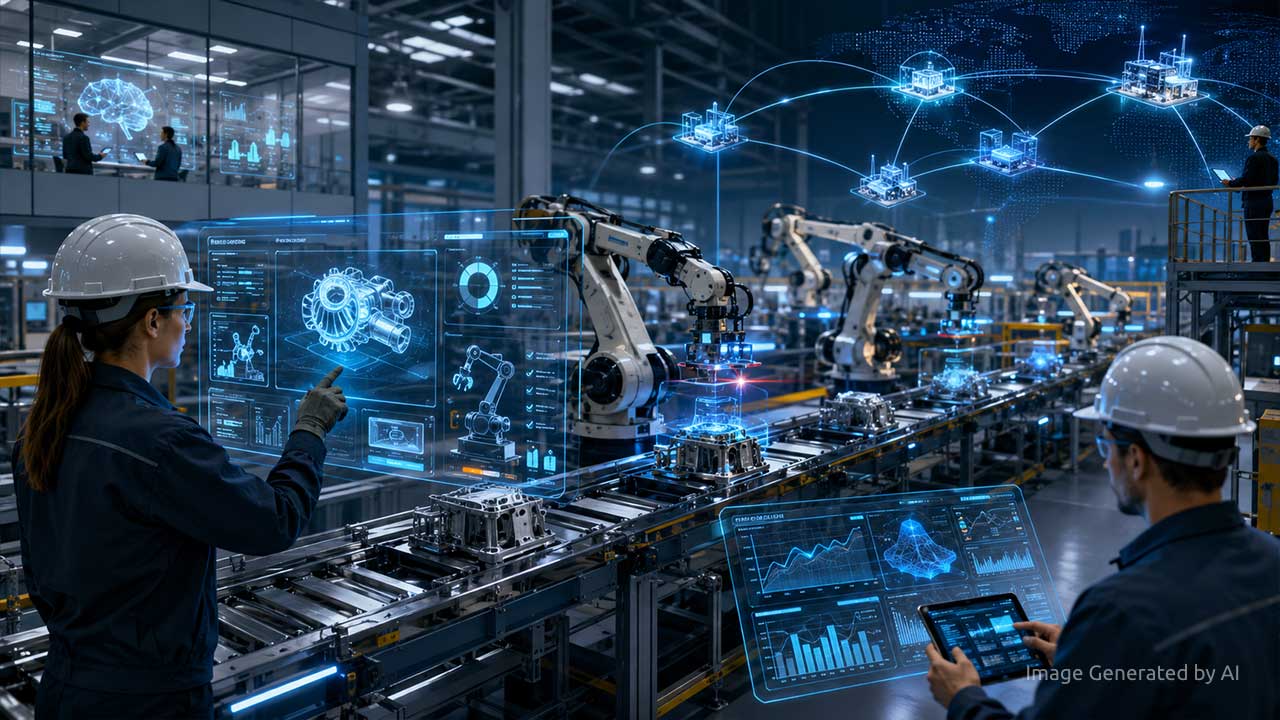
One of the most compelling demonstrations at the 2026 expo involved edge-based machine learning. In this scenario, machines automatically adjust their operating speeds based on real-time quality metrics. Rather than relying on cloud latency, the AI agent makes millisecond decisions directly on the device.
The machine speeds up when quality is high, maximizing throughput, and throttles down the moment the threshold is breached. This approach acknowledges a fundamental truth of modern manufacturing: speed is worthless if it comes at the expense of quality. By optimizing for the "bottleneck process," companies are achieving a level of consistency that was previously impossible without constant human oversight.
Supply Chain as a Team Sport
Supply chain management has historically been an exercise in manual coordination and fragmented communication. Avanade’s agents have transformed this into a "team sport." By translating complex data streams into plain language, these agents allow stakeholders across different regions and organizations to collaborate effectively. Furthermore, the ability to run simulations—previously a task reserved for specialized data scientists—has been democratized. Users can now define scenarios in natural language, enabling rapid iteration and testing of supply chain strategies before they are deployed in the real world.
Official Responses and Strategic Vision
Felix Weindel, Global Manufacturing and Mobility Industry Lead at Avanade, emphasized that the successful integration of AI is less about the technology itself and more about the cultural framework surrounding it.
"The fastest movers," Weindel noted during his interview with IIoT World, "are not just layering AI on top of existing processes. They are embedding it into everyday life."
According to Avanade, three pillars define the companies that thrive in the AI era:
- Foundational Homework: Successful companies have spent years investing in digital infrastructure, clean data sets, and workforce upskilling. There is no shortcut to AI maturity.
- Board-Level Commitment: AI must be treated as a strategic business transformation. Without top-down mandates, AI projects often remain siloed within IT departments.
- Bottom-Up Adoption: AI must be useful to the operator on the floor. When workers see that the technology reduces their stress and helps them solve problems faster, adoption becomes organic rather than forced.
Implications: The Democratization of Industrial Innovation
Perhaps the most significant development of 2026 is the "democratization of development." Building AI-driven applications no longer requires a degree in computer science. Operators on the shop floor, who understand the specific pain points of their machines better than anyone else, are now equipped with low-code tools to build their own AI agents.
This shift presents a new challenge: governance. As the speed of local adoption increases, manufacturers must balance productivity with safety and security. The industry is currently recalibrating its approach to "Responsible AI," ensuring that while operators have the freedom to innovate, the systems remain secure, compliant, and predictable.
The Human Element: Addressing the Skills Gap
The narrative of the "vanishing worker" is one of the most pressing issues in the manufacturing sector today. As experienced personnel retire, they take decades of tribal knowledge with them. AI agents act as a digital repository for this knowledge, providing operators with immediate, context-aware guidance when a machine malfunctions.
By offloading the "stress" of troubleshooting to an AI agent, companies are finding it easier to recruit and retain talent. The role of the operator is shifting from a manual laborer to a high-level supervisor of intelligent systems. This transition is not merely a technical upgrade; it is a vital step in ensuring the sustainability of the manufacturing industry for the next generation.
Conclusion: A New Era of Performance
As we look beyond 2026, the success of companies like those highlighted by Avanade suggests that the divide between the "AI-haves" and "AI-have-nots" will only widen. Those who view AI as an embedded, fundamental component of their value chain—from the raw material supplier to the final assembly line—will enjoy a competitive advantage that is nearly impossible to close.
The Hannover Messe 2026 demonstrations serve as a blueprint: success is found at the intersection of top-level vision and ground-level execution. By focusing on real-world workflows, democratizing access to tools, and prioritizing the human experience, manufacturers are finally realizing the promise of Industry 4.0. The era of the autonomous, intelligent factory has arrived, and it is governed by the quiet, efficient power of the AI agent.
Frequently Asked Questions (FAQ)
1. What are AI agents in manufacturing?
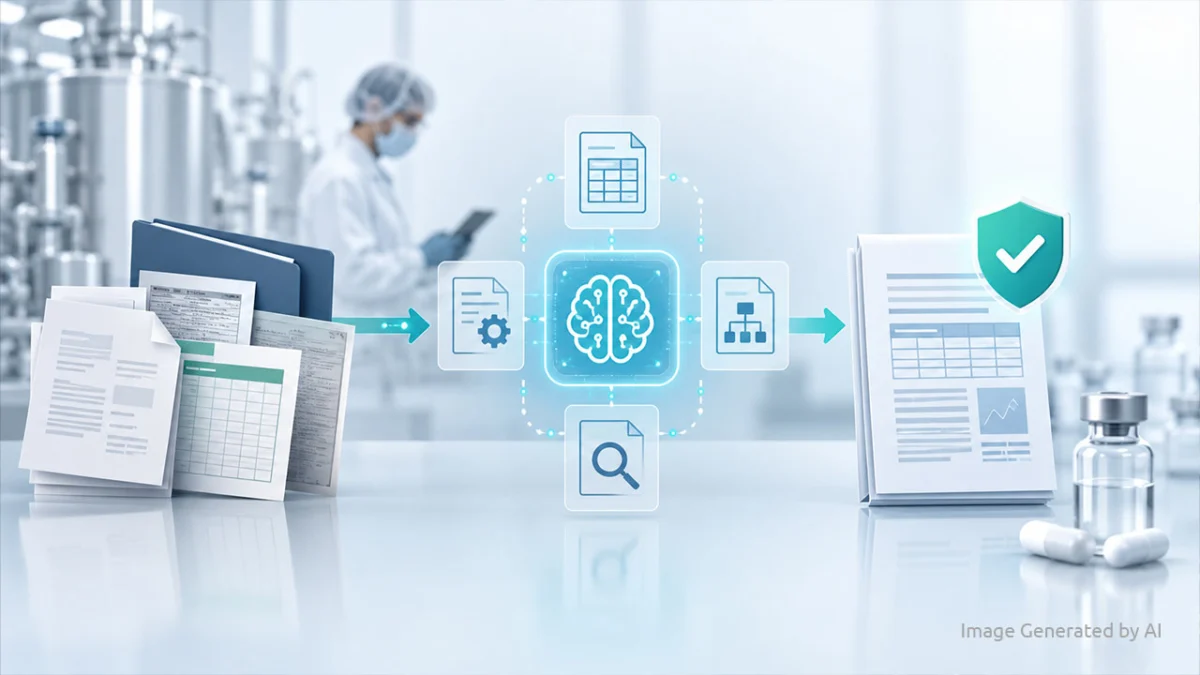
AI agents are software entities embedded directly into industrial workflows. Unlike standard software, these agents possess contextual awareness, allowing them to make autonomous decisions or provide actionable recommendations to human operators, thereby accelerating decision-making across the entire value chain.
2. How do AI agents help manufacturing operators?
They act as a bridge between complex machine data and human action. When a problem occurs on the production line, the agent synthesizes machine parameters and historical knowledge to provide immediate guidance. Furthermore, they can automate routine adjustments—such as varying machine speed based on real-time quality thresholds—reducing stress on the workforce.
3. What do companies that succeed with manufacturing AI have in common?
Success is typically built on three foundations: a history of prior investment in digital infrastructure and people, unwavering commitment from the board of directors to treat AI as a competitive strategy, and a culture of bottom-up adoption where workers are empowered to use AI in their daily tasks.
4. How do AI agents improve supply chain coordination?
They facilitate "team sports" in the supply chain by translating data into accessible, plain-language insights for both internal and external partners. Additionally, they lower the barrier to entry for complex simulations, allowing non-experts to test different operational scenarios in minutes rather than days.
5. Is coding required to build these AI tools?
No. A significant trend in 2026 is the democratization of development through low-code platforms. This allows shop-floor workers to build custom applications that address their specific pain points, provided the development occurs within a framework of proper governance and responsible AI safety standards.