By Global Procurement Insights
Published: Special Executive Report
Main Facts: The Crisis of CPO Self-Development
In the fast-paced corridors of global enterprise, the Chief Procurement Officer (CPO) has evolved from a back-office cost-controller into a vital architect of geopolitical strategy, supply chain resilience, and digital transformation. Yet, a startling paradox lies at the heart of executive suites worldwide: the very leaders tasked with future-proofing massive corporate networks are systematically failing to future-proof themselves.
According to recent data from Procurement Leaders’ Ovation pulse survey, a staggering three-quarters (75%) of group-level CPOs at the world’s largest and most complex organizations spend less than 20 minutes a day on personal growth and development.
The breakdown of the survey highlights a deeper systemic issue within top-tier management:
- One-third (approx. 33%) of CPOs dedicate less than one hour a week to self-improvement.
- An additional 45% invest less than two hours a week.
- Combined, nearly 80% of top procurement executives operate in a perpetual state of professional stagnation, relying entirely on historical expertise rather than continuous capability-building.
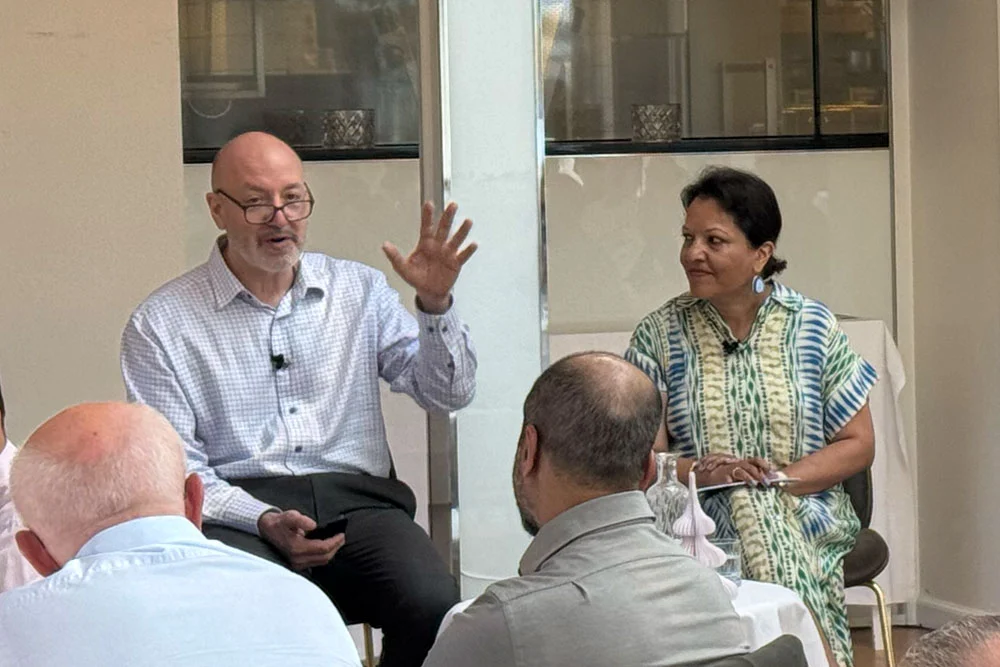
At the recent Ovation conference, academic and institutional leaders issued stark warnings. Among them, Larry Kramer, president and vice-chancellor of the London School of Economics (LSE), argued that the single most critical habit a modern executive can cultivate is "learning to learn"—maintaining the mental elasticity required to absorb entirely new operational methods, technologies, and macroeconomic paradigms.
Yet, for the modern CPO, caught in the crosshairs of inflation, trade wars, climate disruptions, and rapid technological shifts, carving out even twenty minutes a day for personal education has become an endangered discipline.
Chronology: How the CPO Role Outgrew Traditional Leadership
To understand why contemporary CPOs are starving themselves of professional development, it is necessary to examine how the procurement function has transformed over the last two decades.
Phase 1: The Tactical Era (Pre-2008)
Historically, the procurement department was transactional. CPOs focused primarily on cataloging goods, negotiating supplier discounts, and maintaining basic ledger compliance. Leadership development during this era was largely operational, focusing on negotiation tactics, ERP software management, and legal contract literacy. The pace of change was slow, allowing executives to rely on decades-old playbooks.
Phase 2: The Globalization and Risk Era (2008–2020)
The 2008 financial crisis, followed by an era of hyper-globalization, forced procurement out of the shadows. CPOs were suddenly expected to manage sprawling, international supply chains spanning multiple continents. Risk mitigation, sustainability, and supplier relationship management became paramount. However, executives were still largely reactive, solving crises as they appeared rather than proactively acquiring new cognitive frameworks.
Phase 3: The Poly-Crisis Era (2020–Present)
Today’s CPO faces an unprecedented convergence of disruptions: global pandemics, geopolitical conflicts in Eastern Europe and the Middle East, extreme weather events choking vital shipping lanes like the Panama and Suez canals, and the explosive rise of generative AI.
As the calendar filled with crisis-management meetings, board-level risk assessments, and digital overhauls, personal development was quietly pushed to the periphery. The modern working week for a group-level CPO has become a grueling marathon of firefighting, leaving little mental bandwidth for proactive learning when the weekend finally arrives.
Supporting Data & Industry Insights: The Anatomy of Executive Neglect
The Ovation survey data serves as a mirror reflecting a broader executive health and development crisis. While corporate governance frameworks demand robust continuous education programs for lower-tier employees, executive-level self-investment is often treated as optional.
The Exhaustion Factor
The sheer volume and frequency of disruptions make the CPO’s working week not only demanding, but mentally draining. When executives face back-to-back crisis calls, stakeholder management sessions, and board preparations, the cognitive load is immense.
Consequently, firing up the mental cylinders to study geopolitical trends, advanced data science, or organizational psychology at the end of a 60-hour week often feels less appealing than switching off entirely with a glass of wine or retreating into passive relaxation.
The "Expertise Trap"
Senior leaders frequently fall into the trap of the "expert mindset." Having climbed to the pinnacle of their profession, CPOs can unconsciously harbor the assumption that they already possess the necessary toolkit to handle whatever challenges arise.
However, Larry Kramer of the LSE cautions that this mindset is dangerous. In a business environment dominated by exponential technological leaps and unprecedented systemic shocks, past experience is no longer a reliable predictor of future success. Leaders must actively unlearn outdated paradigms and cultivate cognitive humility.
Diverse Pathways to Growth: How the Remaining 25% Learn
For the quarter of CPOs who do prioritize their development, methods vary widely, proving that there is no singular "correct" roadmap for executive education:
- AI-Augmented Micro-Learning: Many forward-thinking CPOs are leveraging artificial intelligence to compress learning curves. As one survey respondent noted: "My preferred method is short bursts of learning—usually listening to podcasts or reading—and I increasingly lean on AI itself to go deeper, ask follow-up questions, and research new areas quickly."
- Reverse Mentoring and Coaching: Several executives utilize peer coaching, formal courses in soft skills, and institutional mentorship programs. By coaching emerging talent within their organizations, senior leaders often encounter fresh perspectives and alternative problem-solving frameworks.
- Cross-Disciplinary Exploration: Progressive CPOs are stepping outside traditional supply chain literature, diving into behavioral economics, climatology, international relations, and data architecture to broaden their strategic vision.
Official Responses and Expert Perspectives
Industry leaders and academic figures have begun sounding the alarm over the widening capability gap at the executive level.
Speaking at the Ovation summit, LSE President Larry Kramer emphasized that institutional education must evolve alongside corporate demands. However, he stressed that institutional degrees and certifications are merely foundational. The true differentiator for top-tier leaders is habitual, self-directed curiosity.
"The single-most important habit that leaders must develop is that of ‘learning to learn’—the mental elasticity to take on new methods, new approaches, and new knowledge," Kramer stated.
Procurement analysts echo this sentiment, pointing out that boards of directors increasingly evaluate CPOs not just on immediate cost-savings or risk mitigation, but on their ability to steer organizations through structural market shifts. A leader who stops learning inevitably leads an organization that stops innovating.
Furthermore, leadership coaches emphasize that self-investment should not be viewed as an indulgence or an addition to an already overloaded schedule, but as a critical operational necessity. Just as an athlete must spend time conditioning away from the game, an executive must step back from daily execution to sharpen their strategic faculties.
Implications for the Future of Procurement
The revelation that 75% of top-tier CPOs spend less than 20 minutes a day on self-development has profound implications for the global economy.
1. The Vulnerability of Global Supply Chains
If the leaders steering trillions of dollars in global trade are failing to continuously update their mental models, global supply chains remain acutely vulnerable to "black swan" events. Without dedicated time to study emerging technologies like predictive AI, blockchain-based traceability, and alternative energy transitions, CPOs risk making reactive, short-sighted decisions that compromise long-term enterprise value.
2. Talent Retention and Cultural Cascade
Leadership behavior cascades downward. If a group-level CPO demonstrates that personal development is secondary to endless firefighting, middle managers and procurement specialists will adopt the same burnout-driven culture. This lack of investment in human capital ultimately degrades departmental morale, accelerates turnover, and stifles innovation from within.
3. The Imperative for a Cultural Shift
The worst thing a CPO can do is use the pressures of the job and the craziness of the calendar as an excuse to completely abandon self-investment. To break this destructive cycle, procurement chiefs must institutionalize micro-learning habits, carve out non-negotiable blocks of calendar time for strategic reading and thinking, and leverage modern digital tools—including AI and curated executive networks—to accelerate their personal evolution.
Ultimately, the future belongs not to the leaders who work the longest hours, but to those who maintain the mental agility to adapt, unlearn, and master new domains before disruption forces their hand.
To receive weekly insights, strategic analyses, and executive-level briefings from the global procurement community, sign up for the CPO Crunch newsletter.