





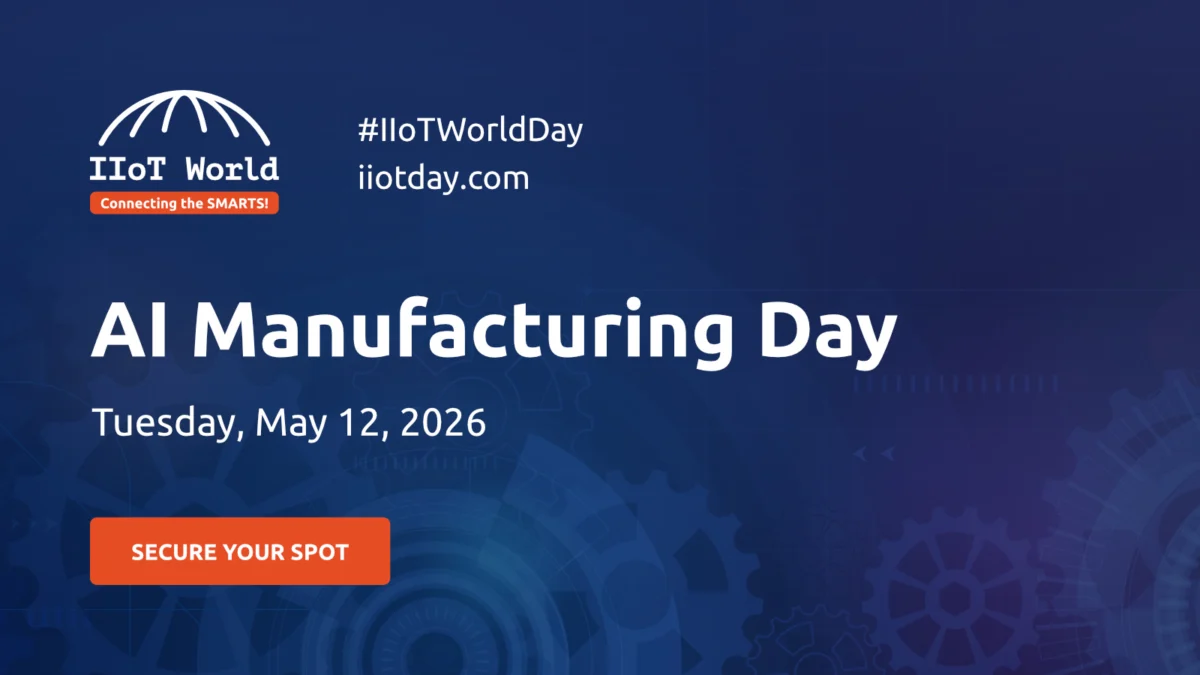
As the global manufacturing sector grapples with the dual pressures of supply chain volatility and the urgent need for digital transformation, IIoT World has announced its flagship event: AI Manufacturing Day 2026. Scheduled for May 12, 2026, this full-day virtual conference aims to serve as the definitive gathering point for engineers, data scientists, and industrial executives looking to navigate the transition toward autonomous production.
With a massive global community backing the event, the conference promises to bridge the gap between theoretical AI models and the gritty, high-stakes reality of the factory floor.
Main Facts: The Blueprint for 2026
AI Manufacturing Day 2026 is designed as an intensive, one-day immersive experience. Starting at 8 AM Eastern Time, the event will feature eight live, interactive panel sessions. Unlike pre-recorded webinars, the live format is intended to foster real-time collaboration, allowing attendees to engage directly with industry leaders during dedicated 15-minute Q&A windows following every session.
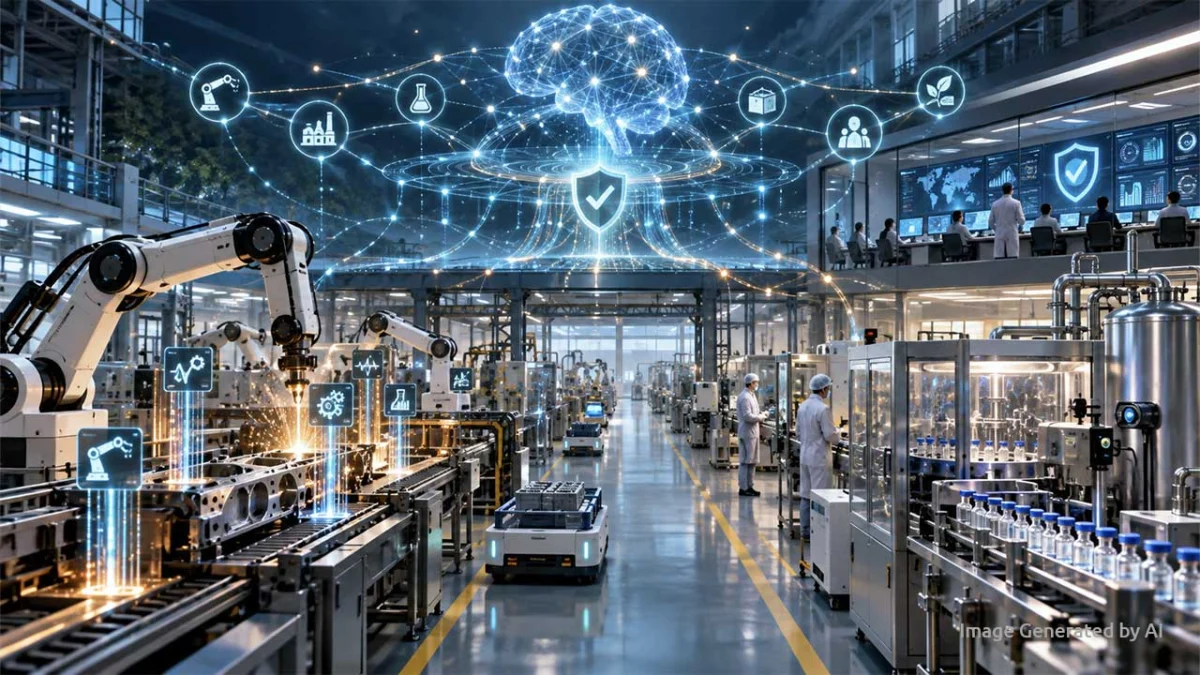
The conference is anchored by three critical pillars that reflect the current maturation of Industrial AI:
- Autonomous AI on the Shop Floor: Moving beyond simple automation toward intelligent systems capable of self-correction.
- Industrial AI Architecture: Standardizing data flow through Unified Namespace (UNS) and i3X frameworks to break down IT/OT silos.
- Edge AI-Powered Predictive Maintenance: Utilizing localized processing to detect anomalies before they result in costly downtime.
Chronology: From Concept to Global Standard
Since its inception in 2020, IIoT World’s conference series has evolved from a niche gathering into a cornerstone of the Industrial Internet of Things (IIoT) calendar.
- 2020–2021: The early years focused on basic connectivity and the "why" of digital transformation, attracting an initial wave of early adopters.
- 2022–2024: As the community grew to over 300,000 members, the conversation shifted toward data analytics, cloud integration, and the first wave of machine learning applications.
- 2025: The focus transitioned to the "Industrial Metaverse" and generative AI, setting the stage for the practical, agent-based architectures that will be highlighted in 2026.
- May 12, 2026: The current event serves as the culmination of these years of experimentation, focusing exclusively on the deployment of robust, scalable AI that delivers tangible ROI.
With over 101,911 registrants since 2020 and more than 600 unique speakers, the organizers have built a repository of expertise that informs the current agenda. The 2026 edition is the largest iteration yet, reflecting the rapid acceleration of AI adoption across the manufacturing vertical.
Supporting Data: The Scale of Industrial Transformation
The success of AI Manufacturing Day is not merely anecdotal; it is supported by significant metrics that underscore the demand for expert knowledge in this space.
- The Community Effect: The event draws from a global network of 300,000+ professionals, ensuring that the insights shared are not limited to a single region or industry subset.
- Speaker Diversity: With over 600 unique speakers having contributed since 2020, the event avoids the "echo chamber" effect. The 2026 roster includes experts from both the software architecture side (i3X/UNS specialists) and the hardware side (Edge sensing manufacturers).
- Accessibility: The commitment to a "free to attend" model removes financial barriers for SMEs (Small and Medium Enterprises), which are often the entities most in need of AI guidance but frequently lack the R&D budgets of global conglomerates.
Official Perspectives: The Three Pillars Explained
To provide clarity on what attendees can expect, the organizers have detailed the technical objectives of the three core pillars of the 2026 event.
1. The Pursuit of Autonomous Manufacturing
The goal of autonomous systems is to achieve "99% trust loops." In a manufacturing context, this means an AI agent can execute a production process, verify the output quality, and adjust parameters without human intervention, maintaining a near-perfect reliability rate. The panels on this topic will address the "how-to" of deploying AI agents on the shop floor—specifically focusing on the governance and safety protocols required to let machines "think" for themselves.
2. The Backbone: Industrial AI Architecture
Data is only as valuable as its accessibility. The conference will dedicate significant time to the Unified Namespace (UNS) and i3X frameworks. These technologies are essential for creating a "single source of truth" where IT (Information Technology) and OT (Operational Technology) systems can communicate in real-time. Without these architectures, AI models remain starved of clean, contextualized data, rendering them ineffective in a production environment.
3. Edge AI and the End of Reactive Maintenance
Perhaps the most direct path to ROI, Edge AI, will be a central focus. By processing data at the source—the machine itself—manufacturers can achieve latency-free predictive maintenance. The sessions will explore how edge sensors not only predict failures but also provide an additional layer of operator safety, turning the maintenance department from a reactive "firefighting" unit into a proactive, predictive powerhouse.
Implications: Why This Matters for the Industry
The shift toward Industrial AI is not merely a trend; it is a survival mechanism. The implications of attending AI Manufacturing Day 2026 extend beyond professional development.
Bridging the Skills Gap
One of the primary challenges in modern manufacturing is the lack of a workforce skilled in both mechanical engineering and data science. By providing an educational platform that is accessible to all experience levels, the event helps democratize the knowledge necessary to manage a digital-first factory.
Standardization vs. Fragmentation
The industry is currently suffering from a fragmentation of protocols and frameworks. By highlighting UNS and i3X, IIoT World is advocating for a standardized approach. If manufacturers adopt these open frameworks, the barrier to integrating third-party AI solutions drops significantly, fostering a more competitive and innovative ecosystem.
Safety and Sustainability
Predictive maintenance is not just about saving money; it is about safety. Unplanned downtime is often when accidents occur, as pressure mounts to fix machines quickly. By transitioning to AI-driven predictive models, manufacturers can schedule maintenance during planned windows, reducing human error and increasing worker safety. Furthermore, optimized machines operate more efficiently, directly contributing to sustainability goals by reducing energy waste and material scrap.
Frequently Asked Questions (FAQ)
What distinguishes this from other AI events?
Most AI events are generalized. AI Manufacturing Day 2026 is hyper-focused on the industrial sector. It does not waste time on consumer-grade AI; it focuses entirely on the challenges of the factory floor, such as harsh environments, data latency, and the need for high-reliability systems.
Is this suitable for beginners?
Yes. The event is structured to accommodate a wide spectrum of expertise. While deep-dive technical sessions are available for systems architects, there are foundational panels for plant managers and executives who need to understand the "business case" for AI before authorizing capital expenditure.
How is engagement maintained in a virtual environment?
The event uses the Zoom platform to maximize interactivity. Beyond the live Q&A sessions, the live chat function allows for cross-pollination of ideas between attendees. It is not uncommon for partnerships and collaborations to form in the event chat between engineers from different corners of the globe.
Is there a cost for attendance?
No. The conference remains free of charge. The organizers emphasize that the democratization of information is key to the overall growth of the IIoT industry.
Conclusion: Preparing for May 12
As the manufacturing landscape becomes increasingly digital, the "wait and see" approach is becoming a liability. AI Manufacturing Day 2026 provides a low-risk, high-reward opportunity to gain the insights necessary to steer industrial operations into the next decade.
Whether the goal is to implement a pilot AI agent, overhaul data architecture, or simply stay informed on the rapidly shifting landscape of Edge computing, this conference offers the requisite roadmap. With a legacy of over 100,000 registrants and a commitment to actionable, real-world content, May 12 promises to be a pivotal day for the future of global production.
For those unable to attend live, the "Watch On Demand" option ensures that the knowledge shared during the eight interactive sessions remains accessible, though the benefits of live participation—the networking, the immediate Q&A, and the community interaction—remain the primary draw for industry leaders globally.