



Main Facts: The Vulnerability of a Hyper-Connected Species
Strip away the innovations of the modern age—the glowing screens of our smartphones, the autonomous navigation systems of our electric vehicles, the climate-controlled sanctuaries we call homes—and humanity is left standing exposed on a volatile rock, entirely at the mercy of planetary forces.
The illusion of absolute technological insulation was shattered violently during a single month: August 2026. Within a compressed 31-day window, the Earth demonstrated its raw, indifferent power on a global scale. Devastating floods swept through Nepal and Arizona; a staggering 86 tornadoes tore across the American Midwest; a powerful earthquake struck Indonesia; catastrophic wildfires scorched the Balkans and reduced Canadian communities to ash; heavy monsoon rains paralyzed streets in Korea and the Philippines; and thousands of residents in Indiana remained without power for days following a single, hyper-intense localized storm system.
These events are not anomalies; they are the baseline of a rapidly destabilizing climate system. Yet, the most startling realization is not the sheer volume of destruction, but a sobering truth: we are simply not keeping up.
Despite the proliferation of consumer technology, artificial intelligence, and big data analytics, society has largely misallocated its intellectual and technical capital. While millions of engineers optimize retail algorithms and advertising pipelines, the scientific vanguard tasked with understanding the fluid dynamics, electrical storms, and thermal thresholds of our living planet remains drastically underfunded and understaffed. The core thesis of our modern predicament is stark: in an age of escalating meteorological chaos, our planetary defense system is dangerously thin.
Chronology: A Month That Redefined Meteorological Extremes
To understand the urgency of the modern meteorological crisis, one must examine the cascading timeline of planetary instability that characterized late summer. The month of August 2026 served as a case study in simultaneous, multi-continental natural disasters, exposing the strain on global emergency response systems.
Early August: The Waters Rise in Asia and North America
The month began with torrential monsoon rains triggering catastrophic flash floods in Nepal, washing away infrastructure and displacing thousands. Concurrently, the North American monsoon season brought unprecedented downpours to the arid landscapes of Arizona, turning dry desert washes into raging torrents that trapped motorists and overwhelmed urban drainage systems.
Mid-August: Fire and Seismic Shocks
By the middle of the month, the crisis shifted from water to fire and earth. In the Balkans, prolonged extreme heatwaves fueled fast-moving wildfires that threatened rural villages and historical preserves. Across Canada, massive wildfire complexes continued an unrelenting march, destroying remote homes and blanketing North American cities in hazardous smoke. Simultaneously, a significant earthquake struck Indonesia, testing the resilience of seismic infrastructure in the Pacific Ring of Fire and prompting mass evacuations over fears of secondary tsunamis.
Late August: Atmospheric Violence in the Midwest and East Asia
As the northern hemisphere approached the end of meteorological summer, atmospheric instability reached a crescendo. In a single, highly anomalous outbreak, 86 tornadoes touched down across the American Midwest, leveling neighborhoods and severely testing early-warning networks. Simultaneously, heavy, stalled weather fronts dropped unprecedented rainfall on South Korea and the Philippines, inundating metropolitan streets and rural farmlands alike.
The month concluded with isolated yet intense convective storms in the American heartland, leaving tens of thousands without power in Indiana—a stark reminder that even localized weather events can paralyze modern infrastructure for days.
Supporting Data: The Great Mismatch in Human Capital
When examining the global allocation of talent, the data reveals a profound structural vulnerability. Humanity possesses unprecedented technological tools, yet applies them to the wrong domains.
The Numbers Game: Software vs. Earth Sciences
- Total global software engineers: Approximately 47 million.
- Total individuals worldwide studying or working with Earth’s natural processes: Roughly 1 million.
- Professionals dedicated strictly to weather and atmospheric sciences: Around 120,000 globally.
- Personnel at the National Oceanic and Atmospheric Administration (NOAA): Just 18,773.
To contextualize this final figure: NOAA represents the primary federal bulwark monitoring the atmospheric and oceanic systems of the United States. With a staff of 18,773 serving a national population—and influencing global data sharing—there is one NOAA employee for every 442,124 people.
When compared to the broader global population of 8.3 billion, the handful of scientists monitoring the planet’s thermodynamic engine amounts to a microscopic guard detail standing watch over a sleeping giant.
Misdirected Innovation
The imbalance extends beyond personnel to the deployment of cutting-edge technology:
- Sensors: Billions of IoT sensors are currently deployed in consumer automobiles, smartphones, and smart-home appliances, tracking user habits and retail metrics rather than atmospheric pressure gradients, soil moisture, and wind shear.
- Big Data: Massive computing clusters are routinely utilized to calculate real-time sales trends, financial market fluctuations, and targeted advertising algorithms, while climate and meteorological supercomputing centers frequently face resource rationing.
- Artificial Intelligence: Generative AI models are heavily commercialized for artistic creation, digital entertainment, and corporate automation, while their immense pattern-recognition capabilities are underutilized in the predictive modeling of micro-weather events and seismic shifts.
Official Responses and Institutional Realities
Governments and international bodies have increasingly acknowledged the escalating frequency of extreme weather, yet institutional responses remain largely reactive rather than proactive.
Meteorological agencies worldwide, including NOAA, the European Centre for Medium-Range Weather Forecasts (ECMWF), and national meteorological services across Asia, have made remarkable strides in numerical weather prediction. The integration of machine learning into forecasting models—such as Google DeepMind’s GraphCast and Huawei’s Pangu-Weather—has dramatically reduced computation times and improved track accuracy for tropical cyclones and major storm systems.
However, institutional leaders within the scientific community have repeatedly warned that technological upgrades cannot substitute for human infrastructure. Funding structures for meteorological research remain tied to cyclical government budgets, leaving observation networks—such as weather radar arrays, ocean buoys, and radiosonde balloon stations—vulnerable to maintenance backlogs and technological obsolescence.
Furthermore, data-sharing protocols between nations remain politically fraught, even as atmospheric rivers, jet stream anomalies, and carbon plumes recognize no geopolitical borders. The official consensus among disaster management experts is clear: while forecasting models are becoming more sophisticated, the physical observation network required to feed these models is stagnating. Without a coordinated, global mobilization of talent and capital toward earth sciences, institutional blind spots will continue to result in preventable casualties.
Implications: The Living Electrical Machine
The implications of this talent and data deficit extend far beyond academic concern; they strike at the core of human survival and economic stability.
Earth is not a passive backdrop for human civilization; it is a dynamic, hyper-complex thermodynamic engine. At every layer of the atmosphere, fluid dynamics govern the distribution of heat, moisture, and kinetic energy. The planet is electrically devastating, thermally conducting to criticality, and fundamentally chaotic. To treat it as an afterthought while dedicating our finest engineering minds to digital consumption is an existential miscalculation.
The path forward requires a radical re-evaluation of societal priorities. Just as nations mobilize industrial and intellectual resources during times of geopolitical conflict, the existential threat of a destabilized climate demands a comparable mobilization.
This transformation involves shifting the paradigm of technological deployment:
- Redirection of Sensor Networks: Leveraging the ubiquitous presence of connected devices to create dense, crowd-sourced atmospheric monitoring grids.
- Democratization of Climate AI: Transitioning generative and analytical AI development from commercial optimization toward high-resolution meteorological and seismic prediction.
- Human Capital Investment: Dramatically expanding educational pipelines and career incentives in meteorology, oceanography, fluid dynamics, and earth systems engineering.
Looking Ahead
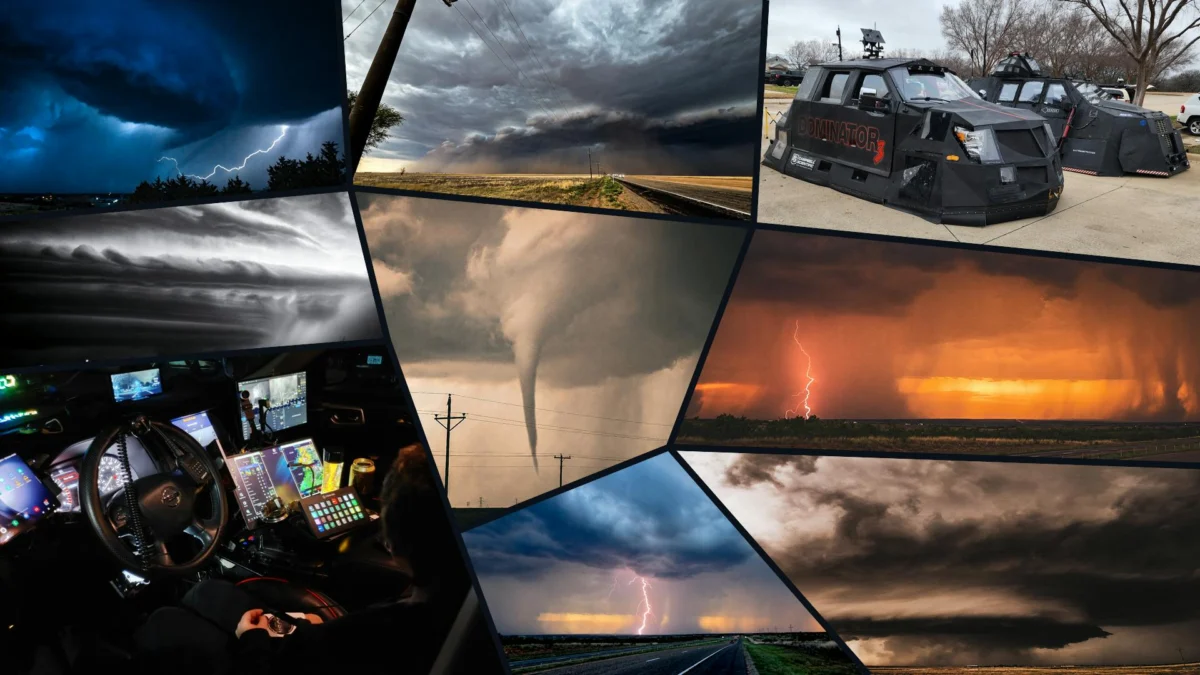
Over the coming week, a deep-dive exploration into the past, present, and future of weather technology will unfold. This series will examine how singular historical figures—from electrical engineers who revolutionized tornado tracking to meteorologists whose radical techniques influenced the outcomes of global conflict—shaped our understanding of the skies. It will also offer a rare glimpse into the terrifying, awe-inspiring interior of a tornado through modern telemetry.
Yet, behind the historical retrospectives and technological marvels lies a sobering reminder. Ballyhooing aside, the math remains unyielding. We have roughly 18,000 federal scientists watching the skies for 8.3 billion souls.
Perhaps by the end of this journey, the true scale of our planetary vulnerability will become undeniable. Perhaps it will inspire a new generation to look up from their screens, turn their brilliance toward the ground and sky, and recognize that at the end of the day, it is just us—standing on a magnificent, volatile planet, entirely at its mercy.