




BERLIN — As the calendar marches toward February 24, 2027, Europe approaches a chilling milestone: five years since Russian tanks rolled across the Ukrainian border in a blatant, unprovoked violation of international law. What Russian President Vladimir Putin packaged for domestic and international consumption as a swift, three-day "special military operation"—a neo-imperialist conquest designed to erase Ukrainian statehood—has instead devolved into a grinding war of attrition.
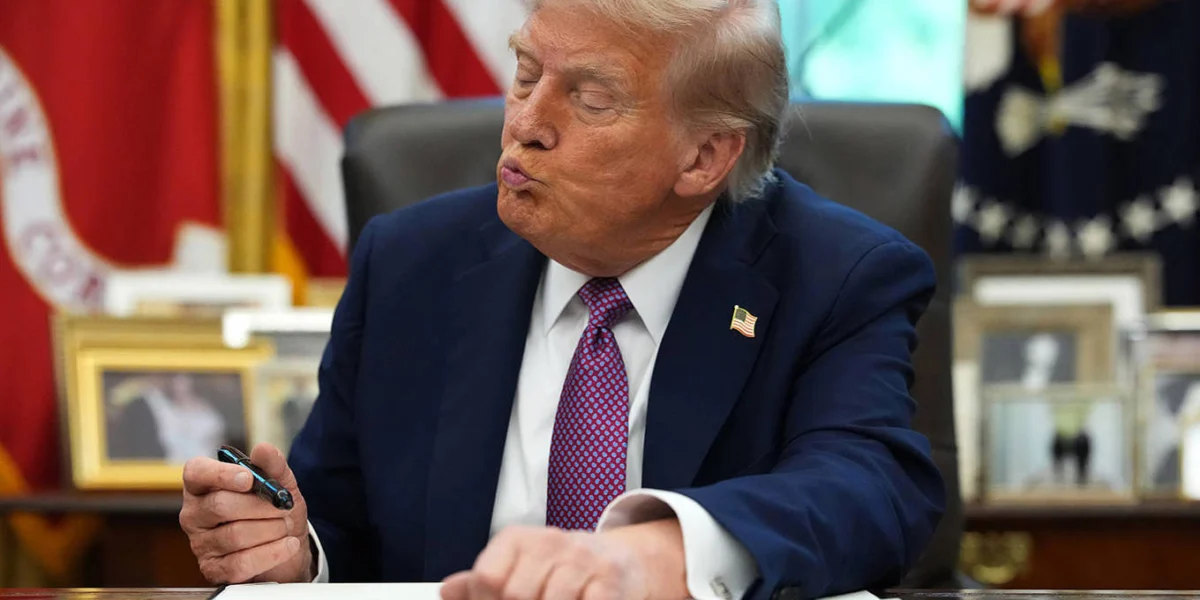
Yet, the greatest existential threat to European security as it enters this grim anniversary is no longer just the artillery echoing across the Donbas. It is the shifting tectonic plates of global geopolitics, most notably the profound betrayal emanating from Washington. Under the stewardship of US President Donald Trump, the United States has not merely stepped back from its historic role as the arsenal of Western democracy; it has fundamentally abandoned Ukraine and its traditional European allies, increasingly aligning itself with the Kremlin.
For European capitals, the realization is stark, sobering, and long overdue: the era of guaranteed American protection is over. To preserve their sovereignty, democratic values, and security architecture in the face of escalating external coercion, European nations must achieve unprecedented internal unity. But that external defense is impossible without first neutralizing the fifth column of political extremism and nationalist populism eroding Europe from within.
Main Facts
- The Five-Year Horizon: February 24, 2027, marks five years since Russia’s full-scale invasion of Ukraine, shattering the post-Cold War security consensus in Europe.
- The Shift in Washington: Under US President Donald Trump, American foreign policy has executed a historic pivot, withdrawing vital military and economic support from Ukraine while actively fostering diplomatic alignment with Russian President Vladimir Putin.
- The European Dilemma: European Union and NATO member states now face a dual-front crisis: managing external aggression from a revived Russian imperialism while combating internal political fragmentation driven by pro-Russian, far-right populist movements within EU borders.
- The Imperative of Strategic Autonomy: Long treated as a theoretical goal in Brussels and Berlin, European strategic autonomy has transformed from an ambitious policy debate into an urgent, non-negotiable prerequisite for survival.
Chronology: From Allied Solidarity to Transatlantic Betrayal
To understand the magnitude of Europe’s current peril, one must trace the rapid unraveling of the transatlantic alliance over the past half-decade.
2022: The Crucible of Invasion
When Russian forces launched their multi-pronged assault on Kyiv on February 24, 2022, the initial Western response was remarkably unified. Ukrainian resistance, led by President Volodymyr Zelensky, shocked the Kremlin and galvanized Western democracies. The Biden administration spearheaded a massive coalition, funneling billions of dollars in advanced weaponry, intelligence, and financial aid to Kyiv. European nations, led by Germany’s historic Zeitenwende (turning point) speech by Chancellor Olaf Scholz, moved swiftly to decouple from Russian hydrocarbons, welcome millions of Ukrainian refugees, and coordinate unprecedented economic sanctions against Moscow.
2023–2024: The War of Attrition and Political Fatigue
As the conflict settled into a brutal, trench-bound war of attrition, cracks began to show in the Western armor. While European nations struggled to ramp up domestic defense manufacturing, political polarization in the United States intensified. Aid packages for Ukraine became a primary political football in Washington. The resurgence of Donald Trump’s "America First" movement injected deep skepticism into the US Congress regarding long-term commitments to Eastern European security.
2025: The Trump Return and Policy Reversal
The political watershed arrived with the return of Donald Trump to the White House. Moving with unprecedented speed, the new administration dismantled the architecture of US support for Ukraine. Bilateral intelligence-sharing was curtailed, military supply lines were abruptly choked off, and Washington initiated back-channel negotiations with Moscow aimed at forcing a rushed, unfavorable territorial settlement upon Kyiv. Simultaneously, Washington adopted a hostile diplomatic posture toward Brussels, threatening punitive tariffs against European goods unless EU member states bowed to American economic demands and ceased their independent efforts to sustain Ukraine.
2026–2027: The Age of Vulnerability
By late 2026, the geopolitical reality had mutated beyond recognition. The US administration was no longer a neutral bystander; it was actively pressuring European leaders to abandon Kyiv, framing continued European resistance to Russian aggression as an obstacle to global peace. In Berlin, Paris, London, and Warsaw, policymakers were forced to confront a nightmare scenario: defending the European continent against a resurgent Russia not only without American leadership but potentially against active diplomatic and economic headwinds from Washington.
Supporting Data
The structural vulnerabilities facing Europe as it navigates this post-American security landscape are laid bare by recent economic, military, and political metrics:
- The Aid Gap: According to recent analyses by the Kiel Institute for the World Economy, the sudden cessation of US military assistance leaves an annual funding gap of approximately €40 billion to €50 billion in Ukraine’s defense budget—a sum that European nations are scrambling, with mixed success, to cover through joint debt issuance and national budget reallocations.
- Defense Industrial Capacity: Despite pledges under the EU’s Readiness 2030 initiative, European defense manufacturing currently operates at only 65% of the surge capacity required to simultaneously sustain high-intensity conventional warfare in Ukraine and replenish depleted national stockpiles.
- Internal Political Fragmentation: Recent European Parliament polling indicates that nationalist, populist, and openly pro-Kremlin political parties now command over 25% of seats in the legislature, wielding veto power or severe disruptive influence in key member states including Hungary, Slovakia, Austria, and increasingly France and Germany.
- Energy and Economic Costs: While Europe successfully weened itself off Russian pipeline gas, replacing it with liquefied natural gas (LNG) and renewables has kept industrial energy prices in Europe roughly 2.5 times higher than those in the United States, straining European competitiveness and fueling populist narratives.
Official Responses
The pivot in Washington and the ongoing slaughter in Ukraine have elicited starkly divergent reactions across European capitals and international bodies:
Berlin (German Federal Government):
Speaking on the steps of the Reichstag, senior German officials emphasized that Europe can no longer outsource its security. "The transatlantic safety net has vanished," a high-ranking Foreign Office official noted on condition of anonymity. "We are standing alone at the crossroads of history. If we do not step up to fund, arm, and secure Ukraine, Russian imperialism will not stop at the Dnieper; it will test the borders of the European Union itself."
Brussels (European Commission):
European Commission President Ursula von der Leyen released a sharply worded memo urging member states to accelerate the creation of a "European Defense Union." "Our sovereignty is indivisible," von der Leyen stated. "We cannot project strength abroad while tolerating Trojan horses within our gates. Financial conditionality must be enforced against any member state actively undermining our collective security consensus."
Moscow (The Kremlin):
Russian state media and foreign ministry spokespersons have welcomed the shift in Washington, portraying the Trump administration’s stance as a "pragmatic recognition of geopolitical realities." Moscow has intensified its psychological warfare campaigns across Europe, framing continued support for Ukraine as a futile, warmongering endeavor driven by out-of-touch Brussels elites.
Kyiv (Office of the President):
Ukrainian leadership has maintained a posture of resolute defiance, though tinged with profound grief over the abandonment by traditional allies. "We fought for five years believing in the values of the free world," a senior advisor to President Zelensky stated. "If Washington chooses to appease the aggressor, Ukraine will fight on alone. But history will judge those who traded democratic security for cynical political expedience."
Implications: Europe’s Imperative for Internal and External Unity
The convergence of American isolationism and Russian aggression forces Europe into a historic moment of truth. The challenges facing the continent are twofold, and failure on either front will prove fatal to the European project.
1. Overcoming External Coercion through Strategic Autonomy
For decades, European integration was treated as an economic project supplemented by an American security umbrella. That luxury has evaporated. To deter further Russian aggression, Europe must rapidly consolidate its defense capabilities. This requires:
- The immediate pooling of procurement and military R&D to bypass national red tape.
- The establishment of a permanent European rapid-deployment capability independent of NATO structures where US veto power or paralysis might apply.
- A robust financial commitment to underwrite Ukraine’s war effort and post-war reconstruction indefinitely.
2. Neutralizing Internal Political Threats
External strength is impossible without internal cohesion. The greatest vulnerability facing the European Union is no longer external invasion, but internal subversion. Far-right populists and nationalist demagogues—financed, ideologically aligned, or organically sympathetic to Vladimir Putin’s authoritarian model—are actively working to paralyze EU decision-making from within.
Countries like Hungary and Slovakia, which have consistently blocked or watered down sanctions against Moscow and delayed financial aid to Kyiv, demonstrate how easily democratic systems can be hijacked by autocratically inclined leaders. Furthermore, the rising electoral fortunes of anti-system parties in core EU states threaten to paralyze the bloc from the inside out.
To survive, European democracies must draw a hard legal and political line. The European Union must vigorously enforce mechanisms that strip voting rights and withhold structural funds from member states that systematically violate the rule of law or collaborate with hostile foreign powers. Tolerating domestic subversion in the name of procedural harmony is a luxury Europe can no longer afford.
Conclusion
As the war in Ukraine approaches its grim five-year anniversary, the choices before Europe are stark. Donald Trump’s abandonment of Ukraine and alignment with Vladimir Putin marks the end of an era. The transatlantic alliance, as it was known for three-quarters of a century, is fundamentally broken.
If Europeans wish to live in peace, freedom, and democratic self-determination, they must awaken to this harsh reality. They must secure their eastern borders by empowering Ukraine, forge a true defense union that transcends national egoisms, and decisively purge their political systems of the populist and pro-Kremlin malignancies eating away at their core. The clock is ticking, and history will offer no second chances.