





Main Facts
The Volkswagen Group is undergoing one of the most aggressive and contentious corporate restructurings in its history, caught in the pincer movement of plummeting profitability, overcapacity at home, and punishing international trade barriers. Once boasting a robust operating profit of €22.6 billion as recently as 2023, the German automotive giant watched that figure plummet to €8.9 billion by 2025, with projections indicating it could drop by half again in 2026.
To stem the financial bleeding, management has proposed a radical austerity program: shuttering up to four domestic factories in Germany, slashing 50,000 domestic jobs, and eliminating up to 100,000 jobs globally over the next four years. Additionally, the automaker plans to discontinue nearly half of its existing vehicle models to streamline its portfolio. These measures are designed to generate €20 billion in value-chain savings by 2030 and slice €11 billion from overhead costs.
However, this survival strategy has triggered a massive confrontation with IG Metall, Germany’s powerful metalworkers’ union. Volkswagen has moved to terminate key collective bargaining agreements governing wages, holiday pay, and working hours for over 100,000 workers at its primary German plants. While executives insist the drastic actions are necessary to ensure the company remains viable, the union has condemned the move as a betrayal, setting the stage for widespread industrial strikes.
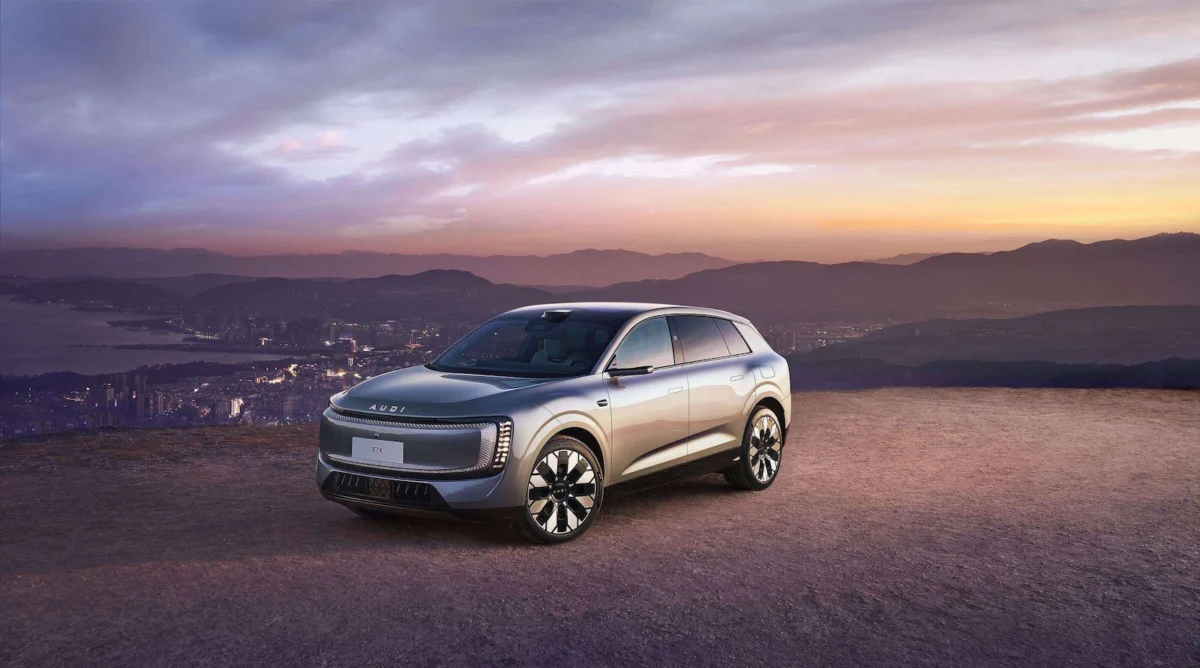
Simultaneously, the Volkswagen Group is executing a high-stakes geographic pivot. While downsizing in Germany, its Audi division has announced a $4 billion investment to build a sprawling 200,000-vehicle-per-year manufacturing plant south of Macon, Georgia, targeting production by 2031. This U.S. expansion—alongside a separate plant in South Carolina dedicated to rugged electric and plug-in hybrid SUVs—serves as both an attempt to bypass punitive American tariffs and an effort to capture a larger share of the lucrative North American market.

Chronology of the Crisis
- 2023: Volkswagen Group records a healthy operating profit of €22.6 billion, buoyed by post-pandemic demand and a strong luxury and volume portfolio.
- September 2024: Volkswagen first attempts to cancel parts of its collective bargaining framework with IG Metall, sparking immediate worker outrage, factory protests, and a wave of strikes across Germany.
- December 2024: After intense negotiations, management and IG Metall reach a landmark labor agreement that includes 35,000 targeted job cuts. Crucially, the pact includes a clause allowing either side to revisit terms if circumstances materially change.
- 2025: Financial performance deteriorates rapidly. Operating profits are more than halved, dropping to €8.9 billion amid rising input costs, sluggish European EV adoption, and intensifying competition from Chinese automakers.
- September 30, 2026: Volkswagen Group officially announces the termination of the December 2024 wage provisions and collective agreements covering more than 100,000 workers at primary German facilities. Management also floats a proposal to freeze the salaries of 660,000 global staff members through 2030.
- Late September/Early October 2026: Union representatives and management meet in Hannover for fresh talks. IG Metall issues an ultimatum, giving the company until the end of October to rescind the termination notice or face catastrophic industrial action once a contractual no-strike clause expires on January 1, 2027.
- October 24, 2026: The New York Times and industry reports confirm that Audi will invest $4 billion in a new manufacturing footprint in Georgia, aiming to mitigate the impact of U.S. import tariffs.
- November 24, 2026: Scheduled date for the opening round of renewed collective bargaining talks between Volkswagen and IG Metall in Emden.
- December 15, 2026: Scheduled date for the second round of labor negotiations in Zwickau.
- January 1, 2027: Expiration of the contractual peace obligation, freeing IG Metall to legally launch widespread strikes across Volkswagen’s German operations.
- 2031: Target production date for the new Audi manufacturing facility in Georgia, U.S.
Supporting Data and Financial Metrics
The scale of Volkswagen’s financial contraction highlights the urgency driving executive decisions:
- Operating Profit Collapse: Plunged from €22.6 billion in 2023 to €8.9 billion in 2025, with expectations that 2026 profits will fall to roughly half of the 2025 figure.
- Cost-Cutting Targets: Aiming for €20 billion in total value-chain savings and €11 billion in overhead reductions by 2030.
- Job Reductions: Up to 50,000 domestic German jobs on the chopping block, alongside plans to close up to four domestic factories. Globally, up to 100,000 positions are targeted for elimination over a four-year window.
- Portfolio Rationalization: Volkswagen plans to discontinue up to 50% of its current vehicle models to focus strictly on high-margin, high-demand segments.
- U.S. Expansion Capital: Audi is investing $4 billion into its new Georgia facility, designed with an annual capacity of 200,000 vehicles.
Official Responses and Stakeholder Positions
Management Perspective
Volkswagen executives argue that the automotive landscape has fundamentally shifted since the 2024 agreements were signed, rendering previous financial assumptions obsolete.
"The economic situation has deteriorated dramatically since the collective bargaining agreement for the future was concluded in 2024. This creates an urgent need for action," stated Arne Meiswinkel, Volkswagen’s Human Resources Chief, following talks in Hannover. Meiswinkel emphasized that terminating the wage provisions was a necessary step to ensure long-term competitiveness. "We must continue to work on our cost structures. Terminating the agreements gives us room to negotiate—so that we can then agree on the necessary measures."
In an official corporate blog post, the company reinforced its commitment to a broader transformation framework: "This far-reaching transformation program sets out a course of action for the Group and its subsidiaries to adapt to changing conditions in the automotive industry. At its core are a leaner product portfolio firmly focused on customers and markets, and an organization realigned accordingly."

Labor and Union Perspective
The workforce and union leadership have reacted with profound anger, viewing management’s actions as a direct assault on the German social market economy and worker welfare.
Thorsten Groeger, a senior negotiator for IG Metall, issued a blistering rebuke of the corporate strategy. "This is a despicable blow to the workforce. We will not accept this. Anyone who tries to reach into the employees’ pockets must expect a fight," Groeger warned.
Setting a hard line during negotiations in Hannover, Groeger added: "We are giving the company until the end of October to withdraw this notice of termination. Otherwise a massive process will be set in motion which, let me make this clear, will pave the way for industrial action at Volkswagen."
Daniela Cavallo, head of the Volkswagen works council, pushed back against executive accountability while acknowledging the shifting market realities. "We know which operating conditions have changed, but we also know which ones were foreseeable, and we expect the highest-paid management board in this country to work with us to find a solution." The council remains deeply opposed to executive proposals to freeze salaries across the 660,000-strong global workforce through the end of the decade.

Broader Implications
The unfolding crisis at Volkswagen carries deep implications for the future of European manufacturing, the global electric vehicle transition, and transatlantic trade dynamics.
The Erosion of the German Industrial Model
Volkswagen has long been the crown jewel of German manufacturing, operating under a tripartite system of corporate governance where labor unions hold significant sway via supervisory boards and works councils. The current standoff threatens to shatter this collaborative framework. If Volkswagen successfully shutters domestic factories and overrides collective bargaining agreements, it could set a dangerous precedent for other German industrial titans struggling under high energy costs, bureaucratic red tape, and stiff international competition. Conversely, if the union successfully halts management’s plans through crippling strikes, Volkswagen risks sinking deeper into financial insolvency as it struggles to fund its transition to software-defined and electric vehicles.
The Transatlantic Pivot and Tariff Pressures
The juxtaposition of domestic downsizing in Germany with multi-billion-dollar investments in the United States highlights how geopolitical trade barriers are reshaping corporate strategies. Audi’s $4 billion facility in Georgia—and the parent company’s parallel investment in a South Carolina plant for rugged electric and hybrid SUVs—demonstrate that European automakers increasingly view local U.S. production as the only viable shield against protectionist trade policies and import tariffs.
While these American investments may safeguard Audi and Volkswagen’s market share in the lucrative North American SUV and light-truck sectors, they do little to placate German workers who see their jobs vanishing to fund factories abroad. As Volkswagen prepares to sit down for high-stakes bargaining sessions in Emden and Zwickau this November and December, the company walks a precarious tightrope: trying to survive a global market transformation without completely fracturing the workforce that built its empire.