





By Industry News Desk
In a strategic move to solidify its position as a global leader in smart building technologies, Johnson Controls (JCI) announced a comprehensive expansion of its product portfolio at the end of January. This release represents a significant evolution in how commercial facilities manage energy, indoor air quality, and supervisory control. By integrating next-generation hardware with advanced cloud-connected capabilities, JCI is addressing the dual pressures facing building managers today: the mandate for extreme energy efficiency and the need for seamless, interoperable digital infrastructure.
The new product rollout spans five key categories, including updated equipment controllers, intelligent plug-load management, hybrid supervisory plant controllers, and enhanced environmental sensing solutions.
Main Facts: A Comprehensive Technological Overhaul
The January announcement signals a pivot toward more autonomous, "standalone-capable" hardware. The most notable updates include:
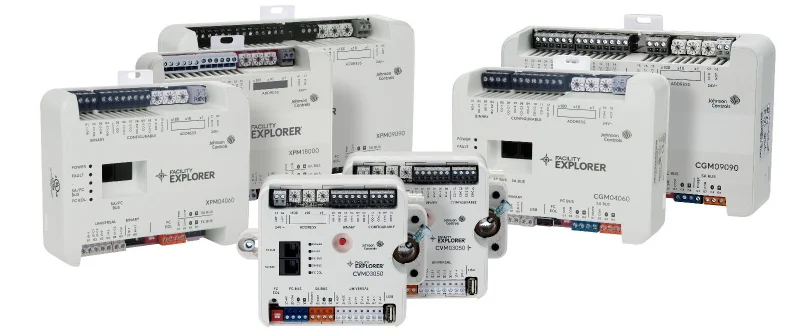
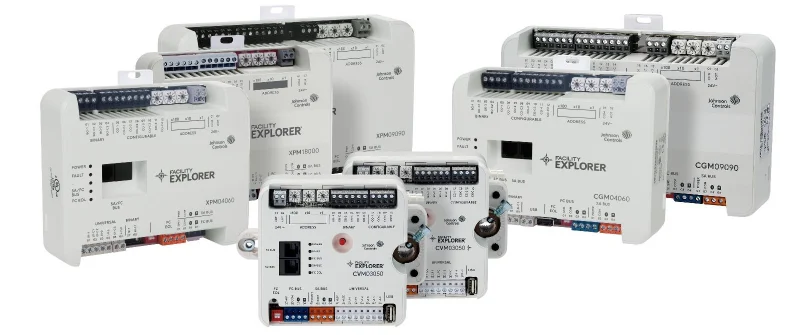
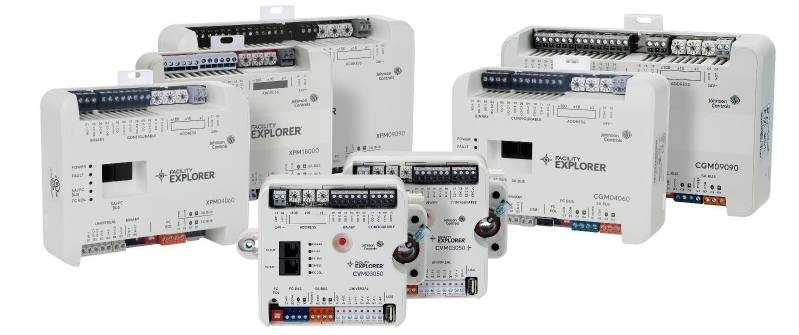
- Expanded Controller Family: Johnson Controls has introduced a new general-purpose application equipment controller and a VAV box controller with position feedback, complemented by three new expansion I/O modules.
- Enhanced CGM/CVM Controllers: A critical upgrade to these series now includes an integral real-time clock. This allows controllers to manage schedules, trends, and calendars independently, ensuring operations continue even if the connection to the broader Facility Explorer system network is interrupted.
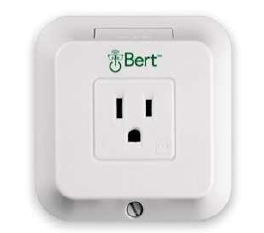
- The BERT Revolution: The introduction of Building Energy Reduction Technology (BERT) smart plugs provides a granular layer of control over electrical plug loads—a historically difficult metric to manage in commercial buildings.
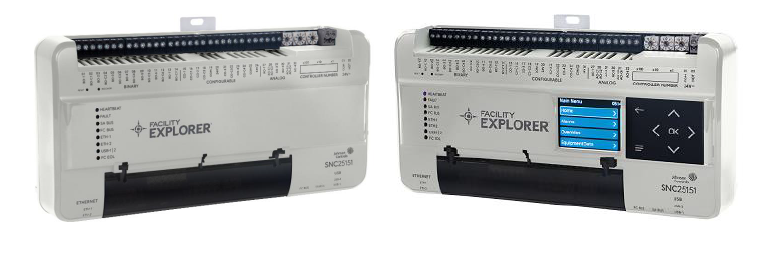
- SNC Supervisory Series: The new FX Supervisory Plant Controller (SNC) series marks the debut of a hybrid architecture that combines traditional supervisory functions with localized equipment control.
- Advanced Environmental Monitoring: New additions include the HE-6900 duct probe series for humidity and temperature and the GS3000 series for carbon monoxide and nitrogen dioxide detection.
Chronology: The Strategic Development of the Release
The timing of this announcement aligns with the industry-wide shift toward "Smart Building 2.0," characterized by high-speed data processing and edge computing.
Late 2023: Johnson Controls finalized internal testing on the SNC series, focusing on BACnet Protocol Revision 18 compliance. The development team prioritized interoperability, recognizing that modern buildings are increasingly composed of heterogeneous systems from various manufacturers.
January 2024: The formal launch occurred. By mid-month, the company began integrating these components into the wider Facility Explorer (FX) ecosystem, ensuring that the legacy architecture could support these high-performance upgrades.
Post-Launch Strategy: Following the announcement, JCI has transitioned into an education and deployment phase. The focus has shifted toward equipping system integrators with the necessary technical documentation to replace legacy hardware with these more robust, energy-efficient alternatives.
Supporting Data: Why Efficiency Matters
The push for these new products is underpinned by a sobering reality in the commercial real estate sector. According to recent industry reports, "plug loads"—the energy consumed by devices plugged into electrical outlets—can account for up to 30% of a commercial building’s total electricity usage.
The Impact of BERT Integration
Before the introduction of BERT devices, plug loads were often "invisible" to Building Management Systems (BMS). The BERT technology changes this by:
- Continuous Monitoring: Providing real-time telemetry on power flow.
- Automated Control: Utilizing Wi-Fi capability to automate on/off statuses based on occupancy or programmed schedules.
- Sustainability Metrics: Directly reducing a building’s carbon footprint by eliminating "vampire power" consumption during off-hours.
Interoperability Benchmarks
The SNC series support for BACnet Protocol Revision 18 is not merely a technical detail; it is an economic driver. By supporting the latest revision, the SNC series significantly reduces "integration debt"—the time and money spent by engineers to make third-party devices communicate with the primary BMS. The inclusion of daisy-chain IP networking ports further reduces cabling costs, allowing for a streamlined installation process that can save project stakeholders significant capital expenditure (CAPEX).
Official Perspectives and Technical Implications
While the official JCI communication focuses on hardware specifications, the technical implications for the industry are profound.
The Shift to "Standalone" Reliability
The inclusion of an integral real-time clock in the CGM and CVM controllers is a direct response to the increasing frequency of network instability. By allowing these controllers to maintain schedules and trends while offline, Johnson Controls is effectively building "fail-safe" intelligence into the building’s nervous system. This ensures that even during a server crash or a network outage, the HVAC and environmental controls continue to operate at peak efficiency, preventing energy spikes or occupant discomfort.
Safety and Compliance
The HE-6900 duct probe series represents the company’s commitment to safety standards. Tested to UL 2043, these sensors are plenum-rated, meaning they meet the stringent fire and smoke safety requirements necessary for installation in air-handling spaces. Similarly, the GS3000 series provides a critical safety layer for modern office environments, where the early detection of CO or NO2 is vital for maintaining healthy air quality, particularly in spaces with underground parking or attached fleet maintenance areas.
Implications: A Future-Proofed Built Environment
The release of these products has three major implications for the facility management and engineering communities:
1. The Death of Siloed Systems
The hybrid nature of the SNC series signifies the end of the traditional division between "supervisory" and "equipment" control. By merging these into a single hardware offering, Johnson Controls is enabling a flatter, more efficient system architecture. This allows building owners to scale their control systems with greater ease, adding I/O modules as needed without having to replace core supervisory hardware.
2. Democratization of Energy Data
With the BERT smart plugs, granular energy management is no longer reserved for massive enterprise data centers. Smaller facilities can now gain the same level of oversight that was previously restricted to massive corporate campuses. This democratization of data is expected to drive significant market interest among small-to-medium-sized businesses (SMBs) looking to comply with tightening energy regulations.
3. Increased Regulatory Readiness
As cities across the globe continue to pass aggressive building energy performance standards (BEPS), the need for hardware that can monitor, report, and reduce energy consumption has never been higher. The integration of these new JCI products provides building owners with the tools necessary to satisfy municipal reporting requirements while simultaneously lowering operational costs.
Conclusion: Looking Ahead
Johnson Controls’ January update is more than a simple product launch; it is a strategic alignment with the future of the built environment. By addressing the granular (plug loads and individual sensors) and the architectural (supervisory plant controllers), JCI is providing a comprehensive toolkit for the next generation of smart buildings.
For facility managers and system integrators, the challenge now lies in the transition. Replacing legacy hardware with these advanced systems will require a phased approach, but the long-term benefits—lower energy costs, increased system reliability, and higher occupant safety—are clear. As building automation continues to evolve, the ability to integrate diverse devices into a single, cohesive, and intelligent network will define the successful facilities of the next decade.
For those interested in exploring how these specific upgrades can be integrated into existing infrastructure, industry professionals are encouraged to reach out to certified BAS representatives to conduct a site audit and energy assessment. The technology is here; the next step is implementation.