





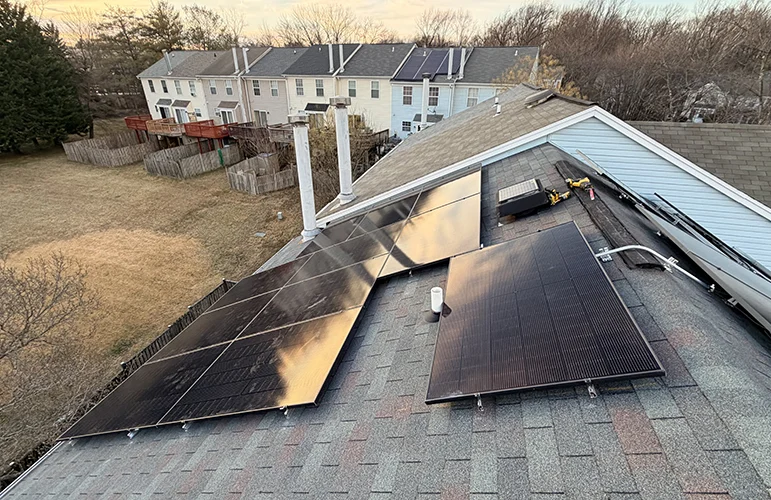
In a powerful intersection of climate action and social equity, a new renewable energy initiative is reshaping the landscape of affordable housing in Montgomery County, Maryland. By installing solar arrays across 40 townhomes managed by the nonprofit Housing Unlimited, a coalition of clean energy advocates has successfully merged environmental sustainability with the urgent mission of mental health support. Supported by the Changemaker Program—an initiative backed by global superstar Billie Eilish and the environmental nonprofit REVERB—this project serves as a blueprint for how clean energy can provide tangible relief to community-serving organizations.
The Core Facts: A Synergy of Sustainability and Social Care
At the heart of this project is the installation of high-efficiency solar photovoltaic (PV) systems across 40 residential units. The initiative, which boasts a total energy output capacity exceeding 270 kW, was a collaborative effort involving three primary stakeholders: the clean energy nonprofit RE-volv, the Montgomery County Green Bank, and the solar contractor GreenBrilliance.
The financial and operational structure of the project is designed to prioritize long-term stability. By transitioning these homes to solar energy, Housing Unlimited—a nonprofit that provides affordable, independent housing for adults in mental health recovery—is expected to slash its utility expenditures significantly. Projections indicate that the solar arrays will save the organization approximately $500,000 in energy costs over the course of their operating lifespans.
These savings are not merely financial line items; they represent a fundamental shift in how the organization allocates its resources. Instead of directing funds toward grid-based electricity, Housing Unlimited can now reinvest those dollars into its core mission: expanding housing availability and hiring additional staff to support the 263 residents currently under its care.
A Chronological Overview: From Conception to Completion
The path to powering these 40 townhomes was a multi-phased endeavor requiring intense coordination between financial, technical, and social stakeholders.
Phase 1: Planning and Strategic Alignment
The project began with a realization by RE-volv and its partners that community-serving nonprofits often face high overhead costs that limit their ability to scale their programs. Identifying Housing Unlimited as a candidate, the partners mapped out a strategy to leverage solar energy to create "fiscal breathing room" for the nonprofit. The Montgomery County Green Bank played a pivotal role during this phase, providing the necessary financial framework to make the capital-intensive installation feasible.
Phase 2: Design and Technical Implementation
Once funding was secured, GreenBrilliance, a solar contractor specializing in high-performance systems for nonprofits, took the lead on the technical side. Engineers had to navigate the logistics of "scattered-site" housing—a model where homes are integrated into residential neighborhoods rather than clustered in a single complex. This required custom design solutions for each of the 40 properties to ensure maximum solar exposure and grid efficiency.
Phase 3: The Changemaker Injection
The inclusion of Billie Eilish’s Changemaker Program provided the necessary catalyst to move the project from proposal to reality. Through her partnership with REVERB, Eilish has prioritized the acceleration of clean energy for organizations that support vulnerable populations. The grant provided by the program effectively lowered the barrier to entry, allowing the project to break ground and proceed through installation.
Phase 4: Activation and Future Monitoring
Following the successful installation and grid connection, the systems are now fully operational. Ongoing monitoring will track the energy output and the resulting financial savings, providing a data-backed case study for future solar projects in the affordable housing sector.
Supporting Data: The Impact of 270 kW
The technical specifications of this project are significant. A 270 kW output is substantial for a distributed residential project, especially when scaled across 40 individual homes.
- Total Capacity: > 270 kW of solar PV.
- Asset Footprint: 40 scattered-site townhomes in Montgomery County.
- Projected Financial Impact: $500,000 in saved utility costs over the lifespan of the panels.
- Direct Beneficiaries: 263 adults currently in mental health recovery who reside in Housing Unlimited properties.
This data underscores the efficiency of decentralized solar. By avoiding the need for a massive, centralized solar farm and instead opting for rooftop installations, the project integrates green energy directly into the community, reducing transmission losses and promoting energy independence at the household level.

Voices from the Field: Official Responses
The project’s success has drawn praise from both the environmental and social work sectors, highlighting the multi-disciplinary value of the initiative.
Andreas Karelas, Executive Director of RE-volv
Karelas emphasized the unique synergy of the project, stating, "Housing Unlimited’s incredible mission at the intersection of mental health and housing is now strengthened through solar power. These lower energy bills allow precious resources to be better utilized serving clients. RE-volv is thrilled to play a role in this incredible project, alongside our longstanding partners Montgomery County Green Bank and GreenBrilliance."
Abe Schuchman, CEO of Housing Unlimited
For Schuchman, the project is a vital tool for organizational growth. "Housing Unlimited is excited to install solar at our homes," he noted. "This enables us to redirect energy bill savings into expanding our team and adding more homes. With a secure home and desired supports, the adults we serve can focus entirely on their independence and recovery."
Nishanth ‘Neo’ Mahankali, Senior Mechanical Engineer at GreenBrilliance
Representing the technical team, Mahankali reflected on the broader mission of his firm. "Our mission is to provide nonprofits with high-performance, turnkey solar solutions that deliver immediate savings. Seeing our systems support mental health recovery and housing stability in Montgomery County is exactly why we do this work."
Broader Implications: A New Model for Nonprofits
The successful completion of this project holds several profound implications for the future of both the clean energy industry and the nonprofit sector.
1. The "Energy Savings for Mission" Model
This project proves that the "energy as a service" model is a viable way to bolster social safety nets. By treating energy costs as a variable that can be reduced through capital investment, nonprofits can effectively turn their rooftops into long-term revenue streams. This is particularly relevant in an era of fluctuating utility rates.
2. The Role of Celebrity Advocacy
Billie Eilish’s involvement via the Changemaker Program demonstrates how high-profile figures can move the needle on environmental policy by focusing on tangible, local results rather than abstract concepts. By funding projects that specifically target community-serving organizations, the Changemaker Program bridges the gap between celebrity platform and grassroots impact.
3. Scalability in Scattered-Site Housing
One of the most significant challenges in greening affordable housing is the scattered-site nature of many properties. If this model proves successful in Montgomery County, it offers a scalable blueprint for cities across the United States. Providing a standardized approach to auditing, financing, and installing solar on non-traditional, scattered-site residential properties could unlock a massive amount of underutilized rooftop potential.
4. Resilience and Mental Health
There is an often-overlooked connection between environmental stability and personal well-being. For the residents of Housing Unlimited, knowing that their homes are powered by clean energy and that their organization is fiscally secure creates a more stable environment for recovery. Financial stress is a major trigger for those navigating mental health challenges; by reducing the "hidden" costs of utility bills, the organization is creating a more stable, supportive ecosystem for its residents.
Conclusion
The collaboration between RE-volv, the Montgomery County Green Bank, GreenBrilliance, and the Changemaker Program represents more than just an installation of solar panels. It is a calculated, effective intervention in the economics of social services. By converting 40 townhomes into miniature power plants, the project has ensured that more funds remain within the community to support those who need it most.
As the energy transition continues to accelerate, the "Housing Unlimited" model serves as a vital reminder that the most successful climate solutions are often those that provide the most direct support to the people living on the front lines of social change. Through thoughtful design, strategic financing, and a shared commitment to community welfare, this project sets a high bar for future initiatives in the renewable sector.