WASHINGTON — In a decisive move aimed at shielding domestic renewable energy infrastructure from foreign market manipulation, the U.S. Department of Commerce (DOC) has released its final affirmative determinations in a high-stakes trade enforcement investigation. The sweeping review targets solar cell and module imports originating from India, Indonesia, and Laos, concluding that foreign producers have systematically flooded the U.S. market with unfairly priced, heavily subsidized goods to the detriment of domestic manufacturers.
The latest findings represent a critical juncture in an ongoing multi-year trade battle over the future of the American solar supply chain. With steep penalty rates assigned across all three nations, the decision underscores Washington’s aggressive posture against trade circumvention and unfair pricing practices in the rapidly expanding clean energy sector.
Main Facts of the Determination
The Department of Commerce’s final determinations validate long-standing complaints from American solar manufacturers, who argued that foreign entities were undercutting domestic production costs through state-backed subsidies and below-cost selling, legally defined as "dumping."
According to the DOC, exporters and producers in India, Indonesia, and Laos have benefited from massive government intervention, prompting the imposition of combined Antidumping (AD) and Countervailing Duty (CVD) rates that reach well over 100% in many categories.
The rationale behind these steep penalties is twofold:
- Antidumping Duties (AD): Designed to offset the difference between the export price of a product and its normal value (the price in the exporter’s home market or production cost), penalizing companies that sell goods in the U.S. below fair market value.
- Countervailing Duties (CVD): Imposed to neutralize the negative economic impacts of foreign government subsidies granted to specific industries or manufacturers.
The resulting tariff structures vary significantly by country, producer, and the specific nature of the trade violation, creating a complex web of financial hurdles for foreign suppliers attempting to access the lucrative American market.
Comprehensive Chronology of the Trade Dispute
The road to these final determinations has been marked by rapid regulatory actions, strategic industry maneuvers, and shifting trade patterns designed to outpace previous U.S. tariffs.
The Tariff Whac-A-Mole: Preceding Investigations
For years, U.S. solar manufacturers have battled what they term a cyclical pattern of circumvention. Earlier trade enforcement actions targeted solar imports from traditional manufacturing hubs in Southeast Asia—specifically Cambodia, Malaysia, Thailand, and Vietnam.
As the U.S. government clamped down on imports from those four nations, domestic producers observed a sudden, massive shift in capital and operational footprints. Global solar manufacturers began relocating or expanding their manufacturing operations to alternative developing nations—most notably India, Indonesia, and Laos—to bypass existing duties and maintain their market share in the United States.
Petition and Launch (July 2025)
Recognizing this strategic migration of manufacturing capacity, the Alliance for American Solar Manufacturing and Trade—a coalition of leading domestic solar producers—took formal action. In July 2025, the Alliance petitioned the U.S. government to launch comprehensive AD and CVD investigations into solar cell imports from India, Indonesia, and Laos. The petition laid out extensive evidence alleging that foreign companies were simply moving their subsidized supply chains to these new jurisdictions to evade existing U.S. trade laws.
Preliminary Findings and ITC Investigation (August–October 2025)
Following the petition, the U.S. International Trade Commission (ITC) launched an expedited review. In August 2025, the ITC delivered a unanimous affirmative vote, determining that the domestic U.S. solar manufacturing industry was being materially injured by the influx of imports from India, Indonesia, and Laos.
Concurrent with the ITC’s injury determination, the Department of Commerce initiated its technical investigations into dumping margins and foreign subsidy levels, leading to preliminary rate announcements late last year and culminating in the newly released final determinations.
The Path Forward: Final ITC Vote (October 2026)
While the Department of Commerce has established the final monetary values for the tariffs, these financial penalties are not yet officially active. By U.S. trade law, the tariffs cannot go into effect unless the ITC issues a final affirmative injury decision. The ITC is officially scheduled to vote on the matter on October 14, 2026. If the ITC confirms material injury, the duties will be formally assessed and collected by U.S. Customs and Border Protection.
Detailed Supporting Data: Country-by-Country Tariff Breakdown
The final determinations issued by the Department of Commerce reveal staggering penalty rates across all three targeted nations.
India: Uniformly High Penalties
India faced universal application of steep duties across all exporters and producers, reflecting broad-based state support and pricing anomalies.
- Antidumping (AD) Rates:
- All Exporters: Preliminary Rate: 123.04% | Final Rate: 123.04%
- Countervailing Duty (CVD) Rates:
- All Exporters: Preliminary Rate: 125.87% | Final Rate: 126.09%
Indonesia: Producer-Specific and "All Others" Rates
Indonesia’s determinations featured targeted rates for specific major producers, alongside baseline rates applied to remaining entities.
- Antidumping (AD) Rates:
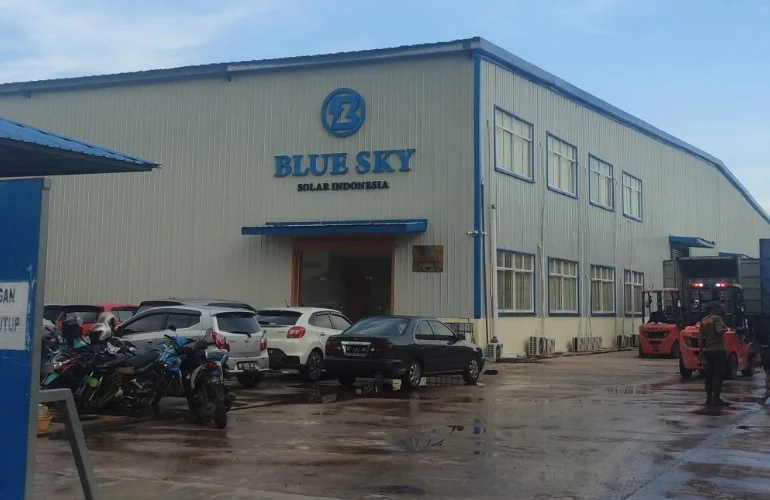
- Blue Sky Solar (Elite Solar): Preliminary: 94.36% | Final: 94.36%
- All Others: Preliminary: 35.17% | Final: 94.36% (marking a sharp upward revision from preliminary findings)
- Countervailing Duty (CVD) Rates:
- Blue Sky Solar (Elite Solar): Preliminary: 143.30% | Final: 173.70%
- PT REC Solar Indonesia (NE Solar): Preliminary: 85.99% | Final: 73.20% (Note: PT REC Solar Indonesia operates independently and has no corporate relation to the REC Group based in Singapore)
- All Others: Preliminary: 104.38% | Final: 73.20%
Laos: Rapidly Escalating Duties
Laos emerged as a prominent focal point for alleged circumvention, resulting in sharp upward revisions between preliminary and final calculations, particularly regarding countervailing subsidies.
- Antidumping (AD) Rates:
- All Exporters: Preliminary: 33.57% | Final: 65.43%
- Countervailing Duty (CVD) Rates:
- Solarspace: Preliminary: 80.67% | Final: 82.03%
- Vietnam Sunergy (VSUN): Preliminary: 80.67% | Final: 153.67% (nearly doubling from initial estimates)
- All Others: Preliminary: 80.67% | Final: 82.03%
Official Responses and Industry Stakeholder Perspectives
The release of the final DOC determinations has ignited fierce debate across the American renewable energy sector, drawing sharp lines between domestic manufacturing advocates and downstream project developers.
The Domestic Manufacturing Perspective
The Alliance for American Solar Manufacturing and Trade, which represents major domestic solar manufacturers including First Solar, Mission Solar, Qcells, and Talon PV, hailed the determinations as a crucial victory for fair trade and national industrial policy.
Tim Brightbill, co-chair of Wiley’s International Trade Practice and lead counsel to the Alliance, emphasized the explosive growth of domestic green manufacturing while warning of ongoing external threats.
"America’s solar manufacturing sector is poised for a historic resurgence, with domestic module capacity up more than 750% since 2022 and cell production expanding as well," Brightbill stated. "लेकिन that progress is being harmed by dumped and subsidized imports from India, Indonesia and Laos that have denied American producers a level playing field."
Brightbill characterized the final determinations as an essential step toward enforcing trade laws and restoring fair competition. Furthermore, he issued a direct warning to international actors seeking new regulatory loopholes:
"These final determinations are an essential step toward enforcing our trade laws and restoring fair competition for U.S. solar manufacturers and the workers they employ. We will keep monitoring import data and holding bad actors accountable wherever they move next."
Broad Industry Participation
The stakes of the investigation drew wide participation from across the broader industrial landscape. During the proceedings, sixteen distinct U.S. panel manufacturers formally provided detailed operational data to the ITC, illustrating the complex ecosystem of domestic assembly and component production. Participating companies included:
- AMPS (JA Solar/Corning)
- Canadian Solar
- Heliene
- Hounen
- Illuminate USA
- Jinko
- Mission Solar
- PowerFilm
- Qcells
- Runergy
- SEG
- Silfab
- Suniva
- T1
- Tesla
- Waaree
While numerous entities participated to provide baseline operational data, the Alliance for American Solar Manufacturing and Trade stood virtually alone in offering official commentary supporting the immediate implementation of punitive AD/CVD tariffs against India, Indonesia, and Laos. Conversely, a coalition of project developers, independent power producers, and utility-scale installers voiced significant concerns, arguing that heavy tariffs on foreign inputs could stall the deployment of clean energy projects and drive up costs for American consumers striving to meet aggressive decarbonization goals.
Broader Economic and Geopolitical Implications
The Department of Commerce’s rulings carry profound implications for the trajectory of the American energy transition, global trade compliance, and domestic industrial capacity.
1. Protection and Expansion of Domestic Manufacturing
Proponents argue that without aggressive trade defense mechanisms, heavily subsidized foreign imports will continuously threaten the viability of fledgling U.S. solar factories. With billions of dollars in federal incentives tied to the Inflation Reduction Act (IRA), Washington has invested heavily in rebuilding a domestic renewable energy supply chain. These tariffs act as a protective regulatory wall, ensuring that American factories can compete on price and reliability against state-backed foreign competitors.
2. Impact on Solar Deployment Costs and Project Timelines
Conversely, critics of the duties—including major utility-scale solar developers—warn that restricting access to diverse global supply chains could create short-term supply bottlenecks. If domestic cell manufacturing capacity cannot immediately meet the soaring demand for utility-scale projects, developers may face higher component costs, leading to project delays or increased electricity prices for consumers.
3. The End of "Tariff Hopping"?
The severity of the rates applied to India, Indonesia, and Laos—especially the dramatic jumps between preliminary and final figures for companies like Vietnam Sunergy (VSUN) and various Indonesian producers—sends an unmistakable signal to multinational manufacturing conglomerates. The era of easily shifting production facilities to new developing nations to evade U.S. tariffs is facing heightened regulatory scrutiny. As the Alliance and federal agencies continue to monitor global trade data, multinational solar enterprises must increasingly weigh the risks of relocation against the certainty of severe retrospective penalties.
As the industry looks ahead to the final International Trade Commission vote on October 14, 2026, all eyes remain fixed on Washington. The ultimate outcome will determine whether these landmark tariff rates become permanent fixtures of U.S. trade policy, fundamentally reshaping how clean energy hardware enters the American market for years to come.