WASHINGTON — As the United States navigates an increasingly complex energy landscape, a new comprehensive report from the nonprofit energy think tank RMI underscores the profound reliability, economic, and public health contributions of utility-scale battery energy storage systems (BESS). Yet, this analytical endorsement arrives at a precarious juncture for the domestic energy sector. While historical data proves that grid-scale batteries have successfully averted blackouts, stimulated local economies, and replaced polluting fossil-fuel peaker plants, shifting federal policies, tightening trade restrictions, and cooling deployment forecasts threaten to decelerate the industry’s momentum.
The juxtaposition between the proven operational value of energy storage and the mounting headwinds facing project developers has ignited urgent discussions among utility executives, policymakers, and energy analysts alike.
Main Facts: The Dual Reality of the American Storage Market
At its core, the RMI report presents a dual reality: while deployed battery infrastructure has consistently proven its worth as an indispensable grid asset, the pipeline for future installations is facing severe downward pressure.
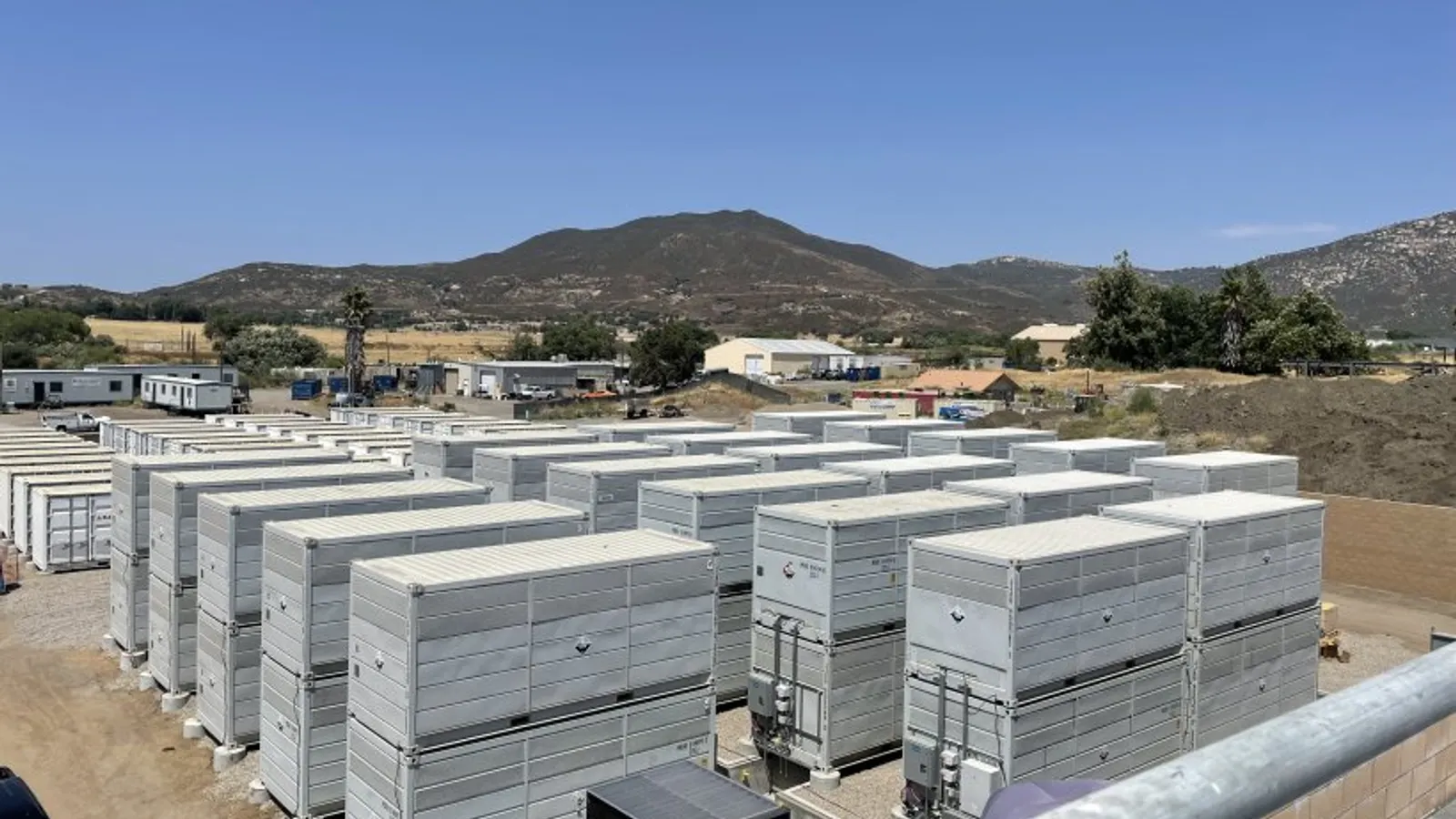
On the operational side, energy storage has evolved from an emerging technology into a foundational pillar of grid management. BESS assets provide crucial frequency regulation, absorb excess renewable generation, and inject power rapidly during demand spikes. According to RMI’s findings, modern battery systems have effectively safeguarded regional power grids against extreme weather events, drastically reducing the reliance on high-emission, fossil-fuel-fired peaking power plants.
Conversely, the market conditions governing the deployment of these systems are undergoing a dramatic structural shift. Regulatory friction, including persistent import tariffs, domestic sourcing mandates, and newly enacted executive restrictions on foreign components, has complicated supply chains. Consequently, financial models that once projected explosive, uninterrupted growth are being aggressively revised downward, raising concerns about whether the U.S. can scale its grid infrastructure quickly enough to match soaring electricity demand driven by data centers, electric vehicles, and industrial electrification.
Chronology: From Biden-Era Optimism to Post-Election Headwinds
To understand the current state of the U.S. energy storage market, industry analysts trace a rapid evolution in deployment forecasts and regulatory milestones over the past several years:
- 2020 (The Vulnerability Baseline): During a modest heat wave in California, the state operated with less than 1 GW of grid-connected battery capacity. Despite peak demand being roughly 10% lower than subsequent record years, the grid faltered, resulting in rolling blackouts that exposed the fragility of the state’s resource adequacy margins.
- 2022 (The Proven Turning Point): At the peak of a historic, record-breaking heat wave, California’s grid was supported by 3.4 GW of utility-scale batteries. According to an ICF analysis cited by RMI, these batteries successfully met 6% of the state’s total energy needs and materially strengthened reserve margins, averting widespread system failures.
- 2024 (The Peak Projections): Energy consultancy Wood Mackenzie, operating under the full regulatory and financial tailwinds of the Biden-era Inflation Reduction Act (IRA), projected a robust 30% annual growth rate in battery deployment across a five-year horizon. RMI’s recent baseline figures heavily relied upon these optimistic forecasts.
- January 2025 (Safety Incidents and Evolving Standards): A high-profile fire severely damaged a 300-MW Vistra energy storage array near Santa Cruz, California (the Moss Landing facility). The incident brought safety concerns back into the national spotlight, though analysts noted the facility utilized older, non-containerized nickel-manganese-cobalt (NMC) chemistries and design paradigms that do not conform to modern industry standards.
- Earlier in 2025 (The Initial Forecast Correction): Facing mounting supply chain bottlenecks, lingering tariff disputes, and shifting political landscapes, Wood Mackenzie dialed back its five-year utility-scale battery deployment forecast from 30% down to 16%.
- August 2025 (Executive Intervention): President Donald Trump signed an executive order specifically restricting the deployment of foreign-produced bulk power components. This move introduced fresh operational hurdles, layering new compliance challenges on top of existing structural headwinds for developers reliant on global supply chains.
- Today (The Stagnation Horizon): Wood Mackenzie’s most recent market forecast paints a much more conservative picture, predicting that utility-scale battery deployments will flatline entirely in 2026 before achieving a modest, single-digit growth rate of just 8% annually through 2031.
Supporting Data: Economic, Health, and Operational Metrics
RMI’s report leverages empirical data and modeling tools—such as the U.S. Environmental Protection Agency’s CO-Benefits Risk Assessment (COBRA) health impacts screening tool—to quantify the wide-ranging benefits of battery storage across multiple domains.
Grid Resilience and Reliability
The operational transformation in regions like California illustrates the power of capacity scaling. Expanding from under 1 GW in 2020 to 3.4 GW in 2022 transformed batteries from a supplementary asset into a primary line of defense against load shedding. By shaving peak demand and responding to frequency fluctuations in milliseconds, storage assets have shielded regional transmission organizations (RTOs) from catastrophic failures.
Local Economic Contributions
Beyond system reliability, utility-scale storage installations deliver substantial, predictable revenue streams to local municipal governments through property and sales taxes. RMI’s review of project agreements across California, Massachusetts, Nevada, and Texas reveals striking economic footprints:
- Average Gross Tax Contributions: Most utility-scale projects yield an average annual gross tax contribution of approximately $6,600 per megawatt (MW), with top-tier projects exceeding $10,000/MW.
- Medway, Massachusetts: A 250 MW / 500 MWh battery installation that came online in February is projected to generate roughly $46 million in revenue for the host town over a 20-year operational lifespan.
- Purple Sage Energy Center, Nevada: Even after accounting for partial state property tax abatements, this 400-MW installation will deliver $3.4 million annually in direct payments to local Nevada governments.
- Libra Installation, Nevada: This combined solar-and-storage facility is slated to inject an estimated $170 million into local coffers via property and sales taxes over its operational lifetime.
Public Health and Environmental Justice
Replacing fossil-fuel peaker plants—typically older, highly polluting natural gas or oil turbines run only during peak demand hours—with clean energy storage yields immediate local health dividends. According to RMI’s EPA-backed COBRA modeling:
- Port Jefferson Peaker (Suffolk County, New York): Transitioning a 500-MW peaker plant to battery storage would allow the county to avoid an estimated $5.3 million in annual health costs associated with particulate matter and smog-forming emissions.
- La Porte Peaker (Harris County, Texas): Swapping a 240-MW peaker plant for equivalent battery capacity would save approximately $3.8 million annually in regional health-related expenses.
Official Responses and Industry Perspectives
The release of the RMI report has drawn mixed reactions from trade associations, market analysts, and safety advocates, highlighting the tension between the technological readiness of storage and external regulatory pressures.
Proponents of renewable energy and storage trade groups emphasize that the industry has proactively addressed historical vulnerabilities, particularly regarding fire safety. Addressing concerns stemming from past incidents like the Moss Landing fire, RMI and battery safety experts noted that the industry has successfully transitioned to lithium-iron-phosphate (LFP) battery chemistries. LFP cells are inherently more stable, less prone to thermal runaway, and have become the universal baseline for modern stationary storage.
Furthermore, industry representatives point out that older, enclosed, non-containerized designs utilizing nickel-manganese-cobalt (NMC) chemistries—such as the one involved in the Vistra incident—are relics of an earlier developmental era. Modern fire codes, National Fire Protection Association (NFPA) standards, and local zoning requirements enforce rigorous safety buffers, advanced suppression systems, and modular containerization that render such failures statistically rare.
On the regulatory front, however, developers and financiers express deep anxiety over the cumulative impact of trade restrictions. Analysts point out that President Trump’s August executive order restricting foreign-produced bulk power components strikes at the heart of an industry that has historically relied on global manufacturing ecosystems—particularly suppliers tied to China—to maintain cost-competitiveness.
Implications: Navigating the Future of American Energy Storage
The convergence of RMI’s data-driven advocacy and Wood Mackenzie’s sobering deployment forecasts signals a critical turning point for the U.S. energy storage sector.
- Infrastructure Bottlenecks vs. Rising Demand: With utility-scale deployments projected to flatline in 2026 and grow at a sluggish 8% through 2031, a dangerous supply-demand mismatch is looming. As electrification accelerates power consumption nationwide, the artificial suppression of battery deployment could leave regional grids increasingly vulnerable to extreme weather shocks.
- The Localization Imperative: The policy push to decouple from foreign supply chains forces domestic developers to accelerate investments in U.S.-based battery manufacturing, cell production, and component fabrication. While this policy aims to bolster national security and domestic manufacturing jobs, the transition period is introducing cost inflation and project delays that threaten near-term deployment targets.
- Community Acceptance and Economic Reliance: RMI’s findings regarding local tax contributions offer a vital playbook for developers seeking community buy-in. As rural and suburban municipalities recognize that utility-scale storage projects can fund schools, infrastructure, and public services without imposing heavy burdens on local roads or water supplies, community opposition may soften—provided safety standards are transparently maintained.
- The Imperative of Regulatory Clarity: Ultimately, the long-term viability of the U.S. storage market depends heavily on regulatory stability. Investors and project developers require predictable tax frameworks, streamlined interconnection queues, and clear, consistent trade rules to commit the billions of capital necessary to build out the nation’s next-generation electrical grid.
As the industry absorbs RMI’s findings and grapples with the new economic reality mapped out by Wood Mackenzie, stakeholders across the energy ecosystem face a shared challenge: ensuring that regulatory hurdles do not prematurely short-circuit one of the most effective tools available for modernizing and securing the American power grid.