Modern live entertainment relies heavily on cutting-edge engineering to create breathtaking illusions. Today’s theatergoers and concert attendees expect more than just static backdrops; they anticipate dynamic, transformative environments where massive LED walls glide effortlessly across stages, towering scenery morphs in real-time, and performers soar gracefully through the air in tightly synchronized choreography.
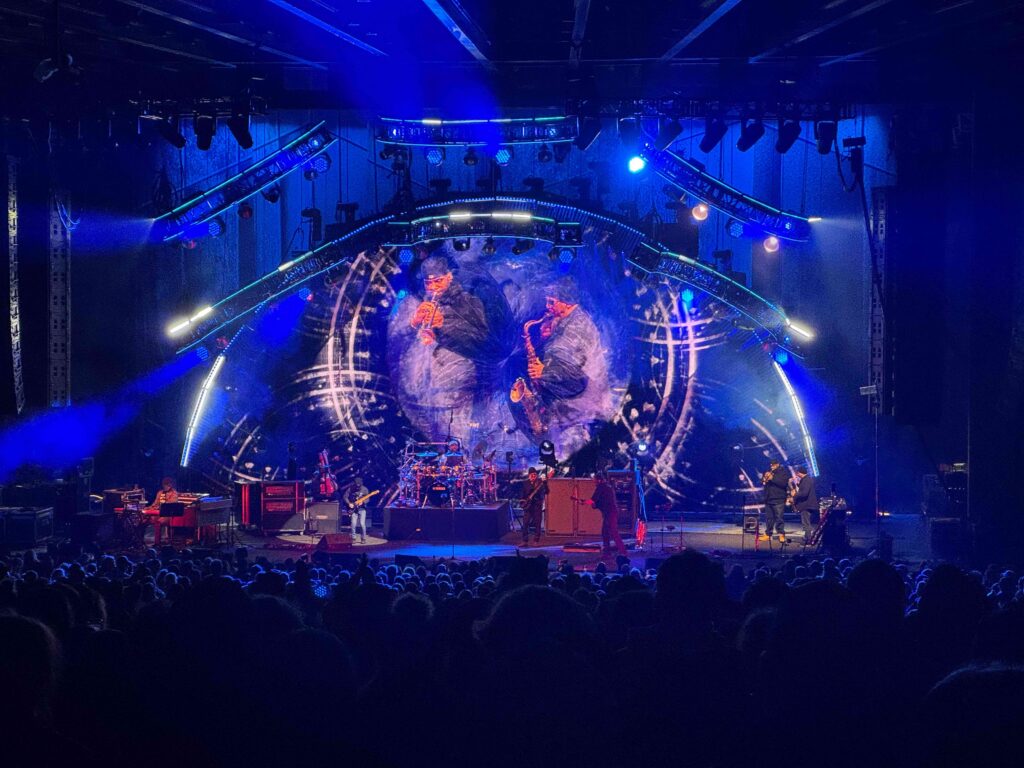
Behind these seamless spectacles lies a complex ecosystem of advanced motion control technology. At the forefront of this niche is Creative Conners, a pioneer in the design and manufacture of modular machinery, standardized control hardware, and intuitive software. By democratizing sophisticated automation tools, Creative Conners has empowered everyone from massive touring acts like Cirque du Soleil and the Dave Matthews Band to regional high school theater departments staging productions of Les Misérables to execute complex stage movements safely and visually compellingly.
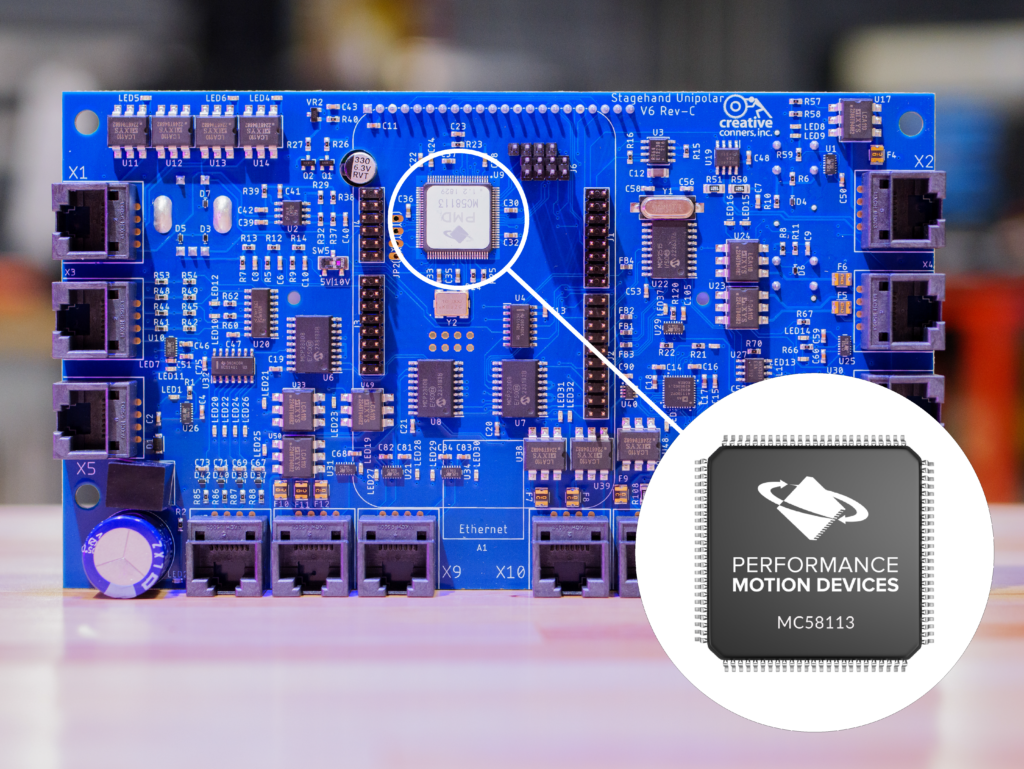
However, delivering high-end automation across such a diverse customer base requires continuous technological evolution. Recently, Creative Conners underwent a major overhaul of its core motion control platform, integrating Performance Motion Devices (PMD)‘s Magellan MC58113 motion control IC into its flagship Stagehand controller. This upgrade overcame legacy technical limitations, streamlined software development, and expanded the company’s operational capabilities—all while preserving the approachable, modular design philosophy that defines its brand.
Main Facts: The Intersection of Hardware, Software, and Stagecraft
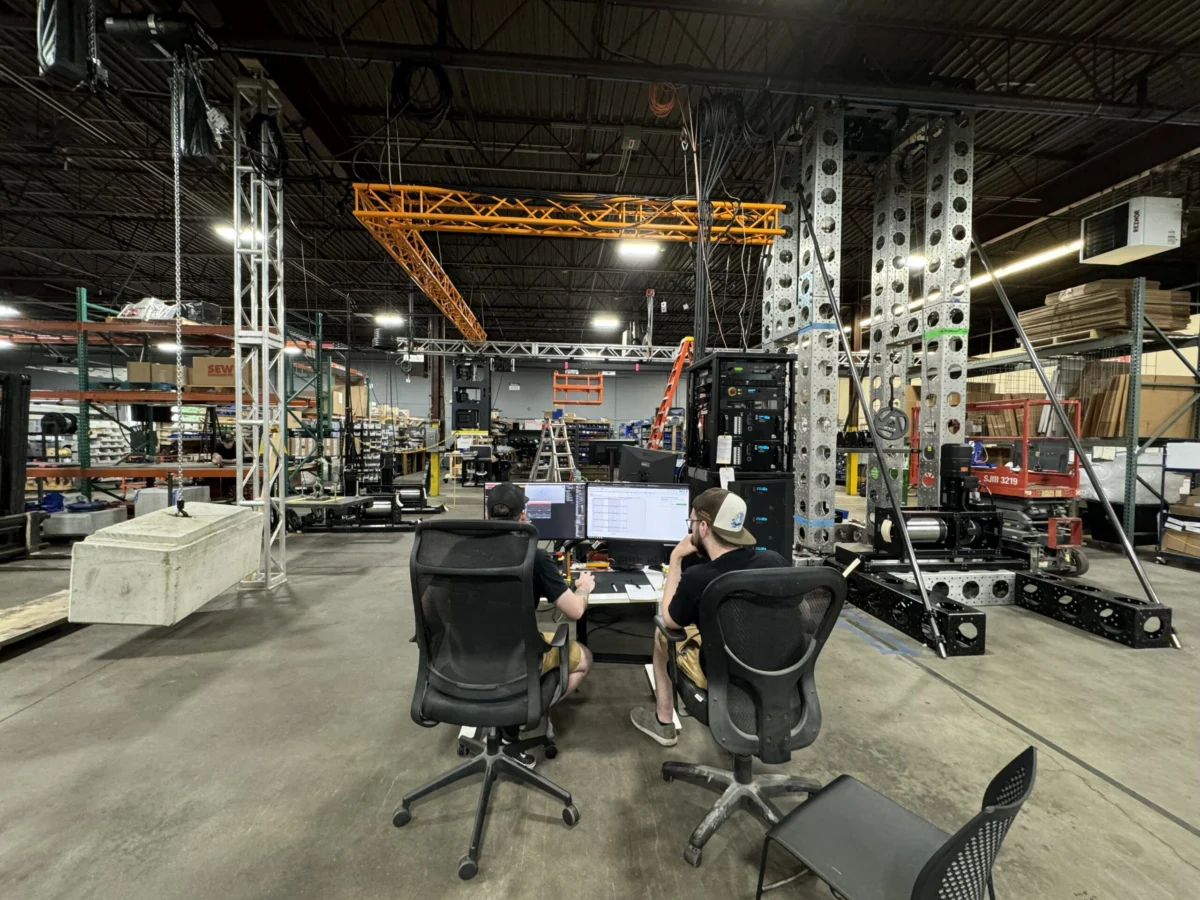
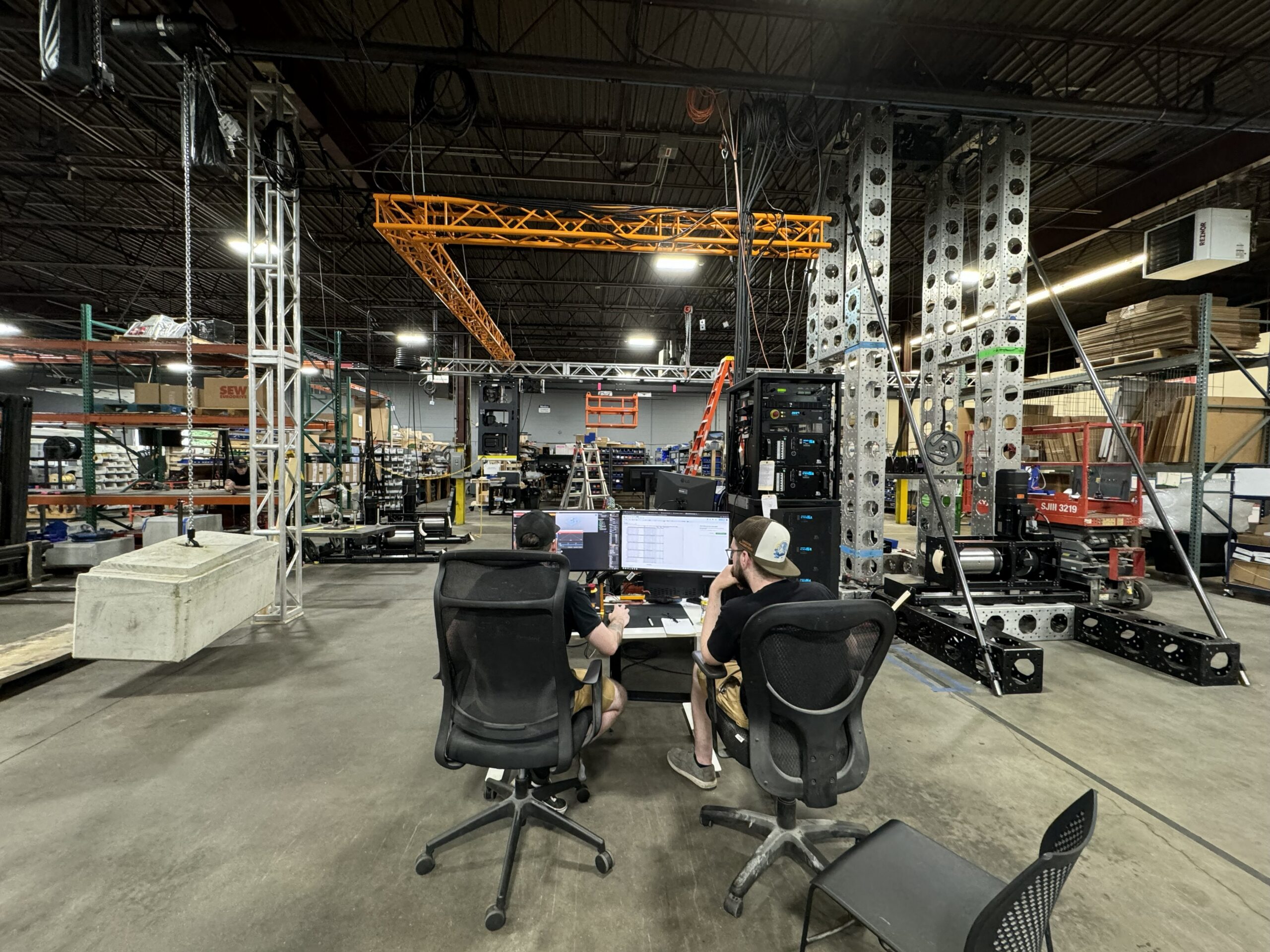
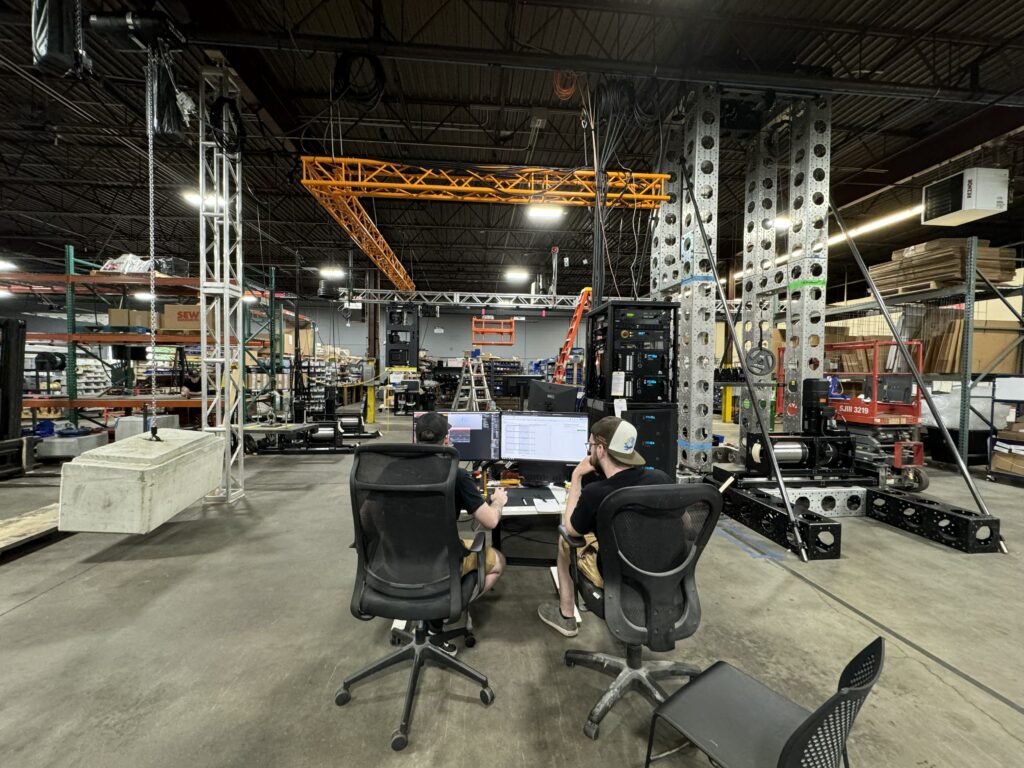
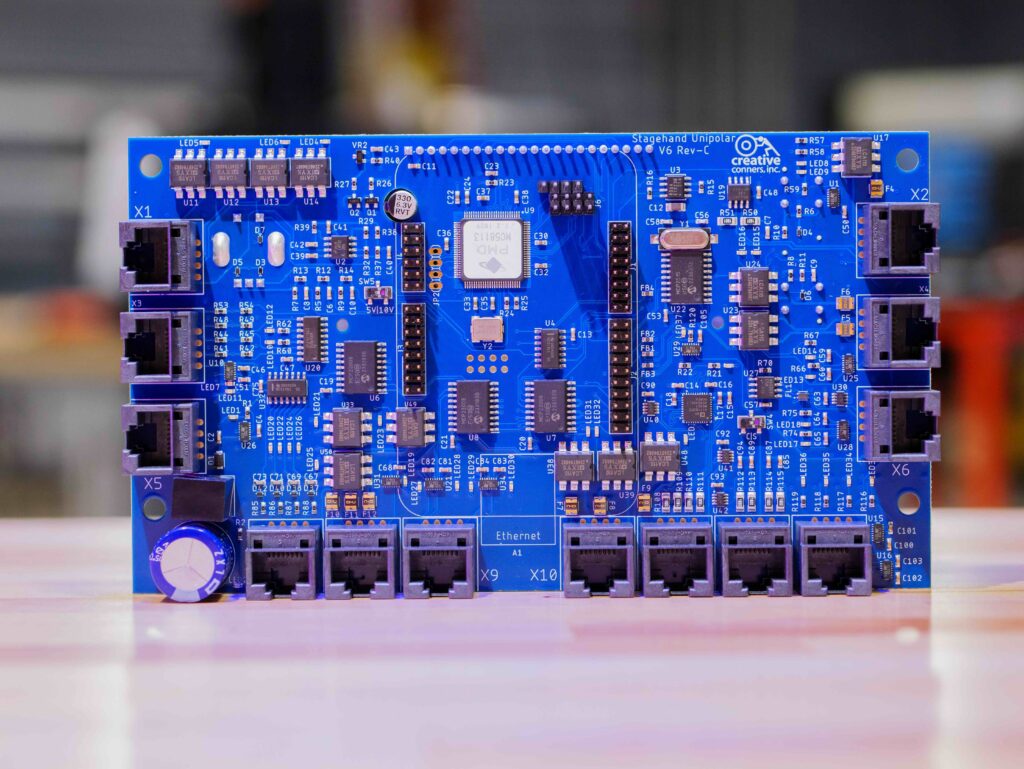
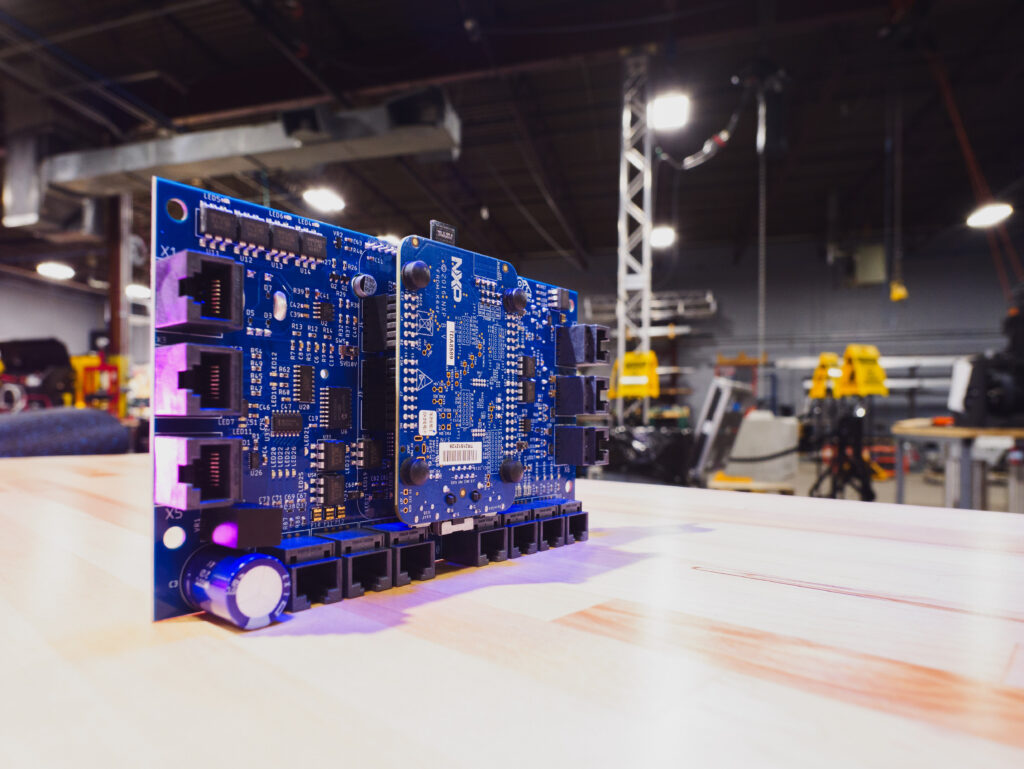
The backbone of nearly every Creative Conners system is the Stagehand, a standardized control box that interfaces with variable-frequency drives (VFDs), encoders, and safety systems. While the physical machinery deployed on a stage—such as winches, lifts, and tracks—is often custom-built for a specific venue or production, the Stagehand controller remains remarkably consistent.
The Stagehand serves as the local execution layer for Spike Mark, Creative Conners’ proprietary show control software. In Spike Mark, production teams map out cues that dictate:
- Where stage elements must travel
- How fast they move
- Acceleration and deceleration rates
- Waiting periods and interlocks with other automated elements
Once a cue is triggered, the Stagehand executes these commands locally, ensuring millisecond-level precision. Because the controller sits precisely at the crossroads of hardware execution, software programming, and rigorous safety protocols, the choice of the underlying motion control integrated circuit (IC) is paramount.
Chronology: Outgrowing Legacy Systems and Finding the Right Partner
For years, Creative Conners relied on legacy motion control chips manufactured by Texas Instruments (TI). While these devices served the company well during its formative growth years, technological stagnation eventually began to stifle innovation.
The Limits of Legacy Hardware
As theater productions demanded more nuanced movements—particularly for performer-flying effects—the limitations of the older TI chips became glaringly apparent. Most notably, the legacy ICs enforced symmetric acceleration and deceleration profiles.
"On the old IC, we were locked to symmetric accel/decel. Whatever you loaded for the acceleration you had to use for the deceleration," explains Christian Basse, Senior Controls Engineer at Creative Conners.
This constraint directly clashed with theatrical aesthetics and safety demands. Stage designers generally want machinery to transition onto the stage rapidly to maintain pacing, but require a smooth, deliberate, and visually pleasing stop to ensure safety and elegance. Furthermore, the legacy hardware did not permit acceleration parameters to be modified on the fly—a dealbreaker for dynamic performer-flying sequences where mechanical loads and vectors change constantly throughout a single cue.
The Supply Chain Crunch
Compounding these functional limitations were severe market forces. The aging TI motion controllers became increasingly difficult to source, a vulnerability brutally exposed by pandemic-era global supply chain disruptions. Creative Conners needed a future-proof, reliable alternative that could seamlessly integrate into its modular product architecture without requiring a total redesign of its product philosophy.
Transitioning to PMD
After a comprehensive market evaluation, Creative Conners selected PMD’s Magellan MC58113 motion control IC as the cornerstone for the new generation of its Stagehand control PCB. Paired with a modern microprocessor and a local Human-Machine Interface (HMI) display, the MC58113 revitalized the Stagehand core, opening up a new tier of performance capabilities.
Supporting Data and Technical Breakthroughs
The adoption of the Magellan MC58113 introduced several critical performance enhancements that directly addressed Creative Conners’ engineering bottlenecks.
1. Asymmetric Acceleration and Deceleration
The single most transformative upgrade provided by the MC58113 is native support for asymmetric motion profiles. Engineers can now program rapid acceleration curves to move scenery into position quickly, paired with gentle, highly controlled deceleration curves that eliminate abrupt jerks, protecting mechanical rigging and ensuring an organic visual aesthetic on stage.
2. Absolute Encoder Integration
Unlike incremental encoders, which lose their positional reference when power is cycled, the MC58113’s support for absolute encoders guarantees that position data is retained indefinitely.
"If it’s going to move without the machine and the controls being powered, you’re not going to lose the position," notes Basse.
This capability is vital for emergency rescue scenarios. If a show loses primary electrical power, technicians can manually lower a suspended performer using mechanical brakes. When power is eventually restored, the Stagehand controller instantly knows its exact position without requiring a time-consuming homing routine. While absolute encoders are deployed primarily for permanent venue installations and high-end rigging, the MC58113 makes this advanced safety feature readily available.
3. Bi-Directional $pm$10-V Speed Signals
Certain theatrical applications—particularly hydraulic lifts and specialized drives—rely on an analog $pm$10-V speed signal, where negative voltage commands reverse motion and positive voltage commands forward motion. When Creative Conners previously transitioned to newer TI controllers, this native bidirectional signal capability was lost.
The integration of the PMD controller allowed engineers to incorporate an external Digital-to-Analog Converter (DAC), successfully restoring bidirectional analog signaling. This prevented the company from having to turn away specialized, hydraulic-heavy retrofits and custom staging contracts.
4. Advanced Diagnostics and Position Filtering
The MC58113 features built-in tracing and monitoring tools, allowing Creative Conners engineers to visualize real-time motion behavior, diagnose anomalies, and fine-tune performance parameters. Coupled with highly tunable position filters, the system ensures that automated stage elements arrive precisely where they are supposed to be, exactly when scheduled. In tightly choreographed productions where a fraction of an inch can mean a missed cue or a safety hazard, this positional rigidity is non-negotiable.
Official Responses and Engineering Insights
Reflecting on the partnership, the engineering team at Creative Conners highlights not just the hardware capabilities of the PMD silicon, but the monumental software advantages it introduced.
Software Acceleration via C-Motion
One of the most unexpected and valuable benefits of partnering with Performance Motion Devices was access to PMD’s C-Motion C/C++ software library.
Historically, developing firmware meant writing low-level serial communication routines, parsing bytes, and building message-packing architectures completely from scratch. With PMD, those low-level hurdles vanished. The C-Motion API provides a comprehensive, command-driven architecture where executing complex motion commands is reduced to simple function calls.
"That saved so much time and has been invaluable to us," Basse emphasizes.
By eliminating the need to reinvent motion control plumbing, Creative Conners’ lean engineering team could redirect their focus toward high-level functionality, user experience improvements, and refining the Spike Mark software suite.
Collaborative Engineering and Rapid Support
The collaborative relationship between Creative Conners and PMD was further cemented during a pivotal development phase when the theatrical team required higher encoder resolutions than standard implementations supported. Instead of forcing Creative Conners to compromise, PMD engineers collaborated directly with the team to develop and deploy a custom firmware update in roughly one week, keeping the product launch on schedule.
Implications: The Future of Smart Stage Machinery
The successful integration of the Magellan MC58113 has not only solved historical engineering limitations for Creative Conners—it has also opened the door to next-generation product roadmaps.
Multi-Axis Coordination and Intelligent Drives
Buoyed by the success of the Magellan IC, Creative Conners is actively exploring PMD’s multi-axis motion controllers to enable even tighter, highly synchronized motion across complex arrays of stage machinery.
Furthermore, the company is eyeing PMD’s ION/CME N-Series intelligent drives, specifically high-power variants such as the 1000-W output option. Transitioning to an integrated, high-power servo solution opens up the possibility of developing a new generation of "smart machines." In these future systems, drive electronics will be mounted directly onto the machinery itself rather than housed in external control boxes.
Res reshaping Live Entertainment
By decentralizing drive architecture, Creative Conners can significantly reduce the physical size and weight of touring gear while simultaneously boosting lifting capacities and operational speeds. For an industry where truck space, setup speed, and safety margins dictate profitability, these advancements promise to redefine what is possible on stage.
As live events continue to push the boundaries of visual storytelling, the partnership between Creative Conners and Performance Motion Devices demonstrates how robust, high-performance motion control components can empower manufacturers to deliver cinematic precision to the physical world of theater.