The landscape of Enterprise Resource Planning (ERP) and financial management technology is undergoing its most profound transformation since the dawn of the cloud era. For years, the primary objective for organizations was the migration from legacy, on-premise infrastructure to flexible, cloud-based environments. Today, however, the goalposts have shifted. Modern businesses are no longer satisfied with simply "hosting" their data; they are demanding a cohesive, real-time ecosystem that connects finance, operations, and industry-specific workflows into a singular, intelligent engine.
At the heart of this evolution is the transition of the ERP from a passive "system of record"—a digital filing cabinet for transactions—to a "system of intelligence." By leveraging Artificial Intelligence (AI) to identify anomalies, surface insights, and provide proactive decision support, modern platforms are fundamentally altering the relationship between technology and organizational leadership.
The Architect of Evolution: A Professional Perspective
Chris Hawley, Managing Director for Great Britain at The Noledge Group, stands at the intersection of this transition. With a career spanning nearly 25 years at Sage—where he was instrumental in the development of the iconic Sage 200—Hawley has witnessed the maturation of enterprise software from rudimentary accounting tools to the sophisticated, AI-driven suites of today. His current work at The Noledge Group focuses on the intricate challenges of cloud adoption, system integration, and the strategic deployment of AI within the finance sector.
In a recent interview, Hawley provided a critical examination of the current market, arguing that the true value of modern ERP lies not in the bells and whistles of new technology, but in the ability to solve long-standing business problems through smarter, more integrated data architectures.
Chronology of the ERP Transition
To understand the current state of enterprise technology, one must trace its recent history:
- The Era of Silos (1990s–Early 2000s): Finance and operations existed in parallel, disconnected universes. Accounting software was a "big calculator," while operational data was relegated to spreadsheets or localized databases.
- The Cloud Revolution (2010s): The primary focus shifted to accessibility and infrastructure. Moving to the cloud allowed for remote access and reduced the burden of on-premise hardware maintenance.
- The Connected Enterprise (2020–2024): Businesses began demanding interoperability. The goal became the elimination of "swivel-chair" integration, where employees manually moved data between systems.
- The Age of Intelligence (2025–Present): We have entered the era of the "Predictive ERP." Technology is no longer just tracking the past; it is surfacing insights about the future.
Breaking Down Data Silos: The Operational Imperative
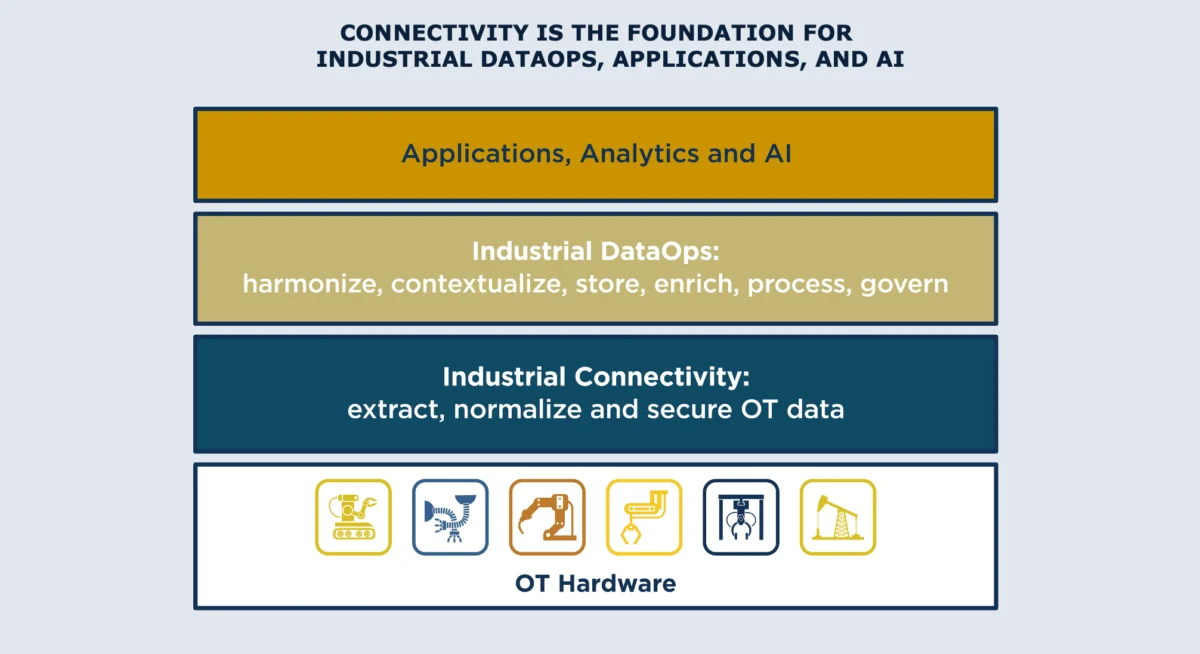
For many organizations, digital transformation has been a double-edged sword. While they have invested heavily in cloud tools, they often suffer from "fragmented success." Departments operate with disconnected data, creating an environment where inventory, procurement, and financial reporting do not talk to each other.

"We see this every day," says Hawley. "Older systems are still working, but so are the teams propping them up. Manual workarounds and overtime become the norm, and the business ends up in a spiral of inefficiency. You are working hard, but you are unable to spot trends or capitalize on opportunities because your data is trapped in silos."
The implication is clear: fragmentation is a competitive disadvantage. Organizations that maintain a unified data platform can make decisions in real-time, whereas those tethered to legacy or disconnected systems are perpetually playing catch-up, relying on retrospective reporting when they should be acting on forward-looking data.
Vertical Solutions: Why One Size No Longer Fits All
One of the most significant trends in current enterprise software is the rise of vertical-specific platforms. For years, the market was dominated by general-purpose ERPs that required companies to "shoehorn" their unique processes into a rigid, one-size-fits-all framework.
The Noledge Group’s recent launch of sruu—a specialized platform for the UK forecourt and convenience sector—highlights the shift toward sector-focused technology. In the retail sector, for instance, traditional EPoS (Electronic Point of Sale) systems often required manual reconciliation with accounting software. This manual labor was not only expensive but prone to human error. By unifying EPoS, supplier, accounts, and energy data into one platform, the technology is tailored to the specific cadence of the retail industry.
"It comes down to understanding the organization," explains Hawley. "If a customer has already invested in a great vertical solution, they might just need to fix a financial bottleneck. Our job is to build a connected solution, not to force them into a new system that lacks the specialized functionality they need to operate."
AI: Beyond the Hype
The infusion of AI into business software is ubiquitous, but Hawley warns against the "technology for technology’s sake" trap. He emphasizes that the real test of AI is its ability to balance acceleration with control.

The Criteria for Meaningful AI Integration:
- Governance: Does the AI operate within the guardrails of existing financial controls?
- Proactivity: Does the system alert the user to an issue before it becomes a crisis, or does it simply report on what has already happened?
- Accuracy: Is the AI providing actionable insights based on the organization’s actual, verified data, or is it generating generic projections?
"The measurable gains show up when acceleration and control move together," notes Hawley. "Everyday tasks and reporting speed up, but the right checks stay in place. We are moving away from the model of ‘remembering to run a report’ to an always-on, proactive understanding of the business."
Strategic Implications for Leaders
For senior leaders, the task of modernizing ERP is as much about change management as it is about software selection. The most common pitfall in digital transformation is the attempt to replace everything at once.
Best Practices for Modernization:
- Audit the Entire Business: Before selecting software, map out the entire organization. Identify where the true bottlenecks lie, rather than focusing on the loudest department or the most outdated piece of software.
- Prioritize Incremental Value: Avoid "Big Bang" implementations. Introduce technology in a measured way, prove the benefit, and then scale.
- Focus on Business Goals: Let technology serve the business strategy. If a piece of technology does not contribute to a specific, measurable goal—such as reducing order-to-cash time or improving inventory accuracy—it is likely just adding complexity.
- Resist the "Sticky-Plaster" Fix: Organizations often try to patch broken processes with more manual labor or temporary software plugins. This often obscures the root cause of the issue, which only a unified system can resolve.
Looking Ahead: The Future of Enterprise Intelligence
As we look toward the next generation of business systems, the line between the user and the software will continue to blur. We are moving toward a future where the ERP acts as a "co-pilot." Imagine an accounting system that automatically reconciles transactions, flags potential fraud in real-time, and provides the CFO with a conversational interface to ask, "What is the cash flow impact if our supplier lead time increases by five days?"
However, as Hawley reminds us, the human element remains paramount. "Will AI ever fully take the wheel of an ERP system? Not without strong controls and governance in place. We are still at the start of this journey, and the organizations that win will be those that use AI to empower their people, not replace the oversight that keeps a business healthy."
The era of the "system of record" is drawing to a close. The future belongs to organizations that can harness intelligence, unify their data, and focus on the strategic outcomes that matter most. In this new landscape, the ERP is no longer just a tool for the finance department; it is the central nervous system of the modern, agile enterprise.