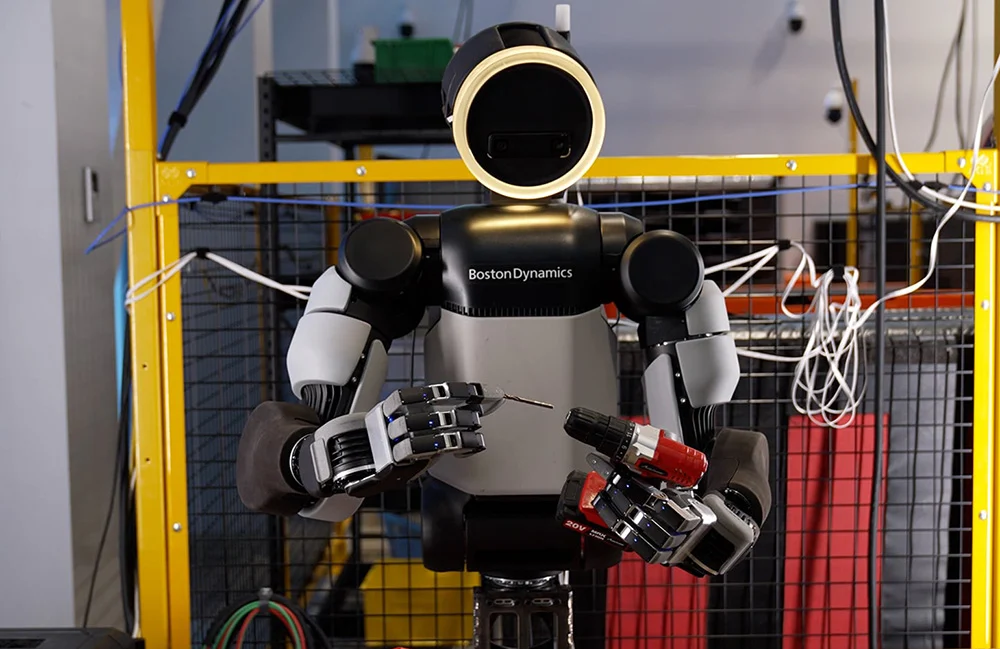
In a bold departure from traditional biomimetic robotics, Boston Dynamics has unveiled a new, four-fingered hand designed specifically for its next-generation Atlas humanoid. By intentionally omitting the pinky finger and focusing on high-fidelity simulation-to-reality (sim2real) reinforcement learning, the company is signaling a shift from "human-mimicking" robotics to "task-optimized" engineering. This development marks a pivotal moment in the ongoing evolution of humanoid robotics, prioritizing manufacturing reliability and agile manipulation over the aesthetic goal of perfect human imitation.
The Main Facts: Rethinking the Robotic Extremity
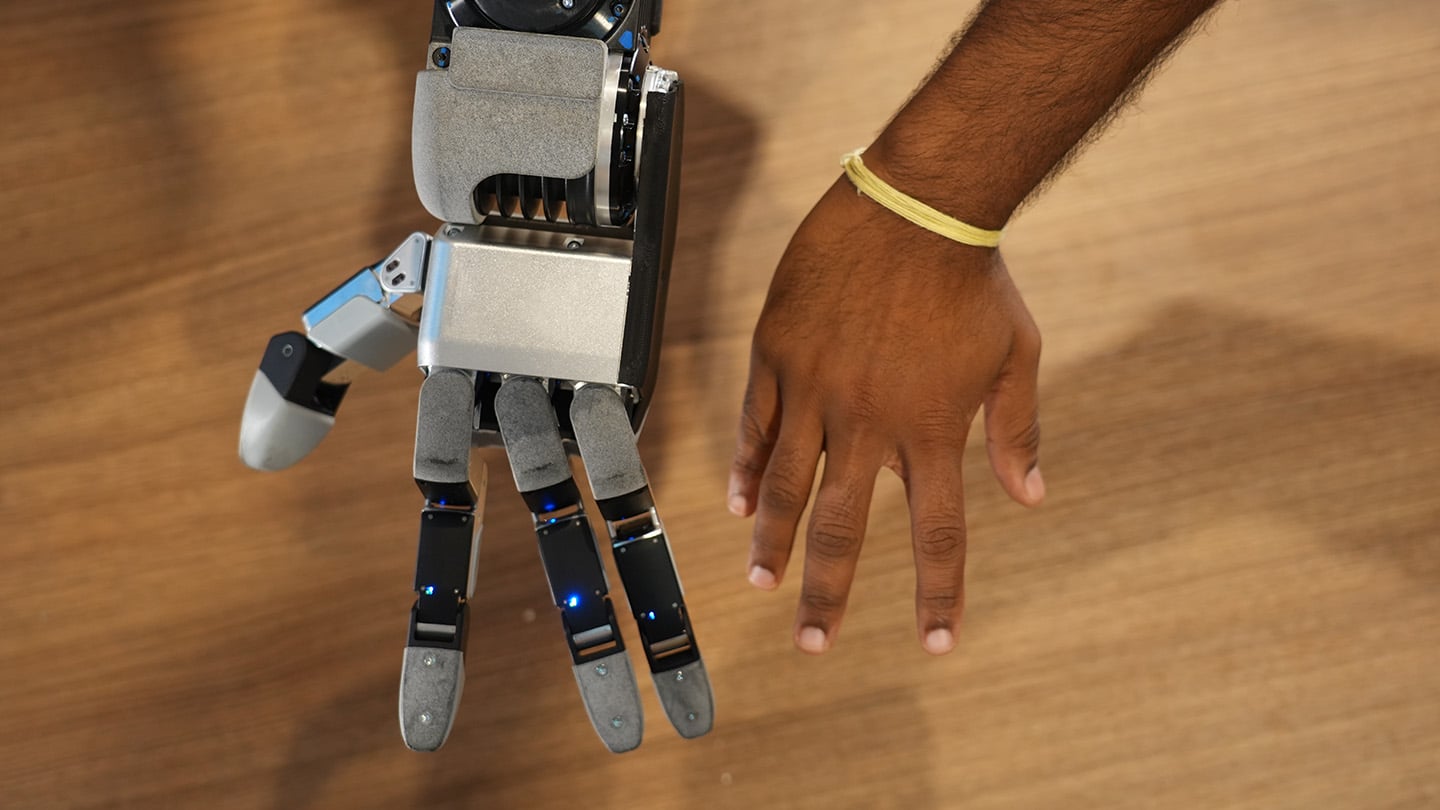
The newly unveiled hand is a feat of mechanical efficiency, featuring 13 degrees of freedom (DOF) and a direct-actuation architecture designed for mass production. Unlike its predecessors, which focused on a wide variety of grasps using seven DOFs, the new design is purpose-built for high-frequency object manipulation.
Key technical specifications include:
- Configuration: Four fingers total, with the thumb featuring 4 DOF and the remaining three fingers featuring 3 DOF each.
- Actuation: A single, standardized actuator type is used throughout, simplifying maintenance and manufacturing.
- Encapsulation: Mirroring the body of the new electric Atlas, the joints are fully enclosed, eliminating the vulnerability of exposed cabling—a common point of failure in older robotic systems.
- Tactile Intelligence: The hand is equipped with dense pressure-sensing arrays on the fingertips and palms, allowing the robot to detect minute contact signals essential for delicate assembly tasks.
Chronology: From Experimental Roots to Industrial Readiness
The development of this hand did not happen in a vacuum; it is the culmination of years of experimentation at Boston Dynamics’ headquarters.
Early Exploration: Initially, the team explored various configurations, debating the merits of one versus two thumbs and the necessity of a pinky finger. These discussions were driven by the need to balance dexterity against mechanical complexity.
The "Taped Finger" Experiment: In a moment of practical engineering, Chief Product and Technology Officer Zachary Jackowski challenged the team to tape their ring and pinky fingers together for an entire workday. The goal was to identify which real-world tasks became impossible without the fifth digit. The outcome was definitive: the team realized that the marginal gain in dexterity provided by a pinky did not justify the exponential increase in power consumption, size, and complexity.
The Integration Phase: Following the design freeze, the team focused on optimizing the hand for the new electric Atlas platform. This coincides with a broader strategic push by Boston Dynamics to integrate humanoids into the automotive manufacturing sector, evidenced by the recent opening of the Robotics Metaplant Application Center (RMAC) at the Hyundai Motor Group Metaplant America in Georgia.
Supporting Data: The Case for Four Fingers
The decision to omit the pinky was not merely a cost-saving measure but a strategic optimization for the robot’s "embodiment gap."
Mechanical Efficiency vs. Complexity
Dylan Thrush, a mechanical engineer on the Atlas team, emphasized that the additional three degrees of freedom required for a pinky finger would have introduced unnecessary mechanical drag and power overhead. By stripping the hand down to its most effective core, Boston Dynamics has managed to keep the hand size comparable to a large human hand—a critical factor in ensuring the robot can interact with tools and workspaces designed for humans.
Proprioception and Backdrivability
The design philosophy centers on backdrivability—the ability of the motor to be "driven" by external forces. This allows the Atlas to "feel" its way through tasks. By utilizing high-fidelity, transparent direct actuation, the robot can rely on proprioception (sensing its own limb position) to perform dexterous maneuvers, such as recovering from a slip or adjusting a grip while actively using a tool.
Tactile Sensing
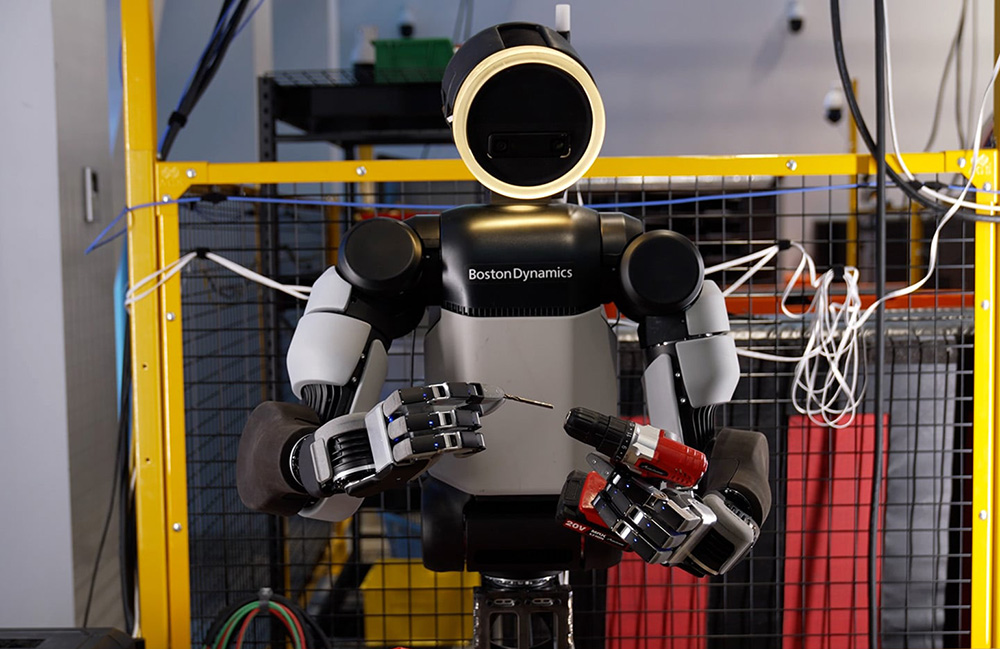
While the hand lacks a pinky, it compensates with advanced sensory density. The pressure-sensitive fingertips provide the "closed-loop" feedback necessary to prevent the crushing of fragile parts while ensuring a firm enough grip to operate heavy-duty industrial drills or fasteners.
Official Responses: The Philosophy of "Sim2Real"
The shift toward this new hand design is heavily influenced by the rise of reinforcement learning (RL). According to the engineering team at Boston Dynamics, human imitation—while useful for capturing visual cues—is insufficient for the high-rate, dynamic control required in real-world manufacturing.
"Human demonstrations are best suited to capturing the visual complexities of a situation," the team noted in a technical briefing. "But at its core, fast and agile dexterous manipulation is also a byproduct of high-rate closed-loop control and force regulation."
Because wearable data collection devices (like Universal Manipulation Interfaces) often fail to capture the high-frequency force data necessary for complex manipulation, Boston Dynamics has pivoted toward training in virtual environments. The new hand is built specifically for this "sim2real" pipeline. By using rigid-drive actuation and sophisticated software that compensates for mechanical friction and "cogging," the team can simulate the hand with such high fidelity that the policies learned in the computer translate seamlessly to the physical robot.
Implications for the Future of Automation
The debut of this four-fingered hand signals a massive shift in how the industry approaches humanoid design.
1. The Death of the "Humanoid" Aesthetic
For decades, the goal of robotics was to create a perfect mirror of human anatomy. Boston Dynamics has effectively declared that era over. By prioritizing the "task-space" over the "human-space," they are creating robots that are more capable of working in factories than they are of winning an anatomy competition. This is a pragmatic, industrial-first approach that prioritizes uptime, force-precision, and mass-manufacturability.
2. The Rise of the "Metaplant" Workforce
The timing of this announcement, mere days after the opening of the RMAC in Georgia, suggests that the new Atlas is ready for the assembly line. The ability of the robot to swap tools, maintain a grip during high-vibration tasks (like drilling), and navigate human-centric workstations makes it a highly viable candidate for the automotive sector.
3. Policy and Economic Impact
As these robots move from the lab to the factory floor, the conversation around "Reshoring with Robots" becomes increasingly pertinent. Brendan Schulman, VP of Policy and Government Relations at Boston Dynamics, is set to address these very issues at the upcoming RoboBusiness 2026 conference. The integration of high-dexterity humanoids into domestic manufacturing could provide a significant boost to local production capabilities, effectively bridging the gap between high labor costs and the need for precision manufacturing.
4. A New Standard for Learning
The industry is watching closely to see if the "four-finger" design becomes the new industry standard. If Boston Dynamics can prove that this configuration—trained via RL in simulation—outperforms traditional, more complex designs, we may see a wave of simplified, highly specialized end-effectors hitting the market.
Conclusion
The new Atlas hand is a testament to the maturation of the robotics industry. By choosing to "tape the pinky" and lean into the strengths of reinforcement learning, Boston Dynamics has moved past the novelty of human-like robots. They are now in the business of creating reliable, intelligent, and highly efficient machines capable of performing the most nuanced tasks in modern manufacturing. As the RMAC begins its work training these machines for the Hyundai assembly lines, the rest of the world will be watching to see if this "four-finger" strategy defines the next twenty years of robotics evolution.