In the high-stakes world of modern industrial manufacturing, the "last mile" of automation is no longer about the robots themselves—it is about the people working alongside them. While academic research labs have spent decades theorizing about how humans interact with autonomous systems, the transition from controlled university environments to the chaotic, high-pressure reality of a production floor remains one of the most significant hurdles in robotics.
At RoboBusiness 2026, scheduled for October 20–21 in Santa Clara, California, this friction between theoretical research and practical implementation will take center stage. Faraz Yousuf, a senior principal robotics application engineer at pharmaceutical giant Eli Lilly, and Dr. Anastasia Kouvaras Ostrowski, an assistant professor at Purdue University, are set to present a seminal session titled "Human-Robot Interaction: Bridging Academia and Industry." Their talk, scheduled for 11:45 a.m. PT on the first day of the conference, promises to move beyond abstract concepts, offering a tangible, repeatable playbook for integrating robots safely and effectively into human-centric workflows.
The "Lab-to-Floor" Disconnect
For years, the robotics industry has faced a persistent problem: academic research on Human-Robot Interaction (HRI) often produces data that struggles to survive "contact with the real world." In a university setting, variables are tightly controlled, lighting is perfect, and test subjects are often volunteers who are primed to interact with new technology.
However, a live pharmaceutical manufacturing site or a high-volume warehouse is a different ecosystem entirely. Factors such as ambient noise, shift fatigue, complex safety protocols, and the innate psychological comfort levels of veteran operators change the equation entirely. Because conducting robust, longitudinal studies inside active, highly regulated manufacturing facilities is logistically complex, most industry-academia partnerships wither before they ever reach the pilot stage.
Yousuf and Dr. Ostrowski are actively dismantling this barrier. By embedding research within Eli Lilly’s operational environments, the duo has moved HRI from the hypothetical to the tactical, focusing on how workers perceive and respond to Automated Guided Vehicles (AGVs) in real-time production settings.
A Chronology of Collaboration
The partnership between Eli Lilly and Purdue represents a model for modern industrial innovation. The timeline of their work reflects a shift in how corporations and universities can share the burden of development:
- Phase 1: Conceptual Alignment: The initial meetings focused on defining the "pain points" of human-robot integration at Eli Lilly’s facilities. Rather than starting with a robot design, the team started with the operator’s experience.
- Phase 2: On-Site Data Acquisition: Utilizing Eli Lilly’s production floors as a living lab, the researchers deployed sensors and qualitative observation methods to track how staff interacted with existing AGVs.
- Phase 3: Synthesis and Safety Frameworks: The team began mapping human behavior patterns against robot motion profiles. This phase was critical for moving beyond "safety as a feature" to "safety as a human-centered design choice."
- Phase 4: The Playbook Creation: The current stage involves codifying these findings into a repeatable framework that other industrial players can adopt, ensuring that safety and productivity are not mutually exclusive.
Supporting Data: Why Perception Matters
The core of the upcoming presentation lies in the early findings regarding human perception. In industrial environments, trust is the primary currency. If an operator feels that an AGV is unpredictable or "creepy," they will override safety protocols or avoid the technology entirely, leading to inefficiencies and potential accidents.
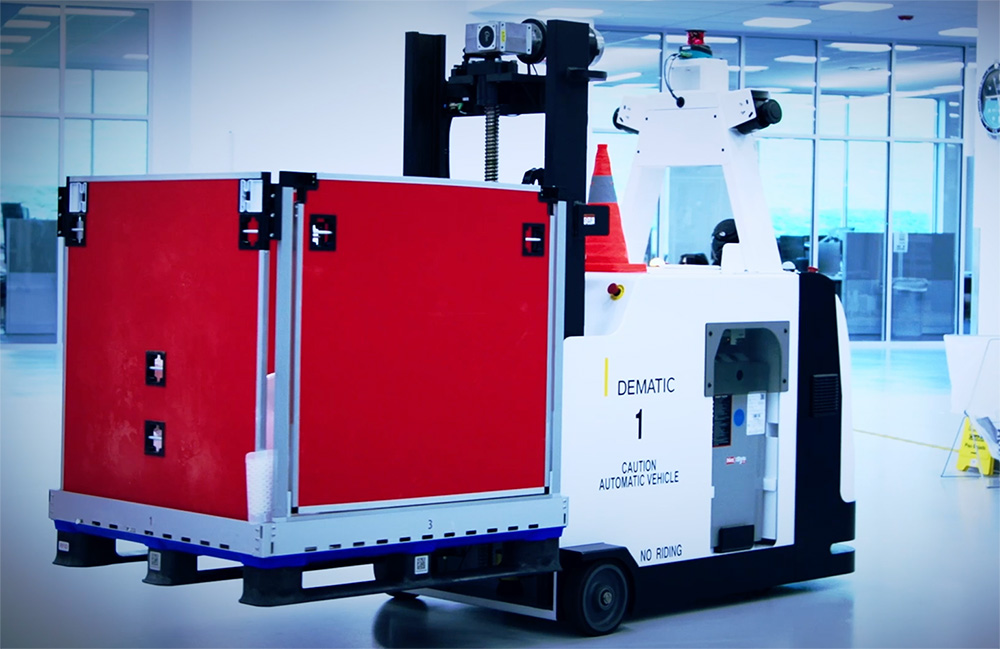
Yousuf and Ostrowski have uncovered that the "mechanical predictability" of a robot—how it signals its intent to move, turn, or stop—is just as important as its physical safety sensors. By integrating insights from social psychology and human-computer interaction (HCI) with traditional robotics, the team is identifying specific cues that foster trust.
Their research suggests that when robots communicate their "intent" through visual or auditory signals in ways that mimic human social cues, the cognitive load on the operator decreases. This is a vital metric for safety: a worker who is less stressed and more aware of their robotic colleague’s next move is a safer, more productive worker.
Meet the Architects of the Future
The credibility of this project is anchored in the diverse expertise of its leads.
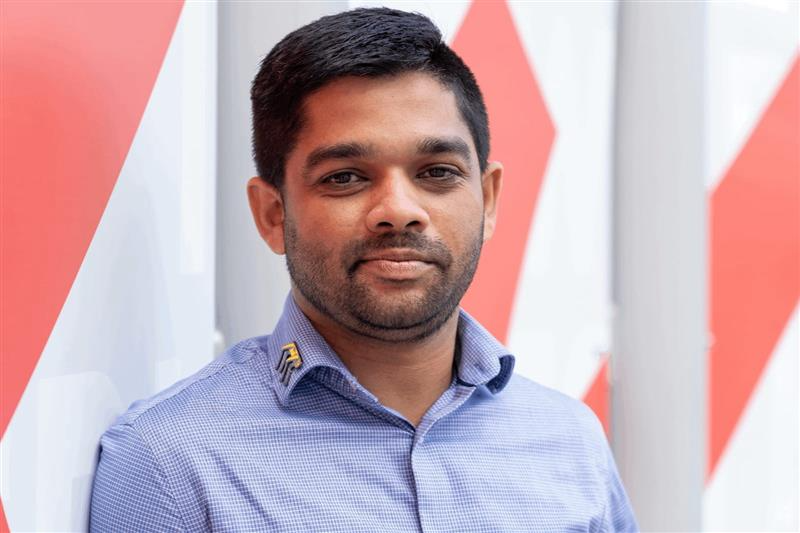
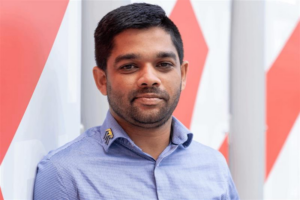
Faraz Yousuf: The Industry Integrator
As a senior principal robotics application engineer at Eli Lilly, Faraz Yousuf operates at the intersection of high-precision pharmaceutical manufacturing and cutting-edge robotics. His resume reads like a roadmap of modern industrial automation, spanning ASRSes (Automated Storage and Retrieval Systems), AGVs, AMRs (Autonomous Mobile Robots), and inspection quadrupeds.
Beyond his hands-on implementation work, Yousuf is a key contributor to global safety standards. His involvement in committees for ANSI R15.08 Part 3, ISO 25785-1, and TR R15.108 underscores his commitment to creating a regulatory environment that keeps pace with rapidly evolving robotic capabilities. His role in the partnership is to ensure that every academic insight is tempered by the reality of industrial compliance and operational feasibility.
Dr. Anastasia Kouvaras Ostrowski: The Human-Centric Strategist
Dr. Ostrowski brings a multidisciplinary perspective to the partnership. With a courtesy appointment in Purdue’s School of Mechanical Engineering and a home in the School of Applied and Creative Computing, she specializes in co-design and participatory design.
Her pedigree includes a postdoctoral stint at MIT, where she worked within the Social and Ethical Responsibilities of Computing (SERC) and the MIT Media Lab’s Personal Robots Group. Having earned her Ph.D. from MIT and degrees in biomedical engineering from the University of Michigan, Dr. Ostrowski is uniquely qualified to bridge the gap between complex engineering processes and the nuanced, often unpredictable nature of human behavior. Her work focuses not just on how robots work, but on the policies and design philosophies that allow them to flourish in human ecosystems.
Implications for the Industry
The work being done by Yousuf and Ostrowski has implications that extend far beyond pharmaceutical manufacturing. As industry moves toward a future defined by "Physical AI," the ability to scale human-robot interaction is the final bottleneck to widespread adoption.
- Safety Culture: By formalizing the human side of HRI, the industry can move toward a "Zero Harm" future where robots are no longer just tools, but collaborators.
- Operational Efficiency: Reducing the fear and uncertainty associated with robots leads to higher acceptance rates, less downtime, and more fluid floor logistics.
- Standardization: The "playbook" the pair is developing could eventually serve as a blueprint for other sectors, including logistics, agriculture, and healthcare, providing a standard methodology for how to introduce robotics into high-human-traffic zones.
Join the Conversation at RoboBusiness 2026
RoboBusiness 2026 is widely recognized as the premier gathering for commercial robotics developers. By attending the session by Yousuf and Ostrowski, industry professionals will gain more than just theoretical knowledge; they will walk away with a practical roadmap for implementing HRI studies in their own facilities.
Beyond this session, the conference offers a comprehensive view of the industry, covering everything from AI-driven cognition to the latest advancements in legged robotics and autonomous navigation. Attendees will have the opportunity to engage with the architects of the next generation of automation, network with peers facing similar challenges, and explore the exhibition floor to see the latest hardware in action.
Registration Information:
Those interested in attending are encouraged to secure their full conference passes early. The event offers dedicated discounts for academic researchers, industry associations, and corporate groups, ensuring that the best minds from all sectors can participate in this pivotal dialogue. For detailed inquiries regarding corporate discounts, interested parties should contact the events team at [email protected].
For companies looking to position themselves at the forefront of the robotics revolution, exhibition and sponsorship opportunities are still available. Interested organizations can download the official prospectus or reach out directly to Colleen Sepich at [email protected] to explore how they can contribute to the future of the industry.
As we look toward the 2026 event in Santa Clara, the message is clear: the future of industrial automation is human-centric. Through the collaborative efforts of experts like Yousuf and Ostrowski, the industry is finally learning that the most successful robots are those that understand the people they work with as well as they understand their code.