In the high-stakes world of industrial testing and automation, the demand for precision, repeatability, and agility is constant. Delta Motion, a leader in high-performance motion control, has officially expanded the capabilities of its RMC Motion Controller series by introducing the new "Trapezoid Waveform Command." This strategic addition provides machine builders and test engineers with a robust, built-in mechanism for generating a diverse array of motion and force profiles, effectively streamlining the development of complex testing rigs.
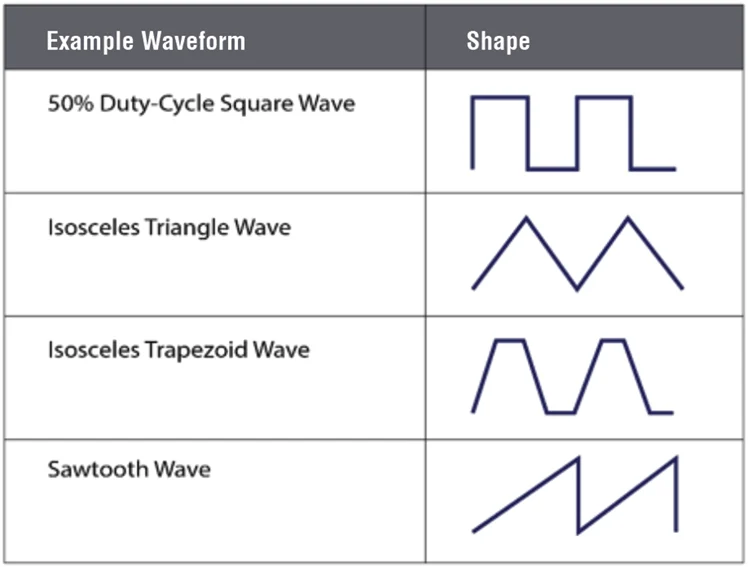
By allowing the native generation of trapezoidal, triangular, sawtooth, and square wave profiles, Delta Motion is effectively eliminating the bottlenecks traditionally associated with custom PLC programming for repetitive motion cycles. This development marks a significant shift in how engineers approach fatigue, durability, and material testing applications.
Main Facts: A New Standard for Cyclic Control
The Trapezoid Waveform Command serves as a sophisticated evolution of the RMC’s existing sinusoidal and curve-based waveform libraries. By moving the heavy lifting of waveform generation from the PLC (Programmable Logic Controller) to the RMC controller itself, Delta Motion has ensured that motion profiles are executed with deterministic precision.
Key Functional Specifications
The command offers a highly configurable environment, allowing engineers to manipulate:
- Geometric Parameters: Amplitude, offset, and frequency.
- Temporal Segments: Rise time, high time, and fall time, enabling the creation of sharp-edged, high-frequency cyclic profiles.
- Dynamic Adjustability: Unlike traditional systems that require a "stop-and-reprogram" cycle, the RMC allows for on-the-fly modifications to amplitude, offset, phase, and shape.
This capability is not limited to simple positioning. It extends to both position and pressure/force control, granting engineers a unified programming interface whether they are simulating the physical movement of an actuator or the precise application of force on a specimen.
Chronology of Development: Listening to the Industry
The introduction of this command is the result of a deliberate, user-centric evolution. Delta Motion has long been a fixture in the motion control sector, but the push for this specific feature set emerged from the growing complexity of modern material testing labs.
- Initial Phase (Market Feedback): Customers reported that while RMC controllers were excellent for complex position tasks, the generation of custom cyclic waveforms for specialized fatigue testing often required cumbersome external PLC logic.
- Engineering Phase: The Delta Motion development team focused on internalizing these waveforms to ensure that execution speed remained independent of network traffic or scan rates—a critical requirement for high-frequency testing.
- Beta Integration: Early adopters in the aerospace and automotive component testing sectors tested the command’s "adaptive amplitude" feature, confirming that it could maintain peak force levels even when material stiffness shifted during a test run.
- Official Rollout: The command is now fully integrated into the RMC75, RMC150, and RMC200 product lines, accessible via the standard RMCTools software suite.
Supporting Data: Why "On-Controller" Matters
In industrial automation, the "scan time" of a PLC is a notorious variable that can introduce jitter into motion profiles. By processing the Trapezoid Waveform Command directly on the RMC controller hardware, Delta Motion achieves a level of deterministic execution that is physically impossible to match via a standard PLC network.
The Adaptive Advantage
One of the most compelling aspects of this update is the Adaptive Amplitude Control for force-controlled applications. In traditional testing, if a material specimen softens or stiffens during a fatigue test, the peak force command often fails to match the actual force applied.
Delta’s algorithm monitors the system dynamically, automatically adjusting the amplitude of the waveform to compensate for these variances. This ensures that the test remains valid from the first cycle to the millionth, significantly reducing the frequency of manual recalibration and human error.
Seamless Transitioning
The capability to morph waveforms—for instance, transitioning from a triangle wave to a sawtooth wave over a set duration—provides a level of flexibility previously reserved for expensive, custom-built data acquisition systems. This is particularly vital for durability simulations where "start-stop" conditions are rarely constant.
Official Responses: Insights from Delta Motion Leadership
Steve Nylund, CEO of Delta Motion, frames this release not merely as a software update, but as a commitment to the "democratization" of high-end testing technology.

"Delta’s controllers are increasingly valued for custom testing applications," Nylund noted during the launch. "Customers often find the cost to be a fraction of other high-end, purpose-built testing solutions, and the RMC controllers are much easier to adapt to special requirements. Many of our product enhancements come directly from customer feedback, and the Trapezoid Waveform Command is a quintessential example of this—a practical, powerful feature that simplifies the development cycle for our users."
Nylund’s emphasis on "practicality" highlights the company’s philosophy: motion control should be powerful enough for the most complex aerospace simulations, yet accessible enough for a medium-sized manufacturing facility to implement without hiring a team of specialized software engineers.
Implications for Industry: The Future of Testing
The integration of the Trapezoid Waveform Command has profound implications for various sectors:
1. Automotive and Aerospace Durability
Durability testing requires millions of cycles. The ability to program these cycles locally on the controller reduces the load on the host system, allowing for faster, more reliable testing of components like suspension systems, landing gear, and engine mounts.
2. Materials Research
Material scientists often require specific stress-strain profiles to understand how a material reacts under cyclic loading. The ease with which the RMC can now switch between different waveform types means that a single test rig can perform a wider variety of experiments without hardware modifications.
3. Reduced Capital Expenditure (CapEx)
For many small-to-medium enterprises (SMEs), purchasing dedicated hydraulic or electromechanical test rigs is cost-prohibitive. By providing an off-the-shelf controller that can handle these complex tasks, Delta Motion allows these companies to build their own custom test rigs using standard industrial components, effectively leveling the playing field.
4. Simplified Maintenance
Because the waveform logic is stored within the RMC controller, it is easier to troubleshoot and replicate across multiple testing machines. If a facility has ten testing stations, the motion logic can be standardized, ensuring that a "test run" in one corner of the factory is identical to a "test run" in another.
Conclusion: A New Standard for Versatility
The Trapezoid Waveform Command is more than just a new line of code; it is a bridge between high-end research capabilities and everyday industrial automation. By offloading complex waveform generation to the RMC’s internal architecture, Delta Motion has effectively removed the latency and complexity barriers that have historically plagued cyclic testing.
As industries push for shorter time-to-market cycles, the ability to rapidly configure, execute, and adjust test parameters on the fly is becoming a core competitive advantage. With this update, Delta Motion has positioned its RMC series as the go-to solution for engineers who refuse to compromise on either precision or ease of use. Whether it is a simple square wave for basic endurance or a complex, adaptive-force profile for advanced materials, the RMC Motion Controller is now better equipped than ever to handle the rigors of the modern testing environment.
For further information on integrating these commands into existing RMC75, RMC150, or RMC200 systems, users are encouraged to visit the Delta Motion website and explore the updated RMCTools documentation. As the landscape of industrial testing continues to evolve, Delta Motion remains at the forefront, turning the complex into the achievable.