By Kenneth Rogoff
Published: October 1, 2026
Section: Economics
Main Facts
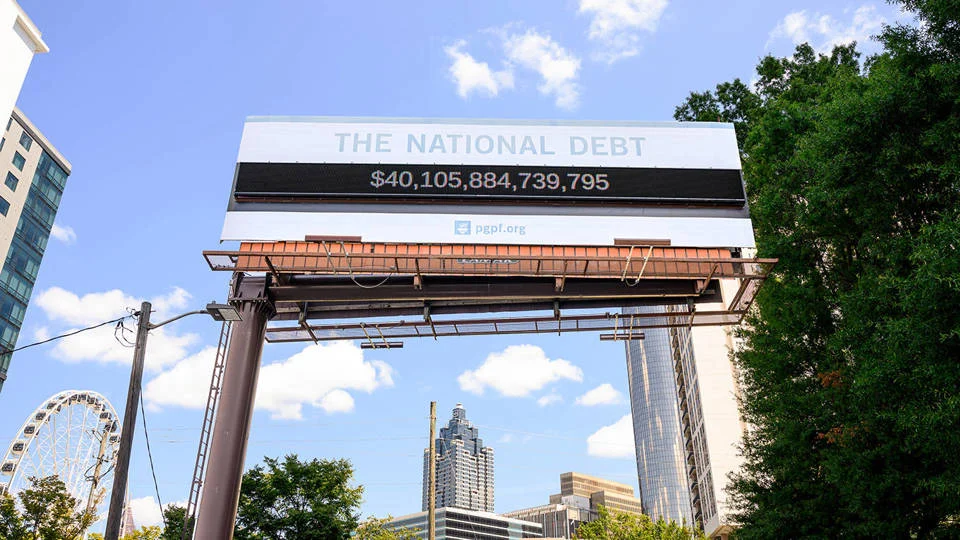
America’s fiscal trajectory has transformed from a long-term academic concern into an immediate structural vulnerability. High national debt levels—traditionally manageable during periods of robust economic growth—become acutely dangerous when rising interest rates compound borrowing costs faster than national income can expand. Despite a resilient economy and solid gross domestic product (GDP) growth, the United States federal deficit currently hovers at an alarming 6% of GDP.
Under the administration of President Donald Trump, however, there is virtually no political appetite to rein in spending or enact structural reforms to curb ballooning liabilities. This dangerous inaction leaves the world’s largest economy exceptionally fragile. When the next major macroeconomic shock inevitably arrives—whether it manifests as a deep recession, a systemic financial crisis, or an unforeseen geopolitical conflict—the federal government risks finding its fiscal toolkit entirely empty.
Chronology: How America Arrived at the Fiscal Brink
To understand the severity of the current crisis, it is necessary to examine the historical escalation of U.S. federal liabilities over the past two decades.
- 2008–2009 (The Global Financial Crisis): In the wake of the subprime mortgage meltdown, the U.S. federal government deployed massive fiscal stimulus and financial bailouts. While necessary to prevent a total economic collapse, this era permanently elevated the baseline of the national debt-to-GDP ratio, moving it from roughly 60% to over 80%.
- 2017 (The Tax Cuts and Jobs Act): Under the first Trump administration, sweeping tax reductions were signed into law. While intended to spur private investment and short-term economic acceleration, independent analysts warned at the time that the cuts were not sufficiently offset by spending reductions or revenue-generating reforms, adding trillions to the long-term debt trajectory.
- 2020–2021 (The Pandemic Era): The COVID-19 pandemic triggered unprecedented bipartisan fiscal intervention. Trillions of dollars in emergency relief were injected into the economy via the CARES Act and subsequent packages. While this prevented a depression, it pushed the national debt past 100% of GDP, bringing it to levels not seen since the aftermath of World War II.
- 2022–2024 (The Inflationary Shock and Rate Hikes): As inflation surged to multi-decade highs, the U.S. Federal Reserve was forced to aggressively hike interest rates. Consequently, the cost of servicing the massive federal debt exploded, turning interest payments into one of the fastest-growing items in the federal budget.
- 2025–2026 (The Present Stalemate): Returning to office, President Trump has continued to prioritize growth-oriented policies and tax extensions, dismissing calls for fiscal consolidation. With the deficit stuck at 6% of GDP during an economic expansion, observers note a complete paralysis in Washington regarding structural debt reform.
Supporting Data and Economic Analysis
The numbers underpinning America’s fiscal imbalance reveal a precarious reality. Operating in Cambridge, economic analysts frequently compare the current trajectory to a train hurtling along a twisting mountain track. No political actor seems willing to slow down for fear of losing momentum, political capital, or electoral viability—even though the tracks ahead are clearly compromised.
Key Economic Indicators
- Deficit-to-GDP Ratio: At approximately 6%, the current federal deficit is historically unprecedented for a non-crisis period. Ordinarily, governments run deficits during downturns to stimulate demand and pull economies out of recessions, subsequently running surpluses or tight balances during expansions to rebuild buffers. Today, the U.S. is running wartime-level deficits during peacetime economic stability.
- Interest Payments: Net interest outlays on the national debt have surpassed traditional major spending categories, including defense and income security in some projections. As older, low-yield government bonds mature, they are being replaced by new issues carrying significantly higher interest rates.
- The Growth Illusion: Proponents of the current fiscal path argue that strong GDP growth will naturally "grow away" the debt. However, basic math dictates that when the rate of interest on debt exceeds the growth rate of the economy ($r > g$), debt compounds automatically unless primary surpluses are achieved. With primary deficits running high, growth alone is mathematically insufficient to stabilize the ledger.
Official Responses and Political Realities
The political landscape in Washington is characterized by profound denial and partisan maneuvering.
Inside the White House, President Donald Trump’s economic advisors maintain that aggressive deregulation, trade protectionism, and pro-growth tax policies will generate sufficient economic velocity to outpace the mounting liabilities. Administration officials frequently argue that prioritizing austerity during a competitive global environment would prematurely throttle American enterprise and cede geopolitical ground to economic rivals like China.
Meanwhile, fiscal watchdogs, such as the Committee for a Responsible Federal Budget (CRFB), have issued repeated, urgent warnings. Groups like the CRFB emphasize that waiting for a crisis to address the deficit is a recipe for disaster. Independent economists echo these concerns, pointing out that both major political parties share the blame. While Republicans have historically prioritized tax cuts without matching spending cuts, Democrats have aggressively expanded entitlement and social spending programs without creating the necessary tax structures to sustain them long-term.
Despite these warnings from non-partisan institutions, legislative action remains entirely absent. In a polarized Congress, proposing entitlement reform (such as adjustments to Social Security or Medicare) or broad-based tax increases is treated as political suicide.
Implications: The High Cost of Inaction
The failure to address the national debt carries profound domestic and global implications. When the next major shock hits the global economy, the consequences of Washington’s fiscal negligence will become painfully apparent.
1. The Loss of Fiscal Space
The primary danger of high debt is the loss of "fiscal space"—the government’s capacity to borrow and spend money in an emergency without triggering a crisis of confidence. If the U.S. enters a severe recession or faces a national security emergency with a debt-to-GDP ratio already exceeding critical thresholds, financial markets may balk at absorbing vast new tranches of Treasury debt. This could trigger a spike in bond yields, forcing the government into sudden, brutal austerity precisely when stimulus is most needed.
2. Crowding Out Private Investment
As the federal government continuously borrows massive sums to finance its daily operations, it consumes a disproportionate share of available global and domestic savings. This phenomenon, known as "crowding out," drives up borrowing costs for private businesses and prospective homeowners alike. Elevated mortgage rates and corporate loan costs can suffocate innovation, housing construction, and long-term capital investment.
3. Vulnerability to Market Sentiment
For decades, U.S. Treasuries have enjoyed status as the ultimate risk-free asset, anchoring the global financial system. However, as foreign central banks diversify their reserves and domestic debt servicing consumes a larger slice of federal revenue, international investors are paying closer attention to Washington’s fiscal dysfunction. A sudden loss of confidence by foreign buyers could lead to a depreciating dollar, imported inflation, and an abrupt end to the exorbitant privilege of low-cost American borrowing.
Conclusion
America’s fiscal policy is on a collision course with reality. The comforting assumption that the United States can indefinitely run massive deficits simply because the dollar is the world’s reserve currency is a dangerous gamble. Without a fundamental shift in political will—one that transcends partisan lines and confronts the structural drivers of spending and taxation—the nation risks drifting toward a financial reckoning from which recovery will be agonizingly slow and exceptionally painful.