As the corporate world attempts to turn back the clock to pre-pandemic operational models, a growing body of data suggests that the push for physical presence carries a profound, unacknowledged financial penalty. While corporate leaders frequently champion office mandates as catalysts for collaboration, innovation, and company culture, the individuals tasked with filling those cubicles are quietly absorbing a punishing financial and temporal toll.
According to a comprehensive analysis recently released by resume builder Resume.io—dubbed the "RTO Tax Index"—the average American worker is shelling out approximately $6,736 annually, or roughly 9.3% of a typical salary, simply to satisfy in-office attendance policies. For working parents who must navigate the treacherous and expensive landscape of contemporary childcare, that financial burden more than doubles, skyrocketing to an estimated $16,538 per year.
As organizations grapple with talent retention, recruitment friction, and employee engagement, these figures introduce a critical new variable into the modern labor equation: going to work has transformed from a baseline expectation into one of the single largest, most volatile expenses in a household budget.
Main Facts
The Resume.io study, which provides a granular look at the economic realities of the modern workforce, quantifies what many employees have felt intuitively for years. The data was compiled using responses from a nationwide Pollfish survey conducted in August, targeting 1,000 full-time U.S. employees who work in a physical office setting at least one day per week. Spanning 36 major metropolitan areas and factoring in an average in-office attendance rate of 4.18 days per week, the findings paint a stark picture of the true cost of commuting.
Key takeaways from the report include:
- The Baseline Financial Hit: The average worker spends $6,736 a year on direct RTO expenses, which translates to nearly 10% of median earnings.
- The Childcare Multiplier: Working parents face an annual cost of $16,538, driven primarily by the necessity of securing supplementary care during office hours.
- Transportation as the Primary Driver: Commuting—encompassing public transit passes, gasoline, vehicle maintenance, and parking—makes up the lion’s share of the expense, averaging $2,751 per year. Over half of survey respondents noted that these transportation costs have risen over the past year, with 19% reporting that costs have escalated "a lot."
- The Time Tax: Beyond monetary expenditures, the RTO tax is levied in hours. Employees forfeit the equivalent of 23 full eight-hour workdays annually to their commutes, alongside an additional 17 days spent on office preparation, such as showering, formal grooming, ironing, and packing meals.
Chronology: The Evolution of the RTO Mandate and Its Economic Fallout
To understand how the corporate landscape arrived at this juncture, it is necessary to examine the trajectory of workplace policies over the past half-decade.
2020–2021: The Remote Revolution
In the wake of the global health crisis, organizations were forced into an unprecedented remote-work experiment. Millions of knowledge workers packed up their desks, relocated away from high-cost-of-living metropolitan hubs, and integrated their professional duties into domestic spaces. For a brief window, the "commute" was reduced to a walk down the hallway, saving households thousands of dollars in gas, transit fares, dry cleaning, and lunches out. Savings soared, and employees enjoyed a newfound reclamation of personal time.
2022–2023: The Pendulum Swings Back
As health restrictions eased, executive leadership teams began signaling a desire to return to physical headquarters. Initially introduced as gentle encouragements or flexible hybrid models (such as "two days in, three days out"), these policies quickly hardened. By late 2022 and throughout 2023, major Fortune 500 companies, financial institutions, and tech giants began issuing rigid return-to-office (RTO) mandates. Employees were told to be at their desks three, four, or five days a week, often under threat of disciplinary action or termination.
2024 and Beyond: The Calculation of the "RTO Tax"
As these mandates solidified into permanent structural expectations, the financial friction became impossible to ignore. Amid broader inflationary pressures—spanning grocery bills, housing, and energy costs—the compounding expenses of dry cleaning, professional attire, daily parking, highway tolls, and morning coffees culminated in a distinct economic squeeze. The Resume.io analysis formalizes this era, capturing a moment where the divergence between executive intent and employee reality has reached a boiling point, transforming the daily commute into a flashpoint for labor dissatisfaction.
Supporting Data: Where the Money and Time Go
The anatomy of the RTO tax reveals that going to the office is death by a thousand financial papercuts. According to Bethany Watson, a digital PR manager at Resume.io, "Going to work has quietly become one of the biggest costs in a lot of people’s budgets."
The Financial Breakdown
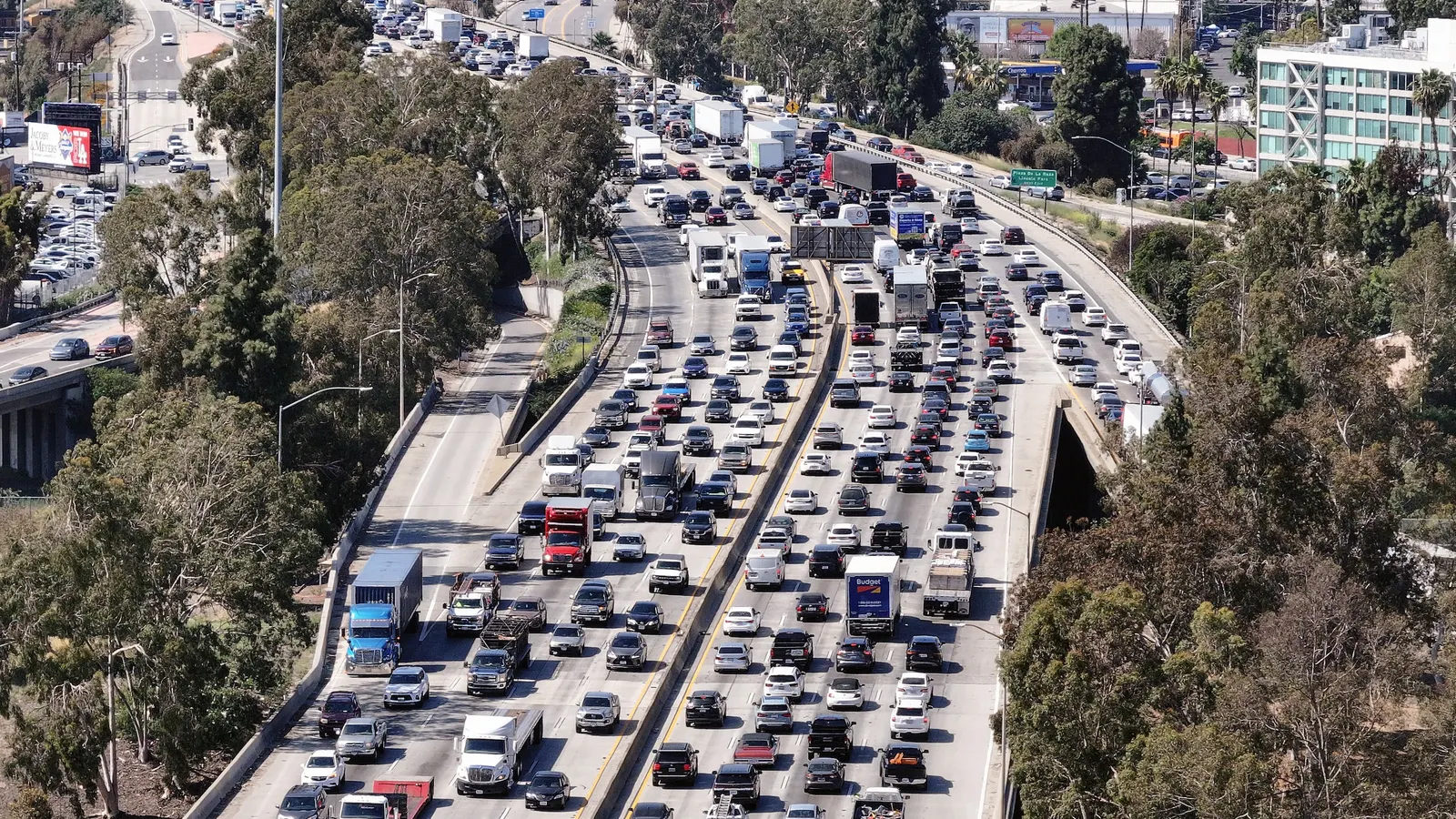
When dissecting the $6,736 annual price tag, transportation emerges as the heavyweight champion of overhead. Whether navigating bumper-to-bumper traffic in congested metropolitan hubs or swiping tap-to-pay cards at subway turnstiles, the average worker pours $2,751 directly into transit.
However, transportation is only the tip of the iceberg. The index accounts for a constellation of hidden expenses that remote workers largely bypassed:
- Wardrobe and Grooming: Maintaining a professional wardrobe suitable for an in-person office environment—including dry cleaning, shoes, and professional attire—demands a consistent capital outlay.
- Nutritional Inflation: Buying lunch, snacks, and beverages at or near corporate headquarters is markedly more expensive than raiding the home refrigerator.
- Parking and Tolls: For drivers in dense urban centers, parking garages can easily run upwards of $20 to $40 a day, completely subverting the financial logic of traveling to an office just to sit on Zoom calls.
The Temporal Toll
Money is only part of the equation. Time is a finite resource, and the RTO tax extracts it ruthlessly.
- The Commute Penalty: Losing 23 full workdays a year to transit means losing nearly a month of waking life trapped behind a steering wheel or packed into a crowded train car.
- The Prep Penalty: An additional 17 days are spent annually on preparation—ironing shirts, styling hair, packing lunches, and executing the intricate logistics required just to walk out the front door looking presentable for corporate stakeholders.
When combined, employees lose 40 days of every year to the mechanics of going to work. For workers balancing caregiving responsibilities, this temporal drain exacerbates stress, burnout, and work-life imbalance.
Official Responses and Expert Perspectives
As organizations navigate the fallout of rigid mandates, human resources professionals and career strategists are sounding the alarm. Employers ignoring the economic realities of their workforce do so at their own peril, particularly in a labor market where talent holds high expectations regarding flexibility.
Amanda Augustine, a resident career expert at Resume.io and a certified professional career coach, emphasizes that candidates are evaluating employment opportunities through an entirely different lens than they did prior to 2020.
"Candidates are looking at job opportunities differently than they did before the pandemic," Augustine explained in an email to HR Dive. "It’s no longer just about the work they’ll be doing, the company they’ll be joining, or the salary they’ll receive. They’re also thinking about how that job, and everything it requires of them, will fit in with the rest of their lives."
Augustine notes that modern job seekers routinely perform complex "mental math" before accepting an offer or complying with a mandate. They calculate how many days a week they must brave the highway, how many hours of their personal time will be confiscated by traffic, and how much their gross salary will be eroded by gas, parking, transit passes, childcare, and meals.
Crucially, Augustine points out that while employers may not be able to wipe out the RTO tax entirely, they possess the power to mitigate its impact. Acknowledging that the tax exists is the vital first step.
"Employers may not be able to eliminate the RTO tax, but acknowledging that it exists matters," Augustine stated. "Even relatively small efforts that give employees back some combination of money, time, flexibility, or convenience can make the transition to more time in the office feel much more manageable. Ultimately, candidates are asking themselves, ‘Is what I’m getting from this opportunity worth what this job is asking of me?’"
Implications for Employers and the Future of Work
The emergence of the RTO tax index carries profound implications for organizational strategy, employee retention, and corporate culture. If executives continue to enforce rigid, blanket return-to-office mandates without offering structural offsets, they risk triggering several negative outcomes:
1. Recruitment and Retention Vulnerabilities
Top-tier talent increasingly views schedule flexibility as a non-negotiable compensation benefit, akin to healthcare or retirement matching. Companies that stubbornly insist on five-day in-office models—especially without wage adjustments to cover the RTO tax—will likely find themselves at a severe competitive disadvantage when trying to attract high-performing professionals. Conversely, organizations offering true hybrid flexibility will siphon away top talent.
2. The Erosion of Employee Trust and Morale
Mandates that are perceived as arbitrary—such as requiring employees to sit in an office all day simply to participate in video calls with colleagues in other states—breed resentment. When workers feel that leadership is prioritizing optics over productivity, engagement plummets. The financial sting of the RTO tax acts as an accelerant to this discontent, turning what could be a collaborative environment into a source of daily friction.
3. A Blueprint for Mitigation: What Forward-Thinking Companies Are Doing
Progressive employers are recognizing that if they want workers in the office, they must actively offset the burdens associated with that request. According to industry experts, organizations can deploy several tactical solutions to alleviate the RTO tax:
- Pre-Tax Commuter Benefits: Implementing transit and parking benefit programs allows employees to pay for commuting expenses using pre-tax dollars, providing meaningful relief.
- Transportation Support: Offering direct financial assistance such as transit stipends, fuel subsidies, toll reimbursements, or corporate-sponsored shuttle services.
- Enhanced Workplace Flexibility: Embracing fluid hybrid schedules or staggered start and end times to help workers dodge peak traffic hours and optimize their daily routines.
- Subsidized Amenities: Providing free or heavily subsidized meals, snacks, and fitness facilities on-site to directly reduce daily out-of-pocket living expenses.
- Childcare Solutions: Recognizing that parents bear the heaviest burden ($16,538 annually), forward-thinking organizations are exploring childcare subsidies, backup care programs, or partnerships with local facilities.
Conclusion
The debate surrounding return-to-office mandates is no longer merely a philosophical disagreement over where work gets done best; it has evolved into a concrete economic issue that directly impacts the financial well-being of the workforce. When an employee is forced to surrender nearly 10% of their salary and 40 days of their year simply to occupy a desk, the traditional employer-employee contract undergoes a severe strain.
As companies look toward the future, the findings from Resume.io serve as both a warning and a roadmap. Leaders who choose to ignore the hidden costs of physical attendance do so at the risk of alienating their workforce. By acknowledging the reality of the RTO tax and implementing intelligent, supportive countermeasures—ranging from financial subsidies to genuine schedule flexibility—organizations can bridge the gap between executive goals and employee realities, ensuring that the return to the office is a mutually beneficial endeavor rather than an invisible pay cut.