MARSEILLE, France / MEMPHIS, Tenn. — In a landmark transaction that significantly redraws the competitive map of global shipping and contract logistics, the CMA CGM Group has officially announced the successful closing of its acquisition of FedEx Supply Chain at an enterprise value of $1.4 billion.
The completion of this mega-deal—first announced to the market in July—serves as the foundation for a sweeping multi-year commercial partnership between the French shipping titan and the American logistics giant. Beyond the immediate transfer of physical assets, the agreement establishes a deeply integrated strategic collaboration spanning international airfreight capacity, ocean transport, and advanced supply chain infrastructure.
For the CMA CGM Group, the acquisition is much more than a regional expansion; it represents a major milestone in the company’s long-term corporate strategy to evolve from a traditional container shipping carrier into a truly comprehensive, end-to-end global logistics solutions provider. By merging FedEx Supply Chain’s extensive North American network into its subsidiary, CEVA Logistics, CMA CGM has instantly transformed CEVA into one of the absolute largest contract logistics providers on the North American continent.
1. Main Facts and Transaction Overview
At its core, the $1.4 billion transaction unites two powerhouses of international commerce, each bringing distinct, complementary capabilities to the table.
The Financial and Structural Scope
- Enterprise Value: $1.4 billion.
- Core Acquisition: FedEx Supply Chain’s extensive operational assets, infrastructure, and contract portfolio.
- Workforce Integration: Approximately 10,000 highly skilled team members transferring from FedEx Supply Chain to the CMA CGM ecosystem.
- Corporate Vehicle: The newly acquired operations will be integrated directly into CEVA Logistics, the third-party logistics (3PL) arm of the CMA CGM Group.
Multi-Year Commercial Agreements
The closing of the acquisition is paired with wide-ranging commercial agreements designed to create synergies across both companies’ global networks:
- Air Cargo Capacity Sharing: The two entities will collaborate closely on air cargo capacity agreements across key strategic trade lanes, most notably the high-demand Asia-Europe corridor. This arrangement is engineered to optimize aircraft utilization, reduce empty-leg inefficiencies, and provide enterprise shippers with greater flexibility on long-haul routes.
- Preferred Ocean Carrier Status: Under a non-exclusive commercial agreement, CMA CGM will step into the role of a preferred ocean carrier for FedEx, providing container transport and maritime logistics services across global trade routes.
- Integrated Digital and Operational Roadmaps: The merger pairs CMA CGM’s maritime infrastructure with FedEx Supply Chain’s advanced warehouse management systems, accelerating the deployment of next-generation automation, robotics, and predictive analytics throughout North America.
2. Chronology of the Deal: From Initial Announcement to Final Closing
The path to finalizing the $1.4 billion acquisition involved months of strategic alignment, regulatory reviews, and operational planning.
- July: The CMA CGM Group and FedEx publicly reveal their intention to enter into a definitive agreement for CMA CGM to acquire FedEx Supply Chain. Industry analysts immediately recognize the move as a bold play by the French carrier to deepen its presence in the United States and Canada while securing long-term operational synergies with a premier parcel and freight titan.
- August through Late Autumn: Regulatory bodies across relevant jurisdictions review the transaction for compliance with competition laws. Simultaneously, transition teams from CMA CGM, CEVA Logistics, and FedEx begin mapping out the operational integration of nearly 10,000 employees and millions of square feet of warehouse space.
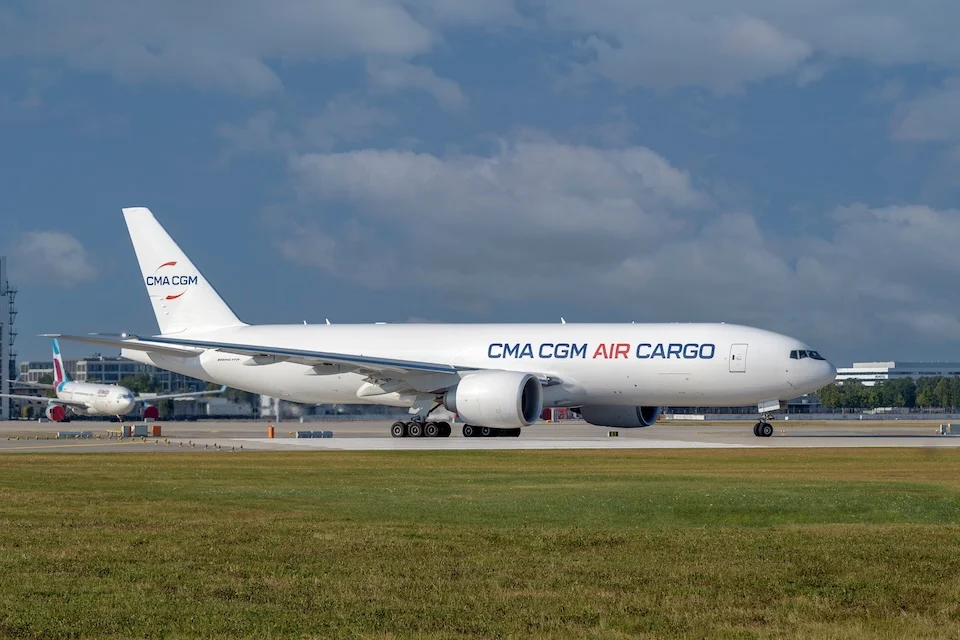
- May (Fleet Benchmarks): Operational baselines are underscored by industry data. Federal Express maintains a sprawling global fleet totaling 698 active freighters as of May 31, while CMA CGM Air Cargo operates a specialized, growing fleet consisting of five Boeing 777 Freighters and one Airbus A330-200 Freighter, positioning both companies to maximize the newly minted air cargo capacity agreements.
- Current Day: The official closing of the transaction is announced, marking the immediate commencement of joint operations, shared air corridors, and the rebranding and absorption of FedEx Supply Chain assets into CEVA Logistics.
3. Supporting Data and Infrastructure Metrics
The scale of the newly integrated North American contract logistics network is staggering, fundamentally altering CEVA Logistics’ market position in the United States and Canada.
Transforming the North American Footprint
Prior to the acquisition, CEVA Logistics held a robust, yet measured, footprint in North America. The integration of FedEx Supply Chain instantly scales these operations by dramatic proportions:
- Footprint Expansion: The acquisition triples CEVA’s North American logistics real estate, injecting approximately 34 million square feet of state-of-the-art warehouse space into its portfolio.
- Facility Count: The combined enterprise now operates roughly 150 newly integrated warehouses, expanding CEVA’s total North American operational footprint to more than 240 distinct locations.
- Workforce Scale: With the absorption of nearly 10,000 FedEx Supply Chain professionals, CEVA’s dedicated North American workforce swells to approximately 20,000 employees.
Sector Expertise and Technological Integration
Beyond square footage and headcount, the transaction brings deep vertical-market expertise into the CEVA Logistics fold. The combined business units significantly enhance service capabilities across several high-complexity sectors:
- Healthcare and Pharmaceuticals: Strict temperature-controlled storage and regulatory-compliant supply chain management for medical devices and pharma.
- Technology: High-security warehousing and reverse logistics for consumer electronics and enterprise IT infrastructure.
- Consumer Goods and Retail: Omnichannel fulfillment solutions designed to handle seasonal surges, e-commerce direct-to-consumer (D2C) shipping, and store replenishment.
Furthermore, the merger combines complementary digital platforms. By blending FedEx Supply Chain’s warehouse execution systems (WES) with CEVA’s global control towers, the company is positioned to accelerate the deployment of advanced automation, goods-to-person robotics, and artificial intelligence-driven inventory forecasting throughout its U.S. and Canadian networks.
4. Official Responses and Executive Perspectives
Leadership from the highest levels of the CMA CGM Group emphasized the transformative nature of the transaction, highlighting its alignment with corporate growth objectives and long-term capital allocation strategies in North America.
Rodolphe Saadé, Chairman and Chief Executive Officer of the CMA CGM Group, issued a comprehensive statement addressing the strategic importance of the milestone:
"The completion of this acquisition marks an important step in the development of CMA CGM and CEVA Logistics in North America. By significantly expanding our contract logistics capabilities, we are strengthening our ability to offer customers integrated, end-to-end supply chain solutions across ocean, air, land, and logistics.
It also reinforces CMA CGM’s long-term commitment to investing in the United States, a strategic growth market for the Group, and supporting the resilience and efficiency of its supply chain."
Industry analysts have noted that Saadé’s emphasis on "resilience and efficiency" directly addresses ongoing corporate demands for supply chain diversification. In an era marked by geopolitical friction, labor negotiations, and fluctuating consumer demand, enterprise shippers are increasingly prioritizing logistics partners who can orchestrate freight movement seamlessly across multiple transportation modes—from containerships and long-haul freighters to final-mile fulfillment centers.
5. Strategic Implications for the Global Logistics Industry
The successful closing of the CMA CGM and FedEx Supply Chain transaction is expected to trigger secondary waves across the global transportation and third-party logistics (3PL) sectors.
1. Intensified Competition Among Integrated Carriers
For decades, ocean shipping lines and air express integrators operated within relatively distinct silos. However, recent years have seen a aggressive push toward vertical integration. By acquiring top-tier contract logistics assets and cementing air-ocean partnerships with a titan like FedEx, CMA CGM is competing directly with other integrated giants—such as Maersk, MSC, and major parcel integrators—who are all racing to offer "one-stop-shop" logistics services to multinational corporations.
2. Optimization of Air and Ocean Trade Lanes
The multi-year air cargo capacity agreement on the Asia-Europe route is expected to provide both CMA CGM and FedEx with unprecedented operational agility. By coordinating aircraft rotations and cargo allocations, the partners can mitigate the financial risks associated with volatile airfreight spot rates. Shippers utilizing these strategic lanes will benefit from more reliable transit schedules, increased capacity during peak shipping seasons, and enhanced flexibility when maritime routes face disruptions (such as those historically seen in the Red Sea or Panama Canal).
3. Redefining North American Contract Logistics
With CEVA Logistics now managing an expansive network of roughly 240 locations and 20,000 workers across the United States and Canada, the competitive landscape for North American warehousing has shifted. Retailers and manufacturers seeking large-scale, automated omnichannel fulfillment now have a heavily reinforced option backed by the global financial strength of a shipping conglomerate.
4. A Template for Future Industry Collaboration
Market observers will be closely monitoring how the non-exclusive ocean carrier agreement and air cargo partnership unfold in practice. If successful, this hybrid model—combining direct mergers of contract logistics assets with commercial cross-modal partnerships—may serve as a blueprint for future alliances between maritime carriers and express air networks seeking scale without the prohibitive regulatory hurdles of a full corporate merger.
Conclusion
As the ink dries on the $1.4 billion transaction, the CMA CGM Group solidifies its standing as an undisputed heavyweight in global supply chain management. By welcoming FedEx Supply Chain’s people, facilities, and technological prowess into the CEVA Logistics family, and by forging groundbreaking commercial ties with FedEx’s aviation network, CMA CGM has engineered a resilient, multi-modal engine poised to navigate the complexities of modern international trade for years to come.