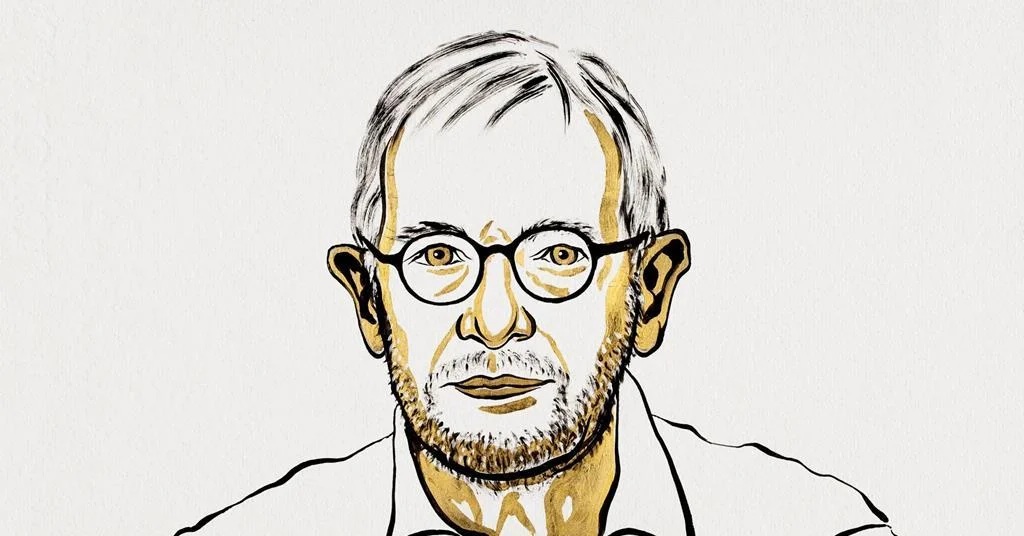
By Jamie Durrani
October 6, 2026
In a rare and historic decision that has electrified the global scientific community, the Royal Swedish Academy of Sciences has awarded the 2026 Nobel Prize in Physics to Belgian astrophysicist Francis Halzen. Recognized for his pioneering work in the detection of high-energy cosmic neutrinos, Halzen stands alone as this year’s laureate. This marks a significant milestone in the history of the prize; Halzen is the first solo recipient of the physics Nobel since Georges Charpak was honored in 1992 for his invention of particle detectors.
The selection of Halzen underscores the monumental shift in how humanity observes the universe. By spearheading the IceCube Neutrino Observatory—a massive detector buried deep beneath the Antarctic ice—Halzen transformed the “ghost particles” of the cosmos into a viable tool for mapping the most violent and energetic events in the universe.
The Main Facts: Listening to the Universe
Neutrinos are subatomic particles with almost no mass and no electrical charge. They zip through the universe at nearly the speed of light, passing through stars, planets, and human bodies without interacting with matter. For decades, these particles were considered nearly impossible to detect.
Francis Halzen’s contribution was to turn the Earth itself—specifically the pristine, deep ice of the South Pole—into a giant sensor. By instrumenting a cubic kilometer of ice with thousands of optical sensors, Halzen and his team created the IceCube Neutrino Observatory. When a high-energy neutrino finally strikes an atom in the ice, it produces a faint flash of light known as Cherenkov radiation. IceCube captures these flashes, allowing researchers to calculate the trajectory of the particle and point their telescopes back toward its source.
This methodology has effectively opened a new window into astronomy. Unlike light, which can be blocked by dust and gas clouds, neutrinos travel unimpeded from the centers of active galactic nuclei, gamma-ray bursts, and black hole environments. Halzen’s work has allowed us to see “behind the curtain” of the cosmos, providing a neutrino map of the heavens.
A Chronology of Discovery
The path to the 2026 Nobel Prize was not a sudden breakthrough, but a decades-long pursuit of an elusive goal.
The Foundation (1980s–1990s)
The journey began with the theoretical realization that if one could build a detector large enough, the inherent difficulty of detecting neutrinos could be overcome by sheer volume. In the late 1980s and early 1990s, the AMANDA (Antarctic Muon And Neutrino Detector Array) project was launched as a proof of concept. Halzen was a driving force behind this prototype, which demonstrated that the deep ice at the Amundsen–Scott South Pole Station was incredibly transparent—the perfect medium for a neutrino telescope.

The IceCube Era (2004–2010)
Following the success of AMANDA, the construction of the full-scale IceCube Neutrino Observatory began in 2004. Over six years, workers drilled 86 holes into the ice, each 2.5 kilometers deep, lowering strings of optical modules. The observatory was completed in 2010, covering a cubic kilometer of Antarctic ice.
The First Major Breakthrough (2013)
In 2013, IceCube announced the detection of the first high-energy neutrinos of astrophysical origin. These particles, nicknamed “Ernie” and “Bert,” were the first definitive proof that we could detect neutrinos originating from outside our solar system.
Multi-Messenger Astronomy (2017)
The defining moment for the field occurred in 2017. IceCube detected a high-energy neutrino and issued an automated alert to telescopes around the world. Within minutes, optical and X-ray telescopes were pointed at the location, identifying a flaring blazar—a supermassive black hole—as the source. This confirmed the birth of "multi-messenger" astronomy, where neutrinos and light are used in tandem to study the same event.
Supporting Data: The Physics of the Invisible
The success of the IceCube experiment relies on a combination of extreme environments and sophisticated data analysis. The data collected by the observatory is staggering:
- Detector Scale: 1 cubic kilometer of Antarctic ice.
- Sensor Density: 5,160 Digital Optical Modules (DOMs) buried between 1,450 and 2,450 meters below the surface.
- Interaction Rates: While the sun produces trillions of neutrinos that pass through the detector, IceCube specifically filters for high-energy neutrinos (TeV to PeV range), which are significantly rarer and carry the signatures of cosmic accelerators.
- Noise Reduction: By placing the detector under nearly 1.5 kilometers of ice, the researchers effectively shield it from the constant bombardment of cosmic ray muons that would otherwise overwhelm the signal.
The statistical rigor required to differentiate between a cosmic neutrino and a background atmospheric neutrino is immense. Halzen’s leadership in developing the machine learning algorithms and signal processing techniques was critical in transforming the “noise” of the Antarctic ice into the “signal” of the cosmos.
Official Responses and Peer Recognition
The Nobel Committee’s decision has been met with universal acclaim. In their official statement, the committee noted, "Francis Halzen has provided humanity with a new eye on the universe. His ability to conceive, fund, and execute an experiment of such unprecedented scale and complexity is a testament to both his vision as a physicist and his prowess as a leader."
"It is a privilege to see this work recognized," said a spokesperson for the University of Wisconsin–Madison, where Halzen has served as a professor for decades. "Francis has spent his life convincing the scientific community that the most invisible particles were the key to understanding the most powerful events in the universe. Today, the world finally sees what he has seen for years."
Global leaders in the physics community have emphasized the solo nature of the award. Dr. Elena Rossi, an astrophysicist at the European Southern Observatory, commented, "While science is a collaborative endeavor, there are individuals whose singular vision acts as the North Star for an entire generation of researchers. Francis is one of those individuals. His perseverance in the face of skepticism—when many thought a cubic-kilometer detector was impossible—is the reason we are where we are today."

Implications: The Future of the High-Energy Universe
The implications of Halzen’s work extend far beyond the current Nobel recognition. We are now entering an era where neutrino astronomy is a standard component of cosmic inquiry, standing alongside radio, optical, X-ray, and gamma-ray astronomy.
1. Solving the Mystery of Cosmic Rays
For over a century, scientists have wondered where the ultra-high-energy cosmic rays that bombard Earth come from. Because these rays are charged, their paths are bent by galactic magnetic fields, making it impossible to trace them back to their origin. Neutrinos, being neutral, travel in straight lines. By mapping neutrino sources, we are finally mapping the sources of cosmic rays, effectively solving one of the oldest mysteries in astrophysics.
2. Probing Black Hole Physics
The discovery that blazars are neutrino factories provides a unique probe into the physics of supermassive black holes. The processes that generate these neutrinos require energy densities and gravitational conditions that cannot be replicated on Earth. We are essentially using the universe as a laboratory for high-energy physics.
3. Future Detectors
Halzen’s success has paved the way for the next generation of detectors. Projects like IceCube-Gen2, which aims to expand the current array significantly, are already in development. Furthermore, the techniques developed for the South Pole are being adapted for sub-oceanic neutrino detectors in the Mediterranean and the Pacific, promising a truly global network of neutrino eyes.
4. A Philosophical Shift
Finally, the Nobel Prize serves as a reminder of the value of long-term fundamental research. Halzen’s work took decades of funding, engineering, and sheer grit before it yielded its first major discovery. In an era where the focus is often on short-term results, the IceCube project stands as a monumental success story for high-risk, high-reward scientific exploration.
As we look toward the future, the "Ghost Particle Hunter" has left an indelible mark on our understanding of the cosmos. Francis Halzen did not just build a detector; he built a bridge between our tiny planet and the most energetic corners of the universe, ensuring that as long as the ice at the South Pole remains, we will never again be blind to the invisible signals of the stars.