As the Internet of Things (IoT) matures, the industry faces an increasingly difficult engineering paradox. The next generation of connected devices—ranging from autonomous agricultural drones and wildlife tracking tags to remote security cameras and health-monitoring wearables—demands a sophisticated suite of capabilities. These systems are expected to perform real-time artificial intelligence (AI) inference, execute multimodal sensor fusion, and maintain continuous, "always-on" situational awareness.
However, these advanced demands collide with the harsh physical realities of edge deployment: strict power envelopes, limited physical space, and the imperative for long battery life. Traditionally, developers have been forced to make a painful compromise: sacrifice advanced edge performance to preserve battery, or burn through power reserves rapidly to keep complex AI models running locally.
To explore how the semiconductor industry is tackling this bottleneck, Electronic Design’s Editor-at-Large Alix Paultre sat down with Mark Goranson, CEO of EMASS—the semiconductor technology division of Nanoveu—to discuss the company’s flagship ECS-DoT chip. By combining an event-driven architecture, open-standard RISC-V computing, and advanced non-volatile memory, EMASS aims to deliver high-performance, sub-milliwatt AI processing directly at the device level.
Main Facts: The Technical Breakthrough of the ECS-DoT Chip
At the core of the discussion is the ECS-DoT, a specialized semiconductor designed to break the traditional compromise between power efficiency and edge-computing capability.
Designed specifically for power- and space-constrained environments, the ECS-DoT tackles the heavy energy costs associated with local data processing. Key technical highlights of the solution include:
- Sub-Milliwatt Operation: The chip achieves continuous sensing and neural network inference at under 1 milliwatt (mW) of power, unlocking true multi-day or multi-year operational lifespans for battery-powered devices.
- Event-Driven Architecture: Unlike conventional processors that continuously poll sensors—wasting precious energy even when nothing is happening—the ECS-DoT operates on an event-driven paradigm. It remains dormant until meaningful environmental data is captured.
- Multimodal Sensor Fusion: The processor natively handles and correlates data streams from various sources simultaneously, including audio, vision, pressure, temperature, and humidity.
- Low Latency: The system delivers rapid response times of less than 10 milliseconds, making it suitable for safety-critical and time-sensitive edge applications.
- RISC-V and Non-Volatile Memory (NVM): Leveraging the flexible, open-standard RISC-V instruction set architecture alongside integrated non-volatile memory, the chip maximizes energy efficiency while keeping form factors minimal.
Chronology: The Evolution of Edge AI and the Rise of Sub-mW Computing
To understand the significance of the ECS-DoT, it is necessary to examine how edge-computing paradigms have shifted over the past decade.
Phase 1: Cloud-Centric Processing (Early 2010s)
In the early days of modern IoT, edge devices were treated primarily as dumb data collectors. Sensors captured raw audio, video, or telemetry and transmitted it over cellular or Wi-Fi networks to centralized cloud servers or data centers. While this shifted the heavy computational burden away from the device, it introduced massive network latency, high bandwidth costs, privacy vulnerabilities, and extreme power consumption required for constant wireless transmission.
Phase 2: Localized Microcontrollers and Basic Filtering (Late 2010s)
As demand for faster response times grew, engineers began pushing basic computing to the edge using traditional microcontrollers (MCUs). Devices could execute simple threshold-based alerts—such as detecting if a temperature crossed a certain degree—without waking up a main radio. However, these traditional architectures lacked the computational throughput required for actual machine learning or pattern recognition.

Phase 3: The AI-at-the-Edge Boom (2020–2024)
The advent of TinyML and specialized neural processing units (NPUs) allowed developers to run lightweight machine learning models on edge hardware. Yet, these early edge-AI chips still struggled with the "always-on" dilemma. Running continuous audio keyword spotting or visual object detection demanded constant power, rapidly draining the batteries of compact wearables and remote field monitors.
Phase 4: The Event-Driven, Multimodal Era (Present Day)
With the introduction of architectures like EMASS’s ECS-DoT, the industry is entering a new phase. By merging event-driven logic with open-standard RISC-V processing, modern silicon can finally perform sophisticated multimodal AI inference at sub-mW levels, opening the door for deployments where battery replacements are impractical or impossible.
Supporting Data: The Metrics That Matter for Edge Developers
Designing electronics for the extreme edge requires a strict adherence to metrics where milliwatts, square millimeters, and milliseconds dictate market viability.
| Metric Category | Traditional Edge Solutions | Next-Gen Event-Driven (ECS-DoT) |
|---|---|---|
| Power Consumption | Typically tens to hundreds of milliwatts (mW) during active processing; constant baseline drain. | Sub-1 mW continuous sensing and inference via event-driven activation. |
| Response Latency | Often bounded by network round-trips to the cloud or heavy local processing pipelines (>50 ms). | <10 ms on-device inference and reaction times. |
| Data Handling | Usually siloed; separate processing pipelines required for audio, vision, or environmental sensors. | Integrated Multimodal Processing combining audio, video, and physical sensor data natively. |
| Instruction Set Architecture | Proprietary architectures that limit software portability and increase licensing overhead. | Open-Standard RISC-V ensuring high flexibility, customizability, and a growing software ecosystem. |
These figures highlight why traditional microprocessors fall short in modern IoT landscapes. When a remote sensor node must last for years in an isolated agricultural field or a wildlife tracking collar, burning 50 mW of power to constantly evaluate camera frames is a non-starter. Dropping active and quiescent power requirements below the 1-mW threshold changes the operational calculus entirely.

Official Responses and Industry Insights
In his discussion with Electronic Design, EMASS CEO Mark Goranson emphasized that the industry’s fundamental challenge is no longer just about shrinking AI models—it is about rethinking how hardware interacts with data streams at the absolute periphery of the network.
"For AI to migrate properly into edge environments, we need milliwatt-level, always-on sensing that doesn’t force developers to choose between battery life and sophisticated edge performance," Goranson explained.
Bringing over 45 years of high-technology and semiconductor industry experience—with leadership stints at major entities like Intel, onsemi, Freescale, TE Connectivity, and Honeywell—Goranson brings a veteran perspective to the silicon scaling crisis. His background in physics and electronics from the New Mexico Institute of Mining and Technology underpins EMASS’s strategic pivot toward hardware architectures that respect physical energy boundaries rather than relying on brute-force clock speeds.
Goranson noted that the ECS-DoT’s event-driven architecture is specifically designed to address real-world deployment friction. By refusing to process redundant, empty data frames, the chip conserves energy dynamically.
"It operates only when meaningful data is detected, enabling continuous sensing and inference at sub-1-mW power," Goranson said. "With less than 10-ms response times and integrated multimodal processing for audio, vision, and sensor data, it delivers high-performance AI without the energy cost of traditional edge solutions."
Implications: What This Means for the Future of Smart Devices
The maturation of ultra-low-power, event-driven, multimodal edge processors has profound implications across multiple verticals:
1. Wearables and Health Tech
Consumers expect modern health trackers and smartwatches to monitor vital signs, listen for voice commands, and detect anomalies continuously. However, frequent battery recharging remains a major user friction point. Sub-mW AI chips allow wearables to run advanced biometric analysis locally and persistently without requiring a daily trip to the charger.
2. Autonomous Drones and Robotics
Unmanned aerial vehicles operating in remote areas must make split-second decisions regarding obstacle avoidance, navigation, and object detection. By achieving sub-10-millisecond response times directly on the device, drones can react to environmental hazards instantaneously, even if wireless links to a base station or cloud instance are completely severed.
3. Precision Agriculture and Remote Environmental Monitoring
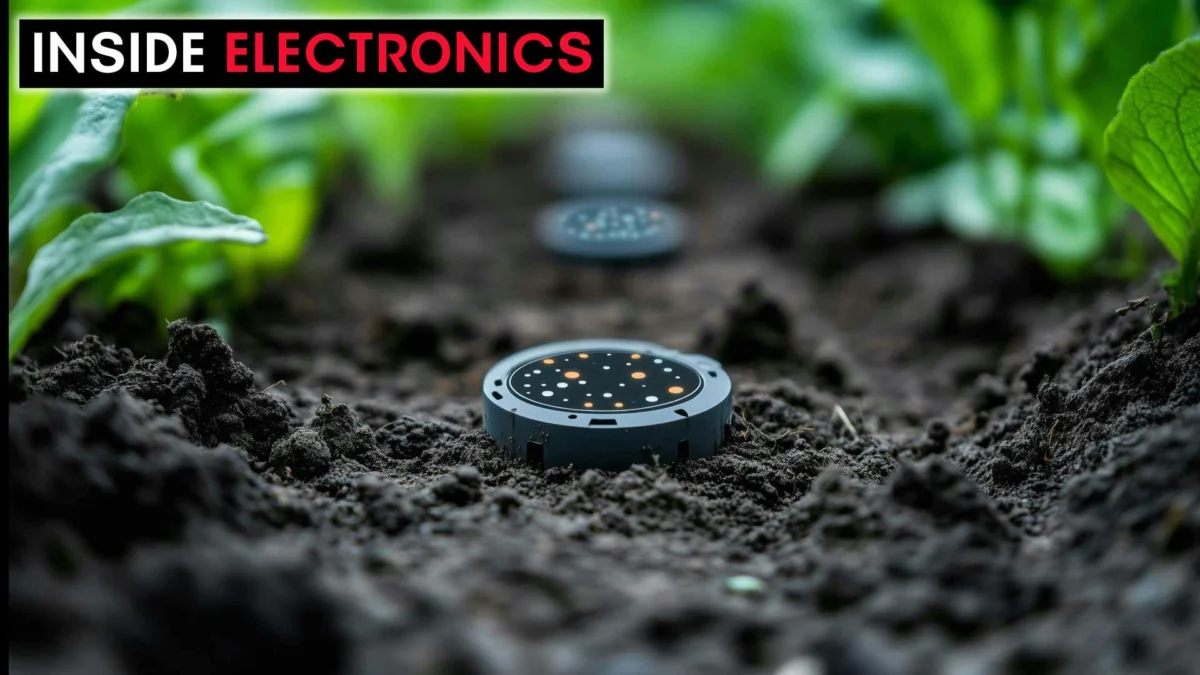
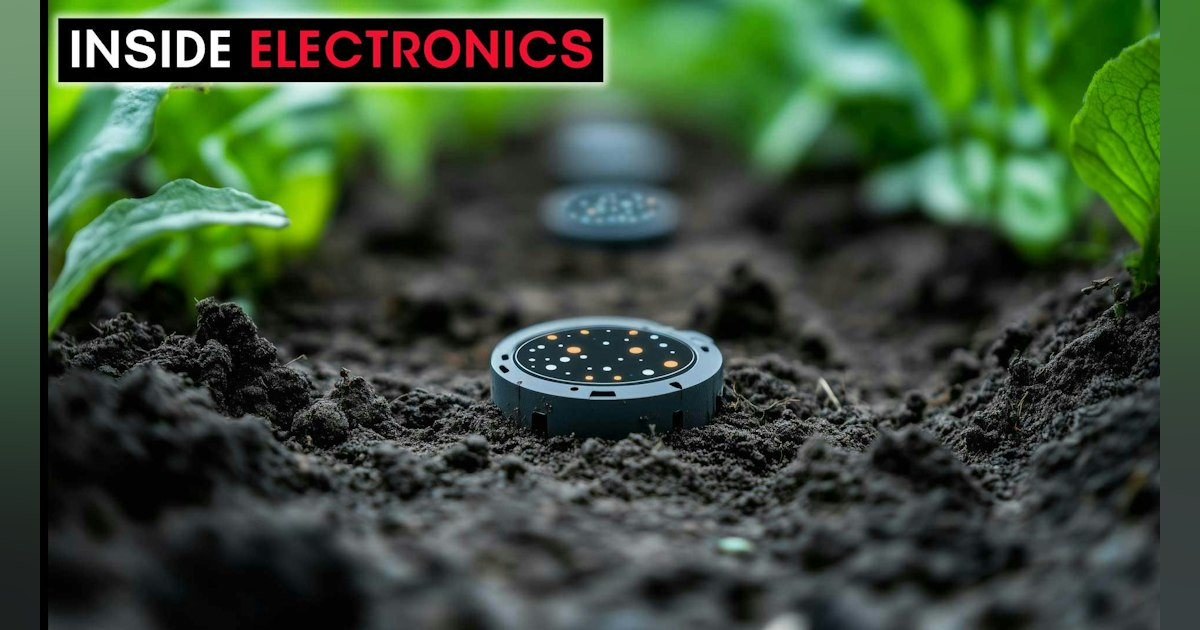
Deploying sensor nodes across vast agricultural tracts or wildlife habitats creates a maintenance nightmare if batteries must be swapped out frequently. Energy-efficient silicon that wakes up only when environmental triggers occur—such as the sound of illegal logging, the visual confirmation of an invasive species, or a sudden spike in local temperature and humidity—enables genuinely autonomous, maintenance-free deployments lasting years.
4. The Open-Source Semiconductor Shift
By embracing the RISC-V instruction set architecture, platforms like the ECS-DoT demonstrate the growing viability of open-standard silicon. RISC-V allows developers to tailor computing resources precisely to their workload requirements without being locked into proprietary ecosystem roadmaps, accelerating innovation across the embedded systems landscape.
Conclusion
As edge computing transitions from a buzzword into a pervasive utility, the hardware driving it must evolve. The traditional approach of scaling up server-grade architectures into smaller packages is no longer sustainable under strict thermal and battery constraints.
Through the convergence of event-driven logic, open RISC-V computing, and multimodal sensor integration championed by companies like EMASS, the electronics industry is inching closer to the holy grail of edge AI: continuous, sophisticated intelligence that operates invisibly, efficiently, and virtually independent of the power outlet.