By Executive Insights Desk
Published by Procurement Leaders
Main Facts: The Urgent Crisis in Executive Self-Investment
In the modern corporate theatre, the Chief Procurement Officer (CPO) has ascended to one of the most critical, high-stakes positions in the C-suite. No longer viewed strictly as cost-cutters or back-office negotiators, today’s CPOs sit at the nexus of global supply chain volatility, geopolitical tension, ESG mandates, and rapid technological transformation. Yet, behind closed doors, a quiet crisis is unfolding at the very top of the organizational chart.
According to recent data from the Procurement Leaders’ Ovation pulse survey, an alarming three-quarters (75%) of group-level CPOs at the world’s largest and most complex enterprises spend less than two hours a week on their own personal development and growth. Breaking that down further reveals an even starker reality:
- One-third (33%) dedicate less than one hour a week to learning.
- Forty-five percent (45%) dedicate between one and two hours.
When translated into daily metrics, this means that the majority of top-tier procurement executives are investing less than 20 minutes a day into sharpening their intellectual tools, expanding their strategic vision, or adapting to new methodologies.
This article examines the underlying pressures driving this neglect, explores expert perspectives from academic and industry leaders—including London School of Economics President Larry Kramer—and outlines practical, modern strategies for how busy executives can cultivate the vital habit of "learning to learn" without burning out.
Chronology and Context: The Evolution of the CPO Role and the Time Crunch
Phase 1: The Traditional Mandate (Pre-Disruption Era)
Historically, the procurement function was linear, transactional, and largely predictable. Supply chains operated on well-established, long-term vendor relationships with stable geographic parameters. In this environment, a CPO’s progression was anchored in operational mastery, negotiation tactics, and spend management. Continuous learning was largely optional, often confined to occasional multi-day executive education seminars or industry conferences.
Phase 2: The Cascading Global Crises (2020–Present)
The landscape shifted dramatically over the past five years. A barrage of unprecedented disruptions—including a global pandemic, severe geopolitical conflicts, Suez Canal blockages, rampant inflation, shifting trade tariffs, and sudden climate-related weather events—transformed the CPO’s desk into a 24/7 crisis response center.
As the scope of the role expanded to encompass risk management, technological integration (such as Generative AI and advanced analytics), and corporate sustainability, calendars filled up instantly. The working week became a marathon of virtual meetings, emergency board briefings, and supplier escalations.
Phase 3: The Current Executive Paralysis
Today, the CPO’s calendar is defined by back-to-back commitments. Faced with chronic exhaustion, many senior leaders treat personal development as a luxury item rather than a core operational necessity. At the end of a grueling 60-hour work week, the prospect of tackling a complex new business book or enrolling in an executive coaching module frequently loses out to the immediate, comforting pull of downtime, family, or simply unwinding with a glass of wine.
Supporting Data: Dissecting the Ovation Pulse Survey
To fully grasp the magnitude of this self-development deficit, one must analyze the structural breakdown of the Procurement Leaders’ Ovation pulse survey data alongside current macroeconomic trends in leadership development.
The Time Deficit Breakdown
- 0 to 60 Minutes per Week (33%): These leaders are in constant triage mode. Their development is entirely reactive—learning only when a crisis demands a specific, immediate fix.
- 60 to 120 Minutes per Week (45%): While slightly better positioned, this group still allocates a minuscule fraction of their weekly bandwidth (roughly 1.5% of a standard 60-hour work week) to growth.
- 120+ Minutes per Week (22%): A distinct minority who have successfully walled off time for strategic introspection, formal mentoring, or continuous education.
The Paradox of Experience
Compounding the time deficit is a psychological trap common among elite executives: the expertise paradox. The very attributes that propelled these individuals to group-level CPO roles—deep domain expertise, proven crisis management instincts, and decades of tactical experience—can breed intellectual complacency. Seasoned leaders frequently fall into the dangerous assumption that their accumulated knowledge is sufficient to navigate whatever the future holds.
However, as business ecosystems evolve at exponential speeds, historical playbooks are increasingly obsolete. Yesterday’s masterclass in global sourcing strategies offers little guidance on how to ethically deploy autonomous AI agents across Tier-3 supplier networks or how to navigate shifting carbon-reporting legislation.
Official Responses and Expert Insights: "Learning to Learn"
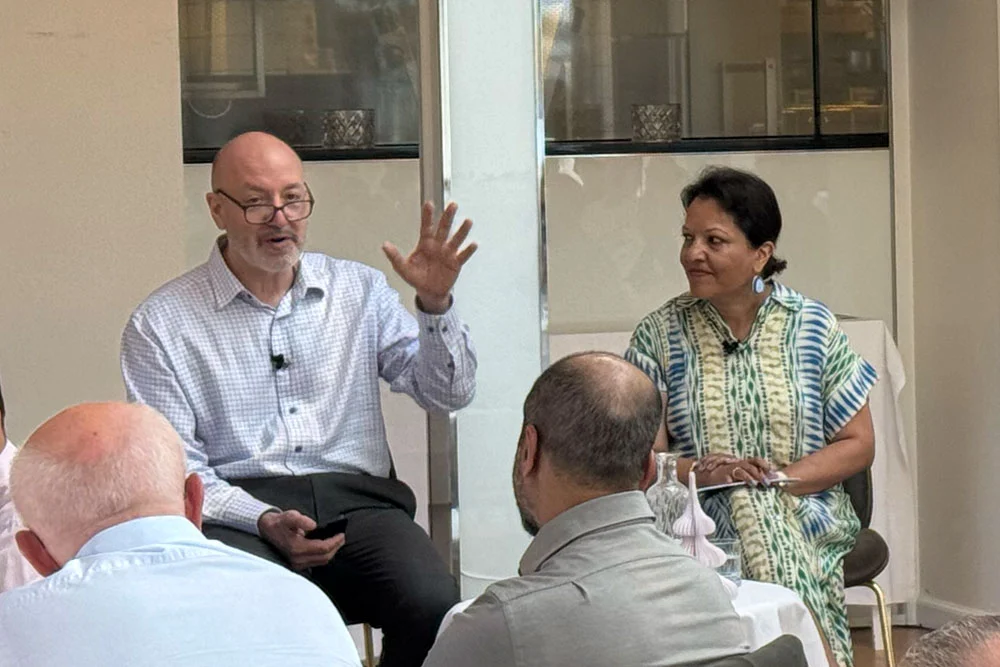
Addressing delegates at the Ovation event, Larry Kramer, President and Vice-Chancellor of the London School of Economics (LSE), offered a stark wake-up call to the gathered executives.
"The single-most important habit that leaders must develop is that of ‘learning to learn’—that mental elasticity to take on new methods, new approaches, and new knowledge," Kramer stated.
Kramer emphasized that in a world characterized by volatility, uncertainty, complexity, and ambiguity (VUCA), the half-life of professional skills is shrinking rapidly. A leader’s value is no longer measured solely by what they currently know, but by how quickly they can unlearn outdated models and absorb new paradigms.
Industry Perspectives: How CPOs Are Fighting Back
Despite the systemic pressures, a progressive segment of the Procurement Leaders community is pushing back against the time crunch, adopting innovative micro-learning and augmented development habits.
1. Leveraging Artificial Intelligence for Accelerated Learning
One forward-thinking CPO who participated in the survey shared how he utilizes AI as an intellectual sparring partner to bypass the traditional friction of independent research:
"My preferred method is short bursts of learning—usually listening to podcasts or reading—and I increasingly lean on AI itself to go deeper, ask follow-up questions, and research new areas quickly."
By using large language models to summarize complex regulatory documents, synthesize geopolitical reports into executive briefs, or simulate negotiation scenarios, this leader compresses hours of academic research into digestible 15-minute intervals.
2. Peer Coaching and Reverse Mentorship
Other respondents highlighted interpersonal dynamics as their primary vehicle for growth. By actively coaching junior talent or engaging with executive mentors, these CPOs force themselves to articulate complex strategies, confront blind spots, and view organizational challenges through multigenerational lenses.
3. Formal Soft-Skill Integration
While technical procurement acumen remains vital, a significant number of executives are steering their self-investment toward emotional intelligence, cross-cultural communication, and change management. Recognizing that leading through influence is harder than leading through hierarchy, these leaders are taking targeted masterclasses in executive presence and persuasion.
As these diverse methodologies demonstrate, there is no single "right" way for a senior leader to evolve. The methodology matters less than the commitment to the habit itself.
Implications: The High Cost of Stagnation
The ultimate danger of neglecting personal development is not merely professional stagnation; it is organizational vulnerability.
- Strategic Blind Spots: When a CPO stops learning, they miss early signals of market shifts—whether those signals are emerging supply chain technologies, disruptive startup competitors, or evolving labor standards.
- Cultural Cascades: Leadership is inherently contagious. If an executive team observes that their CPO never invests time in learning, innovation, or self-improvement, that disinterest cascades down the management chain. A culture of continuous learning cannot thrive from the bottom up if it is suffocated at the top.
- Burnout and Attrition: Paradoxically, leaders who view self-development as an expendable luxury are far more susceptible to acute burnout. Personal growth acts as a cognitive palate cleanser—shifting the brain out of crisis-management loops and into creative, expansive thinking. Without it, the job becomes an endless cycle of energy depletion without replenishment.
Conclusion: Reclaiming the Calendar
The message from the Procurement Leaders data and academic authorities like Larry Kramer is unequivocal: The worst thing a leader can do is use the pressures of the job as an excuse to not invest in themselves.
The modern global business environment will not become calmer, and CPO calendars will not magically clear up on their own. Time must be aggressively protected, scheduled, and spent with the same rigor applied to corporate budgets and capital allocation. Whether through a 15-minute morning podcast paired with AI-driven follow-up queries, bi-weekly mentoring sessions, or structured executive education, CPOs must reclaim their right to grow.
In an era of relentless disruption, the most dangerous risk a procurement chief can take is to stop evolving.
To receive weekly insights, data breakdowns, and strategic guidance from the Procurement Leaders community, sign up to the CPO Crunch newsletter using the link at the top of this page.