ARLINGTON, VA — The Mine Safety and Health Administration (MSHA) has issued an urgent and stark warning to workers across the extractive industries: relying on your nose to detect hydrogen sulfide ($H_2S$) is a deadly gamble. In a recent health alert, the federal safety agency emphasized that miners who depend solely on their sense of smell to identify the presence of this hazardous gas are putting themselves at immediate risk of catastrophic injury or death.
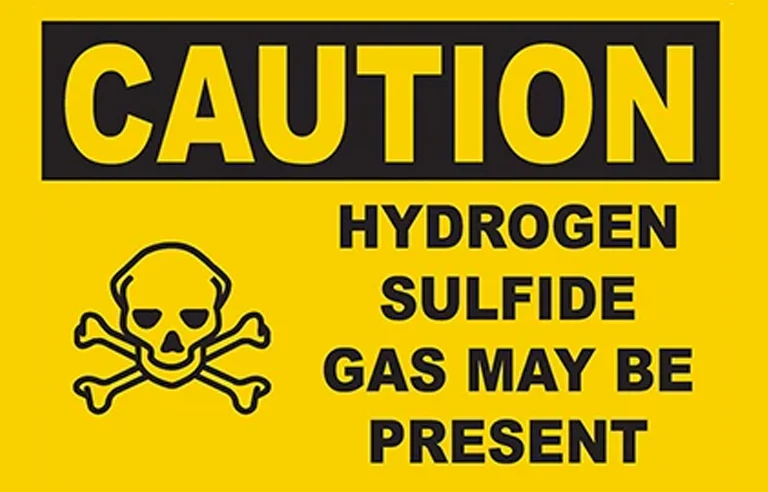
Hydrogen sulfide, a notoriously toxic and colorless compound, is recognized by the Occupational Safety and Health Administration (OSHA) as one of the leading culprits behind workplace gas inhalation fatalities in the United States. While mining operations naturally encounter various subterranean hazards, the deceptive nature of $H_2S$ makes it uniquely perilous. The gas is often insidious, lingering in confined spaces and subterranean voids where it can quickly accumulate to lethal concentrations before workers even realize they are in danger.
As industrial demands continue to push mining operations into complex geological formations, regulatory bodies are ramping up efforts to educate the workforce on atmospheric hazards. The recent MSHA alert serves as a vital reminder that traditional, biological human senses are fundamentally inadequate defenses against modern industrial chemical threats.
Main Facts
At the core of the MSHA’s recent advisory is a critical physiological and chemical reality: hydrogen sulfide destroys a worker’s primary biological early-warning system almost immediately upon exposure.
Commonly referred to in various industrial and colloquial contexts as "sewer gas," "stink damp," "swamp gas," or "manure gas," hydrogen sulfide is naturally occurring and can be released unexpectedly during underground and surface mining operations. It frequently forms during the bacterial breakdown of organic matter in the absence of oxygen, and it can also be liberated when certain sulfur-bearing ores or minerals are disturbed during excavation, drilling, or blasting.
While low concentrations of hydrogen sulfide are famously characterized by a pungent, unmistakable odor resembling rotten eggs, this characteristic provides a false sense of security. MSHA warns that at higher concentrations—or even after brief exposure to moderate levels—the gas rapidly paralyzes the olfactory nerve. Workers who notice the rotten egg smell initially may suddenly find that the odor completely vanishes, leading them to falsely believe the air has cleared. In reality, the gas has simply neutralized their ability to smell it, allowing them to unknowingly breathe in increasingly toxic doses.
The health impacts of hydrogen sulfide exposure are rapid and severe. According to federal health data, acute exposure can trigger a cascade of physiological failures:
- Initial Symptoms: Immediate irritation of the eyes, nose, and respiratory tract; severe coughing and burning sensations.
- Neurological Effects: Disorientation, dizziness, severe headaches, rapid fatigue, and extreme sensitivity to light (photophobia).
- Advanced Toxicity: Pulmonary edema (accumulation of fluid in the lungs), rapid loss of consciousness, respiratory paralysis, seizures, coma, and ultimately, death.
Furthermore, hydrogen sulfide is heavier than air, meaning it tends to pool in low-lying areas, sumps, dead-end drifts, and unventilated corners of a mine. This density gradient creates localized pockets of extreme toxicity, where a worker can step from safe air into a 100% fatal atmosphere in a matter of seconds.
Chronology
The identification of hydrogen sulfide as a workplace hazard is not new, but the evolving nature of modern mining and the frequency of preventable incidents have forced federal regulators to take renewed action.
Historical Context and Early Industrial Regulations
For over a century, miners have been aware of "stink damp," though early historical accounts often conflated various underground gases, grouping hydrogen sulfide together with methane ("fire damp") and carbon dioxide ("black damp"). As industrial chemistry advanced through the mid-20th century, the specific toxicity of $H_2S$ became better understood, leading to the establishment of early threshold limit values (TLVs) by industrial hygienists. When OSHA was established in 1970, and subsequent mining legislation like the Federal Mine Safety and Health Act of 1977 was enacted, strict air-quality standards for underground environments were formally codified into federal law.
The Modern Technological Shift
By the late 1990s and early 2000s, the introduction of personal electronic gas detectors began to revolutionize underground safety. Reliance on "canary in a coal mine" methods—both literal historical practices and metaphorical human sensory reliance—began to be phased out in favor of electrochemical sensors capable of continuous, real-time digital monitoring. Despite these technological advancements, periodic compliance audits and incident investigations continued to reveal gaps in training and equipment maintenance.
Recent MSHA Health Alert Timeline
- Q1–Q4 (Preceding Years): Federal incident databases note a persistent, albeit fluctuating, number of non-compliance citations related to inadequate atmospheric monitoring and confined space entry procedures in metal/nonmetal and coal mining operations.
- Recent Months: Following a series of near-misses and respiratory incidents tied to sulfur-rich geological formations and disturbed organic deposits, MSHA safety engineers initiated a comprehensive review of gas inhalation data.
- Present Day: MSHA formally issues its updated health alert, directly targeting the dangerous misconception that human smell is a reliable detector for hydrogen sulfide, and pushing for renewed adherence to rigorous industrial hygiene protocols.
Supporting Data
To fully grasp the gravity of the MSHA warning, one must examine the empirical data surrounding industrial gas exposures and the specific chemical thresholds of hydrogen sulfide.
Toxicological Thresholds (Parts Per Million – ppm)
Industrial hygienists measure airborne gas concentrations in parts per million. The physiological impact of hydrogen sulfide scales rapidly as concentration increases:
- 0.01 – 1.5 ppm: The typical human olfactory detection threshold (the rotten egg smell becomes noticeable).
- 10 ppm: The Occupational Safety and Health Administration (OSHA) permissible exposure limit (PEL) for an 8-hour workday. At this level, eye and respiratory irritation may occur after extended exposure.
- 50 – 100 ppm: Causes mild conjunctivitis and respiratory tract irritation after 1 hour. Olfactory fatigue (numbing of the sense of smell) typically begins to occur within 2 to 15 minutes of exposure at these levels.
- 100 – 150 ppm: The olfactory nerve is rapidly paralyzed, and the rotten egg smell completely disappears within 3 to 5 minutes. Prolonged exposure can lead to severe pulmonary edema.
- 200 – 300 ppm: Marked by severe eye and respiratory irritation, with neurological symptoms developing quickly.
- 500 – 700 ppm: Rapid onset of systemic symptoms, loss of consciousness within 15 to 30 minutes, and imminent risk of death if rescue is delayed.
- 1000 ppm and above: Immediate collapse ("knockdown") with a single breath. Breathing stops, and death occurs within minutes unless immediate cardiopulmonary resuscitation and oxygen administration are provided.
National Occupational Fatality Statistics
According to historical and ongoing tracking by federal agencies, gas inhalation remains one of the most lethal categories of workplace accidents. While methane and carbon monoxide traditionally capture mainstream media attention due to explosion risks, hydrogen sulfide is uniquely deadly because it acts silently as a chemical asphyxiant. Bureau of Labor Statistics (BLS) and OSHA aggregate data indicate that dozens of American workers across all industries lose their lives to $H_2S$ poisoning every decade, with a significant percentage of these fatalities occurring during maintenance operations, confined space entries, and unexpected geological disturbances in subterranean environments.
Official Responses
The release of the MSHA health alert has triggered coordinated responses across regulatory agencies, labor advocacy groups, and industry leadership associations.
The Mine Safety and Health Administration (MSHA)
In its official advisory, MSHA leadership underscored that complacency is the greatest enemy underground. An agency spokesperson noted: "We cannot allow miners to gamble their lives on an unreliable biological sense. Olfactory fatigue from hydrogen sulfide is real, it is fast, and it is deadly. Operators and miners must treat atmospheric monitoring as a non-negotiable daily standard, not an afterthought."
MSHA inspectors have been directed to increase scrutiny on atmospheric testing logs, calibration records for electronic gas detectors, and the availability of self-contained self-rescuers (SCSRs) during upcoming routine and spot inspections.
Occupational Safety and Health Administration (OSHA)
While MSHA holds primary jurisdiction over mining properties, OSHA continues to collaborate closely on cross-industry standards. An OSHA representative reiterated the agency’s long-standing position: "Hydrogen sulfide is a silent predator in industrial settings. Whether in a municipal sewer, an oil extraction site, or a deep underground mine, the rules of chemistry do not change. Employers are legally mandated to provide continuous engineering controls, proper ventilation, and reliable personal protective equipment."
Industry and Labor Reactions
Mining industry trade groups and labor unions have largely welcomed the clarity of the alert, while emphasizing the practical challenges of implementation in remote or difficult terrain.
Representatives from major mining labor unions issued a joint statement praising MSHA for calling out the "smell test" myth. "For generations, old-school miners relied on folklore and their noses to gauge underground air quality," the union statement read. "This alert dispels that dangerous myth once and for all. Every miner deserves to return home safely, and that starts with putting calibrated technology—not human biology—between the worker and invisible toxins."
Mine operators, meanwhile, are reviewing their internal safety management systems to ensure that supervisor training modules explicitly highlight olfactory fatigue and mandate multi-gas detector usage for any crew entering potentially suspect or unventilated zones.
Implications
The implications of MSHA’s warning extend far beyond a routine administrative advisory; they call for an immediate cultural and operational shift in how mining operations approach atmospheric safety.
Technological Mandates and Engineering Controls
The most immediate implication is the absolute necessity of upgrading and maintaining personal gas detection technology. Relying on passive observation is no longer legally or ethically defensible.
- Multi-Gas Detectors: Mines must ensure that workers carry calibrated, functional multi-gas detectors capable of sensing $H_2S$ alongside oxygen levels, carbon monoxide, and explosive gases.
- Bump Testing and Calibration: Regular "bump tests" (exposing the sensor to a known gas concentration to verify response) and periodic factory calibrations must become an immutable daily routine before any shift descends.
- Ventilation Management: Engineering controls remain the primary line of defense. Proper auxiliary ventilation fans, intake controls, and airflow modeling are essential to prevent the accumulation of heavy gases in sumps, stopes, and development headings.
Legal and Liability Ramifications
From a regulatory compliance standpoint, operators who fail to provide adequate gas detection equipment or training now face heightened exposure to severe citations, mandatory safety shutdowns, and potential criminal negligence investigations in the event of an injury or fatality. MSHA’s explicit warning removes any plausible deniability regarding an employer’s awareness of the dangers of hydrogen sulfide olfactory fatigue.
Cultural Evolution Underground
Perhaps the most profound impact will be on workplace culture. Mining has historically fostered a culture of toughness, where workers sometimes downplay discomfort or rely on intuition. MSHA’s alert actively dismantles this mindset regarding chemical hazards. By educating new recruits and veteran miners alike that their own noses cannot be trusted in the presence of $H_2S$, the industry takes a crucial step toward eradicating preventable gas inhalation tragedies.
Ultimately, the message from Arlington is clear: underground mining is an unforgiving environment where science and strict protocol must override human instinct. By respecting the invisible danger of hydrogen sulfide and embracing rigorous technological safeguards, the mining community can protect its most valuable asset—its workforce.