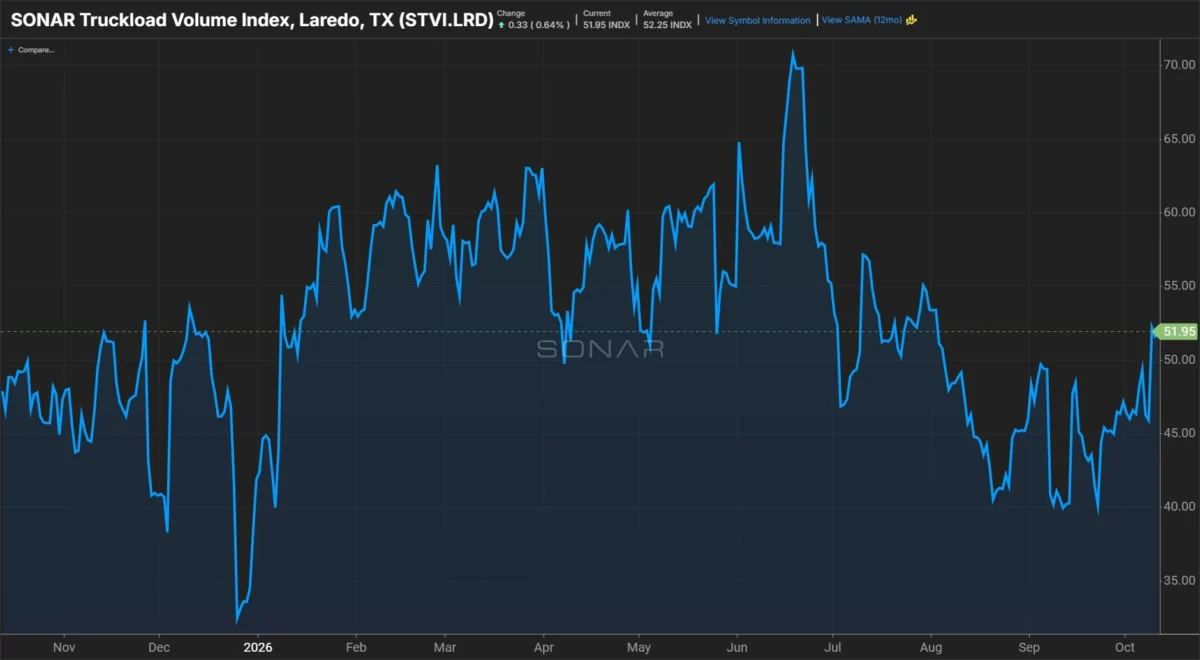
The American freight landscape is currently navigating a period of profound volatility that defies traditional economic cycles. According to the latest Sonar market analysis authored by Julie Van de Kamp, the industry is grappling with an extraordinary capacity crunch. In a deviation from historical norms, carriers are now rejecting loads at quadruple the typical rate, despite freight volumes remaining relatively steady.
This is not a story of a demand-fueled surge; rather, it is a structural supply crisis. The industry is witnessing a rapid exodus of capacity—both in terms of equipment and personnel—that is outpacing the market’s ability to replenish it. As tender rejection rates climb and fleet counts dwindle, the logistics sector finds itself in a precarious position where the traditional "price signal" mechanism is failing to trigger the expected influx of new capacity.
The Core Data: A Divergence of Trends
The most striking indicator of the current malaise is the dramatic rise in tender rejection rates. Currently hovering at approximately 14%, these rates are triple the levels observed in 2023. When placed in the context of truckload volumes—which have grown by a modest 9% over the past three years—the math reveals a glaring disconnect.
Carriers are turning away nearly four times as many loads as they did in previous periods of comparable freight volume. In a healthy market cycle, an increase in rejection rates—which signals higher demand for capacity—would naturally pull more trucks and drivers into the ecosystem. However, Van de Kamp notes that this anticipated response has yet to materialize, suggesting that the barriers to entry and operation are currently insurmountable for many potential market participants.
Chronology of the Capacity Collapse
To understand how the freight sector reached this impasse, one must look at the timeline of the current contraction.
The Peak and the Pivot (2022–2023)
The seeds of the current crisis were sown in the aftermath of the 2022 peak, when new fleet tractor counts reached a high of roughly 47,000. At that time, the industry was riding the momentum of post-pandemic consumption. However, as economic conditions tightened, that momentum stalled.
The Aggressive Contraction (2024–2025)
Over the last 18 months, the industry has seen a consistent, year-over-year decline in tractor counts. The most jarring data point emerged in August of this year, when the sector lost approximately 51,000 for-hire tractors in a single month. Unlike previous cycles where the gap between volume and rejections would narrow as new equipment hit the road, the current cycle has shown no such self-correcting behavior.
The "Ghost" Authority Boom (2026)
In late 2026, a peculiar anomaly appeared in the data: net carrier authority additions hit a five-year high, exceeding 2,000 per week. To the casual observer, this might have signaled a burgeoning recovery. However, industry experts are urging caution. Van de Kamp emphasizes that these figures are misleading. Much of this surge is attributed to the Federal Motor Carrier Safety Administration’s (FMCSA) transition to the new MOTIS system.
The implementation of MOTIS effectively cleared a massive backlog of applications while simultaneously halting routine deactivations. Consequently, the "growth" was largely a result of administrative housekeeping rather than genuine fleet expansion. Further evidence of this illusion is found in the insurance data: only two in three new interstate registrants obtained liability insurance in the recent period, compared to nine in ten during the stable 2019 cycle. This suggests that a significant portion of the "new" carriers are either under-insured or not fully operational, creating a facade of capacity that does not exist on the road.
Supporting Data: Why the Market Isn’t Responding
The failure of the market to self-correct can be distilled into two primary factors: capital barriers and labor attrition.
Equipment Deficits
The cost of entry for new carriers has skyrocketed. High interest rates, coupled with the capital-intensive nature of modern logistics—including investments in emission-compliant tractors and telematics—have sidelined smaller operators. Meanwhile, large, established carriers are prioritizing margin protection over fleet expansion.
The Regulatory and Demographic Wall
The labor market, already tight, is facing a series of regulatory pressures that have effectively capped the number of available drivers.
- The Clearinghouse Impact: Over 202,000 commercial driver’s license (CDL) holders have been rendered ineligible due to drug and alcohol violations tracked by the FMCSA Clearinghouse.
- Non-Domiciled Restrictions: The enforcement of rules regarding non-domiciled CDL holders is expected to affect upwards of 194,000 drivers as compliance audits continue.
- Language and Proficiency: Enhanced enforcement of English proficiency requirements is removing approximately 2,700 drivers from the national workforce every month.
These cumulative losses represent a massive, permanent reduction in the available labor pool, creating a "floor" on how much freight the nation can move at any given time.
Official Responses: The Carriers’ Stance
The major players in the logistics sector have publicly acknowledged that their growth is no longer a function of demand, but a function of constraints.
In their latest earnings reports, industry titans have shifted their strategic focus. Schneider has explicitly characterized the current market as "driver-constrained," noting that the inability to recruit and retain personnel is the primary limiting factor on their service offerings.
Similarly, Knight-Swift and Werner have indicated a pivot in their business models. Rather than chasing volume through aggressive expansion, these carriers are focusing on "yield and utilization." This means they are choosing to move only the most profitable freight and are optimizing their existing lanes to ensure that every available tractor is being used at maximum efficiency. For shippers, this translates to a permanent shift toward higher freight costs and a more selective carrier base.
Implications: A New Normal for the Supply Chain
The implications of this structural capacity crunch are far-reaching for the broader economy.
1. Persistent Inflationary Pressure on Logistics
With capacity constrained, shippers can no longer rely on the "spot market" to provide relief when contract volumes spike. As long as the supply of trucks and drivers remains artificially suppressed by regulatory hurdles and capital costs, freight rates are likely to remain elevated. This "freight floor" will inevitably be passed on to the consumer, adding a persistent layer of cost to goods across the retail, manufacturing, and agricultural sectors.
2. The Death of "Just-in-Time"
The logistics model of the last decade, which prioritized lean inventory and Just-in-Time (JIT) delivery, is becoming increasingly incompatible with the current market reality. Shippers are finding that if they do not have dedicated capacity or long-term, high-yield contracts, their freight simply won’t move. We are witnessing a transition toward "Just-in-Case" inventory management, where companies must carry more stock to hedge against the volatility of carrier rejections.
3. Consolidation of the Market
The current environment is hostile to small, independent operators. The complexity of regulatory compliance, the difficulty of obtaining affordable liability insurance, and the inability to compete for labor against larger carriers are driving a wave of market consolidation. We are moving toward a tiered logistics structure, where only the largest, most technologically integrated carriers can survive the regulatory and capital-intensive barriers of the modern era.
4. Regulatory Reckoning
The government is now in a position where its own regulations—intended to improve safety—are directly impeding the efficiency of the national supply chain. The ongoing debates regarding the MOTIS system, the Clearinghouse impacts, and driver proficiency standards suggest that there will soon be a legislative push to balance safety with economic necessity. Policymakers will be forced to ask whether the current rate of "driver removal" is sustainable, or if the system requires a more nuanced approach to workforce replenishment.
Conclusion
The American freight sector is currently in a state of suspended animation. While the demand for goods remains consistent, the infrastructure required to move those goods is undergoing a painful, structural transformation. The "capacity crunch" is not a temporary dip in a cycle; it is the manifestation of a decade of regulatory tightening, labor demographic shifts, and capital stagnation.
As carriers reject loads at record rates and major fleets prioritize utilization over expansion, the message to the economy is clear: the era of abundant, low-cost freight capacity is over. Shippers, manufacturers, and retailers must prepare for a future defined by high barriers to entry, a shrinking pool of qualified drivers, and a logistics market that operates with a much thinner margin for error. The road ahead will be defined by those who can navigate this scarcity, not by those who wait for it to pass.