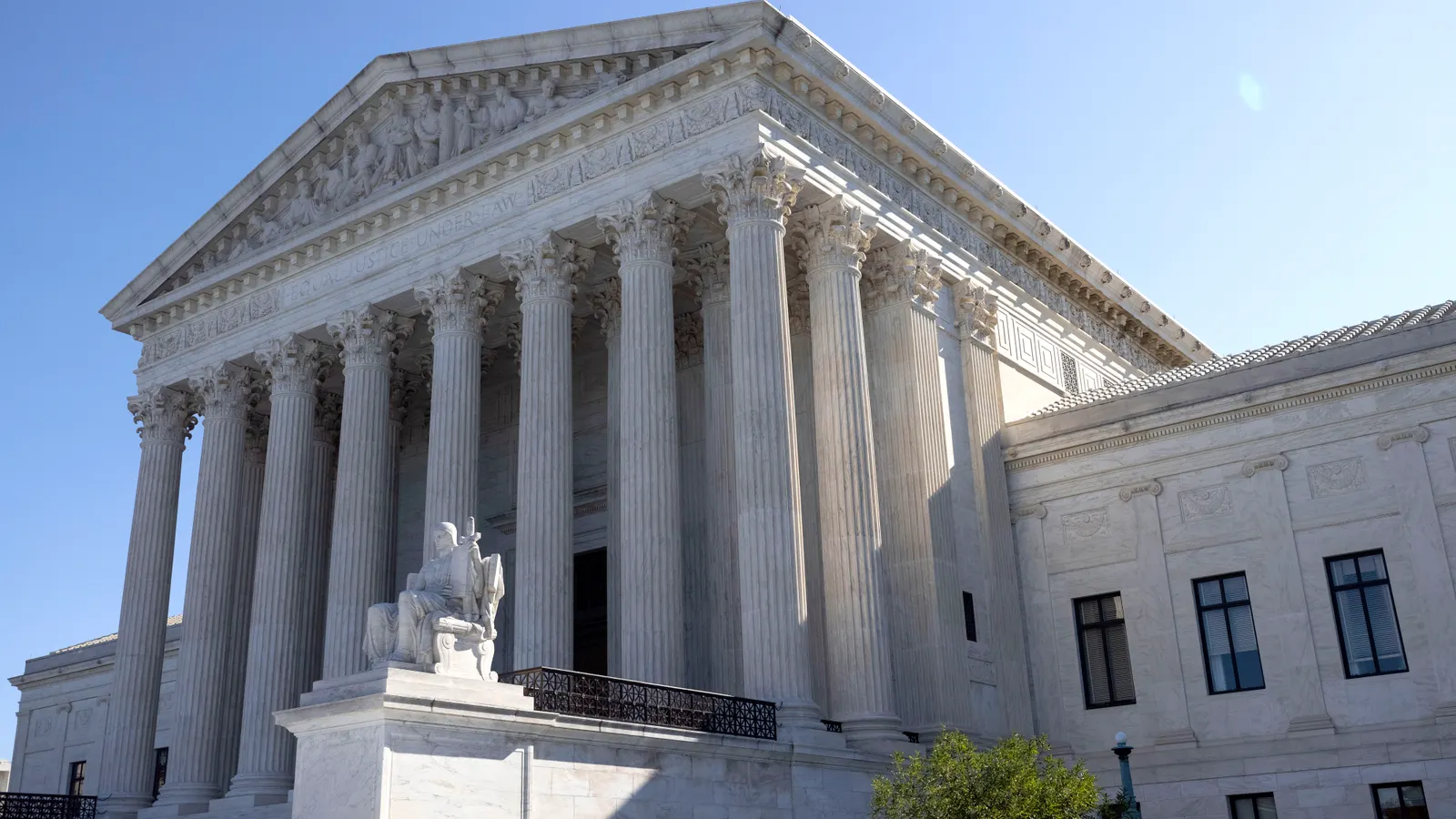
WASHINGTON — As the U.S. Supreme Court shapes its docket for the 2026–2027 term, the nation’s highest judicial body has opted to stand on the sidelines of some of the most contentious workplace disputes in modern American jurisprudence. Over a series of orders concluding in recent weeks, the justices have systematically declined to hear a barrage of high-profile petitions, leaving in place lower-court rulings that span disability discrimination, corporate diversity initiatives, pandemic-era mandates, immigration law, and collective bargaining rights.
By denying certiorari in these pivotal cases, the Supreme Court has effectively signaled a temporary reprieve from issuing sweeping national precedents on several cultural and legal flashpoints. For employers, workers, labor unions, and human resources professionals, the high court’s silence means that a patchwork of regional appellate decisions will continue to govern employment relations across the country, preserving distinct legal landscapes depending on geographic jurisdiction.
Main Facts: A Wave of Denials Leaves Lower Court Rulings Standing
The Supreme Court’s recent wave of refusals encompasses a broad cross-section of American labor and employment law. The rejected petitions touch upon nearly every major operational friction point between employers and employees over the last several years, including the boundaries of anti-discrimination statutes, the fallout from corporate diversity, equity, and inclusion (DEI) policies, lingering challenges to COVID-19 workplace mandates, and the authority of federal labor boards in the post-Chevron era.
Among the most notable rejections are cases testing whether independent contractors are shielded by federal disability statutes, whether corporate DEI initiatives improperly disadvantage majority-group workers, and whether federal agencies like the National Labor Relations Board (NLRB) continue to enjoy judicial deference following landmark administrative law rulings.
By turning away these appeals, the high court has allowed lower federal circuits and state supreme courts to have the final word on these matters for the foreseeable future, creating notable divisions and legal uncertainties for nationwide corporations navigating multi-state workforces.
Chronology of Key Petitions and Rejections
The high court’s reluctance to wade into these disputes has unfolded across several months, culminating in a cluster of rejections that solidified the trajectory of the upcoming term:
- May: The Supreme Court declined to hear Armstrong v. Warner Bros., leaving intact a 9th U.S. Circuit Court of Appeals ruling that favored the entertainment giant against a White camera operator alleging reverse discrimination stemming from corporate DEI commitments.
- June: The justices rejected Lowery v. Mills, declining to clarify whether institutional retaliation and threats to a professor’s research opportunities and pay—following his public opposition to DEI policies—constituted a valid First Amendment retaliation claim.
- June (Mid-Month): The high court refused to intervene in a New Jersey dispute, Marmic v. [Worker], which questioned whether an unauthorized immigrant who utilized a false Social Security number could recover back pay under federal immigration law.
- Recent Weeks (Tuesday Order Cluster): The Supreme Court issued a flurry of denials, notably dismissing disability discrimination claims in Greer v. Benton School District and Redding v. Mullin, alongside a trio of COVID-19 mandate cases (Colson v. Hennepin County, Troogstad v. City of Chicago, and Petersen v. Snohomish Regional Fire and Rescue). Additionally, the court turned away challenges to the NLRB, including petitions from the former owners of the Pittsburgh Post-Gazette and Garten Trucking LC v. NLRB.
Supporting Data: Dissecting the Rejected Cases
To understand the scope of what the Supreme Court has left unaddressed, legal scholars point to the specific legal questions raised within the rejected dockets.
Disability Discrimination and Statutory Reach
In Greer v. Benton School District (Docket No. 25-1197), petitioners asked the court to determine whether Section 504 of the Rehabilitation Act—which bars disability discrimination in federally funded programs—extends employment protections to independent contractors. The Arkansas Supreme Court had previously ruled that Section 504 did not cover such plaintiffs, tossing out a lawsuit filed by a substitute teacher who had secured a jury verdict against a state school district.
Similarly, in Redding v. Mullin (Docket No. 25-1336), a former federal air marshal challenged her reassignment by the Department of Homeland Security following a request for disability retirement, asking the justices to evaluate the legality of the transfer and whether lower courts properly scrutinized failure-to-accommodate claims.
The DEI Legal Battleground
The intersection of corporate diversity programs and anti-discrimination laws remains a fertile ground for litigation. In Armstrong v. Warner Bros., the petitioner argued that corporate DEI commitments served as direct evidence of unlawful racial bias under Title VII of the 1964 Civil Rights Act, asserting that a judge or jury should decide whether the "but-for" causation standard was met. The 9th Circuit disagreed, siding with Warner Bros.
Meanwhile, in Lowery v. Mills, a University of Texas professor sought clarity on whether professional penalties short of termination—such as threats to pay, academic affiliation, and research access—suffered in retaliation for speech against DEI policies could sustain a First Amendment claim. Both petitions were turned away.
COVID-19 Mandate Fallout
Despite numerous federal appeals court rulings working their way through the system regarding vaccine and testing mandates, the Supreme Court declined multiple opportunities to establish a unified standard.
- In Colson v. Hennepin County, Minn. (Docket No. 25-1378), an employee forced to choose between weekly COVID-19 testing protocols or termination argued that the employer’s disciplinary threats violated her religious beliefs under Title VII. The 8th Circuit dismissed the case in a 2-1 decision, which the high court left standing.
- In Troogstad v. City of Chicago, Ill. (Docket No. 25-1400), municipal employees challenged vaccine mandates on substantive due process grounds.
- In Petersen v. Snohomish Regional Fire and Rescue (Docket No. 25-1210), the 9th Circuit ruled that a Washington firefighting department lawfully denied religious exemptions to vaccine mandates because accommodations would impose an undue operational hardship.
Immigration and Labor Relations
In Marmic v. [Worker] (Docket No. 25-1409), the court declined to review whether the Immigration Reform and Control Act of 1986 bars unauthorized immigrant workers who intentionally use false Social Security numbers from recovering back pay—a question resolved affirmatively by the New Jersey Supreme Court.
Finally, labor law practitioners watched closely as the court rejected challenges to the National Labor Relations Board. In the petition brought by the former owners of the Pittsburgh Post-Gazette (Docket No. 25-1192) and Garten Trucking LC v. NLRB (Docket No. 26-84), employers challenged whether the NLRB could find bad-faith bargaining solely on the substance of contract proposals. Crucially, these petitions invoked Loper Bright Enterprises v. Raimondo—the landmark 2024 ruling that ended Chevron deference—questioning whether appellate courts are still showing excessive, unconstitutional deference to agency statutory interpretations. The high court declined to take up the banner.
Official Responses and Legal Perspectives
The systematic denial of cert has elicited strong reactions from legal analysts, employer associations, and employee advocacy groups alike.
Employment defense attorneys note that while the Supreme Court’s inaction provides short-term stability for corporate policies currently deemed lawful within specific circuits, it ultimately prolongs nationwide uncertainty. "Employers operating across multiple jurisdictions are left in a difficult compliance limbo," noted one labor relations attorney. "A practice that is perfectly defensible in the Ninth Circuit may carry severe litigation exposure in the Eighth or Third circuits."
Conversely, civil rights and labor advocates view the rejections as a temporary defense of established statutory interpretations, particularly regarding protections for religious expression, disability accommodations, and agency oversight. However, worker advocates remain cautious, recognizing that the absence of favorable Supreme Court rulings leaves lower courts vulnerable to shifting judicial philosophies regarding civil rights and administrative authority.
Regarding the NLRB challenges, labor law scholars expressed surprise that the high court passed on the opportunity to apply the principles of Loper Bright to labor board adjudications. The intersection of the death of Chevron deference and administrative agency power remains one of the most dynamic areas of post-reform federal law, and observers anticipate that the justices will eventually be forced to clarify how federal courts must review NLRB decisions.
Implications for Employers, Workers, and Human Resources Professionals
The Supreme Court’s decision to clear its docket of these polarizing disputes carries profound practical implications for the American workplace:
- Continued Regional Disparities: Human resources departments and corporate legal teams cannot adopt a uniform, nationwide approach to issues like religious vaccine accommodations, independent contractor rights under disability statutes, or the evaluation of corporate DEI metrics. Compliance strategies must remain hyper-localized, tailored to the specific precedents of the federal circuit in which employees reside.
- DEI Programs Remain Under Scrutiny: Although the Supreme Court declined to hear Armstrong and Lowery, corporate diversity initiatives are far from immune to legal challenge. Lower court rulings that favor employers on narrow procedural grounds (such as causation standards) do not deter activist plaintiffs or regulatory bodies from launching fresh challenges under alternative legal theories.
- The Post-Chevron Labor Landscape: By refusing to hear the NLRB challenges citing Loper Bright, the Supreme Court has left lower appellate courts to grapple independently with the degree of deference owed to federal labor bodies. Employers challenging board rulings will need to carefully build evidentiary records that challenge agency overreach without relying on immediate intervention from Washington.
- Heightened Precaution on Mandates and Accommodations: Even though the high court passed on reviewing COVID-19 mandates, employers must remain vigilant regarding religious and disability accommodations. The legal standards governing "undue hardship" and "adverse employment actions" continue to evolve organically through regional litigation, requiring employers to engage in rigorous, documented interactive processes when evaluating employee accommodation requests.
As the 2026–2027 term formally gets underway, the message from the Supreme Court is clear: while the justices will eventually have to confront the systemic friction points of the modern workforce, today they are content to let the lower courts bear the weight of these profound socio-legal debates.