For decades, the corporate playbook for leadership continuity has remained largely unchanged: identify high-potential employees, enroll them in prestigious development programs, and keep a shortlist ready for when a C-suite or senior management vacancy inevitably occurs. Yet, a persistent, uncomfortable trend has emerged in boardrooms worldwide. When the pressure mounts and a critical role opens, the internal selection process often stalls. The question shifts from the confident "Who is next?" to the anxious "Who is actually ready?"
This transition marks a fundamental misalignment in modern human capital strategy. While organizations have become masterful at identifying "potential," they are failing to cultivate "readiness." This article explores the growing leadership readiness gap, the systemic flaws in current development models, and the three structural shifts required to ensure that the next generation of leaders is truly prepared to navigate an increasingly volatile business environment.
The State of the Pipeline: Why 80 Percent Lack Confidence
The data paints a sobering picture of the current landscape. According to DDI’s Global Leadership Forecast 2025, a staggering 80 percent of organizations report a lack of confidence in their leadership pipelines. This figure is particularly alarming given the billions of dollars invested annually in leadership development, executive coaching, and talent identification software.
If organizations are pouring resources into identifying and grooming future executives, why does the "bench strength" remain so chronically weak? The answer lies in a diagnostic error: many firms believe they have a succession planning problem, when in reality, they are suffering from a leadership readiness crisis.
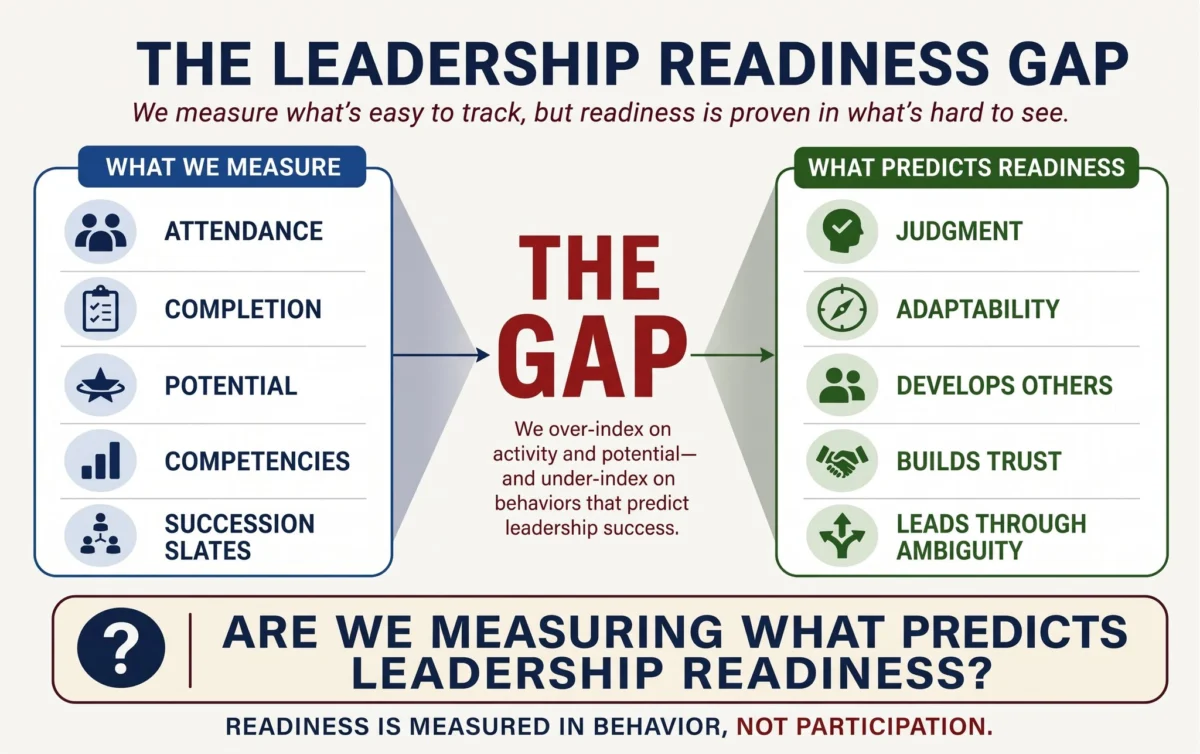
Potential is a measure of what someone could become under ideal circumstances. Readiness, conversely, is a measure of what someone can consistently deliver in the face of current, real-world complexity. By confusing these two metrics, organizations are promoting individuals based on past performance in stable environments, only to see them falter when tasked with leading through ambiguity, transformation, or organizational crisis.
Chronology of the Gap: From Potential to Promotion
To understand how this gap forms, one must examine the typical progression of a high-potential employee.
- Identification: The organization identifies an individual with strong technical skills, high visibility, and professional ambition. They are branded as "High Potential" (HiPo).
- The Programmatic Phase: The HiPo is funneled into leadership workshops and certification programs. These sessions often focus on theoretical leadership frameworks and competency models.
- The Promotion Pivot: When a vacancy arises, the organization promotes the individual based on their "potential" and their successful participation in these programs.
- The Exposure Point: Upon entering the new, more complex role, the individual’s previous methods—often rooted in individual contribution or technical problem-solving—fail to translate. The team struggles, the leader loses confidence, and the organization is forced to acknowledge a failed transition.
This sequence reveals a systemic failure: the organization has measured participation and "paper potential" but has failed to create a "living laboratory" where readiness can be tested, observed, and verified before the stakes become catastrophic.
The Three Shifts in Thinking
Closing the readiness gap requires a radical departure from traditional talent management. Leaders must pivot from viewing succession as a static list to viewing it as a dynamic, evidence-based system.
1. From Potential to Readiness: Defining the "Next"
Potential is aspirational; readiness is operational. A leader may be perfectly prepared to manage a stable department, but utterly unequipped to lead a radical digital transformation or a post-merger integration.
Readiness is inherently contextual. It asks, "Does this person have the specific capability, judgment, and experience required for the specific challenges our organization will face in the next 18 to 24 months?"
When we treat "high potential" as a blanket endorsement for promotion, we set individuals up for failure. A promotion should not be a reward for past success; it should be a calculated step based on demonstrated readiness for the new scope. Organizations must adopt a "gap-analysis" mindset: instead of asking if an employee is ready now, they should ask, "What specific experiences must this person practice and master before they are ready for the next move?"
2. From Leadership Programs to Leadership Systems
Formal training programs are often the "vanity metrics" of HR departments—easy to track, simple to report, and rarely predictive of future success. While education is vital, it is insufficient without a surrounding system that forces the application of skills.
A robust leadership system operates on a continuous feedback loop:
- Succession Decisions: Identify the roles that need filling.
- Readiness Gap Analysis: Identify the specific skills missing.
- Targeted Experiences: Assign work that requires the leader to operate in the "gap" (e.g., leading a cross-functional task force, managing a budget turnaround).
- Observation and Feedback: Rigorously observe performance in these "live" environments.
- Reassessment: Re-evaluate readiness based on actual, observed behavior rather than theoretical performance.
As noted in the DDI research, the shift must move from "theoretical assessments" to "lived performance." If a leader needs to develop big-picture strategic thinking, they should not be sitting in a seminar—they should be working on a strategic project that requires them to defend their decisions to the board.
3. From Measuring Participation to Measuring Impact
For years, the success of Learning and Development (L&D) departments has been measured by attendance: "How many hours of training were delivered?" "How many managers completed the leadership course?"
These metrics are fundamentally flawed because they measure activity, not value. The shift in thinking must move toward the question posed by leaders like Dr. Keith Keating: "What value are we adding?"
To measure readiness effectively, organizations must track the progression from Activity to Capability to Behavior to Impact.
- Activity: Did they attend the workshop?
- Capability: Do they understand the new framework?
- Behavior: Are they applying it in their daily management?
- Impact: Is the team performing better, and is the business objective being met?
This requires a departure from simple dashboards. It requires HR to partner with business unit leaders to observe whether a manager is truly capable of having difficult conversations or navigating ambiguity. If the training doesn’t change what the leader does on a Monday morning, the system has failed.
Implications for the Modern Enterprise
The implications of the readiness gap are profound. Organizations that continue to rely on antiquated succession models will face higher leadership turnover, lower team morale, and a lack of agility in the face of market disruption.
When a "high potential" hire fails, the burden of blame is often placed on the individual. However, the true culprit is a system that declared them ready without the evidence to back it up. By shifting toward an evidence-based, systemic approach to leadership, companies can stop treating succession planning as an administrative task and start treating it as a strategic imperative.
Conclusion: Building the Evidence Base
The future of leadership is not found in a list of names in a succession plan document. It is found in the daily habits, the challenging assignments, and the rigorous, honest observations that happen long before a promotion is finalized.
If we want to build stronger, more resilient organizations, we must stop asking "Who is next?" as if we are choosing the next person in line at a deli counter. We must instead start asking: "Are they ready for what comes next, and what evidence do we have to prove it?"
True succession is not about filling a seat; it is about ensuring that the person in the seat is equipped to lead the organization through the challenges that haven’t even happened yet. The shift from "potential" to "readiness" is the defining challenge for the next generation of HR and business leaders. The evidence is not in the classroom—it is in the boardroom, the factory floor, and the daily grind of leadership itself.