By FreightWaves Commentary Desk
Special Commentary by Michael Caney, Chief Commercial Officer of Highway
Introduction and Main Facts
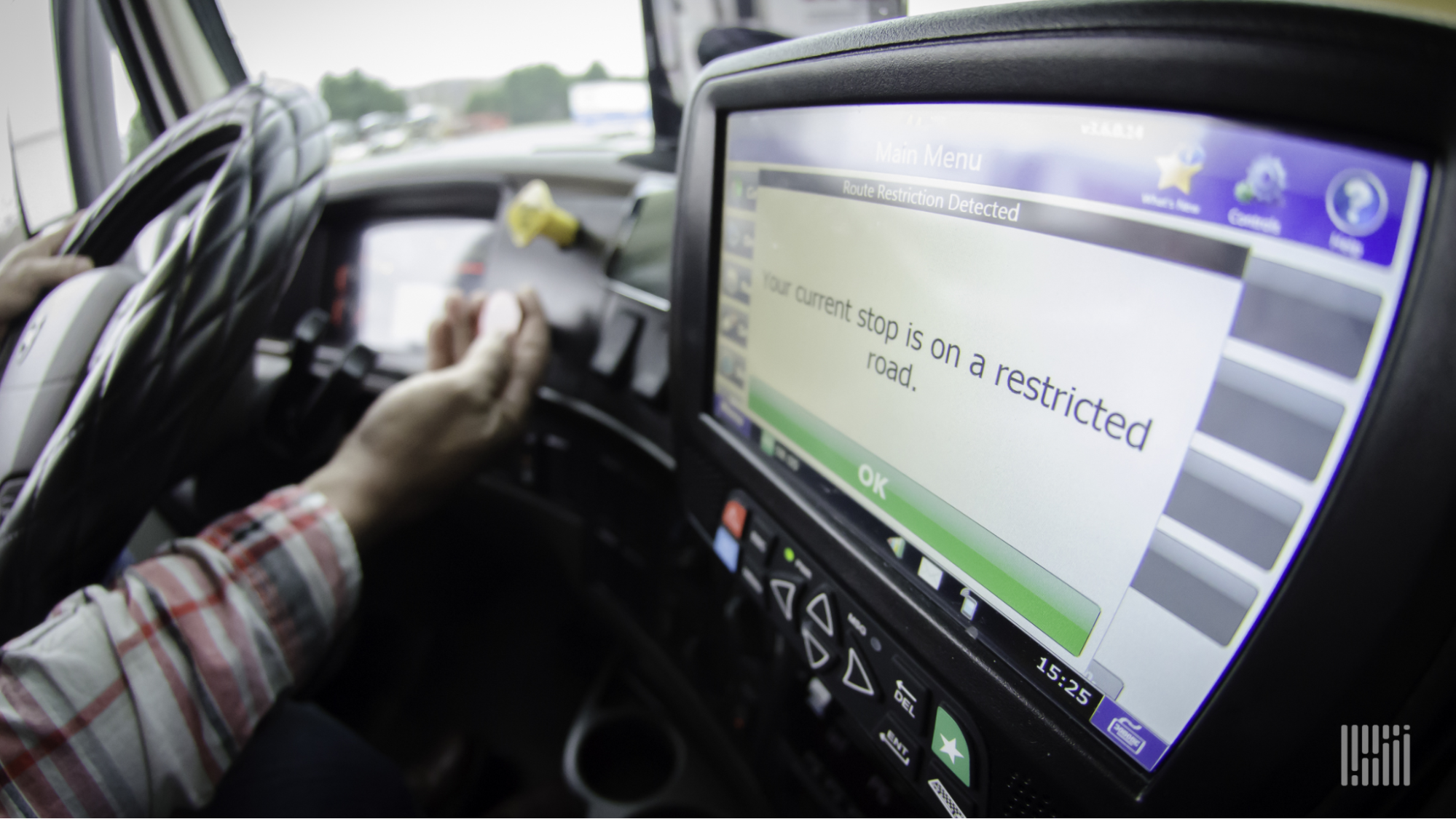
The modern American freight market relies heavily on digital interconnectedness. Among the digital threads holding supply chains together, Electronic Logging Device (ELD) connections have emerged as a critical foundational element. Freight brokers use these connections to verify whether a carrier is actively operating, whether specific commercial vehicles are associated with a legitimate fleet, and whether the correct truck and driver are present for a scheduled load. Conversely, motor carriers use these data bridges to demonstrate their operational capacity and secure access to valuable freight.
However, this heavy reliance on digital data integration introduces significant systemic vulnerabilities. Amid the Federal Motor Carrier Safety Administration’s (FMCSA) ongoing crackdown and revocation of registered ELDs due to widespread hours-of-service (HOS) log manipulation, the integrity of the technology providers behind these connections has become a paramount concern.
A technical integration between a freight platform and an ELD provider cannot—and should not—be treated as a universal endorsement of everything that provider does. Instead, these digital touchpoints must be governed by rigorous standards, continuously reviewed as market conditions shift, and subjected to decisive enforcement actions when those standards fail.
Chronology of the ELD and Carrier Vetting Evolution
To understand how the freight industry arrived at the current crossroads of data verification and fraud mitigation, it is helpful to examine the timeline of technological integration and regulatory oversight.
-
Phase 1: The Integration Boom (2018–2021)
As federal mandates forced the adoption of ELDs across commercial motor carriers, freight tech platforms rushed to integrate telemetry data. Initially, these integrations served as basic indicators of operational presence, with minimal scrutiny applied to the backend software providers supplying the data. -
Phase 2: The Rise of Sophisticated Freight Fraud (2022–2024)
Bad actors quickly identified loopholes in the digital infrastructure. Fraudsters began exploiting ELD registrations, sometimes cycling through defunct company names or reappearing under entirely new corporate identities after previous providers faced federal crackdowns or revocations. A simple label change, the industry learned, could not erase an underlying history of noncompliance. -
Phase 3: The FMCSA Crackdown and Accountability Push (2025–Present)
Faced with systemic hours-of-service log manipulation and fraudulent carrier setups, the FMCSA accelerated the revocation of registered ELDs. Concurrently, carrier identity and fraud-prevention platforms—such as Highway—began implementing stricter, independent vetting protocols that went beyond baseline federal registration, fundamentally changing how third-party data contributors are evaluated.
Supporting Data and Risk Assessment
Navigating the complexities of ELD data requires precision. It is essential to understand what various data points can—and cannot—establish.
For instance, platforms like Highway do not receive drivers’ hours-of-service records directly through standard telematics integrations, nor do they perform the formal safety audits legally assigned to the FMCSA. While reports of manipulated logs warrant serious regulatory scrutiny, ELD telemetry is merely one input in a much broader assessment of carrier identity and cargo risk. It should never be asked to carry the weight of a hiring decision by itself.
Data from nearly five years of operations at Highway illustrate this nuance:
- Cargo Theft Incidents Involving ELD Manipulation: Across millions of vetted loads, the platform has not identified a single successful cargo theft where manipulated ELD data was solely relied upon for a carrier hiring or tendering decision.
- The Reality of Fraud Risk: This statistical reality does not mean ELD manipulation is harmless, nor does it excuse providers from facing consequences for falsifying data. Rather, it emphasizes that the industry must carefully distinguish between hours-of-service enforcement and the specific mechanics of whether a freight decision was compromised by fraudulent telematics.
- Financial Backing and Performance Guarantees: Demonstrating confidence in comprehensive vetting rather than single-point data verification, programs like Highway’s Performance Guarantee offer up to $100,000 to back qualifying loads. Across roughly 1 million guaranteed loads, this financial backstop has been activated only once—proving that holistic risk assessment works when properly enforced.
Official Responses and Industry Accountability
The real test of any operational standard is what happens when a transaction fails or a provider breaches trust. Unfortunately, the current ecosystem often features a disconnect between baseline federal compliance and the practical realities faced by brokers and carriers on the ground.
Protecting Legitimate Businesses
A single problematic ELD provider may serve hundreds or thousands of entirely legitimate, hardworking motor carriers. When concerns arise regarding a specific software provider, brokers need a clear, transparent view of risk alongside a practical way to act on it. Simultaneously, good carriers deserve a fair path to keep operating without facing sudden disruption to their livelihoods.
When an integration must be terminated, responsible platforms work to give legitimate carriers adequate notice and a workable opportunity to transition to compliant providers. Enforcement must protect the overarching network without treating every customer of a compromised provider as automatically guilty.
Raising the Bar: The Certified Partner Network
To establish deeper layers of accountability, industry leaders are introducing initiatives like the Highway Certified Partner Network. Participating technology providers commit to higher standards regarding the integrity and reliable delivery of their contributed data.
- Voluntary vs. Mandatory Standards: While participation in enhanced certification programs is voluntary, meeting baseline integration requirements is mandatory. Certification creates a visible, elevated standard of trust without replacing the enforcement of foundational rules.
- Extending Accountability: This push for transparency is not limited to ELD providers. Similar accountability frameworks were first introduced for insurance agents and are steadily being extended to any third party that contributes data to freight transactions and carrier hiring decisions.
Broader Implications for the Freight Market
The future of the freight market depends on establishing an ecosystem where a provider’s commitments are fully visible, its data can be implicitly trusted, and system failures carry real consequences.
- Empowering Brokers and Protecting Carriers: Brokers must be equipped to set high bars for the freight they move, while legitimate carriers must retain a fair path forward if their technology vendors fail to meet compliance standards.
- Resisting Unfounded Commentary: The market naturally invites questions and critiques. However, much of the loudest commentary often comes from industry pundits and competitors demanding instantaneous, sweeping declarations without bearing the real-world consequences of those decisions. Platform stewards remain accountable not to sideline critics, but to the brokers and carriers whose daily livelihoods depend on sound, data-backed decisions.
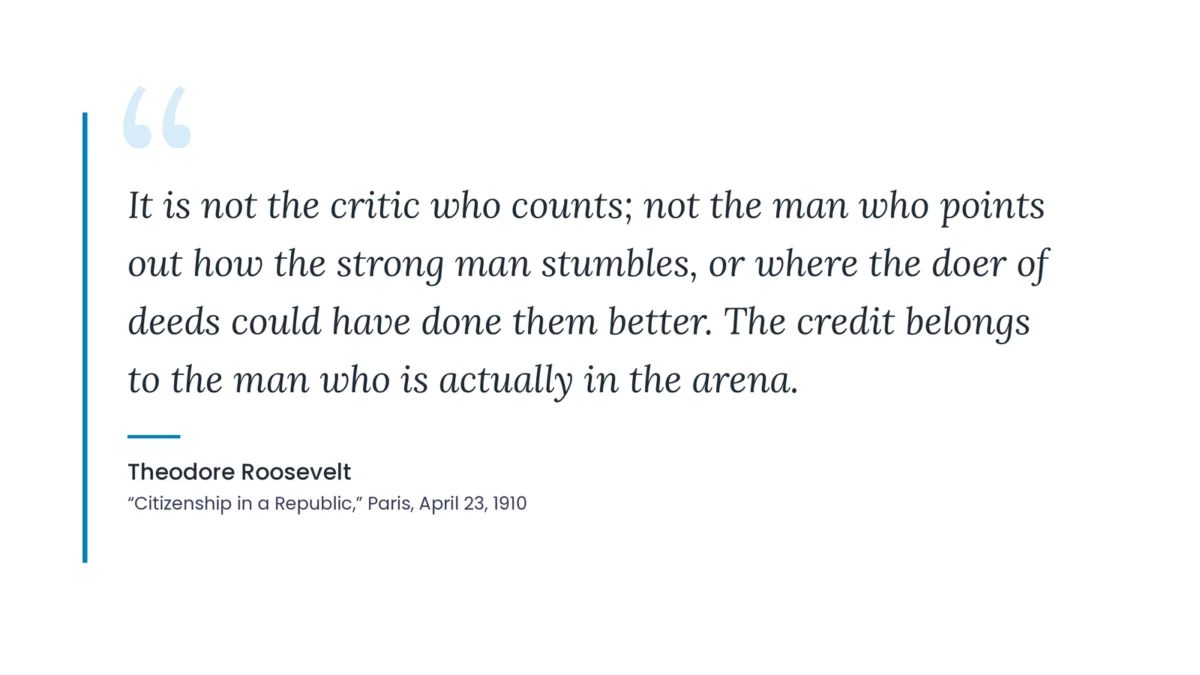
- The "Man in the Arena" Philosophy: In the words of Theodore Roosevelt, true credit belongs to the person who is actually in the arena—striving valiantly, making mistakes, coming short again and again, but enduring the work. In freight, the arena is defined by a load at risk, a legitimate carrier striving to keep moving, and a customer who needs a decisive, accountable partner.
Conclusion
Calling for sweeping, reactionary actions from the safety of the sidelines is easy. Establishing the facts, applying rigorous standards fairly, and remaining financially and operationally accountable for the aftermath is much harder.
As the freight sector continues to weed out bad actors, manipulate-resistant telemetry, and fraudulent identities, the industry requires unwavering commitment to comprehensive vetting. Platforms that pair enforceable standards with direct financial backing—such as performance guarantees—demonstrate what true stewardship looks like. Until the broader market universally adopts these higher bars, market leaders will remain in the arena, doing the heavy lifting, correcting course when evidence demands it, and protecting the supply chain from root to branch.
Disclaimer: The views and opinions expressed in this commentary are those of the author and do not necessarily reflect the official policy or position of FreightWaves.
Upcoming FreightWaves Events
For those looking to dive deeper into compliance, technology, and industry best practices, consider attending upcoming FreightWaves events:
-
Brokerage Compliance Symposium
- Date: October 26, 2026
- Location: The Signal at Chattanooga Choo Choo — Chattanooga, TN
- Overview: Navigate every compliance issue you face—including fraud exposure, carrier liability, FMCSA rules, cargo theft, and insurance gaps—guided by top attorneys and operators defining industry best practices.
- Register Now
-
F3 Awards Dinner
- Date: October 26, 2026
- Location: The Signal at Chattanooga Choo Choo — Chattanooga, TN
- Overview: Honor FreightTech100 companies and witness the live reveal of FreightTech 25 and Shipper of Choice winners, accompanied by a cocktail reception, dinner, and live music with 300 industry leaders.
- Register Now
-
F3: Future of Freight Festival
- Dates: October 27–28, 2026
- Location: The Signal at Chattanooga Choo Choo — Chattanooga, TN
- Overview: Experience industry-defining keynotes, rapid-fire technology demos, and unparalleled networking opportunities across Chattanooga.
- Register Now