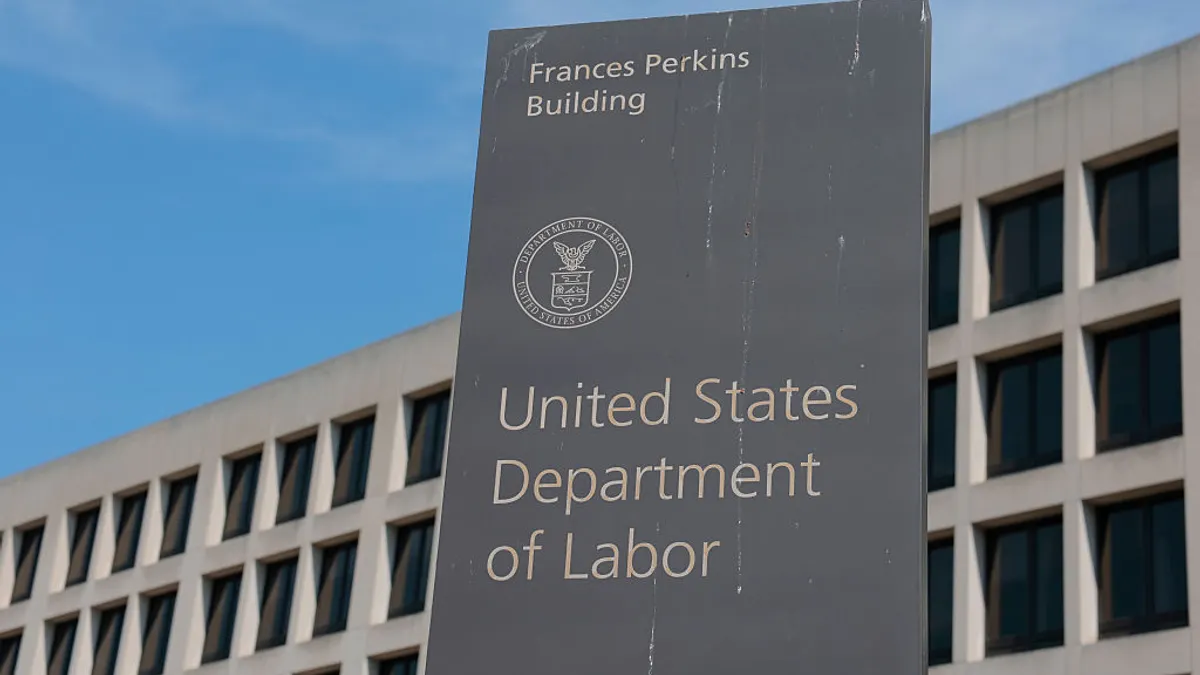
WASHINGTON — The United States Department of Labor (DOL) has announced an impending increase to the minimum hourly wage for specific federal contractors, setting the standard at $14.05 per hour alongside a tipped minimum wage of $9.85 per hour.
According to an official regulatory notice slated for publication in the Federal Register, the new pay scales are scheduled to take effect exactly 90 days following publication. While the adjustment represents an incremental bump for workers tied to legacy federal agreements, the figures highlight a broader, ongoing tug-of-war across successive presidential administrations regarding fair compensation standards for individuals working on government-backed projects.
Despite this upward adjustment, the new baseline remains noticeably lower than the peak $15-per-hour mandate instituted during the Biden administration, underscoring how swiftly labor policies can shift with changes in the Oval Office.
Main Facts of the New Wage Adjustment
The forthcoming regulatory update alters the compensation landscape for a specific tier of the federal workforce. The policy details include:
- Standard Minimum Wage: Increasing from the current rate of $13.65 to $14.05 per hour.
- Tipped Minimum Wage: Rising from the current rate of $9.55 to $9.85 per hour.
- Implementation Timeline: The new rates become legally binding 90 days after publication in the Federal Register.
- Scope and Applicability: The updated wages apply strictly to certain types of federal contracts entered into between January 1, 2015, and January 29, 2022, which have not been formally renewed or extended on or after January 30, 2022.
The Department of Labor noted that while the pool of active contracts bound by these older frameworks is shrinking, a sufficient number of legacy agreements remain operational to warrant statutory adjustments under the governing executive order.
Chronology: A Decade of Executive Order Shifts
The evolution of the federal contractor minimum wage reads as a legislative ping-pong match between Democratic and Republican administrations over the last ten years. Each successive president has utilized executive authority to redefine the financial floor for companies doing business with the federal government.
1. The Obama Administration: Establishing the Baseline (2014)
The modern framework for federal contractor minimum wages began when President Barack Obama signed Executive Order 13658 on February 12, 2014. Taking effect on January 1, 2015, the order established an initial minimum wage of $10.10 per hour for federal contractors and instituted a mechanism for annual, inflation-based adjustments.
2. The First Trump Administration: Carve-Outs for Seasonal Workers (2018)
On May 25, 2018, President Donald Trump signed an executive order amending Obama’s original mandate. The revision specifically excluded federal contractors involved in "seasonal recreational services or seasonal recreational equipment rental for the general public on Federal lands" from the mandatory minimum wage requirements, citing the unique operational structures of outdoor recreation concessions.
3. The Biden Administration: The $15 Mandate (2021–2022)
Seeking a more aggressive approach to raising worker pay, President Joe Biden signed Executive Order 14026 on April 27, 2021. This order superseded previous directives by elevating the federal contractor minimum wage to $15 per hour, effective January 30, 2022. Furthermore, it tied future increases to inflation metrics and explicitly revoked Trump’s seasonal exemption order. Biden’s policy applied to all new contracts, as well as existing contracts that underwent renewal or extension on or after January 30, 2022.
4. The Return of the Trump Administration: Revocation and Fallback (2025–2026)
Following the transition of power, President Donald Trump revoked Biden’s EO 14026 on March 14, 2025. With Biden’s framework dismantled, the older regulatory structures snapped back into legal focus.
As the DOL explained in its latest notice, "As a result, at this time Executive Order 13658 remains in effect." Because newer contracts migrated rapidly under Biden’s $15 framework, the volume of agreements governed by the older Obama-era order has dwindled significantly. Nonetheless, the DOL remains legally obligated to calculate and enforce annual cost-of-living adjustments for the remaining legacy contracts.
Supporting Data: Understanding the Pay Scale Trajectory
To fully grasp the trajectory of federal contractor pay, it is helpful to examine how inflation, executive policy, and statutory guidelines have intersected over the past decade.

| Administration / Order | Effective Date | Standard Minimum Wage | Tipped Minimum Wage | Key Policy Characteristic |
|---|---|---|---|---|
| Obama (EO 13658) | Jan. 1, 2015 | $10.10 | Vied by formula | Introduced annual indexing for inflation. |
| Biden (EO 14026) | Jan. 30, 2022 | $15.00 | Phased out over time | Broadized coverage; eliminated sub-minimums for tipped workers. |
| Current (2025 Pre-adjustment) | May 11, 2026 | $13.65 | $9.55 | Interim rate under legacy guidelines. |
| Upcoming (Late 2026) | 90 days post-notice | $14.05 | $9.85 | Current adjustment under active legacy EO 13658. |
The data points illustrate a clear narrative: while workers under the Biden administration experienced a swift jump to a $15 floor—coupled with policies designed to phase out sub-minimum wages for tipped employees—those stranded on older contract vehicles face a slower, more fragmented wage progression governed by the older index formula.
Official Responses and Regulatory Rationale
The Department of Labor’s administrative notices frame the upcoming wage hike as a ministerial duty rather than a broad policy overhaul. Because Executive Order 13658 mandates annual inflationary adjustments, the agency is required by law to recalculate the figures regardless of which administration holds the White House.
In its Federal Register filing, the DOL addressed the shrinking footprint of the affected agreements:
"Although the number of contracts subject to Executive Order 13658 has significantly decreased over the past several years and continues to dwindle, the Department anticipates that there will be some existing contracts with the Federal Government that would not have qualified as a covered ‘new contract’ for purposes of Executive Order 14026 and that remain subject to the minimum wage requirements of Executive Order 13658."
Labor and employment compliance experts note that while the regulatory language is dense, the practical reality is straightforward: federal agencies and prime contractors managing long-term, multi-year projects initiated prior to 2022 must audit their payroll systems to ensure compliance with the $14.05 and $9.85 thresholds once the 90-day grace period lapses.
Labor advocacy groups have voiced frustration over the disparity. Many worker rights organizations argue that living costs across the United States have far outpaced both the legacy $14.05 rate and the previous $15 standard, leaving vulnerable contractor employees—such as janitorial staff, food service providers, and security personnel—struggling against persistent inflation.

Conversely, business associations and federal contractor coalitions have historically urged caution regarding aggressive wage mandates, arguing that sudden spikes in labor overhead can strain small-to-mid-sized enterprises bidding on government projects, potentially reducing competition for public sector work.
Implications for Contractors, Workers, and Compliance Officers
The announcement carries significant ripple effects for various stakeholders across the federal procurement ecosystem:
1. Complex Compliance Landscapes for HR and Payroll
Human resources departments managing workforces split across different federal contracts face a logistical puzzle. A single contracting firm might employ workers on a post-2022 agreement (where compensation structures vary or are managed under state-level minimums following the revocation of Biden’s EO) alongside workers on a pre-2022 legacy contract explicitly bound by the new $14.05 federal floor. Compliance officers must meticulously categorize project codes and contract inception dates to avoid wage violations.
2. Impact on Worker Retention and Morale
For the subset of federal contract workers whose wages will rise to $14.05 and $9.85, the increase provides a welcome, albeit modest, relief against rising consumer prices. However, the psychological impact of operating below the once-promised $15 benchmark cannot be ignored. Discrepancies in pay among peers performing identical labor on different federal sites can foster friction and complicate workforce retention efforts.
3. Future Outlook for Federal Procurement Policy
As legal challenges and executive orders continue to redefine the baseline of federal labor standards, legal analysts expect future administrations to continue using procurement guidelines as a primary tool for social and economic policy. Whether future executive actions will attempt to resurrect a unified, higher federal contractor wage floor or leave the regulatory framework fractured remains one of the most closely watched issues in employment law.
For now, contractors operating under the specified legacy agreements have a strict 90-day window to adjust their compensation models, update payroll software, and prepare for the transition to the $14.05 standard.