PHILADELPHIA — In a landmark ruling that establishes crucial legal boundaries regarding federal oversight and individual privacy, a federal appeals court has decisively vacated a lower-court order compelling the University of Pennsylvania to surrender expansive personal records of its Jewish employees to the federal government.
The decision by the 3rd U.S. Circuit Court of Appeals marks a major victory for academic freedom and civil liberties advocates. Although the Trump administration ultimately backed away from enforcing the original subpoena, the appellate victory ensures that the precedent-setting mandate is struck from the judicial record, shielding higher education institutions from similar sweeping government demands.
The case highlights the complex, highly sensitive intersection of federal civil rights enforcement, institutional autonomy, historical sensitivities surrounding state-mandated tracking of religious minorities, and the rights of university faculty and staff.
Main Facts of the Case
The legal battle centers on a sweeping investigative demand issued by the U.S. Equal Employment Opportunity Commission (EEOC). As part of a federal probe examining whether the University of Pennsylvania maintained a hostile work environment for Jewish employees, the agency demanded access to troves of confidential personnel data. Specifically, the EEOC sought extensive documentation concerning faculty, staff, and administrators who identified as Jewish or participated in Jewish-affiliated campus organizations.
Rather than cooperating immediately with the demand, the university pushed back aggressively, supported by advocacy organizations such as the American Association of University Professors (AAUP). Penn argued that complying with the federal request would violate the fundamental privacy rights of its employees and evoke deeply troubling historical precedents in which governments compiled registries of individuals based on religious or ethnic ancestry.
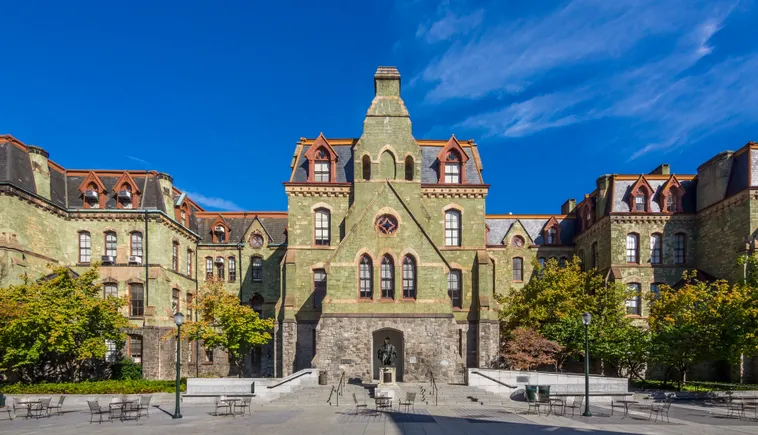
While the Trump administration eventually relented on enforcing this specific subpoena, the initial legal scaffolding remained intact via a lower district court order that had instructed the Ivy League institution to comply. Unwilling to leave the dangerous precedent "on the books," the local AAUP chapter successfully appealed the lower court’s directive, leading to this week’s decisive 3rd Circuit ruling.
Chronology of Events
The legal standoff developed over a tense multi-year period defined by escalating tensions between higher education institutions and federal regulatory bodies:
- The Federal Investigation Begins: Amid heightened scrutiny regarding campus climate and allegations of antisemitism at universities nationwide, the EEOC initiates a wide-ranging probe into the University of Pennsylvania, probing potential workplace discrimination and hostile environment claims affecting Jewish personnel.
- The EEOC Issues Subpoenas: To advance its investigation, the federal agency issues demands for extensive troves of records, seeking to identify and catalog Jewish employees across the Philadelphia campus without obtaining prior consent from the impacted individuals.
- Penn Resists the Demand: The University of Pennsylvania formally refuses to comply with the subpoena, citing profound privacy concerns and drawing explicit parallels to historical instances of government-sponsored religious tracking.
- Legal Escalation: The dispute spills into federal court as the EEOC moves to compel compliance. A lower district court initially issues an order instructing the university to turn over the requested documentation.
- The AAUP Seeks Intervention: In January, the local and national chapters of the American Association of University Professors move to intervene in the litigation, arguing that the government’s data-collection efforts threaten religious liberties and generate a severe chilling effect among campus personnel.
- Policy Shift and Administrative Retreat: Facing mounting institutional resistance and public pushback, the Trump administration backs away from enforcing the subpoena, though the lower court’s compliance order technically remains legally active.
- The 3rd Circuit Appeals Court Decision: The 3rd U.S. Circuit Court of Appeals hands down its ruling, vacating the lower court’s order and declaring the underlying government demands to be an unconstitutional and unjustified government overreach.
Supporting Data and Broader Higher Education Context
The controversy at the University of Pennsylvania does not exist in a vacuum; it is part of a broader, increasingly contentious national trend involving federal inquiries into campus climate.
Before the Penn litigation reached its appellate conclusion, parallel battles unfolded across the country. Most notably, the California State University (CSU) system complied with a similar EEOC request tied to a federal antisemitism investigation. In that instance, the university system surrendered contact information for approximately 2,600 employees to federal investigators.
The CSU compliance triggered immediate, fierce backlash from faculty unions and civil liberties groups, culminating in a major lawsuit. That litigation was eventually resolved through a settlement agreement requiring the public university system to formally notify employees before complying with any future EEOC subpoenas involving personal information.

Legal scholars note that the contrast between the CSU outcome and the Penn decision highlights a fragmented legal landscape. While public systems like CSU yielded to federal pressure—subsequently securing notification compromises—private and public research institutions alike have struggled to balance their legal obligations under Title VII of the Civil Rights Act with their constitutional duties to safeguard employee privacy.
Official Responses and Stakeholder Perspectives
The 3rd Circuit’s decision drew swift praise from faculty representatives and legal advocates who viewed the ruling as an essential bulwark against executive overreach.
"We are pleased the courts found this was an invasion of privacy," said AAUP spokesperson Kelly Benjamin during a Wednesday interview. "There were serious implications for religious liberties across the nation and for AAUP members."
Lorena Grundy, an engineering professor at Penn and vice president of the university’s AAUP chapter, emphasized the necessity of wiping the lower court’s directive from the judicial record. Grundy noted that the faculty group’s primary objective was to eliminate any lingering danger that the EEOC might attempt to revive the subpoena or issue a mirror-image demand in the future.
"Tuesday’s 3rd Circuit decision confirms this was completely unconstitutional and unjustified," Grundy said, describing the palpable anxiety among faculty members regarding the prospect of confidential institutional data being handed over to federal authorities.

When mounting its initial defense, the university explicitly invoked the grim specter of historical persecution. In court filings, Penn’s legal counsel wrote:
"The EEOC insists that Penn produce this information without the consent — and indeed, over the objections — of the employees impacted while entirely disregarding the frightening and well-documented history of governmental entities that undertook efforts to identify and assemble information regarding persons of Jewish ancestry."
Echoing these institutional warnings, the AAUP argued in its court filings that the government’s approach was counterproductive to its stated goal of protecting Jewish staff and faculty.
"Far from protecting Penn’s Jewish employees, the EEOC’s demands have the opposite effect: the subpoena sparks fear among faculty, staff, and students associated with Jewish-identified groups and activities, potentially deterring participation in Jewish cultural, religious, academic, and political pursuits," the group noted in a legal brief.
Representatives for the EEOC did not immediately respond to requests for comment following the appellate court’s decision.
Implications for Higher Education and Civil Liberties
Legal analysts suggest that this week’s ruling by the 3rd U.S. Circuit Court of Appeals will reverberate far beyond the campus of the University of Pennsylvania, establishing a critical defensive framework for higher education institutions nationwide.
1. Precedent for Institutional Resistance
Universities facing aggressive federal inquiries now possess appellate-level justification to push back against overbroad administrative subpoenas. The decision affirms that federal civil rights investigations—even those addressing severe issues like workplace discrimination and antisemitism—do not grant executive agencies carte blanche to bypass employee privacy rights or harvest sensitive demographic data.
2. Safeguarding Academic Freedom and Freedom of Association
By validating the AAUP’s arguments concerning the "chilling effect" of government-compiled registries, the court signaled that the constitutional rights of educators and staff extend to protection from intrusive governmental cataloging. Faculty members can engage in cultural, religious, and political campus activities with greater assurance that their affiliations will not become subjects of dragnet federal data collections.
3. Redefining Federal Investigative Boundaries
The outcome forces regulatory bodies like the EEOC to recalibrate their investigative methodologies. Moving forward, federal agencies pursuing workplace discrimination claims in higher education will likely be required to rely on targeted, less intrusive discovery methods rather than demanding blanket disclosures of sensitive religious or ethnic employee records.
As universities continue to navigate the volatile intersection of federal compliance, civil rights enforcement, and campus politics, the 3rd Circuit’s ruling stands as a formidable reminder of the judiciary’s role in maintaining the delicate balance between accountability and constitutional liberty.