The manufacturing sector sits on a goldmine of operational data, yet many organizations struggle to turn this raw information into a competitive advantage. As artificial intelligence reshapes industrial environments, industry experts argue that traditional analytics and fragmented "do-it-yourself" tech stacks are no longer enough.
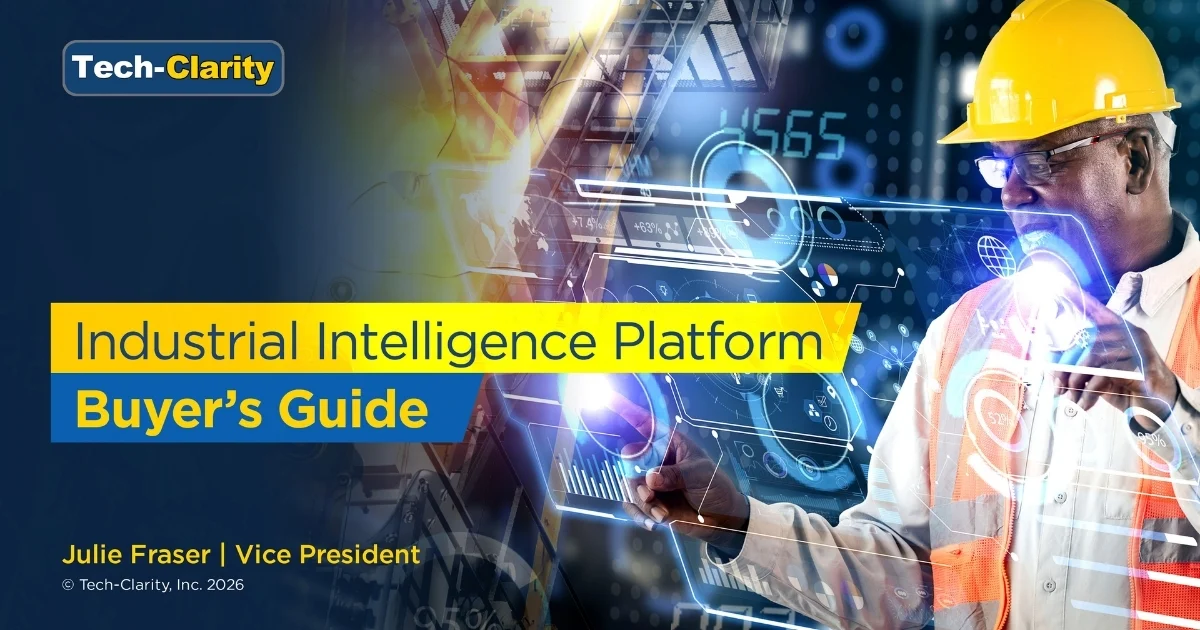
A comprehensive new research report, the Industrial Intelligence Platform Buyer’s Guide—sponsored by Velotic and summarized by industrial research firm Tech-Clarity—examines the critical hurdles keeping manufacturers from scaling AI effectively. The report outlines why companies must move beyond generic dashboards and embrace purpose-built industrial platforms to achieve operational excellence.
Main Facts: The Industrial Data Bottleneck
In modern manufacturing and service operations, frontline teams make split-second decisions that directly dictate profitability, safety, and efficiency. However, a persistent barrier remains: the lack of a structured, coherent, and well-managed system to ensure the right people access the right data at the exact moment it is needed.
- The Limitations of Traditional Tools: Legacy dashboards and standard business intelligence (BI) reports are often too generic, fail to align with dynamic operational priorities, process data too slowly, or simply cannot answer real-time frontline questions.
- The Danger of DIY Systems: Building custom data pipelines in-house forces IT departments to act as software architects, often resulting in dangerous gaps in security guardrails, scalability, and operational constraints.
- The AI Imperative: Scaling AI beyond isolated pilot projects requires a centralized foundation. Purpose-built industrial platforms provide the governance, context, and security necessary to move AI from testing phases into full production.
Chronology: The Evolution of Industrial Data Architecture
To understand why industrial intelligence platforms are taking center stage, it is helpful to trace how plant floors have managed data over the past few decades:
- The Era of Static Reporting (Pre-2010s): Industrial environments relied heavily on manual data logs, periodic spreadsheets, and basic supervisory control and data acquisition (SCADA) screens. Data was historical, siloed, and reviewed long after operational issues occurred.
- The Dashboard Boom (2010s–2020): Manufacturers rushed to adopt generic visualization tools and dashboards. While this improved visibility over static reports, these systems proved too slow and inflexible for fast-moving production lines and complex service operations.
- The Fragmented DIY Phase (2020–2024): As cloud computing and early machine learning matured, many industrial IT teams attempted to build custom data lakes and bespoke AI integration layers from scratch. These projects frequently suffered from high maintenance costs, security vulnerabilities, and a lack of contextual industrial understanding.
- The Rise of Industrial Intelligence Platforms (Present): The current landscape emphasizes out-of-the-box platforms designed explicitly for operational technology (OT) and information technology (IT) convergence. These systems provide unified data ingestion, built-in governance, and domain-specific AI agents.
Supporting Data: Six Core Pillars of Evaluation
Choosing the right platform requires a rigorous evaluation process. According to the Buyer’s Guide, decision-makers must weigh six distinct categories to ensure long-term value, agility, and security.
1. Functionality
A robust platform must seamlessly ingest, harmonize, manage, contextualize, and analyze a wide variety of high-speed industrial data. It must also provide tools for frontline workers and engineers to build operational applications easily.
2. Technology & Cybersecurity
Industrial environments demand high performance to deliver real-time safety alerts and operational adjustments. At the same time, platforms must remain open enough to connect with diverse legacy and modern data sources while maintaining enterprise-grade cybersecurity protections.
3. Industrial Infrastructure
Long-term success depends on a platform’s ability to integrate smoothly into existing enterprise architectures. This includes supporting flexible hosting options, offering robust edge-computing capabilities, and streamlining software licensing by baking core AI features directly into the infrastructure.

4. AI Capabilities and Agentic Assistants
AI should not be bolted on as an afterthought. Modern industrial platforms incorporate AI directly into their core analytics engines. Domain-specific AI assistants—such as agentic workflows tailored for quality control or field service—allow operations experts to rapidly solve specific plant-floor challenges without requiring advanced coding degrees.
5. Provider Expertise & Ecosystem
The software vendor matters just as much as the software code. Providers should possess deep domain expertise in industrial settings, proven case studies in manufacturing and service operations, and a robust ecosystem of implementation partners.
6. Enterprise Scalability
Not all software solutions are built to handle the rigorous demands of large enterprises. Standardizing operations globally requires proven scalability, reusable application components, and reliable performance across multiple facilities.
Official Responses and Industry Perspectives
Industry analysts and sponsors emphasize that the stakes for industrial digital transformation have never been higher.

"Companies need trusted insights that are grounded, contextual, explainable, governed, and bounded," notes the research findings. In safety-critical environments like manufacturing, energy, and heavy asset management, unverified AI outputs or poorly managed data pipelines present unacceptable operational risks.
Velotic, the primary sponsor of the research, advocates for a strategic shift away from fragmented software experiments. By utilizing a pre-engineered Industrial Intelligence Platform, organizations can drastically shorten their time-to-value. Rather than spending months writing custom integration scripts, engineers and plant managers can leverage pre-built building blocks designed to handle the velocity, volume, and variability of industrial telemetry.
Implications: What This Means for Manufacturing Leaders
The transition toward dedicated industrial intelligence platforms carries profound implications for executive leadership, IT professionals, and plant-floor operators alike.
- Empowering the Frontline: When operations teams are equipped with real-time, context-aware intelligence, downtime drops, product quality rises, and reactive firefighting transforms into predictive maintenance.
- Bridging the OT/IT Divide: By utilizing a structured platform, IT teams are relieved of the burden of inventing industrial software architectures from scratch, allowing them to collaborate more effectively with operational engineers.
- Accelerating AI ROI: Manufacturers can finally break free from "pilot purgatory"—the phenomenon where AI initiatives stall out in proof-of-concept phases. With governed, domain-specific AI assistants integrated directly into an industrial platform, scaling AI across multiple plants becomes achievable and repeatable.
For organizations looking to dive deeper into the technical specifics, architectural frameworks, and vendor evaluation criteria, the complete research report is available directly through Velotic’s resource portal.