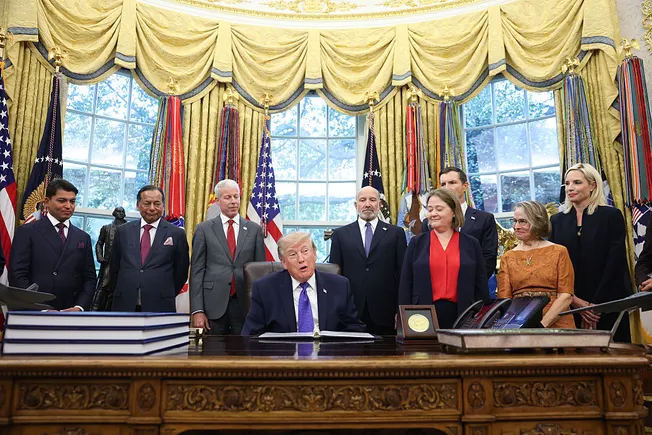
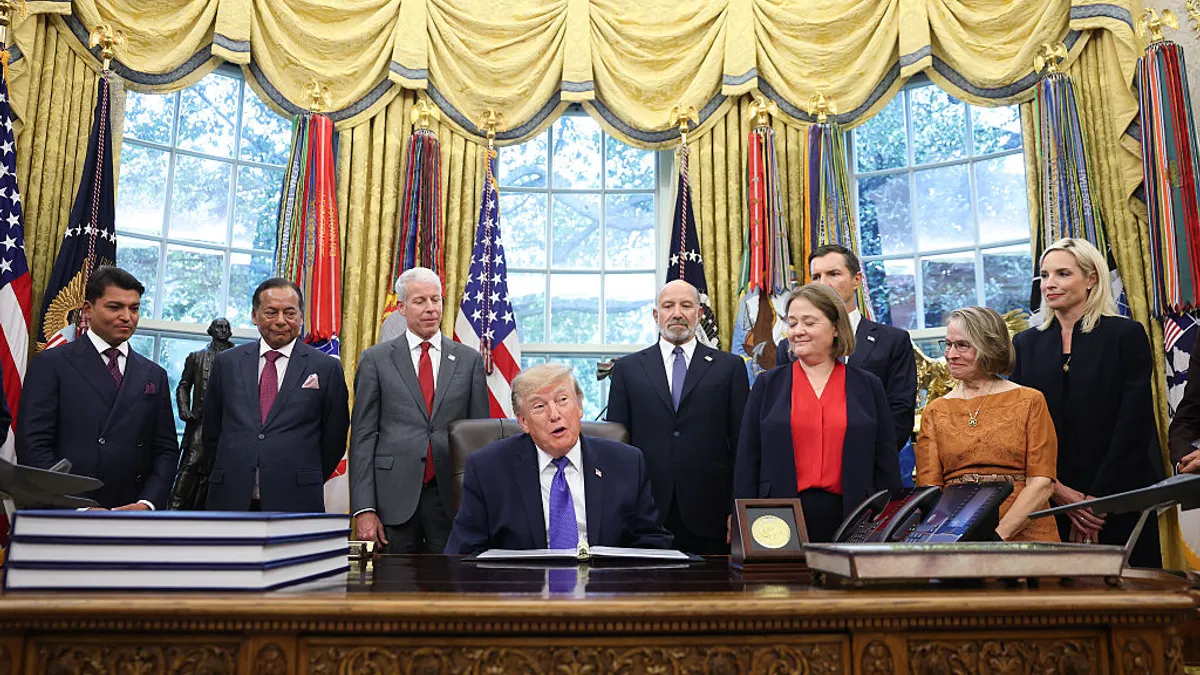
WASHINGTON — In what the White House is hailing as a landmark milestone for American manufacturing, President Donald Trump announced plans for a colossal $15 billion steel facility spearheaded by Mesabi Metallics. Slated to become the largest steel-producing plant in United States history, the upcoming facility aims to reshape the nation’s industrial landscape by generating 10 million tons of annual production capacity and creating thousands of jobs.
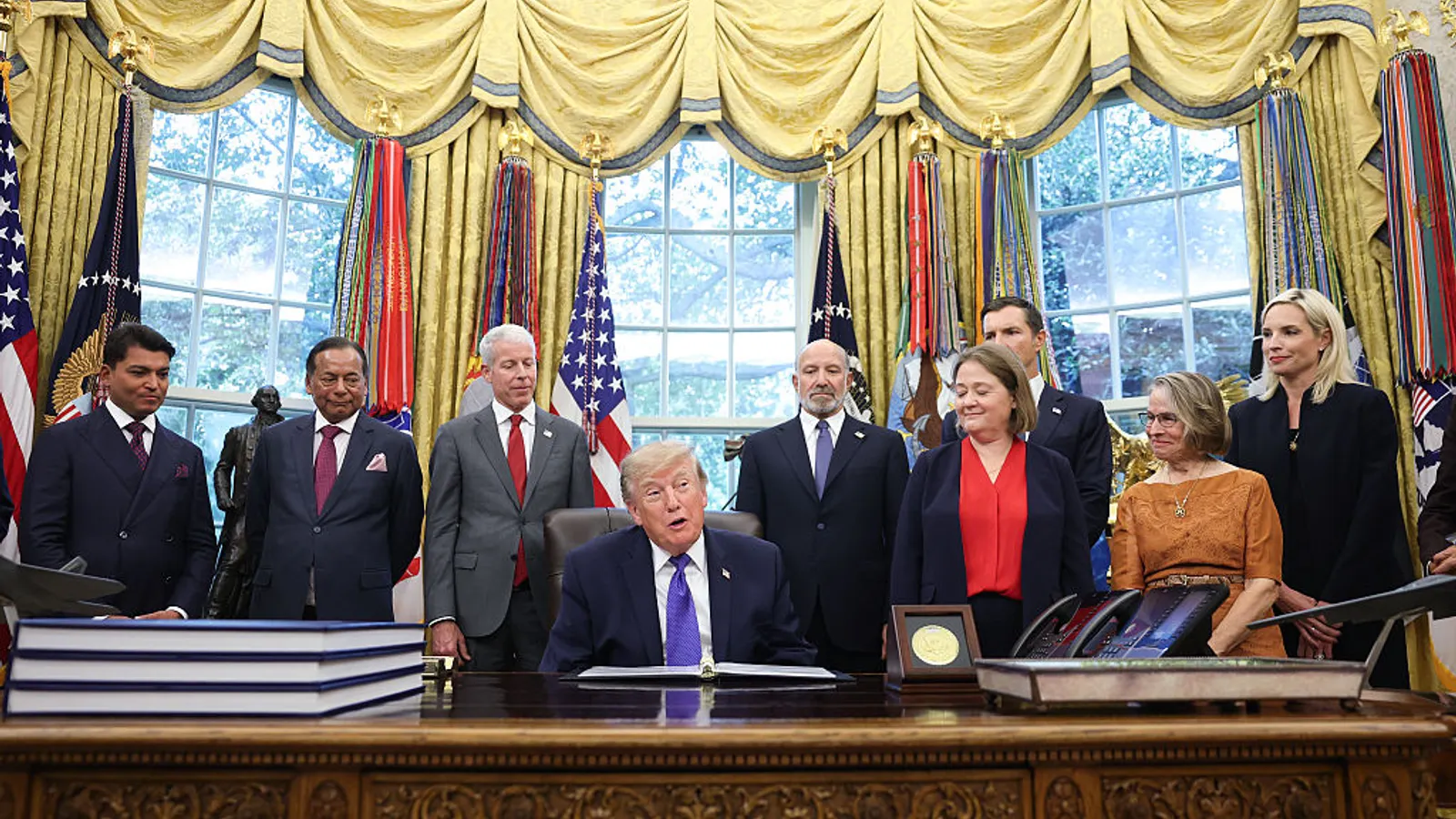
The announcement, delivered from the Oval Office, underscores the federal government’s aggressive push to repatriate heavy industry, secure supply chains, and shield domestic manufacturers from foreign market volatility. As the U.S. steel sector experiences an unprecedented wave of capital investment, the Mesabi Metallics project stands out not only for its unprecedented scale—requiring a massive private investment and injecting billions into the regional economy—but also for its strategic alignment with broader administration policies concerning trade, national security, and domestic resource utilization.
Main Facts
The cornerstone of the newly announced initiative is a state-of-the-art steel mill to be constructed in Iowa by Mesabi Metallics. Marking the company’s inaugural venture into steel production, the facility is designed to set a new benchmark for scale and operational efficiency in the Western Hemisphere.
- Capital Investment: Mesabi Metallics is committing $15 billion to construct the Iowa steel mill, supplemented by an additional $3 billion earmarked to complete and fully operationalize its iron ore mining operations in Nashwauk, Minnesota.
- Production Capacity: Upon completion, the plant will inject an unprecedented 10 million tons of annual crude steel production capacity into the U.S. market.
- Job Creation: The construction phase alone is projected to employ approximately 6,000 workers. Once operational, the facility will directly create 1,750 permanent, high-paying jobs.
- Technological Approach: The facility will utilize modern Electric Arc Furnace (EAF) technology, combining recycled scrap metal with direct-reduced iron (DRI) sourced directly from Minnesota deposits to produce high-grade U.S. steel.
- Upstream Integration: In Nashwauk, Minnesota, more than 1,500 construction workers and 200 permanent employees are already active on-site, preparing the infrastructure to supply the mill with specialized raw materials dubbed "Patriot Pellets."
Chronology
The path toward the Mesabi Metallics mega-project and the broader domestic metals revival has been shaped by a rapid sequence of policy shifts, executive actions, and escalating geopolitical dynamics over recent years.
- Summer 2025: Citing mounting national security concerns and supply chain vulnerabilities amplified by international conflicts—specifically involving Iran—the Trump administration doubles the Section 232 tariff rate on foreign metal imports to 50%.
- September 4, 2025: Hyundai Steel Company holds a high-profile groundbreaking ceremony for its $5.8 billion EAF steel mill project in Louisiana, championed by state and federal leaders as a victory for domestic industrial policy.
- Late 2025 / Early 2026: Aggressive tariff enforcement helps the United States surpass Japan in crude steel production volumes, marking the first time the U.S. has achieved this milestone since 1999. Meanwhile, local regulatory friction mounts around other major metals projects, notably an Oklahoma aluminum smelter initiative facing municipal moratoriums.
- September 28, 2026: President Trump fields questions from reporters in the Oval Office regarding the administration’s ongoing manufacturing initiatives, setting the stage for major industrial announcements.
- October 8, 2026: Mesabi Metallics and federal officials officially unveil the $15 billion Iowa steel mill project, solidifying private sector buy-in and detailing the integration with the Minnesota iron ore supply chain.
- Spring 2027 (Upcoming): The town of Inola, Oklahoma, prepares to place a critical primary aluminum smelting project and its associated moratorium on a public referendum ballot following months of regulatory delays.
Supporting Data
The economics underpinning the U.S. steel and aluminum sectors reflect a complex tug-of-war between aggressive protectionist policies, surging capital expenditures, and localized economic pressures.
+------------------------------------------------------------------------+
|                      KEY METRICS AT A GLANCE                           |
+------------------------------------------------------------------------+
| Mesabi Metallics Iowa Facility Investment:    $15.0 Billion            |
| Nashwauk, MN Iron Ore Mine Investment:        $3.0 Billion             |
| Annual Production Capacity Addition:          10 Million Tons          |
| Permanent Jobs Created (Iowa Facility):       1,750                    |
| Temporary Construction Jobs (Iowa Facility):  6,000                    |
| Section 232 Metal Import Tariff Rate:         50% (Doubled in 2025)    |
+------------------------------------------------------------------------+
Beyond the headline figures for the Mesabi Metallics project, the administration’s broader portfolio of heavy industry investments highlights a multi-billion-dollar transformation of the American rust belt and Gulf Coast:

- The Louisiana Initiative: Hyundai Steel’s $5.8 billion investment in Louisiana, which broke ground in September 2025, represents a major foreign direct investment aimed at capturing tariff-free market share within U.S. borders.
- The Oklahoma Smelter Project: A planned $4 billion primary aluminum smelter, spearheaded by Emirates Global Aluminum and Century Aluminum, aims to address domestic aluminum deficits. Proponents cite an independent economic impact study estimating the project will generate up to $4.9 billion for the Oklahoma economy.
- Trade Rebalancing: The implementation of stringent Section 232 measures—despite subsequent administrative tweaks to close loopholes and grant targeted product exemptions—has fundamentally altered import dynamics, propelling the U.S. past Japan to become a top-tier global crude steel producer once again.
Official Responses
The announcement drew enthusiastic reactions from executive suite executives and federal officials alike, who emphasized the purely private nature of the capital allocation and the strategic necessity of the endeavor.
"Our steel industry is roaring back to life," President Trump told reporters during the White House unveiling. "Everyone’s building their plant here because they don’t want to pay tariffs."
Trump also expressed unwavering enthusiasm for concurrent regional projects, pointing to the heartland: "We’re doing a tremendous aluminum plant in Oklahoma, one of my favorite places in the whole world. That’s going to be unbelievable."

Commerce Secretary Howard Lutnick underscored that the transaction was successfully negotiated without placing a burden on taxpayers. "The deal is done," Lutnick stated, emphasizing that the $15 billion venture is being financed entirely through private capital markets with minimal public sector intervention.
Joe Broking, Chief Executive Officer of Mesabi Metallics, echoed the administration’s sentiments regarding the historic nature of the undertaking. "This is a major moment for U.S.-made steel," Broking said in a formal statement. By integrating local mineral extraction with cutting-edge domestic refining, the company aims to ensure an uninterrupted, self-reliant supply chain for decades to come.
Implications
While the administration celebrates a manufacturing renaissance, the rapid expansion of domestic metals production carries far-reaching economic, environmental, and geopolitical implications for manufacturers, consumers, and local communities.
Industrial Costs and Consumer Inflation
While the 50% Section 232 tariffs have successfully incentivized foreign and domestic firms to break ground on multi-billion-dollar plants within U.S. borders to dodge import penalties, they have simultaneously introduced short-term pain points. Higher raw material costs continue to squeeze downstream manufacturers—ranging from automotive suppliers to construction contractors—ultimately translating into elevated price points for American consumers. Economists note that while industrial capacity will expand significantly once plants like Mesabi Metallics’ Iowa facility come online, the interim period remains inflationary for industries dependent on raw steel and aluminum.
Environmental and Local Community Friction
The aggressive pace of industrial expansion has triggered pushback at the grassroots level. Projects such as the $4 billion aluminum smelter in Oklahoma and Hyundai’s Louisiana mill have faced substantial scrutiny from local residents and environmental advocacy groups concerned over ecological degradation, high energy consumption, and industrial nuisance. In Oklahoma, local pushback resulted in municipal moratoriums and delayed timelines, forcing developers to commission extensive economic impact studies to appease public skepticism. Balancing the federal mandate for national security through industrial self-sufficiency with local environmental stewardship remains one of the primary hurdles for developers.
Geopolitical and Supply Chain Resilience
Fundamentally, the Mesabi Metallics project and its companion investments in Minnesota, Louisiana, and Oklahoma represent a structural decoupling from vulnerable international supply chains. By anchoring the entire lifecycle of steel production—from iron ore extraction in Nashwauk to advanced EAF processing in Iowa—the U.S. is insulating its critical infrastructure and defense industrial base from geopolitical shocks, such as those originating from ongoing volatility in the Middle East. As these mega-projects transition from planning phases to operational status over the next several years, they promise to fundamentally rewrite the rules of global metals trade.