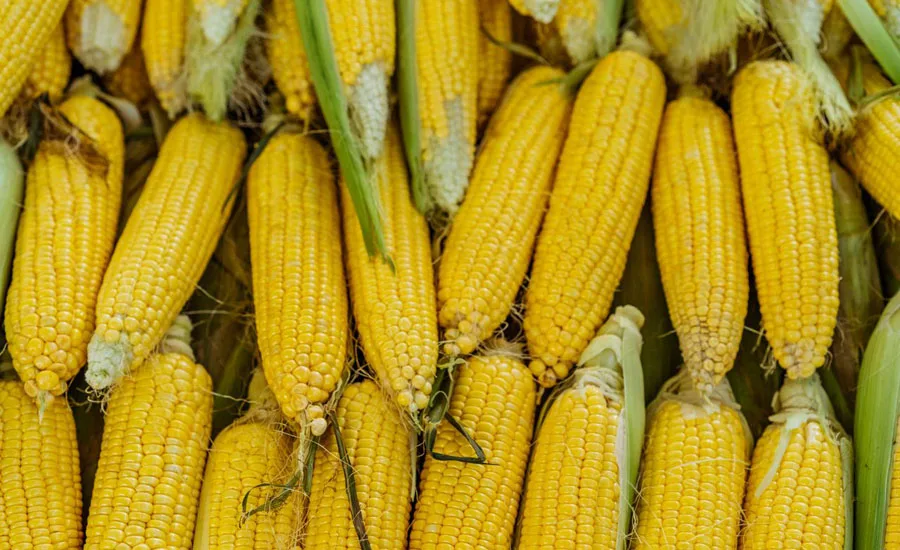
ULSAN, South Korea — In a breakthrough that bridges the gap between agricultural sustainability and high-end consumer electronics, researchers at the Ulsan National Institute of Science and Technology (UNIST) have developed a groundbreaking optically clear adhesive (OCA) derived from corn starch. Utilizing isosorbide—a bio-based chemical compound extracted from plant starches—this new adhesive promises to redefine the manufacturing, durability, and energy efficiency of modern electronic displays, particularly the rapidly expanding market for foldable and rollable devices.
Transparent adhesives are the unsung heroes of modern electronics manufacturing. They are the critical bonding agents used to laminate display cover glass, touch sensors, and internal panels together into a unified, seamless unit. In the architecture of a smartphone, tablet, or automotive dashboard display, the optical and mechanical properties of these adhesives directly dictate the device’s overall performance.
Until now, manufacturers have relied heavily on petroleum-based polymers and crosslinkers. However, as the electronics industry pivots toward flexible screen form factors—such as dual-folding smartphones, rollable televisions, and sweeping curved automotive cockpits—conventional adhesives are increasingly struggling to meet demanding mechanical and optical thresholds. The UNIST research team’s corn-derived innovation addresses these vulnerabilities head-on, offering a glimpse into a greener, more resilient technological future.
The Scientific Breakthrough: Harnessing Isosorbide
At the heart of the UNIST team’s innovation is a novel crosslinker. In polymer chemistry, crosslinkers are agents that chemically tie polymer chains together, preventing the material from permanently deforming under stress and giving it structural integrity.
Led by Professor Lee Dong-Wook from the Department of Chemical Engineering at UNIST, the research team engineered this crucial crosslinker using isosorbide, a versatile chemical derivative obtained by processing and heating natural starches sourced from corn or wheat. By integrating isosorbide into the polymer matrix, the researchers were able to synthesize an adhesive that exhibits exceptional dual properties: near-perfect optical transparency coupled with superior elastic recovery.
"Adhesives for advanced displays must perform a delicate balancing act," explains Prof. Lee. "They must allow light emitted from the underlying panel to pass through with near-zero optical loss, and simultaneously, they must withstand the rigorous, repeated mechanical deformation demanded by foldable and rollable screens."
Chronology of the Innovation
The path from agricultural feedstock to cutting-edge electronic component involved a meticulous multi-step scientific journey:
- Phase 1: Material Selection and Sourcing. Recognizing the environmental and mechanical limitations of petroleum-derived crosslinkers (such as traditional HDDA), the UNIST team zeroed in on biomass-derived compounds. Isosorbide emerged as an ideal candidate due to its rigidity, thermal stability, and eco-friendly pedigree.
- Phase 2: Molecular Synthesis. The researchers successfully synthesized a specialized crosslinker utilizing isosorbide extracted from corn starch. The chemical formulation was carefully calibrated to ensure high reactivity and compatibility with optical-grade polymer chains.
- Phase 3: Optical and Stress Testing. The resulting adhesive film underwent rigorous laboratory evaluations. Researchers tested its light transmittance under severe physical strain, measuring how well it maintained clarity when stretched.
- Phase 4: Elastic Recovery and Fatigue Testing. The team subjected the bio-based adhesive to cyclic fatigue testing—stretching and releasing the material repeatedly to measure how quickly and completely it could return to its original dimensions.
- Phase 5: Comparative Benchmarking. The new isosorbide-based adhesive was benchmarked directly against conventional adhesives utilizing standard HDDA crosslinkers, revealing massive performance disparities in both optical retention and mechanical recovery.
Supporting Data and Performance Metrics
The empirical data published by the UNIST research team underscores a dramatic leap forward in adhesive performance. When evaluated against conventional petroleum-based counterparts, the corn-starch-derived adhesive outperformed legacy materials across every major technical metric.
1. Optical Transmittance Under Strain
- The UNIST Bio-Adhesive: The new adhesive boasts an initial baseline light transmittance of 99.8 percent. Remarkably, even when stretched to 150 percent of its original length, the material maintained an exceptional transmittance rate of 98.6 percent.
- Conventional HDDA Adhesive: By contrast, a standard adhesive containing a conventional HDDA crosslinker suffered a catastrophic drop in optical clarity under the same conditions, with its light transmittance plummeting to just 71.9 percent when stretched to 150 percent of its length.
2. Elastic Recovery and Fatigue Resistance
- The UNIST Bio-Adhesive: When subjected to repeated cyclic testing—stretched to 120 percent of its original length and released 100 consecutive times—the bio-based adhesive snapped back to its exact original dimensions within a blistering 2.5 seconds.
- Conventional HDDA Adhesive: The conventional adhesive struggled profoundly with mechanical fatigue, requiring more than 100 seconds to recover its shape after the same cycle of deformation.
These metrics are not merely academic; they directly address the "creeper" and whitening effects that plague current foldable devices, where screens develop permanent creases or hazy spots along folding axes over time.
Official Responses and Expert Perspectives
The academic and industrial communities have greeted the UNIST breakthrough with significant enthusiasm, viewing it as a milestone for both green chemistry and consumer electronics engineering.
"The development of this isosorbide-based crosslinker proves that sustainable chemistry does not have to come at the expense of high-end performance—in fact, it can vastly surpass legacy materials," noted a leading materials scientist unaffiliated with the study.
Professor Lee Dong-Wook emphasized the practical downstream impacts of the team’s work during a press briefing following the publication of their findings:
"The adhesive we developed will help manufacturers produce exceptionally bright screens while operating at significantly lower power consumption," said Prof. Lee. "Furthermore, it provides the exact mechanical resilience required to make truly durable foldable and rollable displays that consumers can rely on for years without degradation."
Industry analysts point out that as global environmental regulations tighten—particularly regarding electronic waste and the carbon footprint of manufacturing supply chains—the ability to market devices built using plant-derived components will offer consumer electronics giants a formidable competitive edge.
Industrial Implications and Future Outlook
The commercial implications of UNIST’s research span multiple high-growth sectors within the global manufacturing landscape:
Consumer Electronics (Smartphones, Tablets, Laptops)
Foldable phones have transitioned from novelty luxury items to mainstream flagships. However, consumer complaints regarding screen durability, crease formation, and optical distortion at the hinge remain persistent pain points. By incorporating a high-recovery, ultra-transparent adhesive into the lamination stack, manufacturers can eliminate internal stress points, reduce power drain on OLED/MicroLED panels, and extend the functional lifespan of flexible devices.
Automotive Cockpits and Displays
Modern automotive interior design is defined by sprawling, pillar-to-pillar curved glass displays and multi-screen dashboards. These screens are subjected to extreme cabin temperature fluctuations, direct sunlight, and constant tactile input. An adhesive with 99.8 percent light transmittance ensures maximum screen brightness without requiring aggressive backlighting, which in turn reduces thermal buildup and energy draw in electric vehicles (EVs). Moreover, the superior elasticity of the isosorbide-based material ensures that vibration and mechanical stress from the vehicle body do not compromise the display bond over time.
The Push Toward Green Manufacturing
Beyond technical specifications, the agricultural origin of the adhesive aligns with the broader environmental, social, and governance (ESG) goals driving the technology sector. By replacing petrochemical feedstocks with renewable agricultural derivatives like corn and wheat starch, electronics manufacturers can significantly lower the embodied carbon of their supply chains.
Next Steps for Commercialization
While the laboratory results are profoundly promising, the research team is currently collaborating with industrial partners to scale up the synthesis process. Transitioning from batch production in a university laboratory to roll-to-roll mass manufacturing for millions of commercial devices requires rigorous testing regarding thermal aging, moisture resistance, and large-scale coating uniformity.
If successful, consumers could see the first commercial electronic devices bonded with corn-starch-derived adhesives within the next few years—marking a quiet yet transformative revolution happening right beneath the glass of our screens.