Published: October 9, 2026
Author: Kelly Stroh
Source: Supply Chain Dive
Main Facts
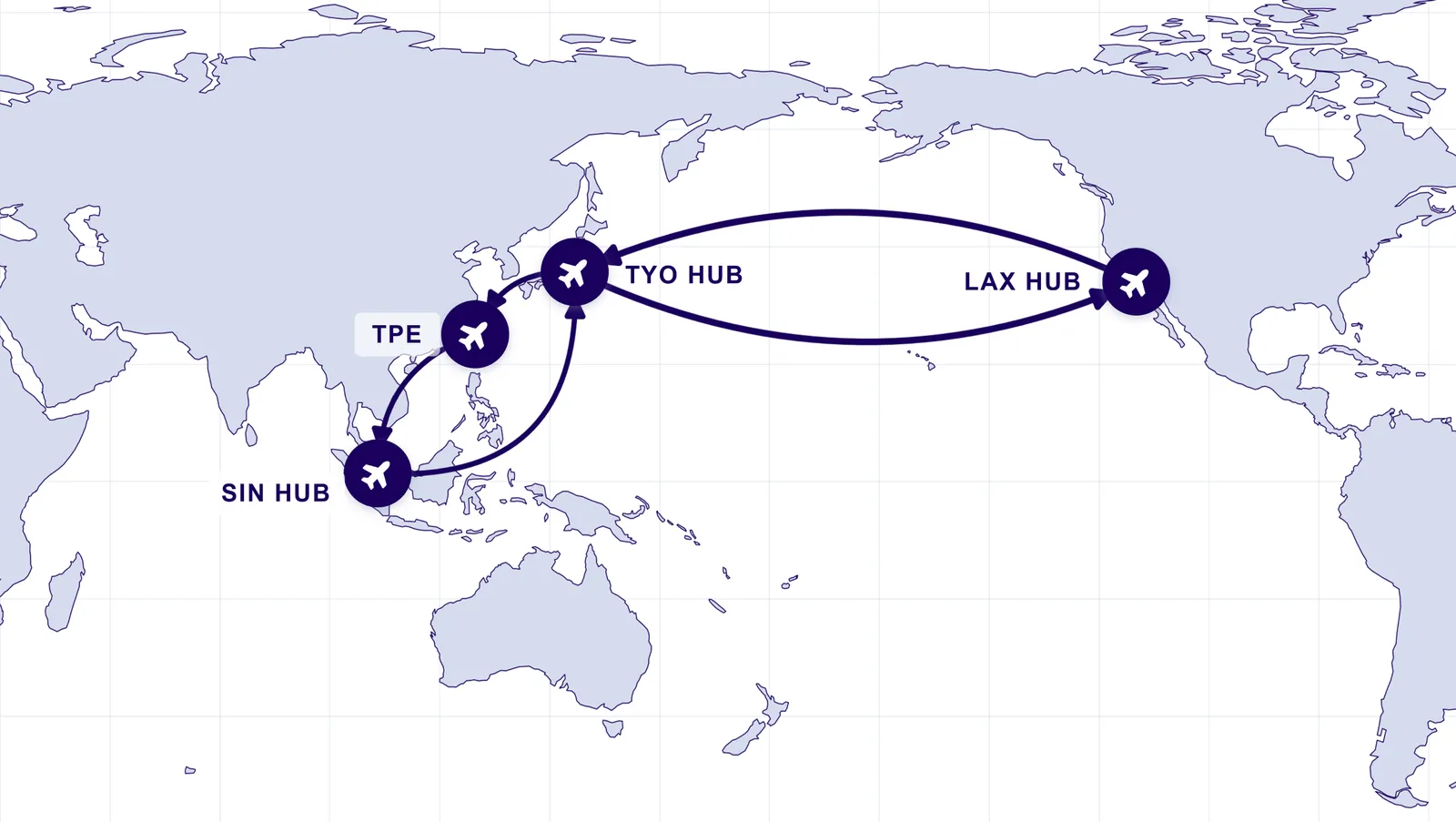
The global race for artificial intelligence infrastructure and advanced computing power has officially taken to the skies. In a strategic move designed to capture surging high-tech logistics demand, logistics giant Nippon Express and Japan Airlines (JAL) have officially launched a specialized weekly air cargo circuit. This dedicated route connects Los Angeles (LAX) with vital manufacturing and technological hubs across Asia, specifically targeting the high-growth market for AI and semiconductor hardware.
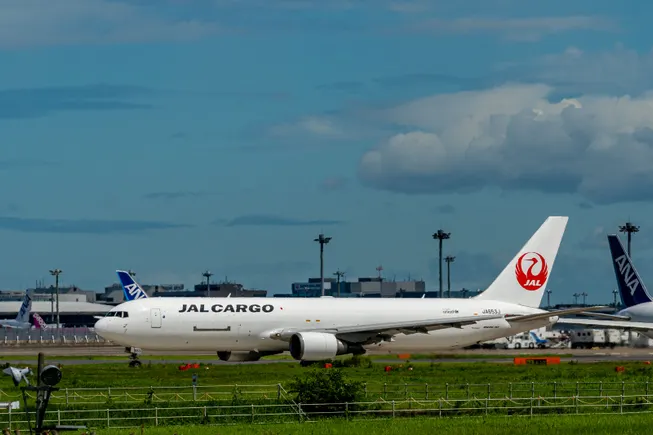
At the heart of this new operation is a high-capacity 100-ton freighter aircraft. The service is purpose-built to navigate the logistical complexities of transporting heavy, oversized, and ultra-sensitive cargo—such as massive server racks, liquid-cooling units, and dense data center infrastructure—that standard commercial bellies often struggle to accommodate.
By tying North America directly to major Asian economic centers, including Narita Airport (NRT) in Japan, Taipei (TPE) in Taiwan, and Singapore (SIN), the Nippon Express and JAL partnership aims to provide a reliable, stable, and flexible supply chain pipeline. This infrastructure is critical as global enterprises scramble to secure the physical building blocks of the generative AI revolution.
Chronology: The Evolution of Transpacific Tech Logistics
The launch of this specialized air route does not happen in a vacuum; it is the culmination of years of explosive, pandemic-era supply chain shifts followed by an unprecedented surge in digital infrastructure spending.
- Late 2023 – 2024: As generative AI models capture mainstream enterprise adoption, demand for specialized graphics processing units (GPUs), application-specific integrated circuits (ASICs), and server infrastructure skyrockets. Semiconductor manufacturing facilities in East Asia operate at peak capacity to meet the deficit.
- Early 2025: Major freight forwarders begin noticing severe bottlenecks on traditional cargo lanes. The sheer physical dimensions and weight of modern data center server racks overwhelm standard passenger-plane cargo holds, prompting a renewed focus on dedicated freighter capacity.
- June 2026: Xeneta releases market intelligence data highlighting that AI and semiconductor shipments have become one of the air cargo sector’s primary growth engines, single-handedly pushing global air cargo demand up by 7% year-over-year during the month.
- August 2026: World Semiconductor Trade Statistics (WSTS) records a staggering 18th consecutive month of global semiconductor sales growth, culminating in a monthly total of $159.7 billion. Regional breakdowns show staggering jumps of over 180% in the Americas and 143% in the Asia-Pacific region.
- September 2026: Recognizing an underserved niche for heavy intra-Asia tech transfers combined with North American imports, Nippon Express and JAL finalize plans for their multi-stop circuit route.
- October 9, 2026: Nippon Express and Japan Airlines officially operationalize their weekly Los Angeles-Asia cargo circuit, setting a new benchmark for tech-focused supply chain solutions.
Supporting Data and Market Dynamics
The commercial rationale behind the Nippon Express-JAL partnership is backed by hard numbers illustrating a fundamental transformation in global trade.
While AI-related hardware currently accounts for a relatively modest slice of total global air cargo volume—estimated at less than 10% by market analysts like Xeneta—its economic value and impact on carrier strategies are disproportionately massive. Because these shipments are mission-critical, time-sensitive, and extremely high-value, shippers are willing to pay premium rates for direct, reliable air transit, bypassing congested ocean shipping lanes and vulnerable ground transport networks.
Semiconductor Sales Surge
The foundational driver of this air traffic is the relentless expansion of the semiconductor market. According to World Semiconductor Trade Statistics, year-to-date global semiconductor sales surpassed the $1 trillion milestone through August 2026. This growth is propelled by:

- The Americas: Experiencing an unprecedented year-over-year sales increase exceeding 180% in August, driven by massive domestic investments in hyperscale data centers and cloud computing infrastructure.
- Asia-Pacific: Surging by 143% over the same period, reflecting the region’s absolute dominance in wafer fabrication, chip packaging, and hardware assembly.
The Route Architecture
The circuit route engineered by Nippon Express and JAL is uniquely structured to address these regional surges. By utilizing a 100-ton freighter on a cyclical path connecting Los Angeles (LAX), Narita (NRT), Taipei (TPE), and Singapore (SIN), the carriers have created a dynamic logistical loop.
Crucially, the route addresses a known infrastructure gap within Asia itself. While transpacific lanes are heavily contested, Nippon Express noted that relatively few airlines operate large-scale freighters within the intra-Asia corridor. By enabling cargo to be seamlessly loaded and unloaded at each port of call, the circuit functions as an agile conveyor belt for components moving between Taiwanese fabrication plants, Japanese assembly nodes, Singaporean distribution hubs, and North American deployment sites.
Official Responses and Strategic Intent
Executives from both logistics and aviation sectors emphasize that this partnership is a direct response to the structural shift in global enterprise IT spending.
According to joint press releases and corporate statements from Nippon Express, the core objective is to provide absolute stability for supply chains that cannot afford disruption. "Because cargo can be loaded and unloaded at each port of call on the circuit route, the service enables the design of diverse transport routes and efficient transport operations," corporate representatives noted. This flexibility allows supply chain planners to pivot dynamically, meeting surging transport demands not only between North America and Asia, but also extending reach into Latin American markets via major US entry points like Los Angeles.

Japan Airlines, leveraging its deep operational heritage at Narita Airport alongside JAL Cargo’s fleet capabilities, provides the technical aviation muscle. The partnership ensures that Nippon Express—a logistics titan with expansive global forwarding capabilities—has guaranteed access to specialized heavy-lift capacity precisely when the market needs it most.
Industry Implications and the Broader Competitive Landscape
The launch of the Nippon Express-JAL circuit is part of a broader, systemic adaptation across the global air freight industry. As artificial intelligence transitions from an experimental technology to an entrenched global utility, the physical supply chains supporting it are being entirely redesigned.
A New Class of Freight Demand
Traditional air cargo has historically relied on consumer electronics, apparel, and perishable goods—commodities characterized by seasonal spikes and predictable weight profiles. AI and data center hardware, however, present a fundamentally different profile. They are heavy, densely packed, incredibly fragile, and intensely valuable. A single delayed server rack can stall the deployment of an entire billion-dollar AI training cluster. Consequently, logistics providers are moving away from ad-hoc charter flights toward permanent, purpose-built infrastructure.
Competitors Adapt Their Networks
Other global logistics giants are making parallel moves to capture this lucrative corridor. Earlier in the year, DHL Global Forwarding launched a thrice-weekly Transpacific air cargo service bridging Bangkok (BKK) and Cincinnati (CVG). Like the Nippon Express-JAL route, DHL explicitly cited the technology sector and advanced manufacturing as the primary demand drivers for the expansion.
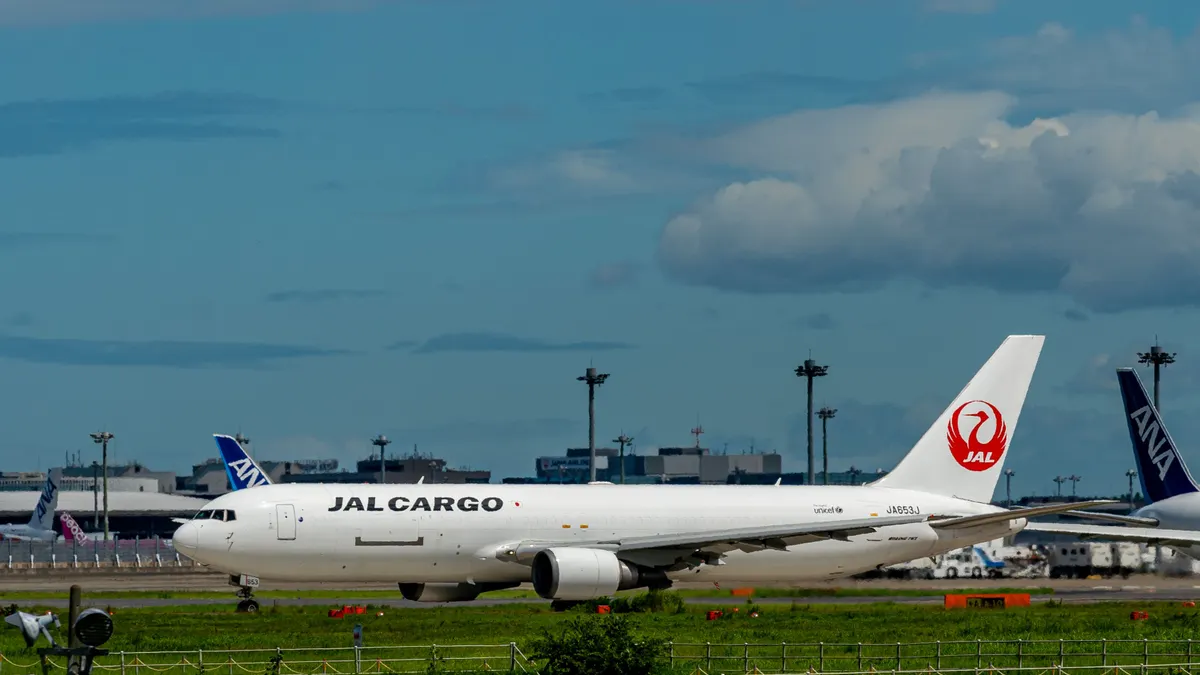
These concurrent developments signal a clear industry trend: air cargo carriers and forwarders are no longer waiting for tech companies to adapt to standard flight schedules. Instead, they are tailoring their fleets, routes, and hub structures specifically to the geography of the silicon supply chain.
Looking Ahead
As hyperscalers—such as Microsoft, Google, Amazon, and Meta—continue to pour hundreds of billions of dollars into global AI infrastructure throughout the late 2020s, the demand for high-speed, secure, and heavy-lift logistics will only intensify.
The Nippon Express and Japan Airlines weekly circuit serves as a bellwether for the future of specialized logistics. By bridging the manufacturing powerhouses of Asia with the technological epicenters of North America via a flexible, multi-stop aerial highway, these carriers have established a vital economic bridge. For an industry racing to build the future of intelligence, these silicon skies are destined to get much busier.