By Supply Chain Intelligence Desk
Published October 15, 2026
Main Facts
As geopolitical tensions and regional conflicts continue to roil global energy markets, major American logistics and distribution networks find themselves on the front lines of a severe economic pressure test. United Natural Foods, Inc. (UNFI), one of the premier wholesale food distributors in North America, is successfully utilizing a combination of sophisticated financial hedging instruments and advanced artificial intelligence platforms to weather an unprecedented surge in diesel fuel costs.
The strategy comes at a critical juncture for the supply chain sector. Driven largely by the ongoing conflict involving Iran, U.S. on-highway diesel prices have experienced exponential growth throughout 2026. Data released by the U.S. Energy Information Administration (EIA) in mid-October underscored the severity of the crisis, pegging average on-highway diesel at $6.18 per gallon—a staggering year-over-year increase of $2.51.
To insulate its sprawling operations from these volatile market conditions, UNFI leadership has turned to a two-pronged approach. First, the company relies on traditional financial hedging to stabilize fuel expenditures and reassure investors. Second, it has deployed Samsara, a cutting-edge, AI-powered visibility and telematics platform, across its vast fleet. By optimizing delivery routes and cutting down on extraneous mileage, UNFI is proving that technological integration is no longer a luxury for wholesale distributors, but an absolute operational necessity.
Chronology of the Fuel Crisis and UNFI’s Response
The timeline leading up to UNFI’s current defensive posture reveals a rapidly accelerating energy market that caught many supply chain operators off-guard, necessitating swift institutional responses.
- Early 2026: Geopolitical instability, particularly surrounding critical trade and energy chokepoints linked to the conflict involving Iran, begins to strain global crude oil supplies. Refining capacities are squeezed, immediately translating to elevated wholesale and retail diesel prices in the United States.
- Spring to Summer 2026: Freight transporters and food distributors absorb mounting fuel surcharges. As margins tighten, UNFI accelerates the deployment of its AI-powered operational tools, scaling up the integration of the Samsara platform across its distribution network.
- September 15, 2026: UNFI executive leadership formally details the company’s cost-mitigation strategies during a presentation at the prestigious Goldman Sachs Global Consumer and Retail Conference. CEO Sandy Douglas highlights how hedging and technology are successfully keeping the company’s exposure within a manageable threshold.
- October 1, 2026: In parallel developments across the retail and consumer goods sector, major players like McCormick & Co. report the strain of higher freight and input costs on earnings calls, signaling a widespread industry trend.
- October 12, 2026: EIA data confirms the relentless upward trajectory of fuel prices, officially placing national on-highway diesel averages at $6.18 per gallon—marking a dramatic $2.51 jump compared to the same period in 2025.
- October 15, 2026: Industry analyses highlight UNFI’s proactive stance as a masterclass in modern supply chain resilience, balancing traditional risk management with forward-thinking data utilization.
Supporting Data and Economic Analysis
The macroeconomic landscape of late 2026 presents severe headwinds for any enterprise reliant on heavy-duty freight. Because food distribution requires continuous, temperature-controlled transportation across vast geographic footprints, fuel represents one of the most volatile and unavoidable variable costs on a balance sheet.
The Anatomy of Fuel Hedging
To understand how UNFI protects its bottom line, one must examine the mechanics of fuel hedging. According to Dean Croke, principal industry analyst at DAT Freight & Analytics, hedging functions essentially as an institutional price lock.
"If prices climb, the hedge covers the difference. If they drop, you miss the savings. Either way, you know your costs and can plan around them," Croke explained in an email to industry monitors.
For mega-distributors consuming millions of gallons of diesel annually, missing out on potential price dips is a minor trade-off. The primary advantage of hedging is predictability. It provides corporate boards and investors with the financial reassurance that operating expenditures will not spiral out of control during unforeseen geopolitical shocks. During the Goldman Sachs conference, UNFI CEO Sandy Douglas emphasized that this traditional tool has been instrumental in "keeping our exposure in a reasonable place."
The Scale of UNFI’s Logistics Footprint
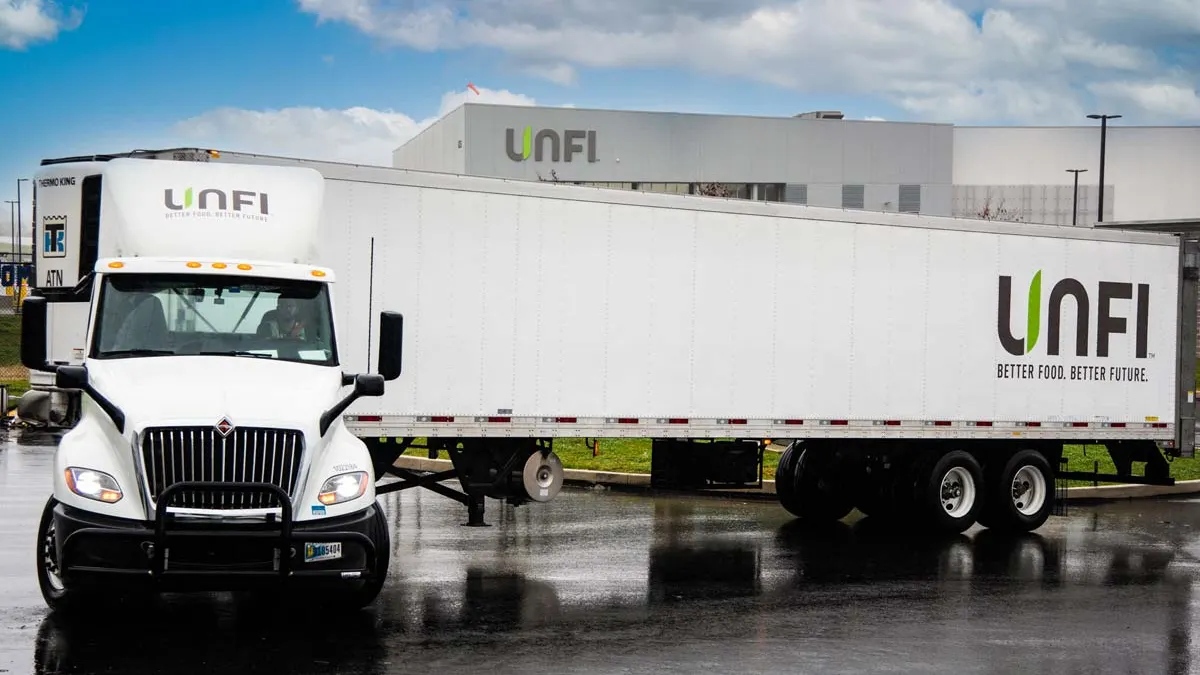
UNFI’s exposure is immense. The distributor operates a sprawling network consisting of:
- Approximately 50 distribution centers strategically positioned across North America.
- A dedicated fleet of roughly 2,000 delivery vehicles traversing millions of miles annually.
With fuel costs hovering near historic highs at $6.18 per gallon, even a fractional reduction in total mileage yields massive financial dividends. This is where advanced software steps in to complement financial engineering.
Official Responses and Industry Context
UNFI’s internal initiatives are part of a broader corporate strategy focused on driver safety, operational efficiency, and technological modernization.

The Role of Samsara
In recent years, UNFI has heavily invested in next-generation supply chain technology. The deployment of the Samsara platform has been a cornerstone of these efforts. Designed to provide real-time visibility into transportation data, Samsara empowers fleet managers to track vehicle health, monitor driver behavior, and dynamically adjust transit paths.
A UNFI spokesperson elaborated on the platform’s utility in an official statement:
"Samsara is one of several technologies UNFI is using to continue to improve safety, effectiveness, and efficiency across our transportation fleet. The platform helps us identify opportunities to optimize delivery routes and reduce unnecessary miles."
By analyzing historical traffic patterns, delivery windows, and fuel consumption metrics in real time, the AI system eliminates deadheading (running empty miles) and trims inefficient detours, directly countering the per-gallon price hikes dictated by the macroeconomic environment.
Industry-Wide Strategies
UNFI is not alone in its quest to neutralize surging freight costs. Across the consumer packaged goods and retail sectors, executives are pulling every available lever to protect margins without alienating price-sensitive consumers.
- Costco Wholesale Corporation: During a Q4 2026 earnings call, EVP and CFO Gary Millerchip noted that Costco has successfully offset incremental fuel surcharges by leveraging lower contracted shipping rates secured through long-term carrier partnerships.
- McCormick & Co.: Facing compounding pressures from freight, logistics, packaging, and raw input costs, McCormick has leaned heavily on internal efficiency measures. EVP and CFO Marcos Gabriel highlighted the company’s Comprehensive Continuous Improvement (CCI) program during an October earnings call, using productivity savings to absorb the shocks of a turbulent macroeconomic climate.
Implications for the Future of Supply Chain Management
The convergence of geopolitical conflict, energy price volatility, and technological innovation in 2026 marks a permanent evolution in how supply chains must operate. The days of treating fuel as a static, predictable budget line item are officially over.

1. The Imperative of Hybrid Strategies
UNFI’s success demonstrates that modern logistics resilience requires a hybrid approach. Financial tools (such as futures contracts and hedging) protect against macro-level price spikes, while operational technologies (such as AI routing software) protect against structural inefficiencies. Relying on only one of these pillars leaves an enterprise dangerously exposed.
2. The Maturation of AI in Fleet Management
Artificial intelligence has transitioned from a buzzword into a critical mission-critical utility. Platforms like Samsara are no longer used merely for basic GPS tracking or regulatory compliance (such as Electronic Logging Devices). They are now sophisticated optimization engines capable of making split-second routing decisions that save hundreds of thousands of dollars in fuel burn across large fleets.
3. Sustaining Consumer Price Stability
Ultimately, the strategies deployed by UNFI, Costco, and McCormick have massive implications for the end consumer. By aggressively managing fuel and freight pressures through hedging and technological optimization, these corporations prevent runaway logistics costs from translating into catastrophic retail food inflation.
As the global energy landscape remains unpredictable through the remainder of 2026 and beyond, UNFI’s playbook serves as a definitive case study for the wholesale distribution sector: marrying financial prudence with artificial intelligence is the most reliable roadmap for navigating uncharted economic waters.