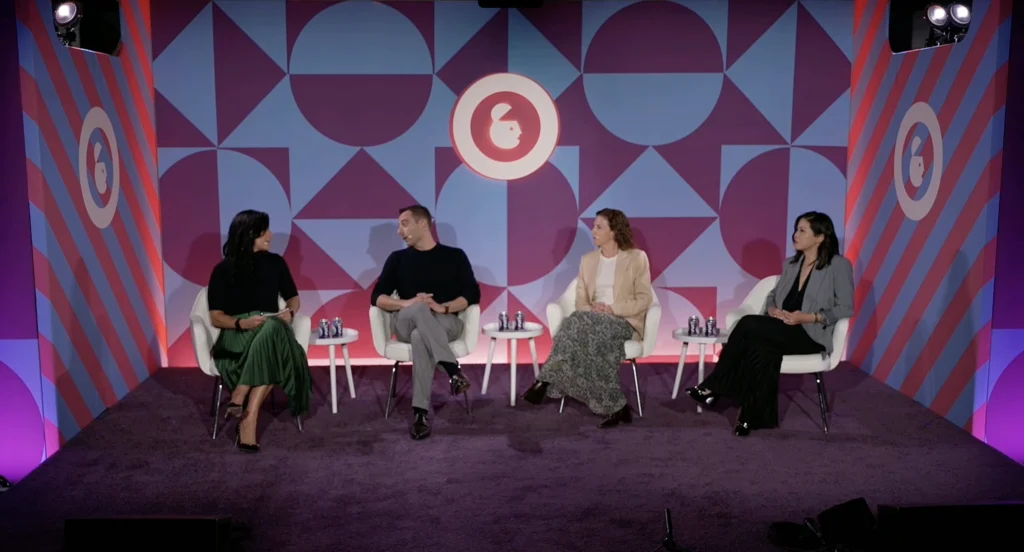
In the modern marketing landscape, where consumer attention is a scarce currency and skepticism is the default setting, the old playbook of "telling" a brand story is increasingly obsolete. At Advertising Week New York, a panel of industry heavyweights—representing powerhouses like The Hershey Company, LinkedIn, and e.l.f. Beauty—converged to address a singular, existential challenge: How do brands pivot from being merely "known" to being "chosen"?
The consensus among the marketing elite was clear: Credibility is no longer a marketing claim; it is a ledger of visible actions. For global brands, the imperative has shifted from creating catchy advertisements to providing tangible value, honoring consumer promises, and navigating cultural conversations with surgical precision.
The Core Philosophy: Value Before Trust
The discussion centered on a fundamental paradigm shift. Historically, marketing was designed to build awareness, assuming that trust would follow. Today, the panel argued for a "Value-First" model. Before a brand can ask for a consumer’s loyalty or data, it must first prove its utility.
The "Value-Exchange" Mandate
Paolo Provinciale, Vice President of Marketing at LinkedIn, encapsulated the sentiment during the session: "It’s not what you say, but actually the way you show up. Provide value to your audience before actually asking for that credibility and trust back."
LinkedIn’s strategy for achieving this involves moving beyond the platform’s role as a job board and positioning it as a curator of economic intelligence. By leveraging its vast internal data to track hiring trends and skills gaps, LinkedIn provides policymakers and members with research that has real-world utility.
Furthermore, the platform has pivoted its storytelling to reflect the non-linear nature of modern life. By highlighting "zigzag" career paths—stories of failure, pivots, and unexpected detours—LinkedIn reinforces its value as a partner in professional growth rather than a sterile corporate utility.
The Challenge of Legacy Brands
For brands with deep historical roots, the challenge is not awareness—it is relevance. Stacy Tappitt, Chief Growth and Marketing Officer at The Hershey Company, noted that for legacy brands, the greatest danger is "being loved but not chosen actively."
Hershey manages a portfolio of 90 brands, each at different stages of maturity. Tappitt argued that legacy brands must fight the inertia of familiarity. The goal is to remain "top of mind and relevant every single day" by constantly injecting new utility into the brand experience, ensuring that consumers don’t just recognize the logo on the shelf but have a compelling reason to reach for it.
Chronology of the Modern Marketing Shift
To understand how these brands arrived at this "Action-Oriented" strategy, one must look at the evolution of consumer-brand dynamics over the last decade:
- 2014–2017: The Era of "Brand Purpose." Companies began attaching themselves to social causes, often resulting in performative marketing that drew backlash for being disconnected from business operations.
- 2018–2021: The Digital Acceleration. The pandemic forced brands to move their value propositions online. Companies that provided utility—digital tools, community support, or accessible entertainment—thrived.
- 2022–Present: The "Show, Don’t Tell" Mandate. Consumers, empowered by social media, now demand consistency. The current marketing standard is defined by "zero-distance" relationships, where companies are expected to align their internal culture with their external messaging.
Strategic Partnerships: Moving Beyond Logo Placement
A significant portion of the panel was dedicated to the changing nature of partnerships. The era of "logo-slapping" collaborations is ending; in its place, we see a rise in symbiotic, value-add partnerships.
The Hershey Model: Complementary Value
Tappitt emphasized that for Hershey, a partnership must offer something that neither brand could achieve alone. She pointed to the collaboration between Reese’s and the Nitro Bar, which produced a Reese’s pumpkin latte. This wasn’t just a stunt; it was a way to introduce the brand to a younger demographic and create a new "consumption occasion"—home-based recipe creation—that extended the brand’s relevance into the kitchen.
The e.l.f. Beauty Model: Community-Led Innovation
Lori Lamb, Chief Brand Officer at e.l.f. Beauty, highlighted the importance of listening to community conversations before initiating partnerships. The company’s collaboration with Bubble was born from consumer discourse, ensuring the partnership felt organic rather than manufactured.
"We look for a distinctive contribution from each partner," Lamb noted. "It cannot be a collaboration that any two brands could do." By combining product strengths, e.l.f. delivers a "better together" experience that rewards the loyalists who drove the conversation in the first place.
Navigating Culture: Shaping vs. Chasing
Perhaps the most contentious issue discussed was how brands should participate in cultural trends. The panel warned against the "trend-chasing" trap, which often leaves brands looking desperate or tone-deaf.
The "Add-Value" Rule
Provinciale of LinkedIn offered a golden rule for social media engagement: "The overarching rule is not to ask yourself how can I jump into the conversation, but what can I add to the conversation?"
If a brand cannot contribute a unique perspective, resource, or piece of utility to a trending topic, the consensus is that they should remain silent. Jumping into a conversation purely for visibility is now seen as a net negative for brand equity.
The e.l.f. Approach: Shaping the Narrative
Lori Lamb pushed this further, suggesting that the most successful brands don’t follow the culture; they shape it. By maintaining a "zero-distance" culture—where employees across all levels are exposed to company decisions—e.g., e.l.f. ensures that its external actions are rooted in a coherent, internal reality. This consistency is what allows the brand to influence consumer narratives rather than simply reacting to them.
Implications: The High Cost of Inconsistency
The panel concluded with a candid discussion on the consequences of failure. In an age of radical transparency, misinformation and criticism spread at lightning speed.
The Crisis Response Framework
Tappitt provided a pragmatic roadmap for when things go wrong:
- Preparation: Build the infrastructure to respond quickly.
- Radical Transparency: Acknowledge the mistake immediately.
- Corrective Action: Attempt to make it right.
- Resilience: "Live to fight another day."
The overarching implication is that "Purpose" is not a marketing campaign; it is a business strategy. If a company claims a set of values but fails to embody them in its hiring, partnerships, or crisis management, the audience will sense the disconnect immediately.
As Lamb noted, "Purpose can become a platitude if it is not tied to action."
Conclusion: The Credibility Horizon
The Advertising Week panel made one thing clear: The barrier to entry for brand loyalty has been raised. Consumers are no longer swayed by emotional appeals or polished aesthetics alone. They are looking for brands that act as consistent, value-adding participants in their lives.
Whether through LinkedIn’s career data, Hershey’s innovative product collaborations, or e.l.f. Beauty’s community-driven growth, the message to marketers is the same: Your brand is defined by your actions. In the digital age, credibility is the only currency that matters—and it is earned only through the relentless delivery of value. For the modern marketer, the task is no longer to be the loudest voice in the room, but the most useful partner in the consumer’s journey.