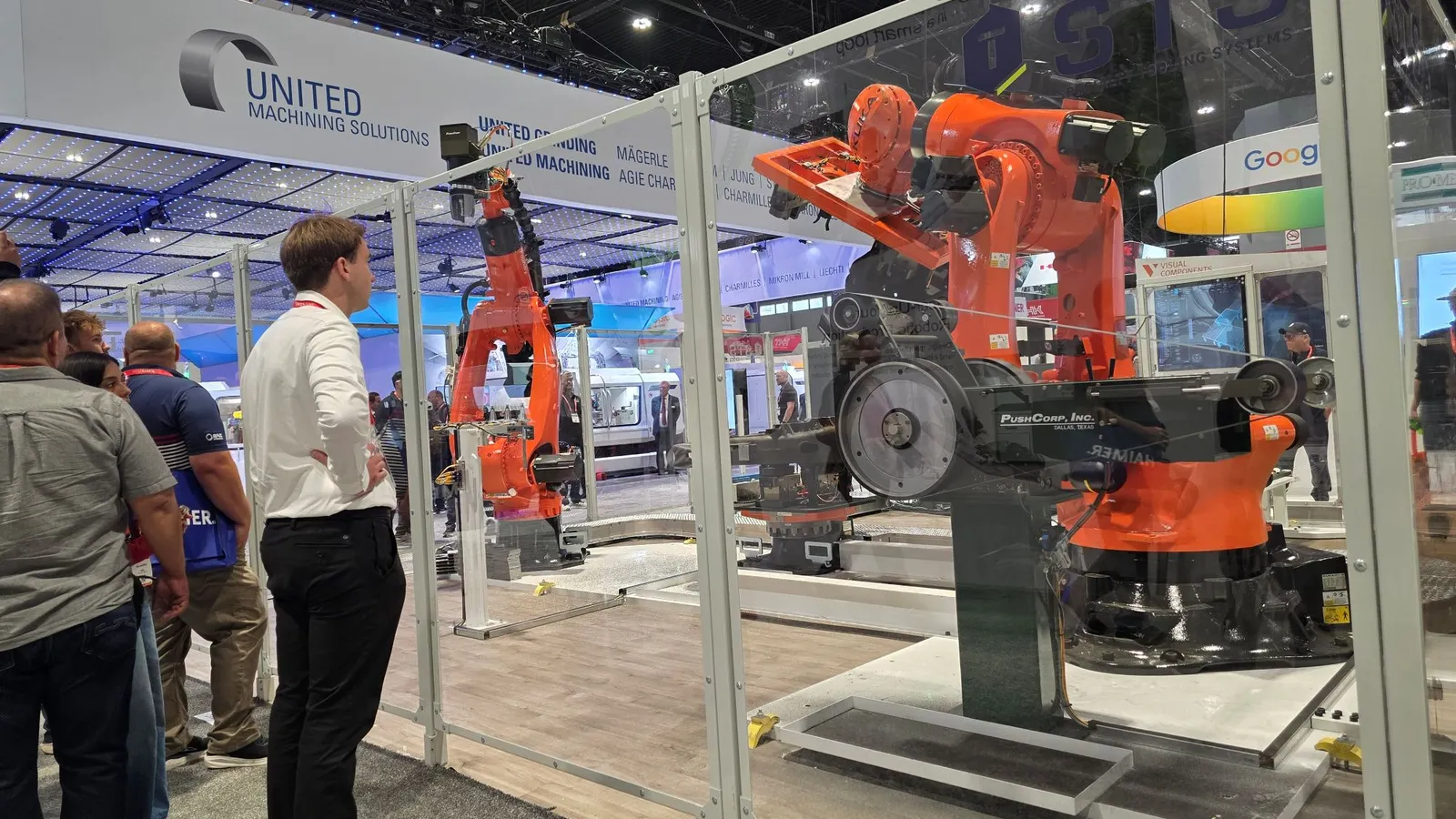
In the modern industrial landscape, the allure of Industry 4.0 is undeniable. From robotic arms that never tire to artificial intelligence algorithms capable of predicting maintenance needs before a failure occurs, the promise of the "smart factory" is driving a massive investment cycle across the global manufacturing sector. However, as the race to digitize accelerates, industry experts are raising a cautionary flag: technology alone is not a silver bullet.
At the International Manufacturing Technology Show (IMTS) in Chicago, Sven Diedrich, head of digital transformation and business solutions at Pinaxis, argued that many manufacturers are setting themselves up for failure by focusing on the "shiny new object" of hardware and software without first fortifying the foundational elements of their business. According to Diedrich, the path to successful automation is built upon four critical pillars: People, Processes, Data, and Systems.
The Core Challenge: Misaligned Priorities
The primary pitfall in modern manufacturing, according to Diedrich, is the tendency to approach automation in departmental silos. When engineering, IT, and operations teams work in isolation, they often select technological solutions that address local pain points but fail to serve the holistic needs of the organization.
"Are your people, processes, data, and systems actually aligned, or do they improve on their own in silos?" Diedrich asked attendees at the IMTS. "That’s what we come across a lot: There is a disconnect between the four pillars."
This disconnect often manifests in a classic "capacity crisis" scenario. A company identifies a bottleneck and deploys a high-end robotics or AI solution. Only after the investment is made does the company realize that its underlying data is insufficient, its internal processes are incompatible with the new technology, or its workforce lacks the specific skills to manage the new system. The result is a high-dollar investment that delivers mediocre outcomes, reinforcing the notion that technology is only as effective as the environment in which it operates.
The Four Pillars: A Strategic Framework
To avoid these pitfalls, companies must conduct an honest, audit-level evaluation of their infrastructure before signing off on large-scale automation projects.
1. People: The Overlooked Variable
In the rush to automate, the workforce is frequently treated as an afterthought. "The equipment gets the attention, the software gets the attention, and the business case and ROI calculation get the attention, but not the people who need to use the automation technology," Diedrich noted.
Successful automation requires a fundamental shift in how organizations view their employees. Rather than simply reducing labor, automation creates new, complex challenges that demand higher-level skill sets. Companies must plan for:
- Defining Ownership: Who operates the system, who supports it, and who serves as the primary responder when an automated process encounters an error?
- Bridging the IT/OT Gap: As Information Technology (IT) and Operational Technology (OT) converge, traditional departments must break down barriers to ensure that technical requirements are met by both software and mechanical teams.
- Administrative Capacity: Automation does not eliminate the need for human oversight; it shifts the nature of the work. Someone must still manage the application, troubleshoot recurring exceptions, train new staff, and drive continuous system improvement.
2. Processes: Exposing Weaknesses
One of the most counterintuitive aspects of automation is that it highlights existing inefficiencies rather than masking them. Human operators often act as a "hidden buffer," using tribal knowledge to compensate for process flaws. When a machine takes over, that human flexibility is lost.
"The machine actually does exactly what we tell it to do and doesn’t deviate from it," Diedrich explained. "Automation exposes process weaknesses very quickly, because it removes the human being who quietly compensates for all their shortcomings."
Furthermore, companies must avoid "digitizing waste." If a process is fundamentally flawed, adding a robot or a software layer will only make that flawed process run faster and more consistently. The focus should be on refining workflows into a "rock-solid" state before applying automation.
3. Data: The Currency of AI
AI and machine learning are fundamentally dependent on high-quality, trustworthy data. If the input data is messy, incomplete, or siloed, the resulting AI insights will be misleading.
Diedrich categorizes critical data into three distinct tiers:
- Master Data: Foundational information such as item numbers, dimensions, weights, and bills of materials.
- Transactional Data: The movement of goods, including orders, inventory receipts, and shipping logs.
- Process Data: Real-time metrics such as cycle times, quality signals, machine downtime, and rework rates.
Without a unified strategy to collect and sanitize this data, companies cannot build the decision-making capabilities that AI promises to deliver.
4. Systems: The Infrastructure of Communication
The final pillar is the system architecture that connects the shop floor to the executive suite. A lack of communication between IT and OT systems is a frequent cause of project failure. When shop-floor operators lack real-time access to the data their machines are generating, they cannot make the necessary adjustments to prevent quality drifts or bottlenecks.
Chronology of Implementation: From Pilot to Scale
Diedrich’s approach advocates for a disciplined, stage-gated implementation process.
- Phase 1: Alignment Audit. Before a single piece of hardware is ordered, cross-functional teams must ensure that their people, processes, data, and systems are synchronized.
- Phase 2: The Pilot. Small-scale testing allows a company to prove the value proposition of a specific technology while testing the readiness of the Four Pillars.
- Phase 3: Scaling. This is where many companies fail. Scaling is not merely "copy-pasting" a solution from one factory to another. Because different locations have unique cultural, data, and process environments, what works in one plant may require significant adaptation in another.
"A pilot can be successful with current operators because they have the tribal knowledge to overcome the shortcomings with a regular workaround," Diedrich warned. "But when we try to scale that toward the entire process, that is where true readiness becomes visible—or where the shortcomings become glaringly obvious."
Implications: The High Cost of Shortcuts
The pressure to implement AI and robotics is mounting as competitors across the globe increase their automation spend. However, the data suggests that jumping on the "shiny object" bandwagon without a strategic framework leads to significant wasted capital.
For manufacturers, the implications are clear: The competitive advantage of the future will not belong to the company with the most expensive robots, but to the company with the most robust integration of people and technology.
By prioritizing the "Four Pillars," manufacturers can move away from reactive, siloed, and high-risk investments toward a sustainable model of digital transformation. The goal is not just to automate, but to create a transparent, agile, and data-driven organization capable of adapting to the rapid changes of the 21st-century market.
Summary Checklist for Manufacturers:
- Stop treating technology as the starting point. Start with an assessment of existing people, processes, data, and systems.
- Define ownership roles before installing new software or robotics.
- Clean your data. Ensure that master, transactional, and process data are accurate and accessible.
- Audit your processes. If the process is inefficient, fix it manually before automating it.
- Plan for the scale-up. Recognize that technology is not "plug and play" across different geographic or departmental sites.
In conclusion, as the manufacturing sector continues its aggressive move toward automation, the advice from industry leaders remains consistent: caution is not a sign of weakness, but a hallmark of maturity. By focusing on the foundational elements of the business, manufacturers can ensure that their investments in AI and robotics deliver the transformative results they promise.