



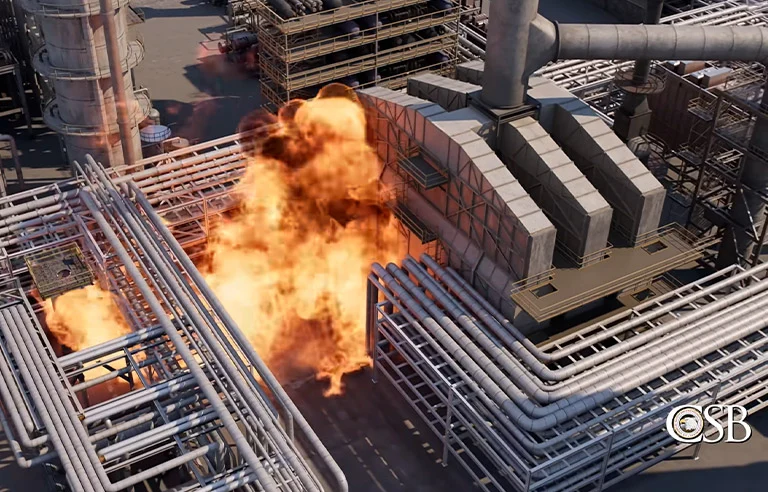
WASHINGTON — In the high-stakes environment of a modern oil refinery, operating errors do not typically occur in a vacuum. Instead, they are frequently the culmination of hidden systemic vulnerabilities, overwhelming sensory distractions, and poor procedural safeguards. This reality is at the heart of a comprehensive new educational video released by the U.S. Chemical Safety and Hazard Investigation Board (CSB), which examines the tragic events leading up to the September 2022 fire and chemical release at the BP-Husky Energy Refinery in Oregon, Ohio.
The incident, which claimed the lives of two dedicated refinery workers, serves as a stark reminder of the fragile boundary between industrial productivity and catastrophic failure. According to CSB investigators, the disaster was not the result of a single misstep, but rather the tragic convergence of cascading operational anomalies, severe alarm fatigue, misidentified process streams, and an over-reliance on human intervention during high-stress moments.
In the wake of its exhaustive June 2024 final report, the CSB has leveraged digital media to broadcast the lessons learned from the BP-Husky disaster to a global audience. The agency announced that its newly released investigative video, titled "Alarming Mistakes, Deadly Decisions: Fatal Fire at BP-Husky," surpassed 500,000 views within just one week of its launch. The unprecedented public response highlights a growing national appetite for transparency, accountability, and education regarding industrial safety.
Main Facts of the Disaster
The catastrophe at the BP-Husky refinery unfolded on September 20, 2022, transforming a routine industrial facility into a zone of devastation. The core of the incident involved the catastrophic containment failure of a pressurized process vessel, which released large volumes of naphtha—a highly flammable liquid hydrocarbon mixture derived from petroleum.
When the released naphtha found an ignition source, it flashed into a fierce, uncontrolled fire that ultimately cost the lives of two refinery workers who were actively attempting to mitigate the emergency.
An extensive federal investigation conducted by the CSB revealed a chilling sequence of operational misjudgments and systemic omissions:
- Misidentified Substances: Workers operating under extreme duress attempted to drain a vessel that they believed contained a benign amine-water solution. In reality, the vessel was flooded with highly volatile liquid naphtha.
- The "Alarm Flood": In the 12 hours leading up to the fatal incident, control room operators were subjected to an overwhelming barrage of more than 3,700 alarms. This phenomenon, known as an "alarm flood," severely delayed human response times, distracted personnel, and masked the true nature of the unfolding emergency.
- Absence of Automated Safeguards: The facility lacked critical preventive engineering safeguards—such as a high-level automatic interlock—that could have halted the liquid overflow mechanically. Instead, the refinery relied heavily on human intervention amidst a chaotic backdrop of flashing lights and warning sirens.
- Human Factors and Stress: Investigators emphasized that the cognitive load placed on workers during abnormal situations can drastically degrade decision-making capabilities, underscoring the critical need for pre-established, well-practiced operational plans.
Chronology of Events: The 12 Hours to Catastrophe
To fully understand how a major petroleum refinery suffered such a catastrophic breakdown, investigators reconstructed the timeline leading up to the September 20, 2022, disaster. The chronology paints a picture of an operational environment slowly spiraling out of control long before the flames ignited.
Phase 1: The Onset of Abnormal Operations
Hours before the fatal release, process upsets began occurring within the refinery’s crude-processing and treating units. These initial deviations from normal operating parameters triggered the first wave of automated alerts. While minor process upsets are not uncommon in large-scale chemical manufacturing, the facility’s monitoring systems failed to stabilize the environment efficiently.
Phase 2: The Alarm Flood Escalates
As the operational instability compounded, the control system began generating warnings at an unsustainable rate. Over the course of the 12 hours preceding the incident, control room operators were battered by more than 3,700 alarms.
In industrial safety engineering, an alarm flood occurs when the number of alarms presented to operators exceeds their cognitive capacity to evaluate and respond—typically defined as more than one alarm per second during a crisis. This sensory overload forces operators into a state of triage, where critical safety warnings are easily lost amidst a sea of low-priority diagnostic alerts and nuisance alarms.
Phase 3: The Critical Misidentification
Amidst the auditory and visual chaos of the control room, a liquid process stream shifted into a vessel where it did not belong. Typically, this specific vessel was designed to hold only vapor. However, due to the preceding operational anomalies, liquid naphtha accumulated inside it.
Believing the vessel was filling with a standard amine-water solution—a substance with vastly different physical properties and handling requirements compared to light hydrocarbons—two workers were dispatched to perform an emergency manual draining procedure.
Phase 4: The Fatal Intervention and Ignition
As the workers opened the vessel to execute the drain, the pressurized, highly flammable liquid naphtha was unleashed into the atmosphere. Because naphtha has a low flash point and a high vapor pressure, it immediately vaporized, forming a massive, dense flammable cloud that rapidly contacted an ignition source.
The resulting fire engulfed the area, leaving the workers with fatal injuries and causing extensive damage to the refinery infrastructure. The rapid escalation from a contained process deviation to a fatal fire highlighted systemic flaws in how the facility managed abnormal situations.
Supporting Data and Safety Board Findings
The CSB’s June 2024 final report went beyond the immediate human errors made on the day of the fire, delving deeply into the organizational and engineering shortcomings that allowed the disaster to occur.
The Danger of Alarm Floods
The CSB data regarding the 3,700 alarms serves as a wake-up call for the entire petrochemical sector. Modern distributed control systems (DCS) are capable of monitoring thousands of data points simultaneously. However, without rigorous alarm management philosophies—such as those outlined in standards like ISA-18.2—facilities risk creating "noise" that actively undermines safety. When operators cannot discern a critical safety warning from a routine status notification, the safety system has effectively failed its human users.
Engineering Controls vs. Administrative Controls
A foundational tenet of process safety management is the hierarchy of controls. Engineering controls—which physically remove or prevent a hazard through design, such as automatic shut-off valves and high-level interlocks—are vastly superior to administrative controls, which rely on human behavior, training, and manual intervention.
In the BP-Husky incident, the facility relied heavily on administrative measures. Operators were expected to notice rising liquid levels via alarms, interpret the data correctly despite an alarm flood, and take manual corrective action. The CSB report noted that if a high-level interlock had been installed and maintained to automatically halt the liquid transfer, the overflow would have been prevented entirely, regardless of operator distraction.
Official Responses and Industry Implications
The national reaction to the CSB’s investigative video and final report has underscored a widespread desire for reform across the energy and chemical sectors.
Insights from CSB Leadership
In the educational video, CSB investigator Melinda Hartz emphasized that anticipation is a powerful tool in industrial safety. "Anticipating abnormal situations and establishing and practicing written plans can greatly improve confidence and decision-making in times of duress," Hartz stated.
CSB member Sylvia Johnson echoed these sentiments, pointing to the absolute necessity of empowering frontline personnel. "The tragic loss of life underscores the importance of putting in place tools that employees need to perform tasks safely," Johnson said. She explicitly highlighted stop-work authority—a policy that grants every employee, regardless of rank, the absolute right to halt any operation they believe is unsafe—as a non-negotiable component of safety culture. Furthermore, Johnson stressed the need for robust policies to manage alarm floods and high-stress scenarios effectively. "Doing so will help prevent a future needless tragedy."
The Public and Industry Reaction
The staggering viewership of the agency’s video—crossing the 500,000-view threshold in roughly a week—stunned even the regulatory body. CSB Board Chair Steve Owens addressed the overwhelming public response in an October 8 press release:
"The tremendous response demonstrates that people are concerned by the serious chemical incidents that happen throughout this country on a weekly basis and that they want to know how to keep them from happening again."
The viral nature of the video indicates that industrial safety is no longer viewed solely as a back-room compliance issue for engineers and plant managers. Instead, workers, labor organizations, and local communities are actively seeking out safety data to hold corporations accountable.
Broader Implications for the Petrochemical Industry
The tragedy at the BP-Husky refinery holds profound implications for refineries, chemical plants, and processing facilities across the globe. As industrial facilities age and operations become increasingly automated, the relationship between human operators and digital control systems is undergoing a tense evolution.
- Mandatory Alarm Rationalization: Facilities must audit their control systems to eliminate nuisance alarms, group related alerts, and ensure that operators are never again subjected to debilitating alarm floods during a crisis.
- Upgrading Safeguards: Companies must audit their existing infrastructure to replace reliance on manual interventions with fail-safe engineering controls, such as automated interlocks and emergency shutdown systems (ESD).
- Enhancing Procedural Clarity: Written operating procedures must be clear, unambiguous, and regularly updated to account for worst-case scenarios, ensuring that workers never have to guess the chemical composition of the process streams they are handling.
- Fostering a Just Culture: True safety requires an organizational culture where workers feel fully supported in exercising stop-work authority without fear of production-related retaliation or pressure.
Conclusion
The fire at the BP-Husky Energy Refinery was a devastating human tragedy that robbed families of loved ones and exposed deep vulnerabilities in industrial safety practices. Yet, through the rigorous investigative work of the Chemical Safety Board and the unprecedented public engagement with its findings, the sacrifice of those lost workers is driving meaningful reflection and reform.
As industrial facilities review their alarm management systems, upgrade their engineering safeguards, and re-evaluate their emergency response protocols, the ultimate goal remains clear: transforming the hard-earned lessons of Oregon, Ohio, into an ironclad defense against future disasters.