As the peak shipping season gathers momentum, the U.S. freight and logistics sector is navigating a complex convergence of surging rates, tightening capacity, and severe weather disruptions. According to the latest data and insights presented in FreightWaves’ SONAR market update, economic pressures and shifting market dynamics are forcing a recalibration of pricing strategies across the supply chain.
At the same time, regional weather events are testing localized logistics networks, while technological innovations in freight analytics offer new avenues for cost optimization.
Main Facts
The current logistics landscape is defined by several critical developments:
- Record Contract Rates: Contract truckload rates have climbed to a 52-week high of $2.72 per mile (excluding fuel), marking an 18% increase year-over-year. This upward trajectory indicates that legacy pricing models are giving way to elevated market realities.
- Narrowing Spread: Driven by a nearly 50% year-over-year spike in the National Truckload Index (NTI) for spot rates, the traditional gap between spot and contract rates is narrowing. This shift provides carriers with significantly more leverage as annual bids roll over.
- Elevated Tender Rejections: The Outbound Tender Reject Index (OTRI) remains elevated and range-bound, hovering tightly between 13% and 14% (currently sitting at 13.75%). Concurrently, truckload demand ticked up approximately 1.25% week-over-week, returning to pre-Labor Day volumes.
- Severe Weather Impact: Tropical Storm Isaias has driven localized freight disruptions along the Alabama Gulf Coast and the Florida Panhandle, causing a sharp increase in tender rejections and spot rates in key regional markets like Mobile and Montgomery.
- Enhanced Analytics: FreightWaves has expanded its SONAR Rate Intelligence module to include comprehensive intermodal benchmarks, allowing supply chain managers to compare van rates with intermodal alternatives across specific lanes and rail ramps.
Chronology of Market Shifts
To understand how the freight sector reached this inflection point, it is helpful to examine the timeline of events leading up to the latest SONAR update:
Post-Labor Day Volatility
Following the Labor Day holiday, the freight market experienced a brief, predictable dip in tender volumes and demand. However, this lull was short-lived. By early October, demand rebounded by roughly 1.25% week-over-week, erasing the post-holiday slump and returning the market to robust pre-Labor Day baseline activity.
The Rise in Spot and Contract Rates
Throughout the late third quarter, spot rates experienced aggressive upward momentum, pushing the NTI up by nearly 50% compared to the previous year. As spot prices sustained these highs, carriers began demanding structural adjustments to annual agreements. By the October 9 market update, these pressures culminated in contract rates hitting a 52-week high of $2.72 per mile plus fuel—an 18% annual increase.
The Gulf Coast Weather Event
As macro-level pricing pressures intensified, micro-level disruptions emerged in the Southeast. Tropical Storm Isaias tracked toward the Gulf Coast, bringing heavy winds, localized flooding, and power outages. Over a matter of days, inbound truckload rejections into markets such as Mobile and Montgomery, Alabama, spiked significantly above national averages as carriers exercised caution or diverted capacity away from the storm path.
Supporting Data and Analytics
Data continues to be the ultimate compass for supply chain executives trying to navigate this volatile environment. The latest figures from FreightWaves SONAR provide a granular look at the state of capacity, pricing, and risk management.
Contract vs. Spot Rate Convergence
For months, shippers enjoyed the cushion of lower legacy contract rates even as spot markets fluctuated. However, the latest figures show contract rates hitting $2.72 per mile (plus fuel). This 18% year-over-year jump proves that shippers are no longer able to hold the line on outdated pricing. Because spot rates have skyrocketed—climbing nearly 50% year-over-year—the spread between contract and spot pricing has compressed. When this gap narrows, carrier compliance on contracted freight typically faces pressure unless rates reflect current market clearing prices.
Tender Volumes and Rejections
- OTRI Levels: The Outbound Tender Reject Index has stabilized within a predictable band of 13% to 14%, resting at 13.75%. While these numbers do not reflect the chaotic spikes seen during historic market disruptions, a sustained 13%+ rejection rate indicates that capacity is tight and carriers are selectively accepting loads that optimize their network profitability.
- Demand Recovery: A 1.25% week-over-week demand increase signals steady, resilient shipment volumes heading deeper into the fall shipping season.
Weather Risk Assessment via Weather Optics
During the briefing, analysts highlighted the utility of FreightWaves’ Weather Optics tool, specifically the Business Impact Index. By leveraging predictive modeling, the tool assesses moderate-to-elevated disruption risks during severe weather events like Tropical Storm Isaias. Coupled with live overlays for road closures and power outages, logistics planners can proactively reroute shipments before bottlenecks form.
Official Responses and Expert Insights
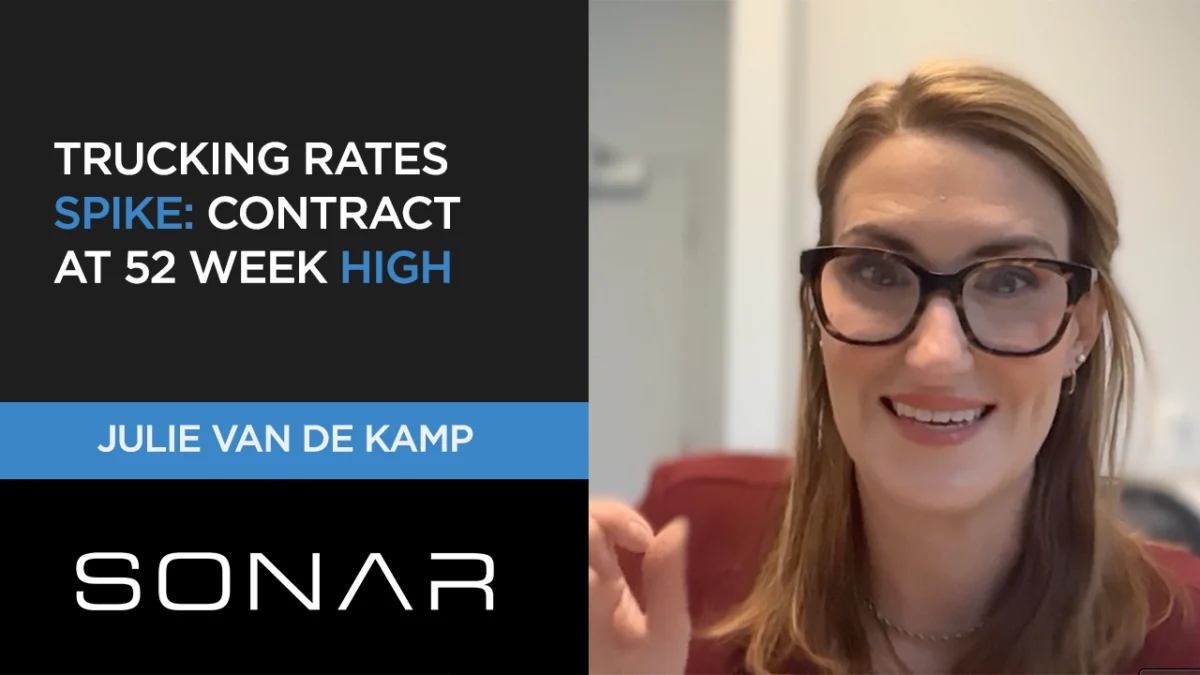
During the market update, Julie Van de Kamp provided critical commentary on the psychological and structural shifts occurring between shippers and carriers:
“Contract rates have reached a 52-week high at $2.72 per mile plus fuel — that’s up 18% year over year, so we’re absolutely seeing some of those contracts between carriers and shippers re-upping, reset at higher rate levels,” Van de Kamp explained.
This reset underscores a broader operational reality: shippers can no longer rely on below-market contracts. As carriers absorb rising operational costs—including insurance, maintenance, and equipment—pricing adjustments have become a mandatory prerequisite for maintaining consistent capacity.
Furthermore, industry experts have emphasized the importance of multimodal flexibility. With the introduction of intermodal rate benchmarks in the SONAR Rate Intelligence module, stakeholders now have access to a broader suite of data. Users can evaluate lanes, identify the nearest rail ramps, and execute direct cost comparisons between traditional dry vans and intermodal transport across both contract and spot formats.
Strategic Implications for Supply Chain Leaders
The convergence of rising rates, tightened capacity, and severe weather carries profound implications for shippers, brokers, and carriers alike:
1. Budget Realignment for Shippers
With contract rates touching a 52-week high and spot rates up nearly 50% year-over-year, procurement teams must recalibrate their freight budgets. Assuming that legacy rates will hold into the next fiscal cycle is a high-risk strategy. Shippers should prepare for higher baseline transportation costs and work closely with core carrier partners to secure reliable capacity before peak holiday surges intensify.
2. Embracing Multimodal Solutions
To mitigate rising truckload costs, supply chain leaders must aggressively explore alternative modes. The newly integrated intermodal rate benchmarks in SONAR provide a timely mechanism for identifying cost-saving opportunities. Shippers operating along high-density corridors should evaluate whether moving freight via rail can alleviate truckload dependency without sacrificing transit time.
3. Proactive Risk Mitigation
The disruptions caused by Tropical Storm Isaias in Mobile, Montgomery, and the broader Florida Panhandle serve as a stark reminder of how quickly regional weather can distort national metrics. Logistics managers must incorporate advanced meteorological analytics—such as the Business Impact Index—into their daily Transportation Management Systems (TMS) workflows to anticipate disruptions, secure alternative routing, and protect service level agreements (SLAs).
Upcoming Industry Events
For supply chain professionals looking to dive deeper into these trends, network with industry peers, and explore cutting-edge freight technology, FreightWaves is hosting several major events in late October 2026 at The Signal at Chattanooga Choo Choo in Chattanooga, TN:
- Brokerage Compliance Symposium (October 26, 2026): Navigating the day’s most pressing compliance challenges, including fraud exposure, carrier liability, FMCSA regulations, cargo theft, and insurance gaps, led by top-tier attorneys and industry operators.
- F3 Awards Dinner (October 26, 2026): An exclusive evening honoring FreightTech100 companies, alongside the live reveal of the FreightTech 25 and Shipper of Choice winners, accompanied by a cocktail reception, dinner, and live music.
- F3: Future of Freight Festival (October 27–28, 2026): Industry-defining keynotes, rapid-fire technology demonstrations, and high-level networking experiences designed to shape the future of the supply chain.