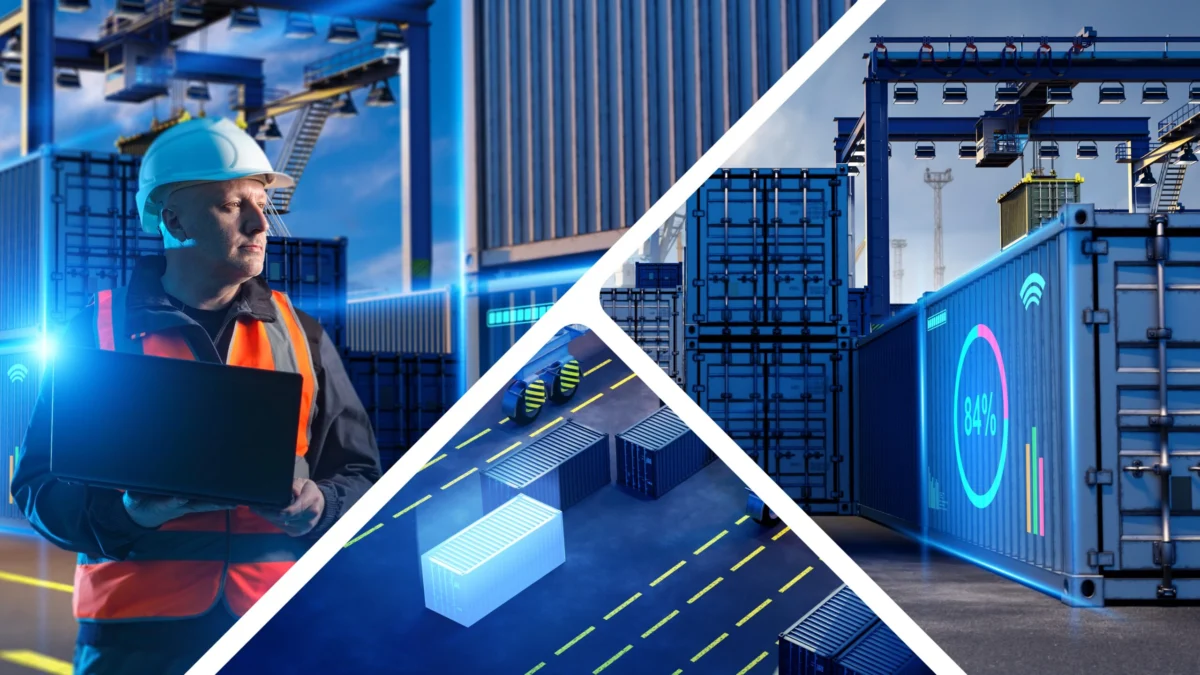
Step into a contemporary distribution center today, and the most striking observation isn’t the sheer volume of metal—the towering storage racks, the high-speed sorters, or the scurrying autonomous mobile robots (AMRs). It is the silence of efficiency. The frantic pace of human workers rushing to meet delivery deadlines has been replaced by the quiet, choreographed hum of automated systems. However, a deeper analysis reveals that the true value of these facilities no longer lies in the machinery itself, but in the sophisticated software "brains" that orchestrate every movement.
As the global supply chain pivots toward a more digital-first architecture, the logistics automation market is undergoing a structural transformation. According to the latest figures from Global Market Insights, the industry is poised for an unprecedented period of expansion, evolving from a hardware-reliant sector into a software-defined ecosystem.
Main Facts: The Path to a $100 Billion Industry
The numbers surrounding the logistics automation market are staggering. In 2025, the market was valued at approximately USD 35.9 billion. By the close of 2026, analysts expect this figure to climb to USD 39.5 billion. Looking further ahead, the projections indicate a sustained, robust growth trajectory, with the market reaching an estimated USD 104.9 billion by 2035. This represents a compound annual growth rate (CAGR) of 11.5%—essentially a threefold expansion in a single decade.
This growth is not merely a result of more warehouses being built; it is a fundamental shift in how goods are handled. The industry is moving away from monolithic, static infrastructure toward modular, flexible, and intelligent systems capable of adapting to the "on-demand" nature of the modern global economy.
Chronology of the Shift: From Mechanization to Intelligence
The evolution of logistics automation can be viewed in three distinct phases:
- The Era of Mechanization (Pre-2015): Logistics was defined by physical scale. Large, static conveyor belts and massive storage nodes moved pallets in bulk. Efficiency was measured by the sheer speed of mechanical throughput.
- The Rise of Robotics (2015–2022): Driven by the e-commerce explosion, companies began adopting point-solutions like automated guided vehicles (AGVs) and early-stage picking robots to handle increasing SKU counts.
- The Era of Orchestration (2023–Present): We are now in the age of the "connected facility." The focus has shifted toward interoperability. It is no longer enough to have a robot; that robot must communicate with the warehouse management system (WMS), the transportation management system (TMS), and the overarching digital twin of the facility to ensure end-to-end visibility.
Recent developments underscore this transition. In April 2026, industry giants Siemens and KION announced a landmark partnership centered on digital twins. By simulating warehouse processes in a virtual environment before a single bolt is turned in the physical world, companies can eliminate the friction that previously hindered large-scale automation projects.
Supporting Data: Where the Capital is Flowing
The market’s capital expenditure is currently split into three core categories, providing a clear picture of investment priorities:
- Hardware (58% / USD 21 Billion): This remains the largest share, covering autonomous robots, retrieval systems, and sorting equipment. It is the tangible foundation of the warehouse.
- Software (26%): This segment is growing in strategic importance. As companies realize that a facility full of "siloed" machines is a liability, investment is flowing into the orchestration layer—the software that decides which task goes where and when.
- Services (15.6%): Consulting, integration, and ongoing maintenance. As systems become more complex, the need for third-party expertise to keep these automated environments running has never been higher.
Interestingly, while large enterprises still account for roughly two-thirds of the total market, small and mid-sized businesses (SMBs) are the dark horse. SMBs are projected to grow their automation investment at a rate of 13.2% annually, compared to 12.4% for larger firms. This is being driven by "modular automation"—the ability to buy a few robots or a software subscription to solve a specific bottleneck, rather than committing to a total facility overhaul.
The Four Pillars of Demand
Why are companies spending billions to automate? The answer is found in four mounting pressures:
1. The E-commerce Reality
Modern consumers demand instant gratification. This has forced companies to move inventory closer to the end customer. Instead of moving pallets between a few large, regional hubs, retailers now manage millions of small, urgent, item-level orders. This complexity requires a level of precision that manual labor simply cannot sustain at scale.
2. The Labor Paradox
Despite concerns about job displacement, the primary driver for automation is the persistent labor shortage in North America and Europe. Aging populations and a shrinking pool of willing warehouse staff have made automation a survival necessity. Notably, the industry trend is not toward the total elimination of humans, but toward "upskilling." Repetitive, dangerous, or ergonomic-straining tasks are handed off to robots, while human workers move into roles involving supervision, maintenance, and complex exception handling.
3. Visibility as a Survival Skill
The post-pandemic era taught supply chain managers a hard lesson: ignorance is expensive. Companies now view real-time visibility as a competitive advantage. Using sensors, IoT tracking, and digital twins, operators can now identify a supply chain disruption the moment it occurs, rather than days later.
4. Technological Maturity
AI-guided robots have finally cleared the "variability" hurdle. Older robotics struggled with items of irregular shapes and sizes. Today’s AI-vision systems allow robots to handle a massive variety of goods, significantly increasing the range of tasks that can be automated effectively.
Official Responses and Strategic Implications
Industry leaders are responding to these market realities with aggressive integration strategies. DHL Supply Chain, for instance, has moved beyond pilot programs, currently operating over 8,000 collaborative robots globally. Their strategy involves extending a unified robot-coordination platform across 100+ sites to ensure consistency and scalability.
Similarly, the Otto Group is collaborating with AI giants like NVIDIA and Reply to develop an "orchestration layer" for their logistics network. This indicates a clear market sentiment: The bottleneck to growth is no longer the machine—it is the integration.
Regional Disparities
- North America: Remains the dominant market (USD 13.7 billion in 2025), driven by a highly mature fulfillment ecosystem and a desperate need to combat high labor costs.
- Asia Pacific: Serving as the global growth engine (12.8% CAGR), led by China’s massive manufacturing and digital commerce output.
- Europe (Germany): A unique case of "retrofitting." Because German infrastructure is long-established, the challenge is not building from scratch, but integrating new technology into legacy sites without halting production.
Challenges: The "Hidden" Costs of Automation
Despite the growth, the market faces significant headwinds. Automation is not a "plug-and-play" solution. Upfront capital costs are high, and poor system design can lead to "automation islands"—facilities where robots work fast, but the software fails to communicate with legacy ERP systems, creating bottlenecks rather than throughput.
Retrofitting existing sites is particularly fraught with risk. The industry is increasingly favoring "modular, step-by-step" projects. By tackling the most painful bottleneck first, companies can realize an immediate return on investment (ROI) while minimizing the risk of a total operational shutdown.
The Bottom Line
The next decade of logistics will not be defined by who possesses the fastest conveyor or the most expensive robot. It will be defined by the "orchestrators"—the organizations that can make diverse machines, legacy systems, and human workers function as a single, cohesive unit.
For businesses looking to enter this space or expand their footprint, the path forward is clear:
- Identify the bottleneck: Do not automate for the sake of trends; automate to solve the most costly delay in your current workflow.
- Prioritize Interoperability: Insist on software that plays well with your existing stack. If a vendor’s system cannot talk to your WMS, it is an obstacle, not an asset.
- Plan for People: Automation changes the nature of work. Organizations that invest in training their staff to manage, repair, and optimize these systems will be the ones that thrive.
As we march toward a USD 100 billion market by 2035, the logistics industry is shedding its image as a manual, labor-intensive sector. It is becoming a high-tech, data-driven discipline where the true magic happens behind the screen—in the code that ensures every package reaches its destination at the speed of the modern consumer’s click.