By Justin Yifu Lin and Yan Wang
Published: October 9, 2026
Beijing / Boston
Main Facts
The architecture of global development finance is undergoing a quiet, structural transformation. For decades, the post-World War II financial order has relied on a singular anchor: the United States dollar. From infrastructure projects in sub-Saharan Africa to industrial parks in Southeast Asia, developing economies have borrowed, traded, and held foreign reserves overwhelmingly in greenbacks.
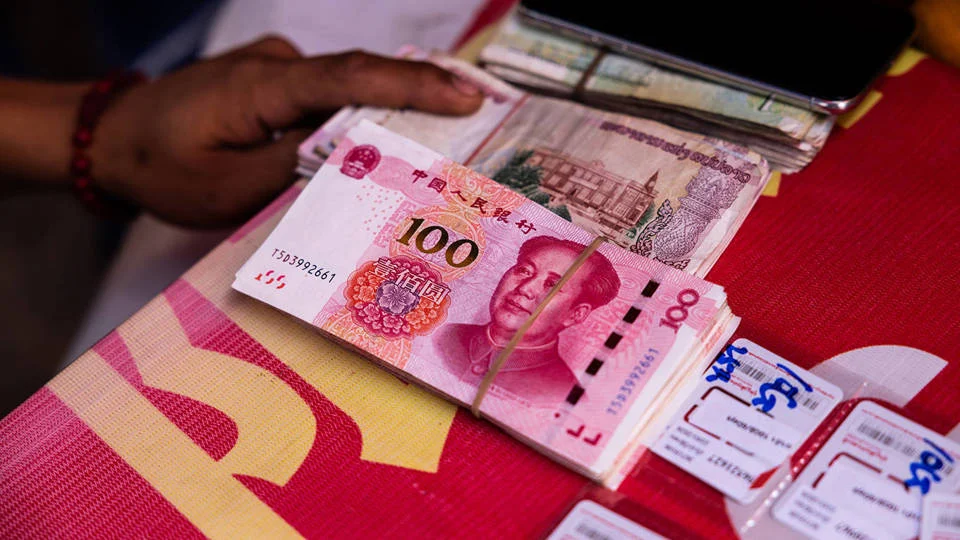
However, a confluence of mounting economic pressures, shifting geopolitical realities, and questions surrounding the long-term predictability of United States economic policy has catalyzed a search for alternatives. At the center of this shift is the Chinese renminbi (RMB).
According to recent analyses, renminbi-denominated loans are increasingly emerging as a credible, highly accessible, and cost-effective alternative to traditional dollar-based borrowing. This shift is occurring against the backdrop of a staggering global development-finance deficit. Data from UN Trade and Development highlights that developing countries face an annual shortfall of $4 trillion in their efforts to achieve the United Nations Sustainable Development Goals (SDGs) by 2030.
For generations, sourcing this capital through dollar-denominated instruments left emerging markets acutely vulnerable to external shocks. Surges in U.S. interest rates, shifts in Federal Reserve monetary policy, and volatile investor sentiment in advanced economies have repeatedly triggered severe debt crises, capital flight, and currency depreciations across the Global South. By offering financing denominated in RMB, China is positioning its currency as a stabilizing mechanism, allowing developing nations to diversify their debt portfolios, mitigate foreign-exchange risks, and secure critical capital for sustainable growth.
Chronology of a Financial Shift: From Dollar Dominance to Multicurrency Realities
To understand the current momentum behind the renminbi in international development finance, it is necessary to examine the evolutionary milestones that brought the global economy to this juncture.
1. The Postwar Hegemony (1944–1990s)
Following the 1944 Bretton Woods conference, the U.S. dollar was established as the world’s primary reserve currency. International financial institutions (IFIs) such as the World Bank and the International Monetary Fund (IMF) operated almost exclusively in dollars, cementing the currency’s role as the lifeblood of cross-border trade, sovereign borrowing, and global liquidity management. Developing countries had little choice but to align their fiscal strategies with U.S. macroeconomic conditions.
2. The Rise of China as a Creditor (2000–2015)
As China’s economy expanded rapidly to become the world’s second-largest, its footprint in global development finance grew exponentially. The launch of the Belt and Road Initiative (BRI) in 2013 marked a watershed moment. Initially, much of this lending was denominated in U.S. dollars or euros, reflecting China’s integration into Western-led financial systems. However, the sheer scale of Chinese lending quickly transformed Beijing into the world’s largest bilateral creditor, often rivaling traditional Western lenders and multilateral development banks.
3. Early Internationalization of the RMB (2009–2018)
Recognizing the structural risks of holding vast dollar reserves and relying on dollar-based trade settlement, the People’s Bank of China (PBOC) began taking deliberate steps to internationalize the renminbi. Cross-border RMB trade pilot programs were launched in 2009. By 2016, the International Monetary Fund officially included the RMB in its elite Special Drawing Rights (SDR) basket, affirming the currency’s growing status as a global reserve asset.
4. The Pandemic and Macroeconomic Volatility (2020–2024)
The COVID-19 pandemic, followed by aggressive monetary tightening by the U.S. Federal Reserve to combat domestic inflation, exposed the fragility of dollar-dependent emerging markets. As U.S. interest rates soared, debt-servicing costs for developing nations skyrocketed, draining foreign exchange reserves and forcing widespread austerity. During this period, debtor nations increasingly sought bilateral currency swaps and alternative credit lines with Beijing to manage liquidity crunches, paving the way for more formalized RMB-denominated lending frameworks.
5. The Institutionalization of RMB Development Finance (2025–Present)
By 2026, questions surrounding the stability, political predictability, and weaponization of U.S. economic institutions accelerated diversification trends. Developing countries are no longer viewing RMB financing merely as an emergency stopgap, but as a strategic, cost-effective, and long-term alternative to Western capital markets.
Supporting Data: The Scale of the Gap and the Costs of Dollar Dependence
The economic imperative driving the pivot toward renminbi financing is rooted in hard numbers. The intersection of massive financing deficits and structural macroeconomic vulnerabilities has created an urgent demand for alternative financial channels.
The $4 Trillion SDG Financing Gap
According to UN Trade and Development reports, the financial requirements for developing countries to eradicate extreme poverty, transition to clean energy, and build resilient infrastructure are immense.
- Annual Shortfall: $4 trillion is required annually to meet the 2030 Sustainable Development Goals in developing economies.
- Public Sector Constraints: Traditional multilateral development banks (MDBs)—including the World Bank and regional lenders—possess capital bases that, while vital, fall woefully short of covering this deficit.
- Private Capital Hesitance: Private investors often view emerging market infrastructure projects as high-risk, leading to high borrowing premiums when capital is available in Western markets.
The Volatility of Dollar Debt
The cost of borrowing in U.S. dollars is inextricably linked to the monetary policy cycle of the United States. When the Federal Reserve raises interest rates:
- Capital Outflows: Investors pull capital from emerging markets in search of higher yields in U.S. Treasuries.
- Currency Depreciation: Developing country currencies depreciate against the dollar, making imports (especially energy and food) more expensive.
- Debt-Servicing Burdens: Because sovereign debts are denominated in dollars, local governments must generate significantly more domestic revenue simply to service the same principal and interest payments.
The Advantage of RMB-Denominated Instruments
In contrast, borrowing in renminbi offers distinct macroeconomic buffers:
- Interest Rate Stability: Monetary policy in China has historically maintained lower and more stable inflation-adjusted interest rates compared to recent cycles in the West, shielding borrowers from aggressive external rate shocks.
- Trade Alignment: For nations running trade deficits with China—the world’s largest trading nation—borrowing in the currency earned through exports creates a natural macroeconomic hedge. Debt can be serviced directly using RMB earned from bilateral trade, reducing foreign-exchange conversion risks.
- Cost-Effectiveness: Institutional reforms and growing liquidity in offshore RMB markets (such as dim sum bonds and bilateral swap lines) have driven down transaction costs, making renminbi loans increasingly competitive against traditional dollar packages.
Official Responses and Perspectives
The growing prominence of renminbi-denominated development finance has elicited varied reactions from global policymakers, central bankers, and international financial institutions.
Beijing’s Perspective: Stability and Mutual Benefit
Chinese policymakers and financial authorities emphasize that the internationalization of the renminbi is a market-driven process aimed at facilitating global trade and investment, rather than a geopolitical maneuver to unseat the dollar.
- PBOC Statements: Representatives from the People’s Bank of China have repeatedly stressed that expanding RMB usage provides global public goods by offering liquidity alternatives during periods of systemic stress.
- Win-Win Cooperation: Chinese officials frame RMB lending under frameworks like the Belt and Road Initiative as a practical mechanism to foster "South-South cooperation," ensuring that developing nations have access to predictable capital without political conditionality.
Developing Country Perspectives: Pragmatism Over Politics
For capitals across Africa, Latin America, and Asia, the turn toward renminbi financing is driven by economic pragmatism.
- Ministry of Finance Officials: Finance ministers in several heavily indebted developing nations have noted that diversification is essential for risk management. Relying on a single currency exposes economies to the domestic political cycles of a single foreign power.
- Reduction of Red Tape: Many developing nations report that bilateral financing arrangements involving RMB often feature streamlined approval processes compared to the bureaucratic conditions frequently attached to traditional Western-led multilateral loans.
Western and Multilateral Reactions: Concern and Adaptation
In Washington, Brussels, and traditional multilateral institutions, the rise of the renminbi is viewed with a mixture of strategic anxiety and cautious recognition.
- U.S. and European Regulators: Western policymakers have expressed concerns regarding transparency, debt sustainability, and governance standards in alternative lending models. There are persistent worries that non-traditional lending could undermine sovereign debt restructuring frameworks, such as the G20 Common Framework.
- Institutional Adaptation: Recognizing the competitive pressure, leaders of traditional multilateral institutions have increasingly called for internal reforms to dramatically increase their lending capacity, acknowledging that if they fail to provide adequate capital at competitive rates, developing nations will naturally look elsewhere.
Implications for the Future of Global Finance
The expanding role of the renminbi in international development finance carries profound implications for the structure of the global economy over the coming decades.
1. The Transition to a Multipolar Currency System
We are witnessing the definitive twilight of a unipolar monetary system dominated by the U.S. dollar. While the dollar will undoubtedly remain the world’s primary reserve and invoicing currency for the foreseeable future, it will increasingly share space in a multipolar financial architecture alongside the euro, the renminbi, and digital currencies. This fragmentation reduces systemic risk for developing countries by preventing any single monetary authority from holding a monopoly on global liquidity.
2. Redefining Sovereign Debt Architecture
The proliferation of RMB-denominated debt requires a major evolution in how sovereign debt crises are managed. Traditional Paris Club creditors and Western-led institutions must find cooperative mechanisms to coordinate debt treatments with China, which is now the world’s largest bilateral creditor. Without inclusive, multilateral restructuring frameworks that accommodate non-dollar debt, future defaults could become protracted and legally complex.
3. Geoeconomic Realignment
As more developing nations conduct trade and secure development loans in renminbi, economic ties between China and the Global South will inevitably deepen. This financial integration reinforces commercial supply chains, digital payment systems (such as China’s Cross-Border Interbank Payment System – CIPS), and investment flows centered around Beijing. For developing countries, this offers a valuable shield against unilateral economic sanctions and financial weaponization by Western powers.
Conclusion
The $4 trillion sustainable development financing gap cannot be bridged using the exhausted frameworks of the past. As confidence in the stability and predictability of U.S. economic institutions wanes, renminbi-denominated loans have transcended their status as a niche alternative. They are rapidly becoming a cornerstone of modern development finance—offering developing countries a credible, cost-effective, and pragmatic pathway toward economic modernization and resilience in an increasingly uncertain world.