As the global transition toward electrification accelerates, the demand for high-efficiency, high-precision manufacturing infrastructure has never been greater. At the forefront of this industrial shift, Columbus McKinnon Corporation (CMCO) is set to demonstrate how sophisticated conveyance and automation technologies can solve the complex challenges of battery production.
The company has announced that it will showcase an integrated suite of battery production conveyance solutions at The Battery Show North America in Detroit, Michigan. By bringing together the specialized capabilities of its powerhouse brands—Dorner, Garvey, and montrac—CMCO aims to provide a comprehensive look at how modern factories can optimize throughput, improve safety, and reduce downtime in the demanding world of lithium-ion and solid-state battery assembly.
Main Facts: A Triad of Automation Powerhouses
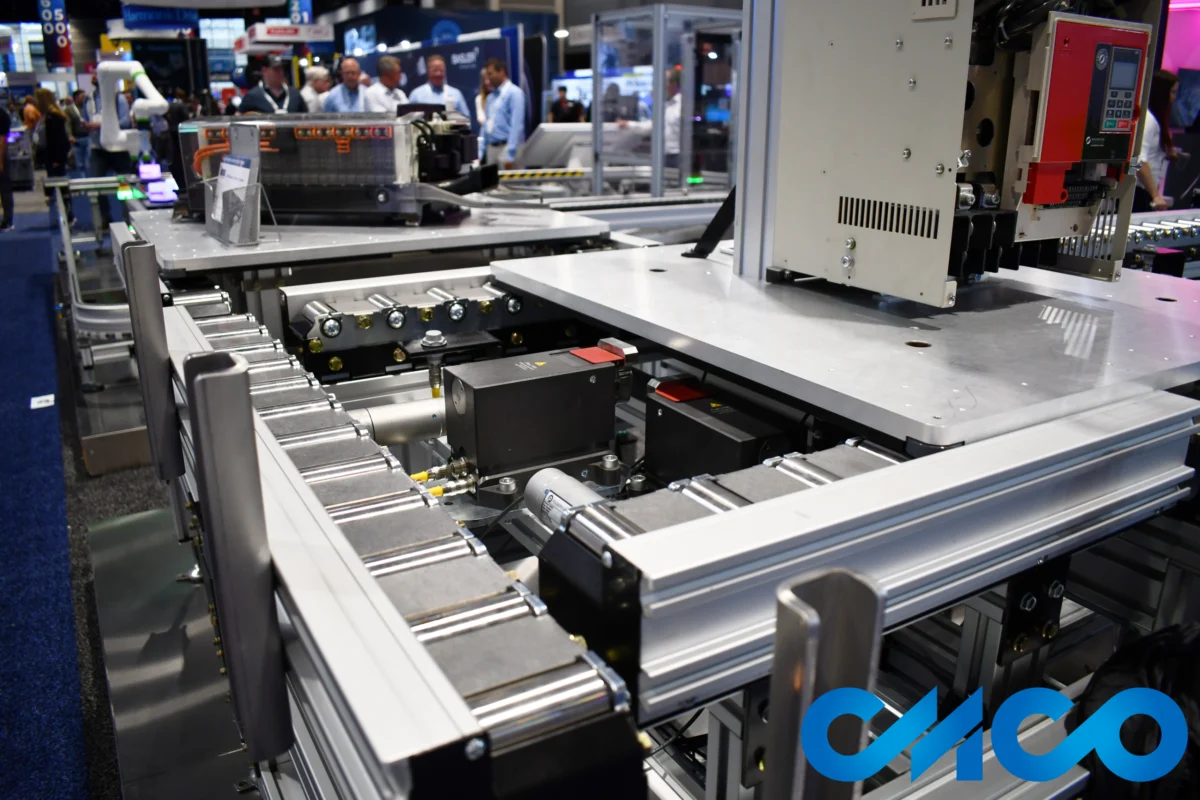
The upcoming exhibition at Booth 3808 will center on the synergy between three distinct yet complementary brands under the Columbus McKinnon umbrella. Each brand addresses a specific pain point within the battery manufacturing lifecycle:
- Dorner: Renowned for precision conveyor systems, Dorner will headline the booth with its heavy-duty pallet systems.
- montrac: Specializing in intelligent, modular monorail systems, montrac provides the flexibility required for complex, multi-stage production environments.
- Garvey: A leader in accumulation and automation, Garvey will demonstrate its ability to maintain seamless flow, preventing the "bottlenecking" that frequently hampers battery cell packaging and assembly.
The central thesis of the CMCO exhibit is that battery production is not merely a single process but a sophisticated ecosystem. By integrating these systems, manufacturers can create a "smart" floor that reacts in real-time to production demands, buffering parts when necessary and maintaining the high-speed movement required to keep up with surging electric vehicle (EV) demand.
Chronology: From Component Handling to Integrated Solutions
The journey to these integrated solutions reflects the broader evolution of the manufacturing sector over the last decade. Historically, conveyor systems were static, rigid structures. However, as battery production scaled up—moving from pilot lines to massive "gigafactories"—the need for modular, reconfigurable, and high-load-bearing systems became clear.
- The Rise of Precision (The Dorner Era): The development of Edge Roller Technology (ERT) marked a pivot toward handling heavier loads with higher precision. As automotive OEMs moved toward modular battery packs, the need to perform heavy operations like riveting and pressing directly on the conveyor became a requirement.
- Intelligent Routing (The montrac Integration): Once heavy-duty movement was mastered, the industry required intelligence. The introduction of montrac’s independent shuttle systems allowed factories to transition from linear assembly lines to "loop" and "branch" configurations, where individual battery modules could be diverted for quality testing or rework without stopping the entire line.
- Flow Optimization (The Garvey Innovation): Finally, the integration of Garvey’s zero-pressure accumulation technology solved the issue of product damage. In the early days of battery assembly, accumulation tables often caused "backpressure," leading to micro-cracks in delicate cells. The transition to advanced rotary replacements ensured that throughput could remain high without compromising the integrity of the battery components.
Today, these technologies converge at The Battery Show, representing a culmination of years of R&D aimed at solving the "high-speed, high-precision" paradox in battery manufacturing.
Supporting Data: Engineering Specifications and Performance Metrics
The booth will feature live demonstrations of systems designed to handle the punishing realities of a 24/7 battery manufacturing facility.
The ERT350: A New Standard for Heavy-Duty Assembly
The centerpiece of the Dorner display is the ERT350 pallet conveyor. Engineered for the specific stressors of battery assembly, it utilizes "locate-and-drop" technology. Unlike conventional conveyors, the ERT350 transfers process forces—such as those generated during high-speed riveting or heavy-duty pressing—directly to the frame and floor structure rather than the pallet.
- Pallet Capacity: Up to 1,000 pounds.
- Max Pallet Size: 1,200 mm x 1,200 mm.
- Operational Advantage: Allows for torque-heavy operations without product displacement, ensuring that every cell is seated perfectly within its module.
The montrac Infinity Loop
The montrac system provides the "nervous system" of the factory. By using independently controlled shuttles, the system eliminates the traditional "master-slave" conveyor hierarchy.
- Scalability: Its modular design allows for rapid facility expansion. As a battery manufacturer adds new production lines, they can "plug and play" additional monorail sections.
- Dynamic Buffering: The system can automatically route units to buffers during peak times, preventing downstream equipment from becoming overwhelmed.
Garvey Infinity RX 36: Efficiency Through Fluidity
The Infinity RX 36 addresses the mechanical friction inherent in traditional accumulation. By utilizing patented zero-pressure accumulation, the system moves products along a path that eliminates physical contact between individual units.
- Impact: Reduces noise pollution, lowers maintenance intervals by minimizing wear-and-tear, and drastically reduces the risk of cell damage caused by jamming or pressure build-up.
Implications for the Battery Industry
The integration of these systems has profound implications for the future of North American battery production.

Reducing the Cost of Quality
In battery manufacturing, the cost of a defective cell is astronomical. It isn’t just the loss of the raw material; it is the potential for downstream failure in a finished vehicle. By utilizing conveyors that emphasize stability (Dorner) and gentle handling (Garvey), manufacturers can significantly reduce the "scrap rate," which is one of the most critical KPIs for any gigafactory.
Bridging the "Gigafactory Gap"
Many manufacturers are currently struggling to scale from R&D facilities to full-scale production. The modularity offered by CMCO brands provides a bridge. A company can start with a basic montrac loop and gradually add more Garvey accumulation zones and Dorner assembly stations as their production volumes increase. This "modular growth" strategy minimizes initial capital expenditure while keeping the door open for future, massive-scale production.
Sustainability and Efficiency
The energy transition is not just about the batteries produced; it is about the energy consumed during the manufacturing process. By optimizing flow and reducing the number of times a part must be handled, stopped, or restarted, CMCO’s systems contribute to a more energy-efficient production line. Fewer line stoppages mean less electricity wasted on restarting heavy machinery and fewer carbon-intensive rework cycles.
Official Perspective: A Strategic Vision
Columbus McKinnon’s presence at The Battery Show is more than a sales pitch; it is a signal of the company’s commitment to the electrification vertical. As the industry moves toward highly automated, robotic assembly, the "mechanical" aspect of the factory floor is becoming increasingly digitized.
By integrating brands that were once separate entities, Columbus McKinnon is positioning itself as a "total solutions provider." Rather than forcing a battery manufacturer to source conveyors from one vendor, accumulation tables from another, and monorails from a third, CMCO offers a unified ecosystem.
In a statement regarding their participation, the company noted that these systems are designed to provide the "foundational infrastructure" for the next generation of energy storage. Whether it is an automotive manufacturer building a battery pack or an appliance company integrating storage into home electronics, the requirements remain the same: reliability, speed, and precision.
Looking Ahead: The Future of the Production Floor
As the industry looks toward the upcoming exhibition, the focus remains on how these physical systems will interact with the "digital twin" of the factory. The modularity of the montrac and Dorner systems makes them ideal candidates for future integration with AI-driven predictive maintenance.
The demonstration in Booth 3808 serves as a microcosm of the modern factory. It illustrates that the future of battery production is not just about chemistry and voltage—it is about the physical movement of materials in a way that is as precise as the electronics themselves.
For engineers and production managers attending The Battery Show North America, the Columbus McKinnon booth will be a must-see. It offers a tangible look at the mechanical backbone of the energy transition, proving that even in an age of software and sensors, the efficiency of the assembly line starts with the conveyor beneath the product.
For more information, please visit www.cmco.com.